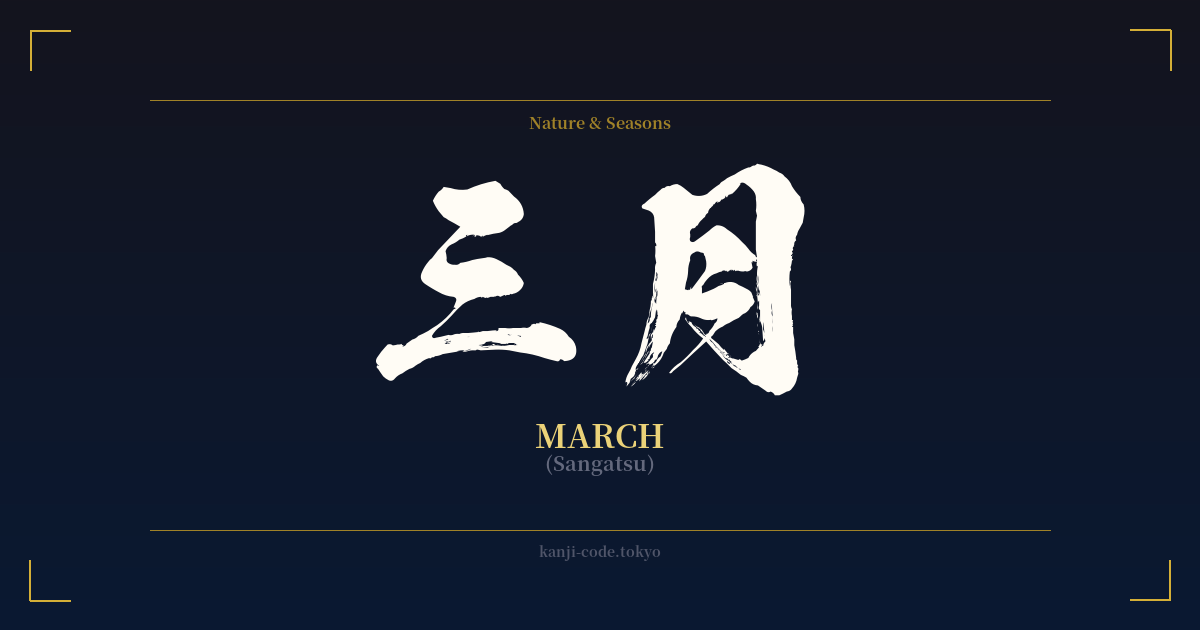
✍️ 三月 (Sangatsu) — Cultural Context
三月 (Sangatsu) is the Japanese word for March, literally translating to “the third month.” While straightforward, this term is deeply woven into the fabric of Japanese life, representing a pivotal time of transition, farewells, and new beginnings.
In Japan, March marks the end of the fiscal and academic year. It is a month filled with graduation ceremonies (卒業式, sotsugyōshiki), a poignant rite of passage for students at every level. These ceremonies are a blend of solemnity and celebration, acknowledging the hard work of the past and the uncertain promise of the future. For companies, it’s a busy period of closing books and preparing for the new business year that starts in April.
Culturally, March is synonymous with the arrival of spring. The cold of winter begins to recede, and the natural world awakens. This is most famously symbolized by the blooming of cherry blossoms (桜, sakura). The “cherry blossom front” (桜前線, sakura zensen) typically begins its northward journey across Japan in late March, making it the unofficial start of the hanami (花見) or flower-viewing season. These gatherings under the blooming trees are a cherished national pastime, celebrating the fleeting beauty of the blossoms and, by extension, life itself.
Early March also hosts the Hina Matsuri (雛祭り), or Doll's Festival, on March 3rd. This festival is dedicated to praying for the health and happiness of young girls. Families display ornate sets of dolls representing the Heian-era imperial court, a beautiful and gentle tradition that ushers in the spring season.
Before Japan adopted the Gregorian calendar, the third month of the traditional lunisolar calendar was called Yayoi (弥生). The characters for Yayoi mean “new life” or “abundant growth,” perfectly capturing the essence of spring as plants begin to sprout and life re-emerges. While Sangatsu is the modern, standard term, the feeling of Yayoi still lingers in the cultural consciousness, tying the month to powerful themes of renewal and vitality. Thus, the simple kanji 三月 evokes a rich tapestry of cultural moments, from tearful goodbyes at a train station to joyful picnics under a canopy of pink blossoms.
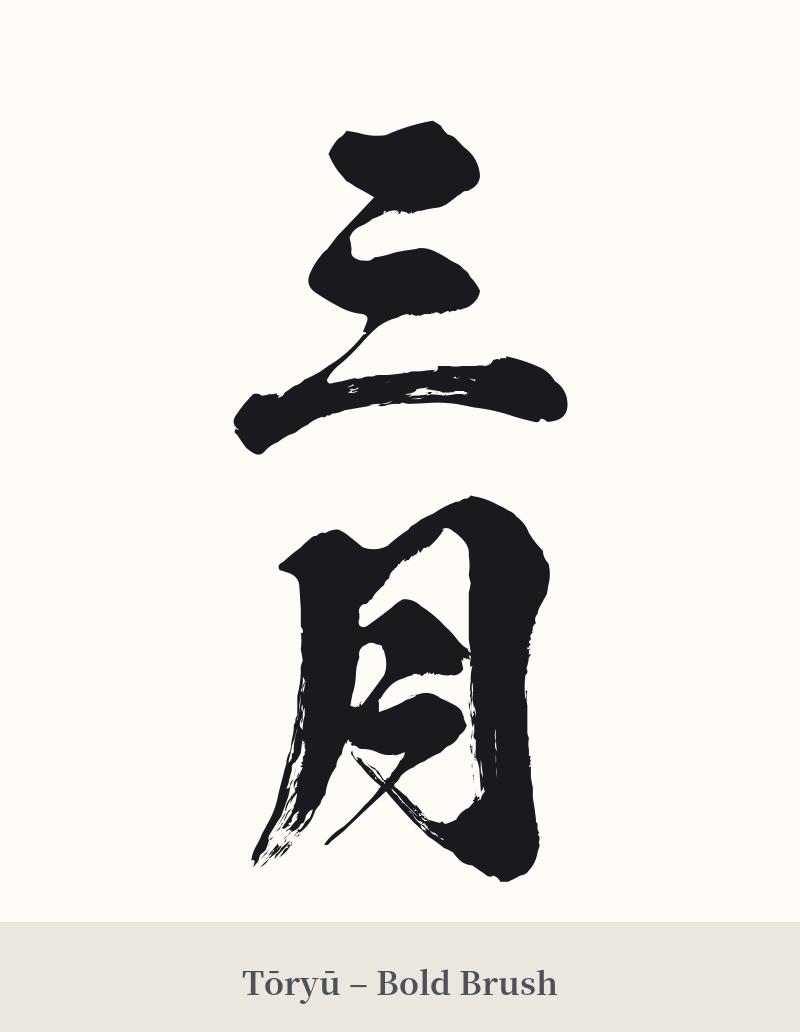
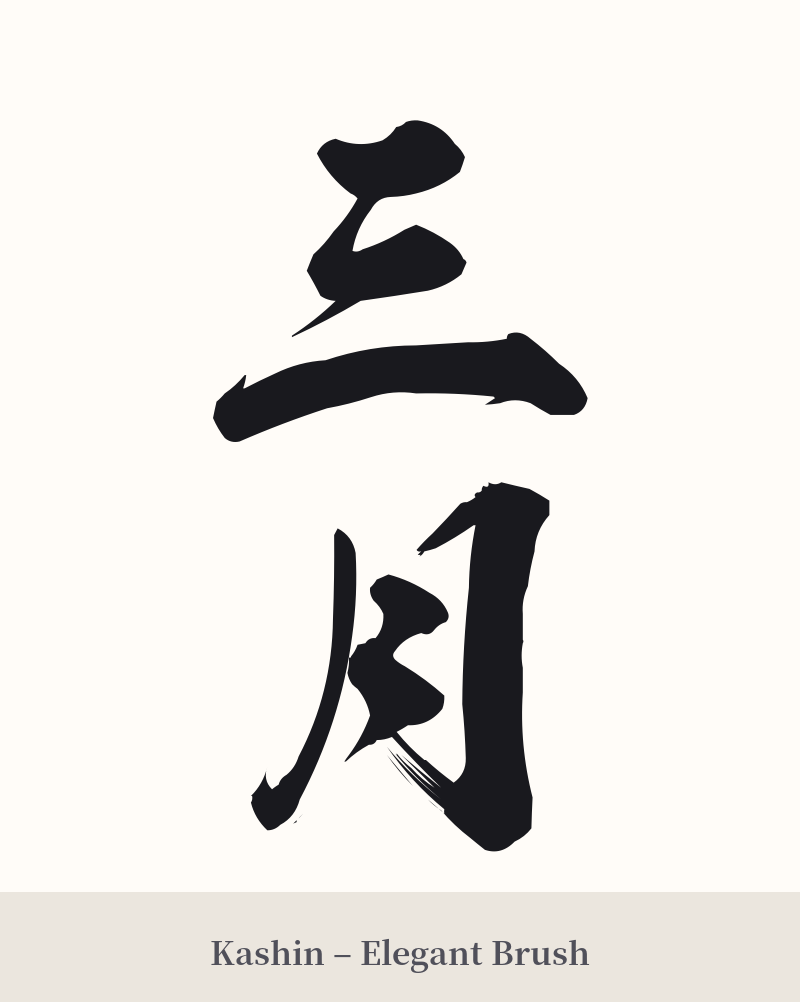
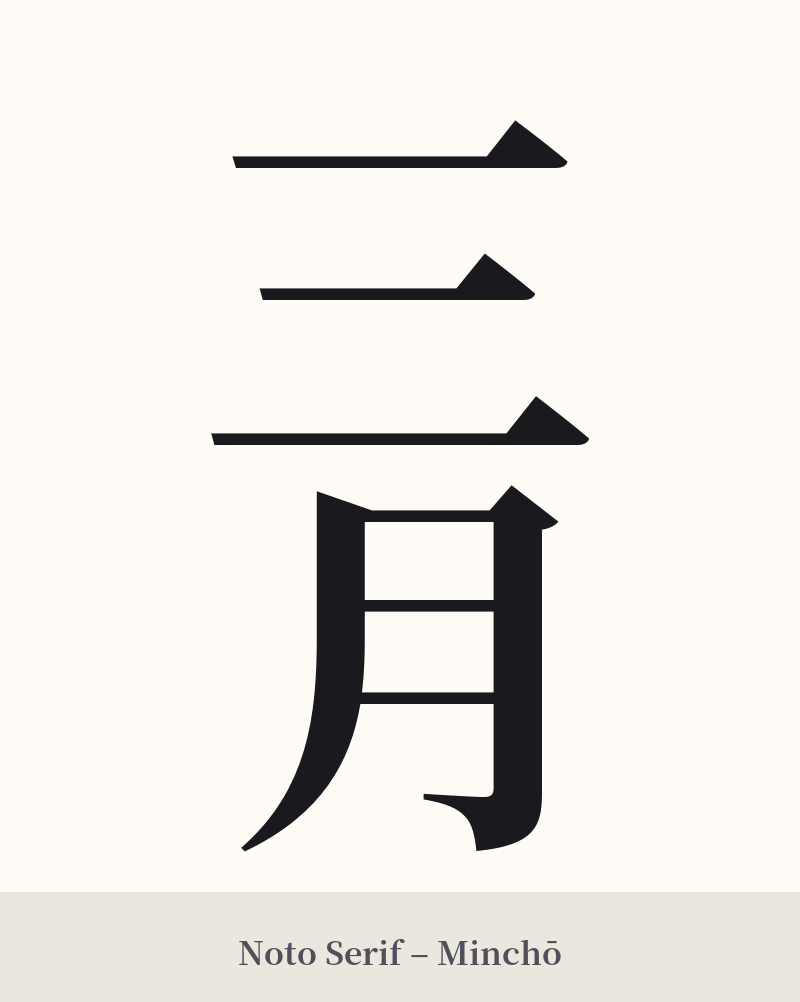
🖌️ Font Styles for 三月
The same kanji can look dramatically different depending on the calligraphy style. Choose a font that matches the mood you want for your tattoo or design.
🎨 Tattoo Suitability
📐 Tattoo Design Guide
Due to its simplicity, 三月 is best suited for minimalist designs and discreet placements.
– Placement: Consider smaller spots like the inner wrist, ankle, behind the ear, or along the collarbone. It can also be integrated into a larger piece, such as a full birthdate or alongside an image of a cherry blossom.
– Font Style: A clean, crisp Mincho (serif) or Gothic (sans-serif) font emphasizes its straightforward nature. For a more artistic flair, a flowing semi-cursive (gyōsho) or cursive (sōsho) calligraphy style can add movement and elegance to the simple characters.
– Visual Tips: Pair the kanji with imagery that represents March in Japan. A few falling cherry blossom petals, the date of a significant event (like 3.11), or even a subtle watercolor background in shades of pink or spring green can elevate the design from a simple word to a meaningful scene.
Comments