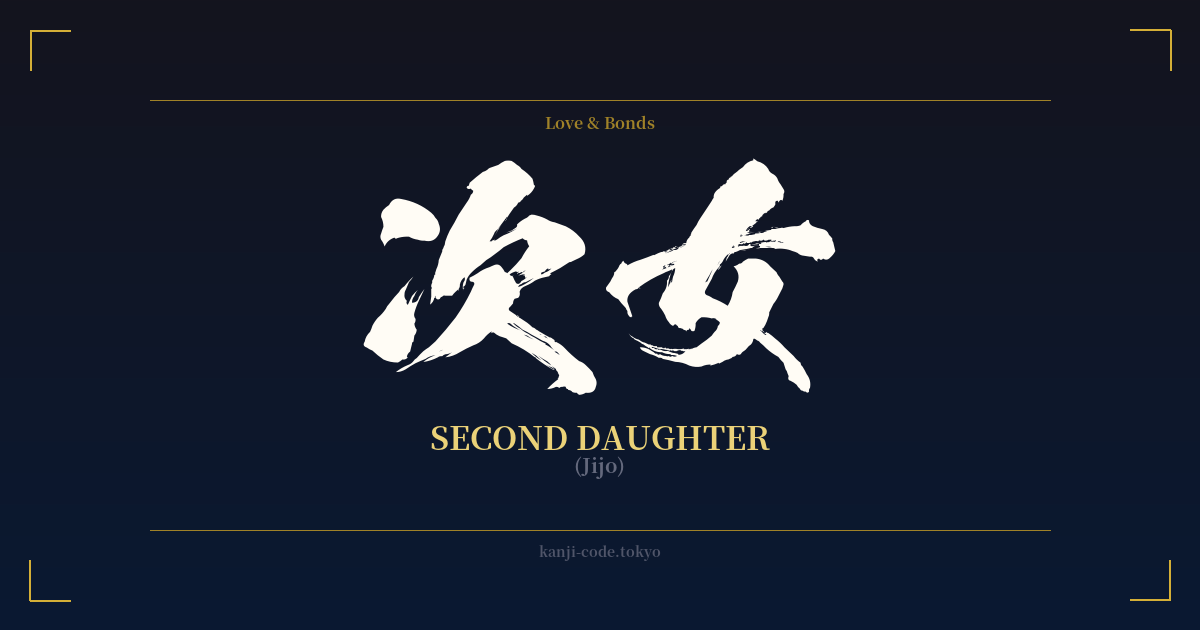
✍️ 次女 (Jijo) — Cultural Context
次女 (Jijo) is the Japanese word for 'second daughter'. Its meaning is direct and unambiguous, combining the character for 'next' or 'second' (次) with the character for 'woman' or 'female' (女). While simple on the surface, this term is rooted in the cultural importance of family structure and birth order in Japan.
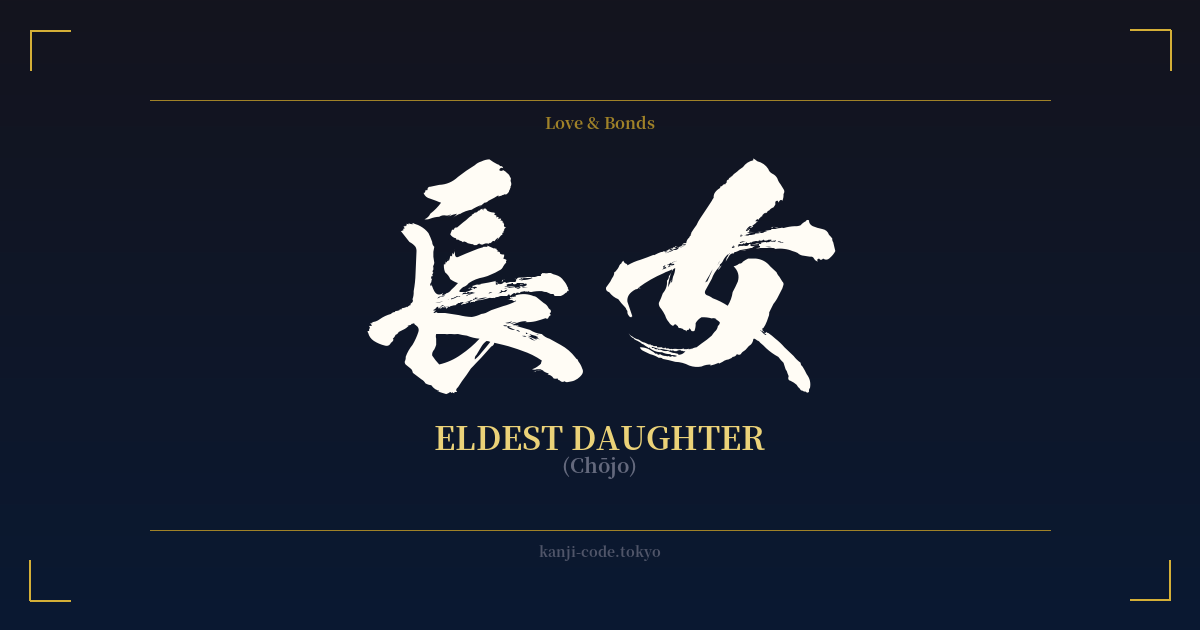
Historically, Japanese society, particularly under the family register system known as 'koseki', placed great emphasis on one's position within the family. The eldest son (長男, chōnan) and eldest daughter (長女, chōjo) were traditionally burdened with the most responsibility. The chōjo was expected to be a role model, help care for younger siblings, and uphold the family's honor, often preparing for a favorable marriage.
The second daughter, or jijo, existed in a different social space. Freed from the heavy expectations placed on her older sister, the jijo often experienced a childhood with more liberty. This has led to a common cultural archetype of the second daughter being more independent, creative, or even rebellious. While the eldest was the dutiful one, the second could explore her own path, sometimes seen as the 'free spirit' of the family.
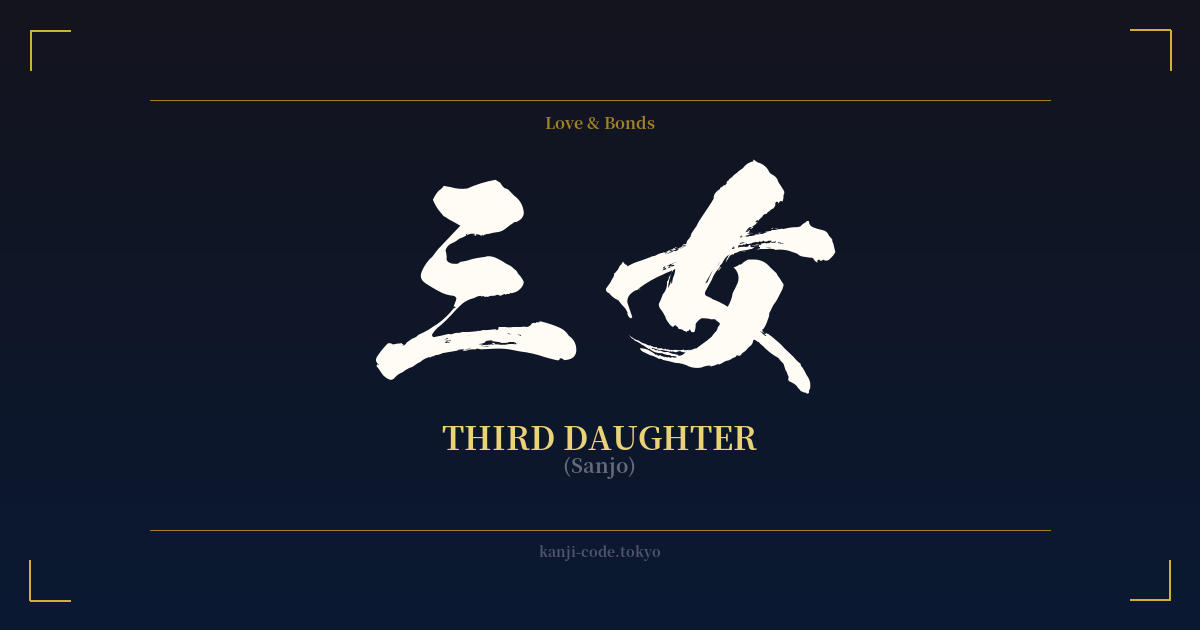
In modern Japan, these rigid roles have significantly softened, and individual personalities matter far more than birth order. However, the terms chōjo, jijo, sanjo (third daughter), and so on are still universally used to describe family relationships. They are simple facts of life, but they can also carry a sense of shared identity. Many 'jijo' might relate to the cultural trope of having more freedom or developing a unique personality to stand out from their older sibling.
For someone who is a second daughter, the word 'Jijo' is more than just a label; it's a fundamental part of her identity within the family unit. It represents a specific life experience—the relationship with an older sibling, the dynamic with parents, and the unique path forged as the 'next' one in line. It speaks to a quiet identity shaped not by being first, but by being a crucial part of the family sequence.
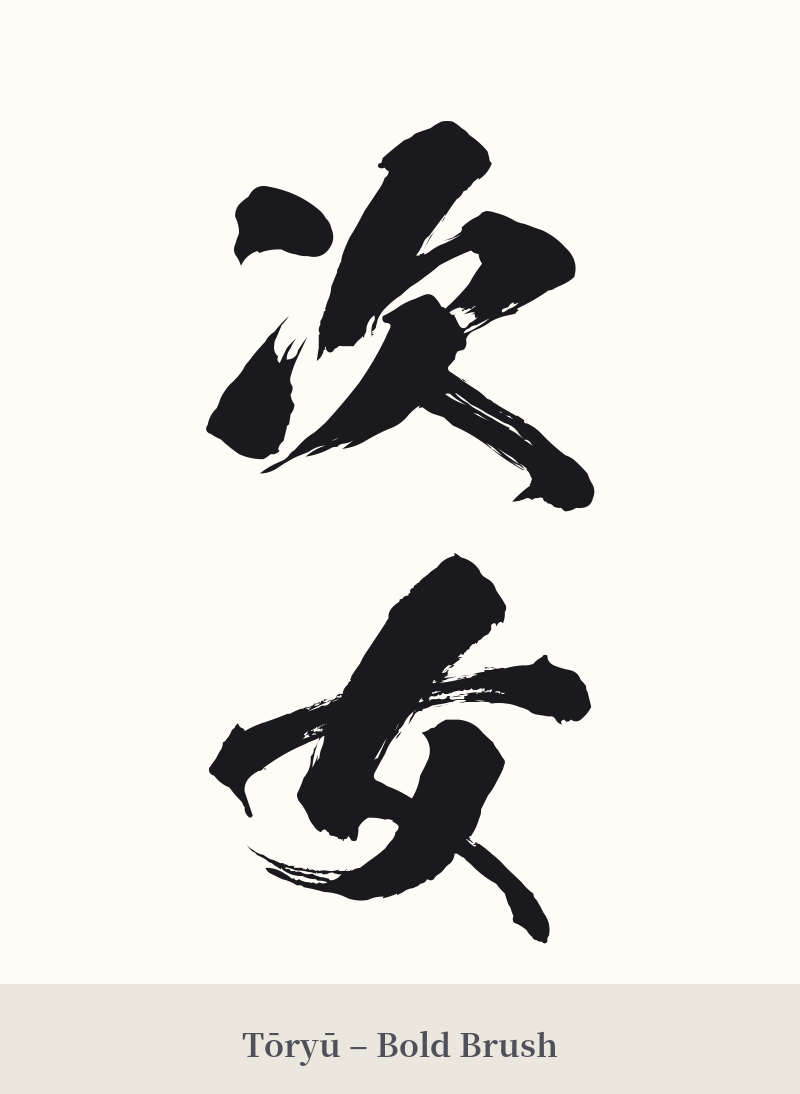
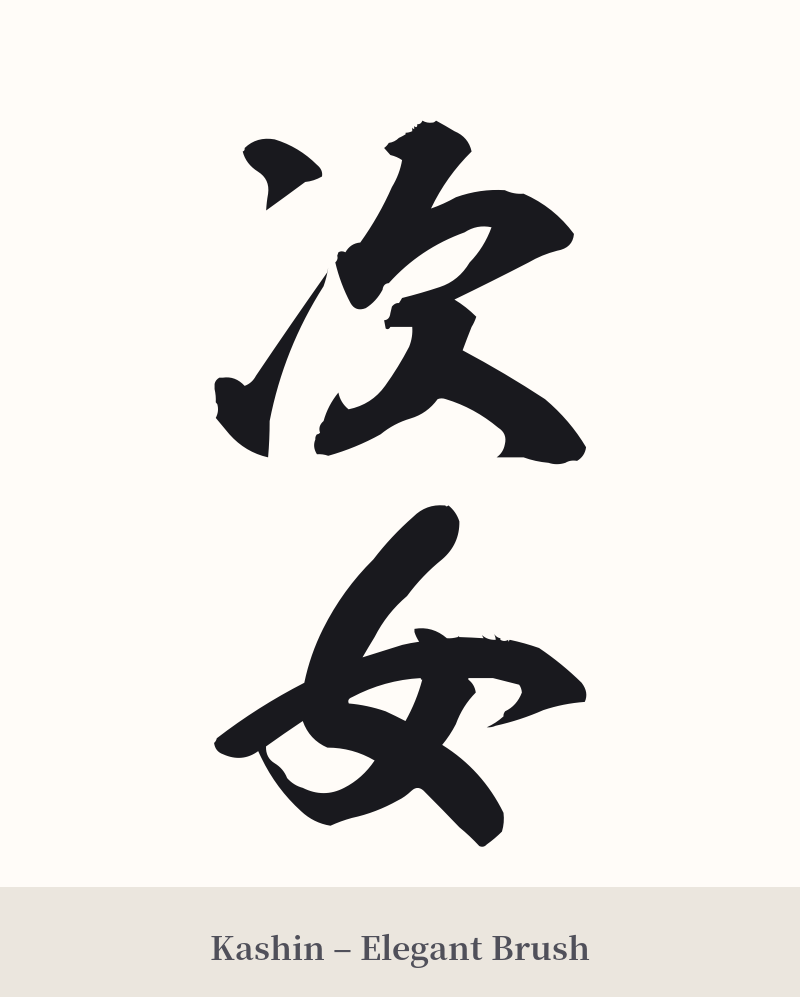
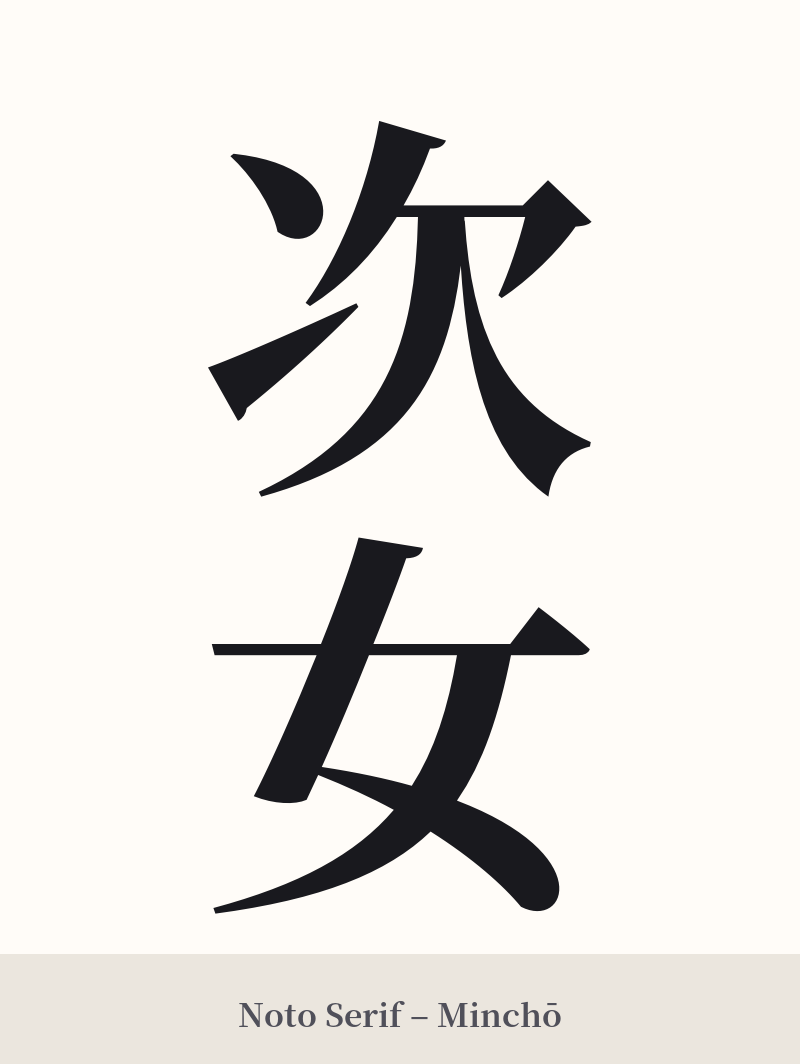
🖌️ Font Styles for 次女
The same kanji can look dramatically different depending on the calligraphy style. Choose a font that matches the mood you want for your tattoo or design.
🎨 Tattoo Suitability
📐 Tattoo Design Guide
Given the literal and personal nature of 次女, a minimalist and thoughtful design approach is recommended.
– Placement: This word suits smaller, more personal locations. Consider the inner wrist, the ankle, along the collarbone, or behind the ear. These spots reflect the idea that this is a personal identifier, not a loud public statement.
– Font Style: Clean, legible fonts work best. A standard Kaisho (block) style or a slightly stylized Mincho (serif) font will look elegant. Avoid overly aggressive or complex calligraphy, which can feel mismatched with the word's simple, factual meaning.
– Visual Tips: Consider a vertical orientation, which often looks graceful with two-character kanji. You could also incorporate it into a larger design, perhaps alongside a flower that has personal meaning or the birth flower of the person it represents. Keeping it small and simple allows it to be a subtle, meaningful mark.
Comments