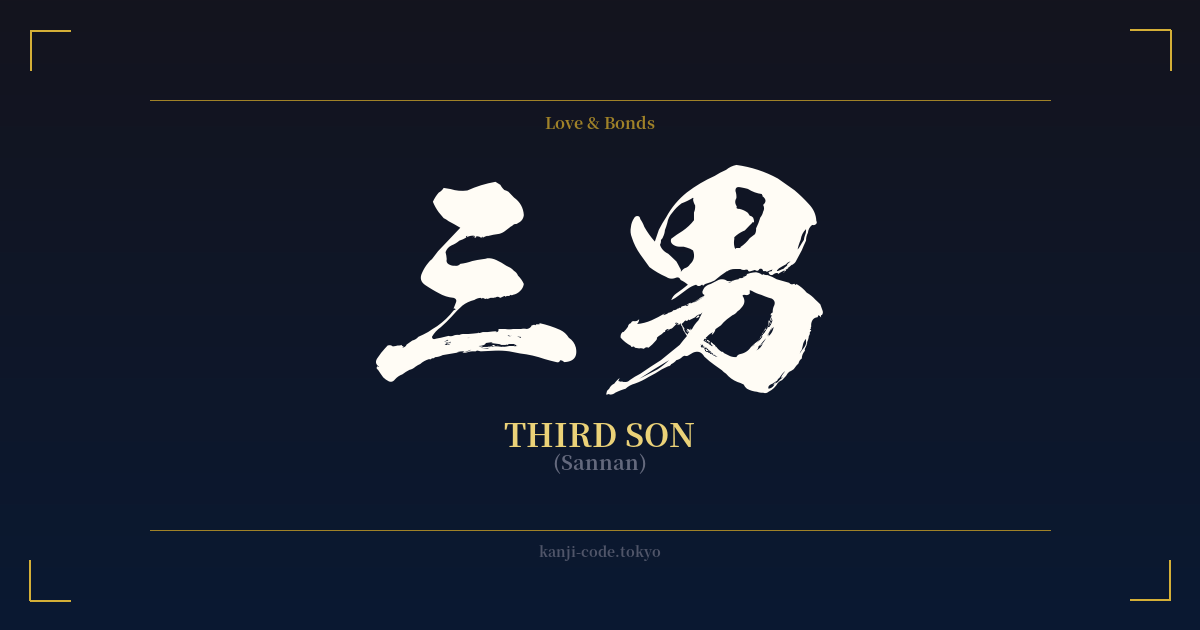
✍️ 三男 (Sannan) — Cultural Context
The Japanese word 三男 (Sannan) literally translates to "third son." While straightforward, this term is deeply rooted in the historical and cultural context of the Japanese family system, which was traditionally organized around primogeniture.
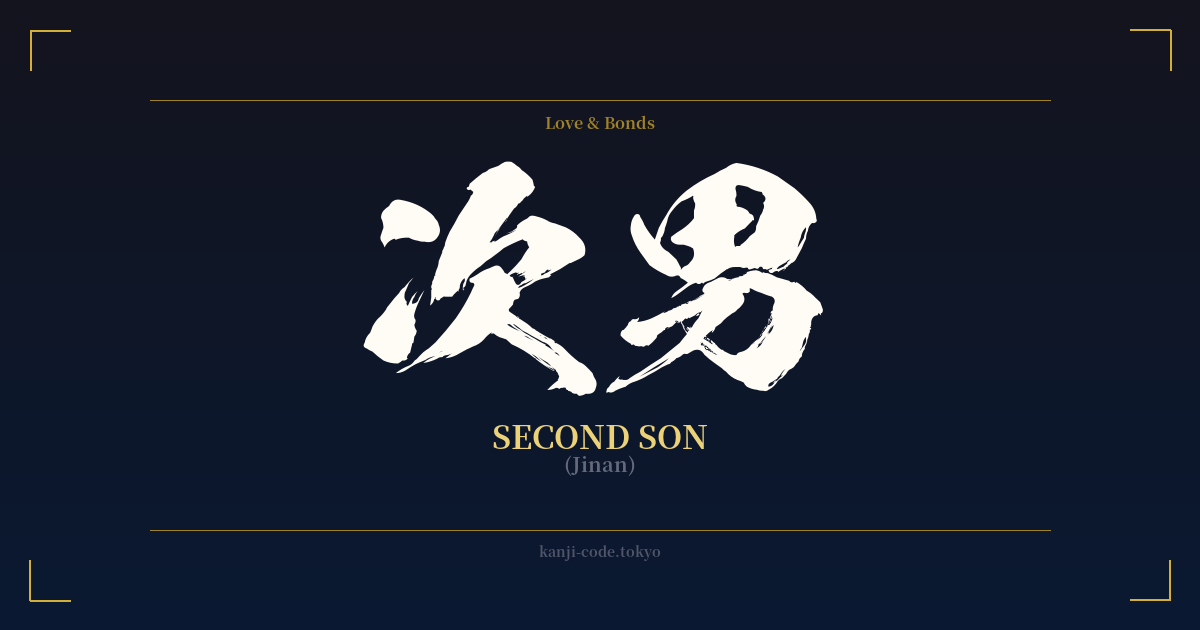
Historically, the social structure placed immense importance on the eldest son, or 長男 (Chōnan). The chōnan was the heir, responsible for carrying on the family name, inheriting the majority of the property and wealth, and caring for his parents in their old age. His path was largely predetermined by duty and expectation. The second son, or 次男 (Jinan), often served as a backup heir in case anything happened to the eldest.
The third son, the sannan, occupied a unique position. Freed from the heavy burdens of succession, he often had significantly more liberty to choose his own path. Younger sons might be adopted into other families that lacked an heir (a practice known as yōshi), start a branch family (bunke), or pursue a career outside the family trade. Many became samurai serving other lords, entered the Buddhist priesthood, or became artisans and scholars.
This freedom, however, also meant a lack of guaranteed inheritance or status. The term 三男坊 (sannanbō) is a colloquial expression that captures this nuance. While it can be used affectionately, it sometimes carries a slightly dismissive tone, implying a carefree, perhaps even spoiled or unreliable, person who didn't have to face the pressures of responsibility. He was the one who could afford to be a bit of a wanderer or a dreamer.
In modern Japan, the laws of primogeniture no longer apply, and inheritance is divided more equitably. However, the cultural echoes of this system remain. The terms chōnan, jinan, and sannan are still commonly used to identify birth order within a family. For someone who is a third son, the word 三男 is a direct and unambiguous statement of their identity and place within their family lineage. It can symbolize a sense of freedom from traditional expectations, a unique personal journey, or simply a factual acknowledgment of one's birthright.
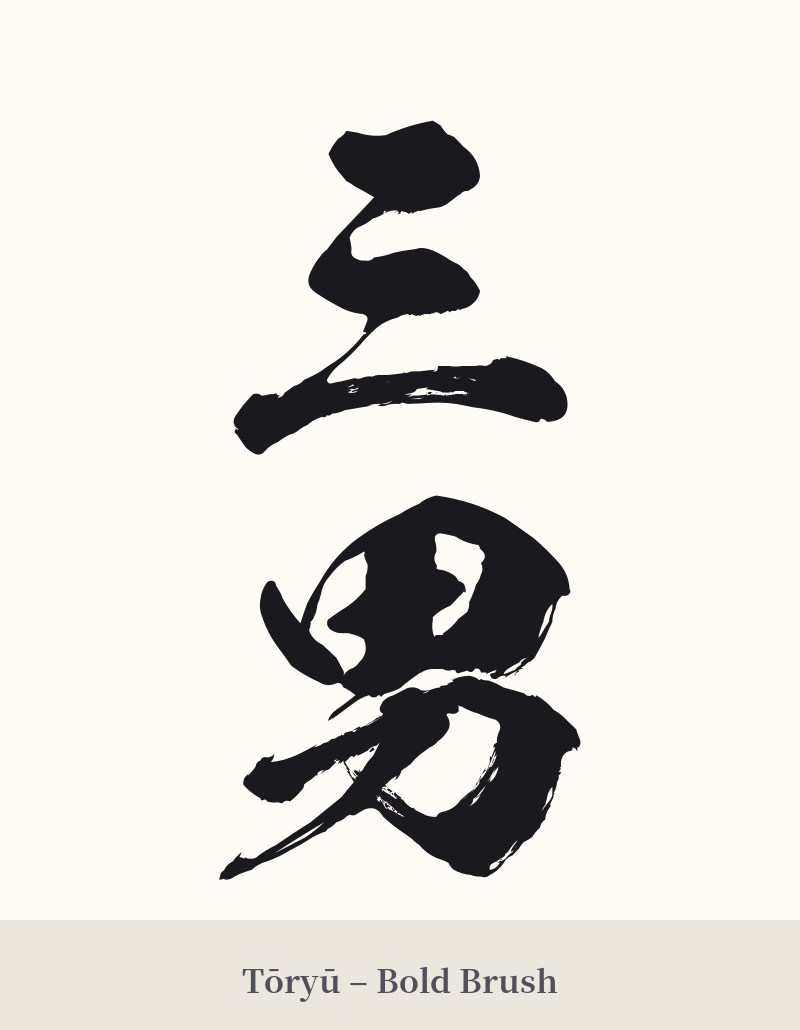
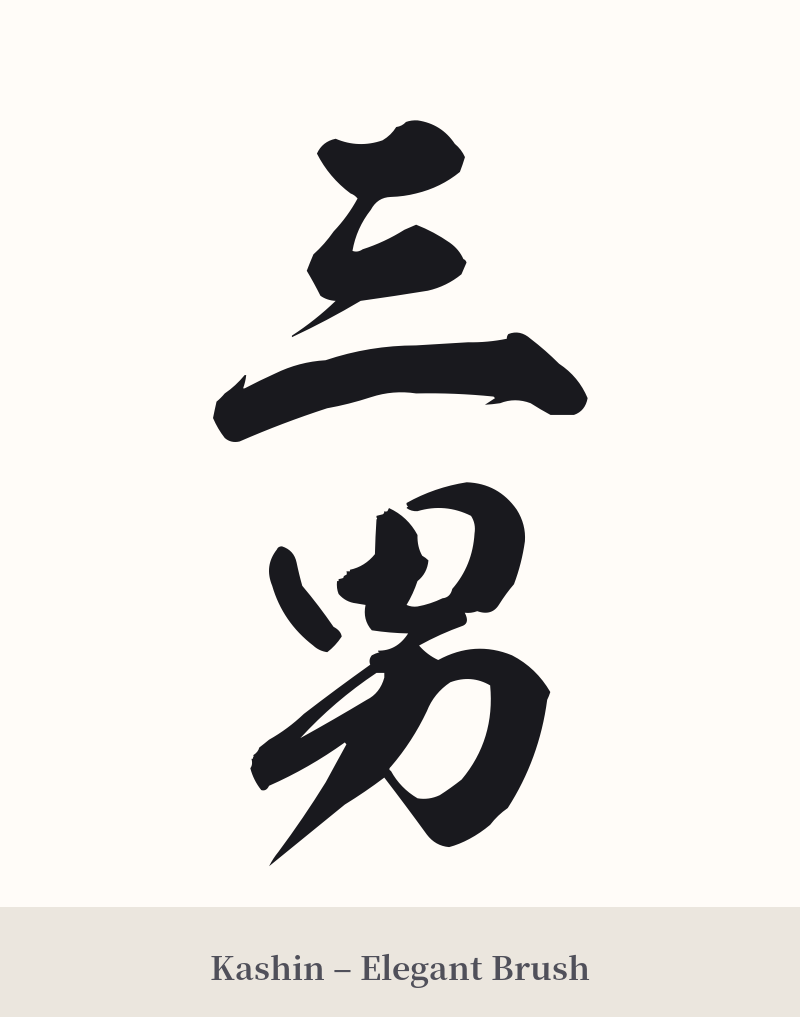
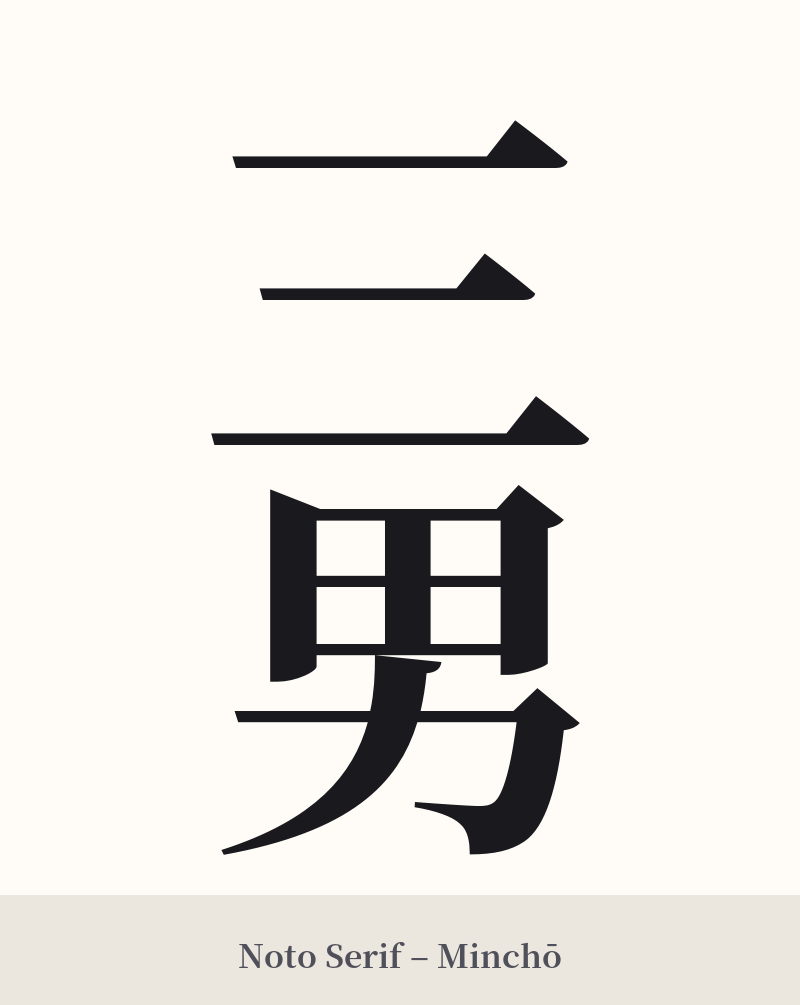
🖌️ Font Styles for 三男
The same kanji can look dramatically different depending on the calligraphy style. Choose a font that matches the mood you want for your tattoo or design.
🎨 Tattoo Suitability
📐 Tattoo Design Guide
Given the personal and literal nature of 三男 (Sannan), the design should reflect its simplicity and directness.
– Placement: This kanji is best suited for more personal, less conspicuous placements. Consider the inner forearm, the ribs, the back of the shoulder, or even behind the ear. These spots align with the idea of a personal identity marker rather than a bold public statement.
– Font Style: Clean, legible scripts are ideal. A standard block script (Kaisho) or a slightly more elegant Mincho font would work well, emphasizing the clarity of the characters. Overly complex or cursive styles (Sōsho) might feel incongruous with the word's straightforward meaning.
– Visual Tips: This is a design that benefits from minimalism. Let the two characters stand on their own, either horizontally (三男) or vertically. A vertical arrangement is classic for Japanese script and can create a nice visual flow. Avoid adding elaborate backgrounds or elements that could distract from the core meaning, unless it's part of a larger piece dedicated to family.
Comments