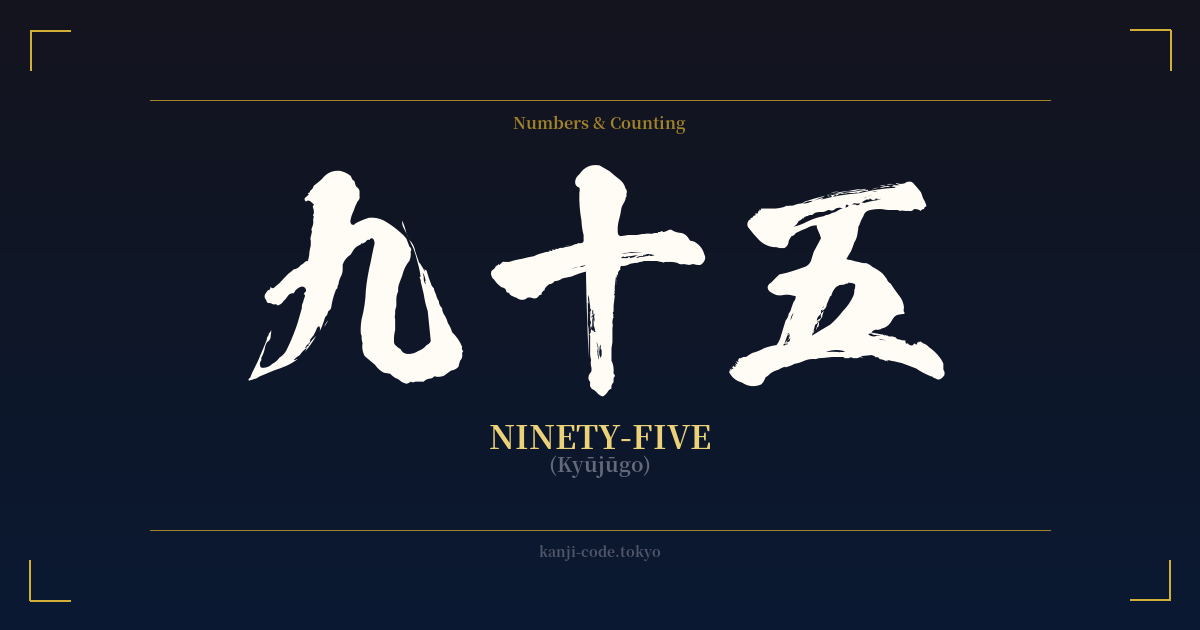
✍️ 九十五 (Kyūjūgo) — Cultural Context
The Japanese word for ninety-five, 九十五 (Kyūjūgo), is a perfect example of the logical and straightforward nature of the Japanese numbering system. It is constructed literally as 九 (kyū, nine) followed by 十 (jū, ten) and 五 (go, five). This translates to "nine tens plus five," a simple multiplicative and additive structure that is consistent across all numbers.
This contrasts with English, where words like "ninety" have evolved from older roots and don't explicitly contain the components "nine" and "ten." The Japanese system, borrowed from Chinese, is a model of clarity. Once you learn the characters for one through ten, and the characters for hundred, thousand, and so on, you can construct and read any number with ease.
The number 95 itself does not hold a major, overarching cultural significance in Japan in the way that numbers like seven (associated with luck) or four (associated with death) do. Its meaning is almost always literal. However, the individual components carry their own weight. The character 九 (kyū) is sometimes viewed with caution because its reading, "ku," is a homophone for 苦 (ku), meaning suffering or hardship. This is why you might not find a Room 9 or Floor 9 in some Japanese hospitals or hotels. Conversely, 五 (go) can have positive connotations, as its reading is part of the word ご縁 (go-en), which signifies a fateful bond or connection.
In the playful art of Japanese wordplay known as goroawase, numbers are used to create phonetic messages. While not a common association, 9-5 could be read as kyū-go, which sounds like 救護 (kyūgo), meaning "aid" or "rescue." This provides a potential layer of personal meaning for someone in a helping profession or who has experienced a significant rescue.
Ultimately, 九十五 is a number. Its power comes not from ancient mythology or deep-seated symbolism, but from the specific context a person brings to it. It could represent a birth year (1995), a significant age, or a personal milestone. In this way, its lack of inherent meaning makes it a blank canvas for personal stories.
🖌️ Font Styles for 九十五
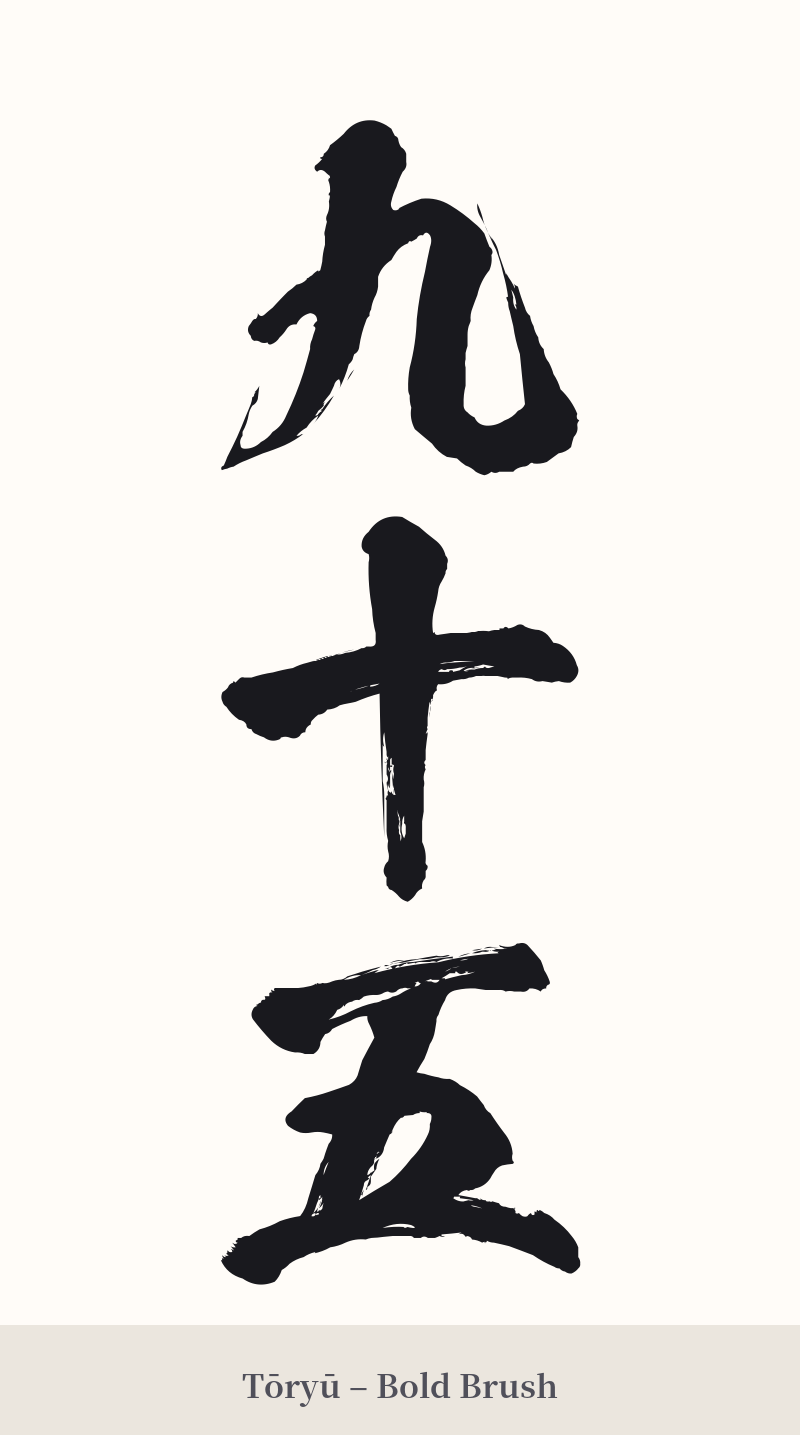
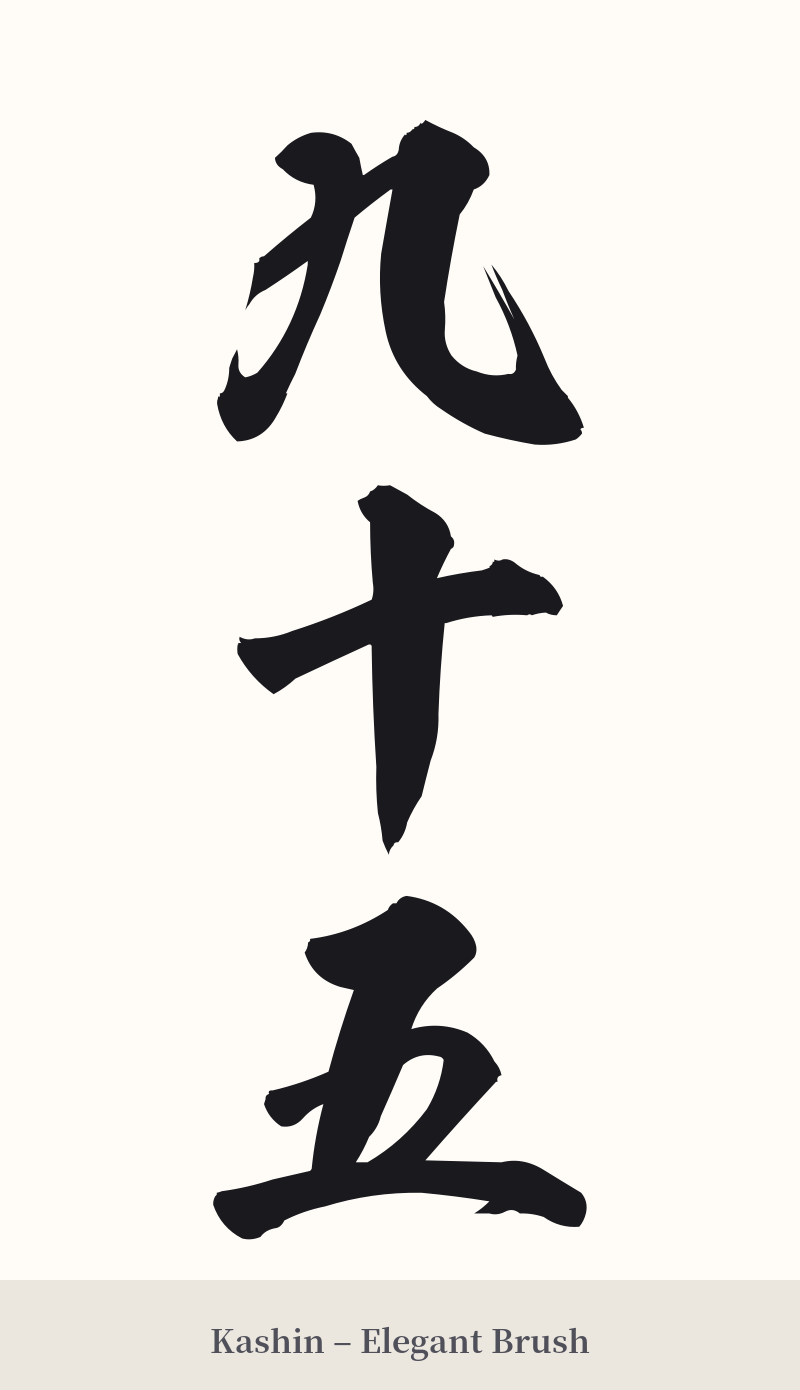
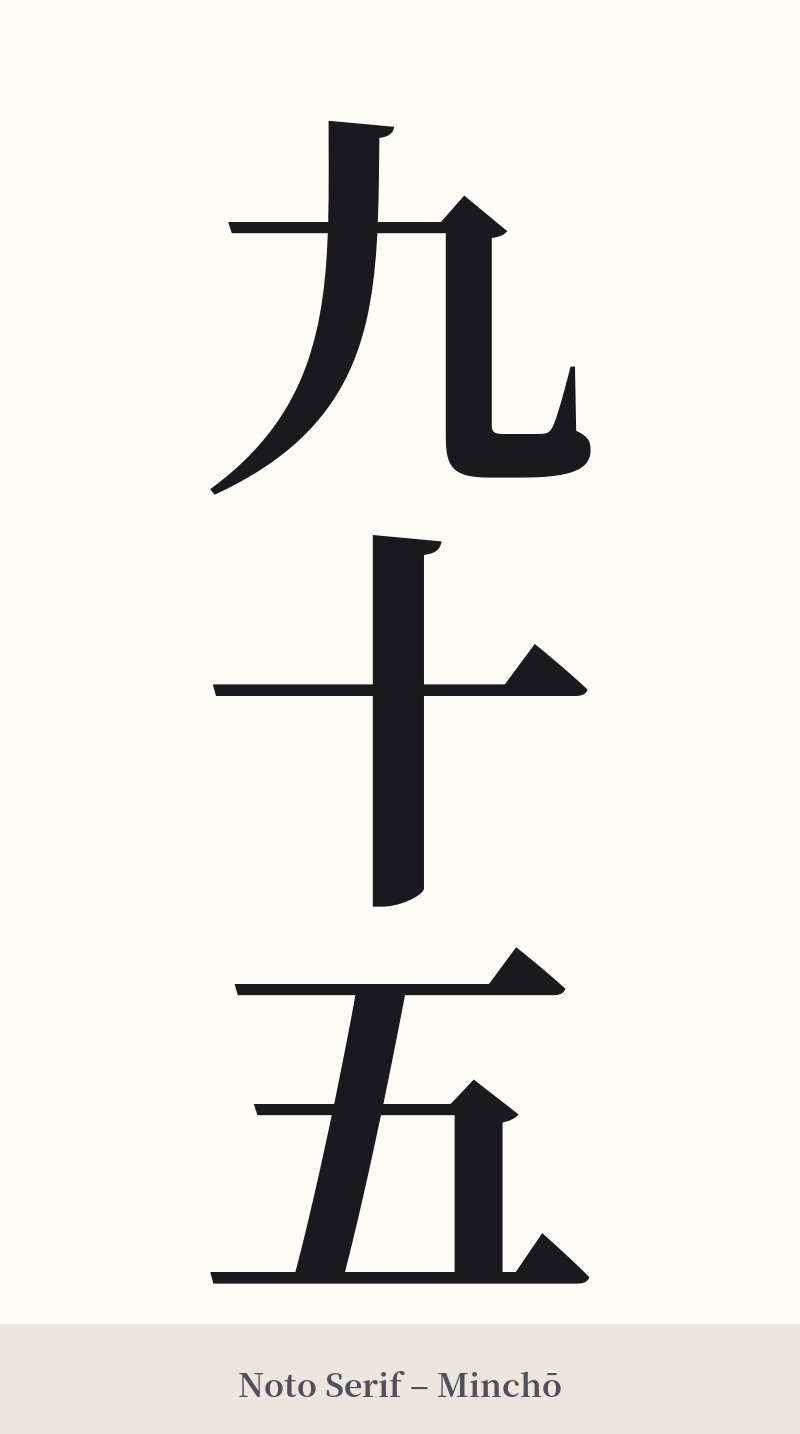
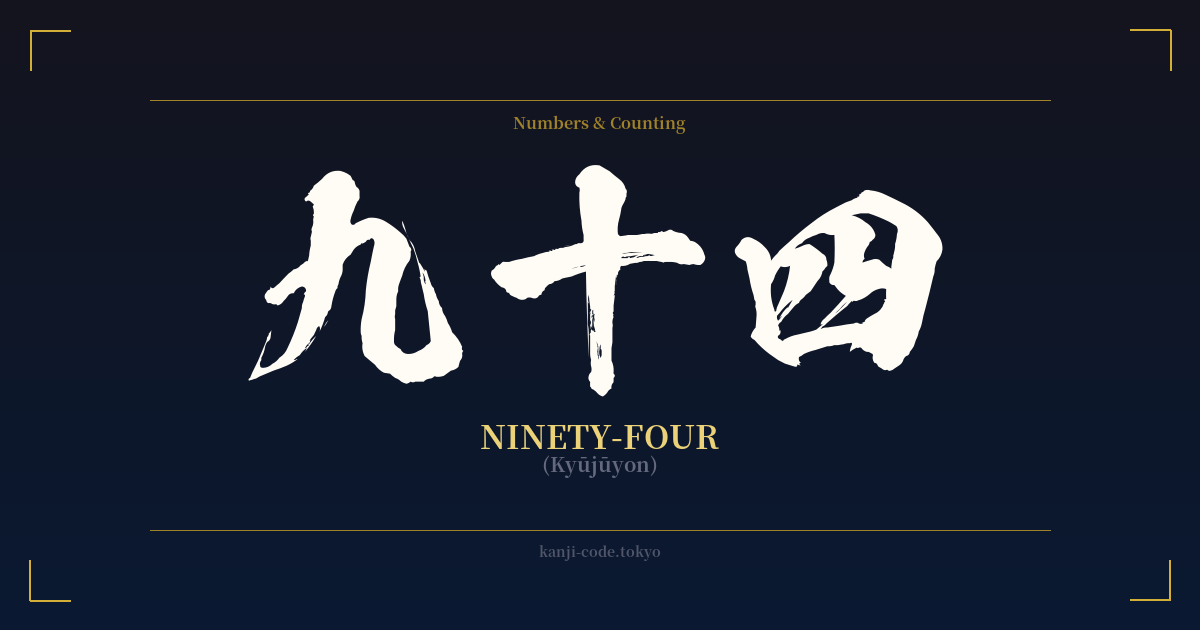
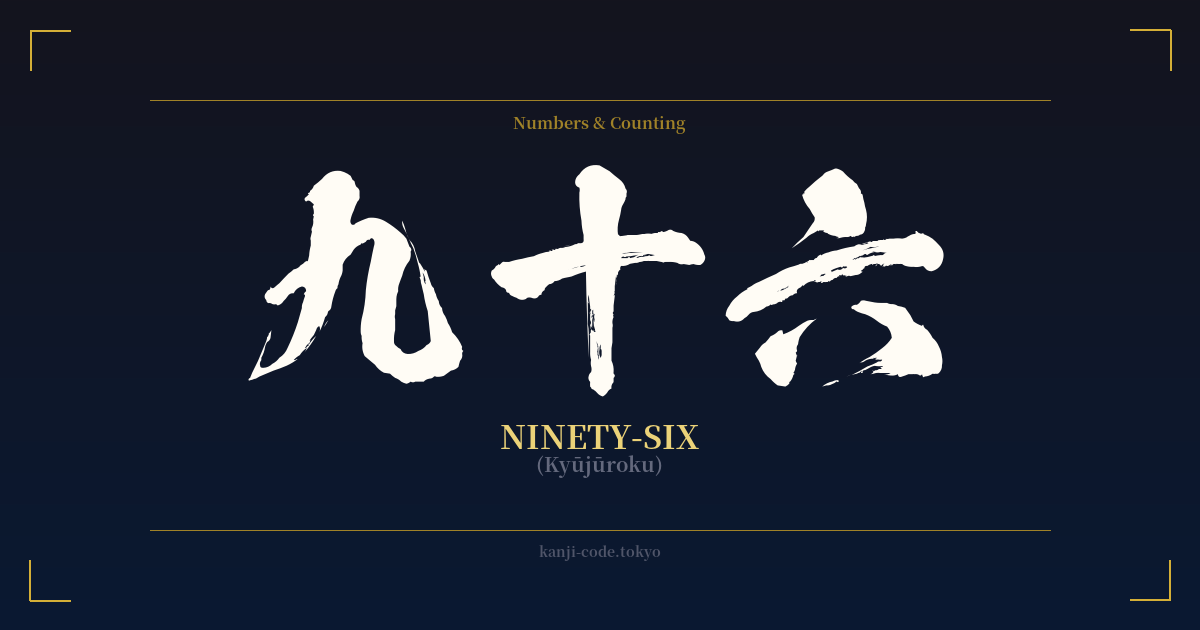
The same kanji can look dramatically different depending on the calligraphy style. Choose a font that matches the mood you want for your tattoo or design.
🎨 Tattoo Suitability
📐 Tattoo Design Guide
For a tattoo of 九十五, the design choices should emphasize its numerical and linear nature.
– Placement: Vertical alignment is the most traditional and aesthetically pleasing option for this three-character compound. It works exceptionally well on the forearm, calf, or along the spine, where it can follow the natural lines of the body.
– Font Style: A clean, crisp Kaisho (block) script will highlight the simplicity and clarity of the characters. For a more artistic and fluid feel, a Gyosho (semi-cursive) script can connect the characters in a subtle, elegant flow. A minimalist, modern san-serif style could also be effective if the number has a contemporary personal meaning.
– Visual Tips: Because the characters themselves are simple, consider the negative space around them. A skilled artist can use spacing to create a sense of balance and rhythm. Avoid overly ornate or complex styles, as this can detract from the straightforward nature of the word. If the number represents a specific event, you could subtly incorporate a related, small visual element nearby, but the kanji itself is best left clean.
Comments