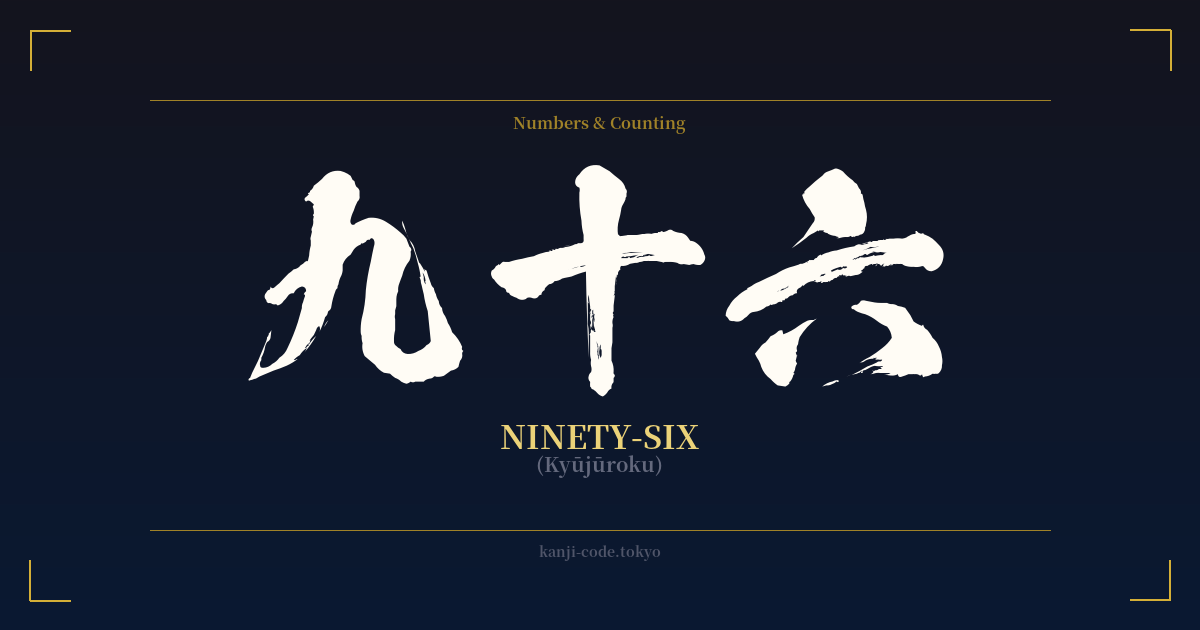
✍️ 九十六 (Kyūjūroku) — Cultural Context
The Japanese word for ninety-six, 九十六 (Kyūjūroku), is a straightforward and functional term constructed with logical simplicity. It combines the characters for nine (九), ten (十), and six (六). In the Japanese numbering system, larger numbers are built by multiplication and addition. Thus, 九十 (kyūjū) means 'nine-tens' or ninety, and adding 六 (roku), or six, creates the final number.
While the construction is simple, the cultural implications of using a number like ninety-six for a design are more complex. Unlike numbers such as seven (七), which is associated with luck, or four (四), which is feared for its phonetic similarity to 'death' (死), ninety-six holds no major traditional symbolic weight. It is simply a number, used for counting, measuring, and identifying, much like in English.
However, the most critical cultural aspect of this number lies in 'goroawase' (語呂合わせ), a form of Japanese wordplay where numbers are assigned phonetic values. In this system, 9 can be read as 'ku' and 6 as 'rō' or 'roku.' This allows the number 96 to be read as 'kurō' (苦労). The word 苦労 means hardship, toil, struggle, and suffering. It's a word heavy with negative connotations of difficulty and pain. Because of this, the number 96 is often consciously or subconsciously associated with struggle in Japan. This association makes it an exceptionally poor choice for anything meant to be auspicious or positive, such as a tattoo.
Beyond this negative wordplay, 九十六 is simply a functional number. You might see it in addresses, as a page number, or as part of a historical name, such as the 96th Emperor of Japan, Emperor Go-Daigo. Yet, it carries none of the mystique or philosophical depth of words like 'Bushido' or 'Kaizen.' Its beauty is purely in its logical construction and the calligraphic form of its individual characters, not in any hidden, profound meaning.
Therefore, while the kanji themselves are fundamental building blocks of the language, their combination into 'ninety-six' remains in the realm of the mundane. It serves as a perfect example of how not all kanji words are created equal in terms of symbolic power and suitability for artistic expression.
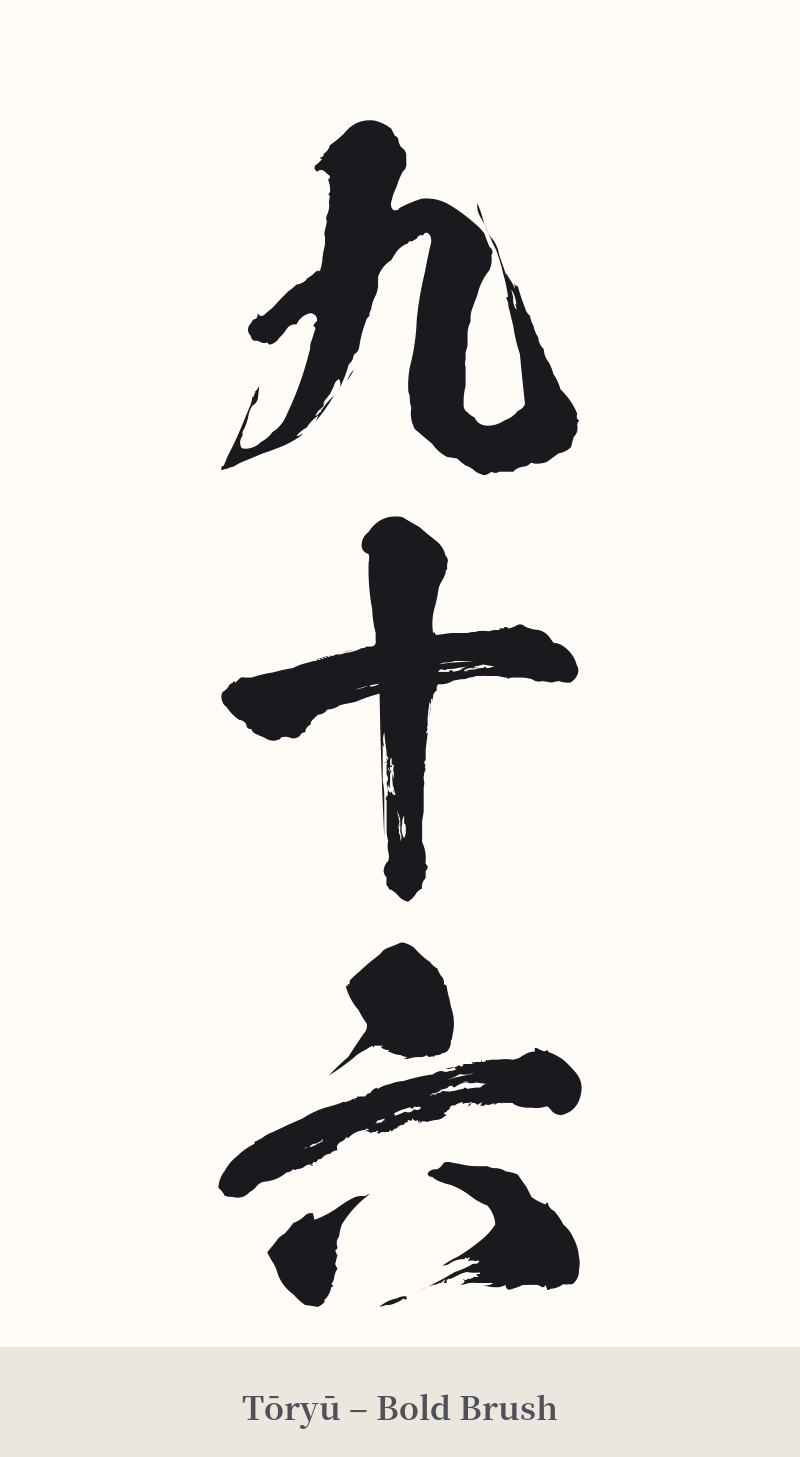
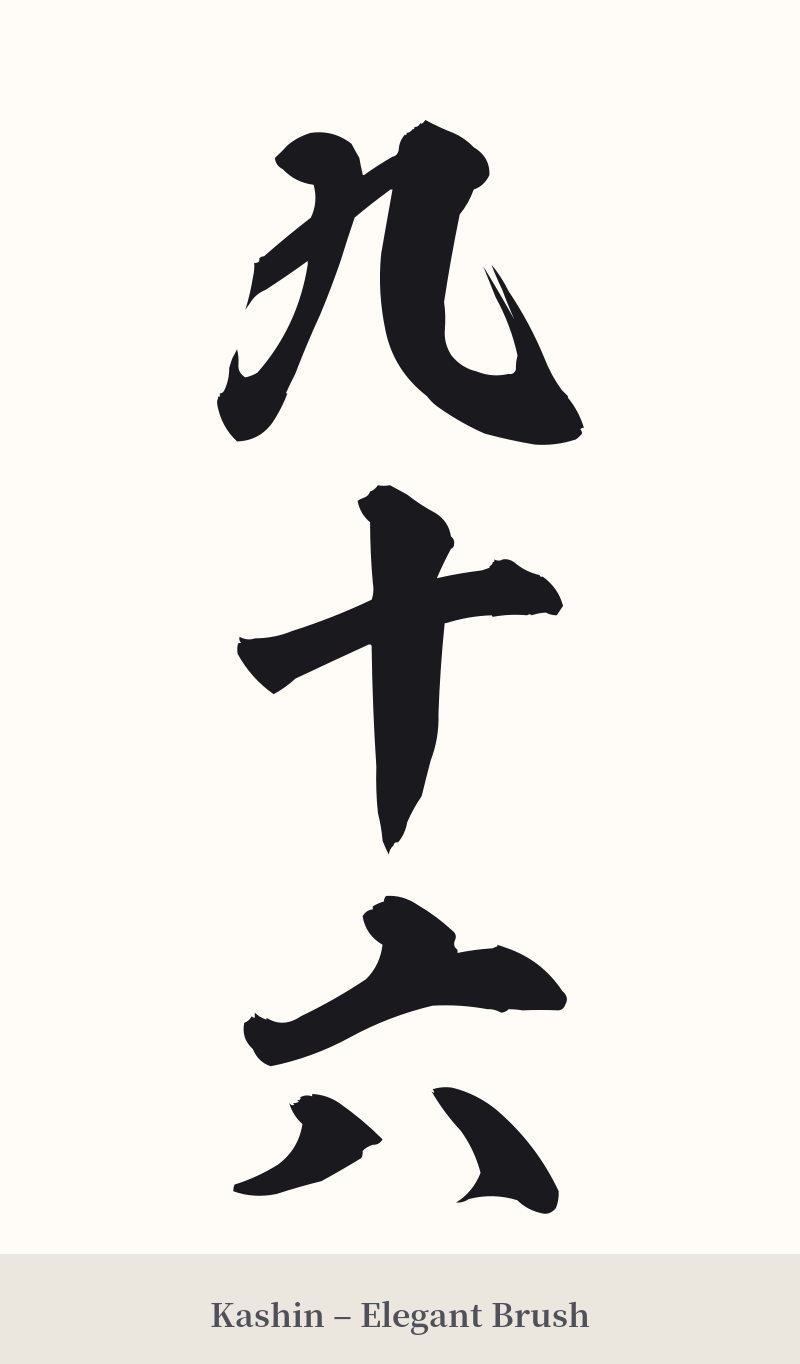
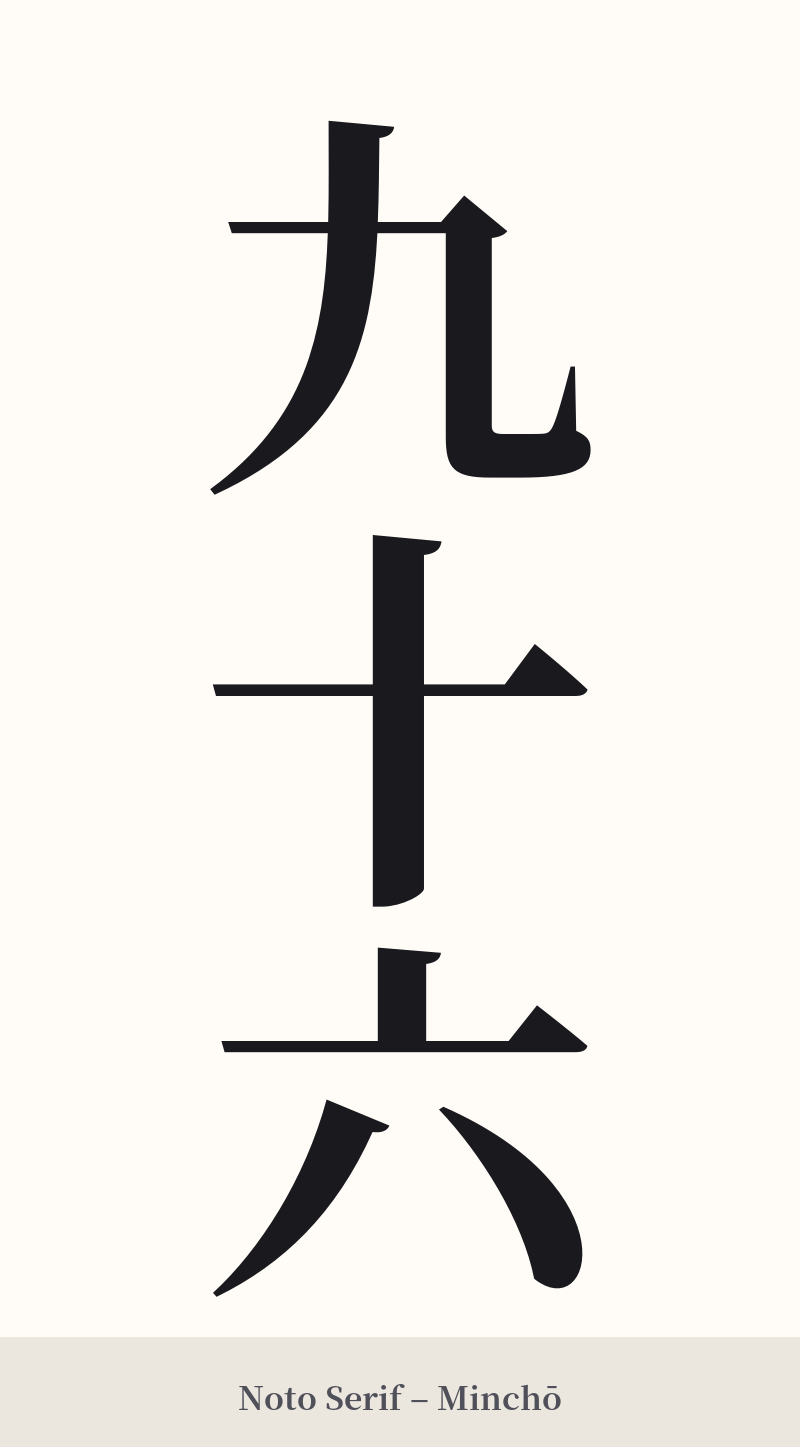
🖌️ Font Styles for 九十六
The same kanji can look dramatically different depending on the calligraphy style. Choose a font that matches the mood you want for your tattoo or design.
🎨 Tattoo Suitability
📐 Tattoo Design Guide
If you have a deeply personal and significant reason to use the number ninety-six, such as a birth year ('96) or a memorial date, it's still crucial to approach the design with care due to its potential negative reading. We generally advise against it, but if you are set on it, consider these guidelines:
– Context is Key: Do not get 九十六 as a standalone piece. Instead, incorporate it into a larger design that provides context and overrides the 'hardship' interpretation. For example, include it as part of a full date (e.g., 1996年) or embed it within an image that holds personal meaning.
– Placement: Because it's a personal number, consider a more private placement like the inner arm, ribs, or behind the ear. A large, prominent display of a simple number can look out of place and invites misunderstanding.
– Font Style: A clean, straightforward font is best. A simple Mincho (serif) or Gothic (sans-serif) style matches the functional nature of the word. An overly ornate or aggressive calligraphy style can look jarring and mismatched with the plainness of a number.
Comments