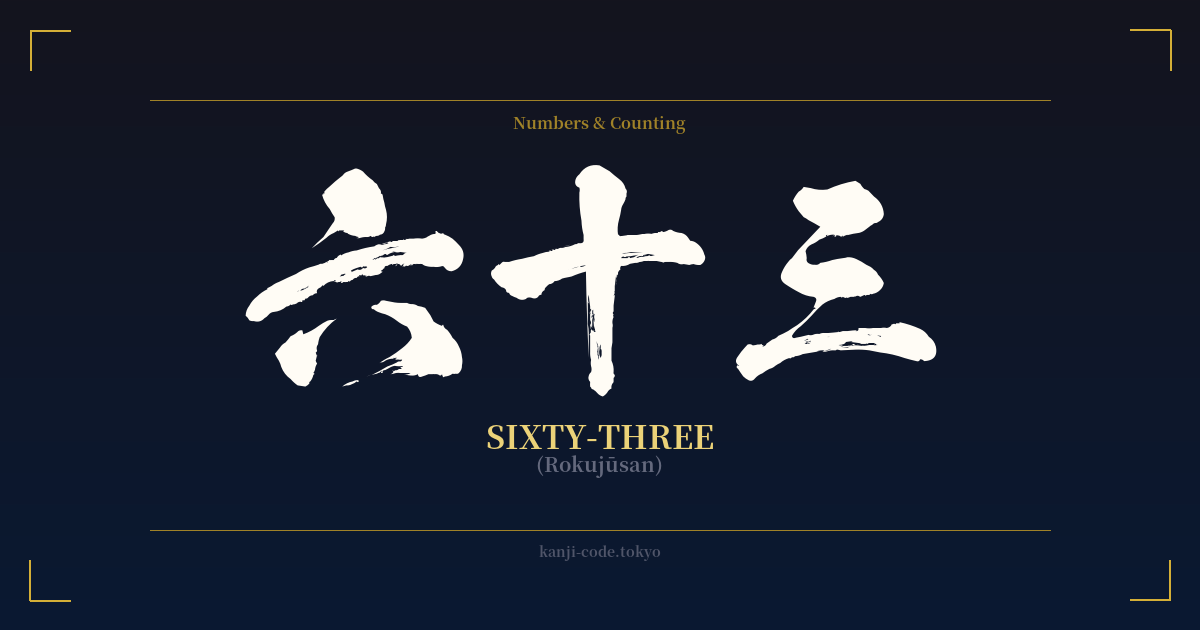
✍️ 六十三 (Rokujūsan) — Cultural Context
The Japanese word 六十三 (Rokujūsan) is the direct and literal representation of the number sixty-three. Unlike many kanji that carry layers of poetic, philosophical, or historical meaning, this compound is purely functional. It is constructed in a logical, mathematical way that is a hallmark of the Sino-Japanese numbering system.
The structure is a simple multiplication and addition: 六 (roku) means six, 十 (jū) means ten, and 三 (san) means three. Together, they form "six-tens-three," or 60 + 3, which equals 63. This straightforward system is used for all numbers in Japanese and provides a clear, unambiguous way to write them using kanji characters. While Arabic numerals (63) are common in modern, everyday Japanese life, kanji numbers are still essential for formal documents, traditional contexts, and for their aesthetic value in vertical writing.
In Japanese culture, the number 63 itself does not hold any widespread special significance, superstition, or symbolism. It doesn't carry the auspicious connotations of numbers like eight (八), which sounds like "prosperity," nor the inauspicious weight of four (四), which sounds like "death." It is simply a number, occupying a neutral space in the cultural lexicon.
Therefore, the meaning of 六十三 is most often found not in culture, but in personal experience. Someone might choose this kanji to commemorate their 63rd birthday, an important anniversary, a jersey number, or any other event tied specifically to this number. It becomes a personal marker, a coded message whose significance is known primarily to the bearer.
The act of choosing kanji for a number over Arabic numerals is an aesthetic one. It connects the number to a long tradition of calligraphy and art, transforming a simple quantity into a piece of design with visual harmony and cultural roots. While it may not tell a deep story to outsiders, its clean lines and logical composition give it a quiet dignity.
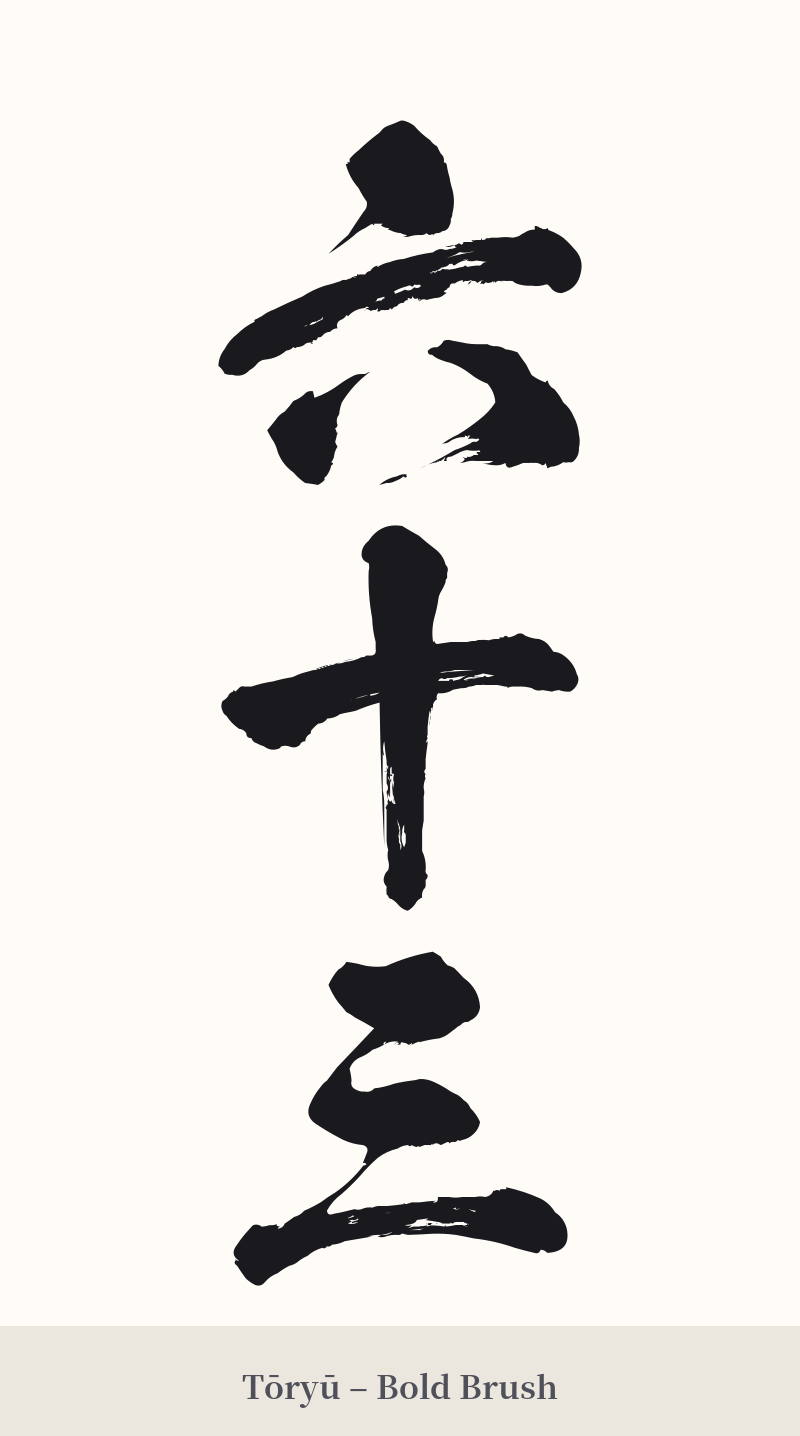
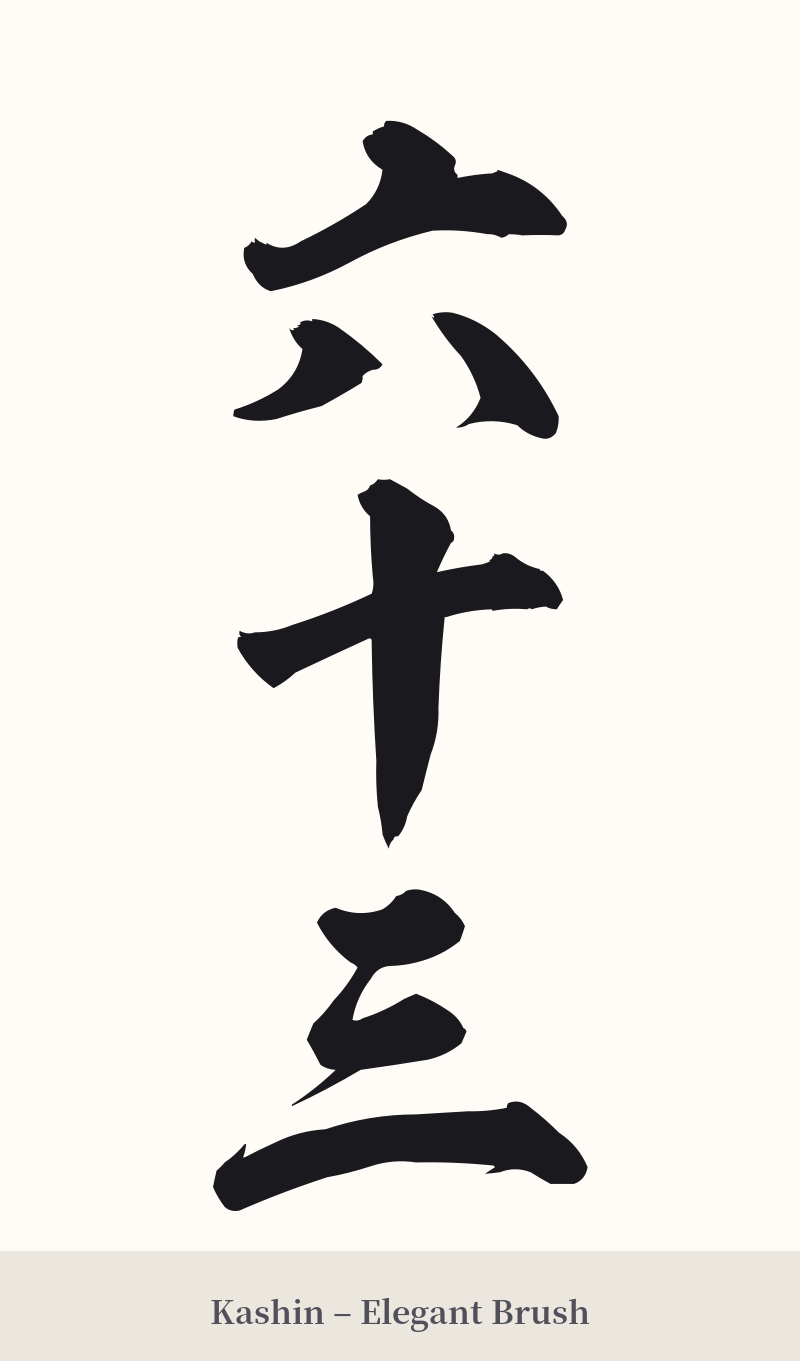
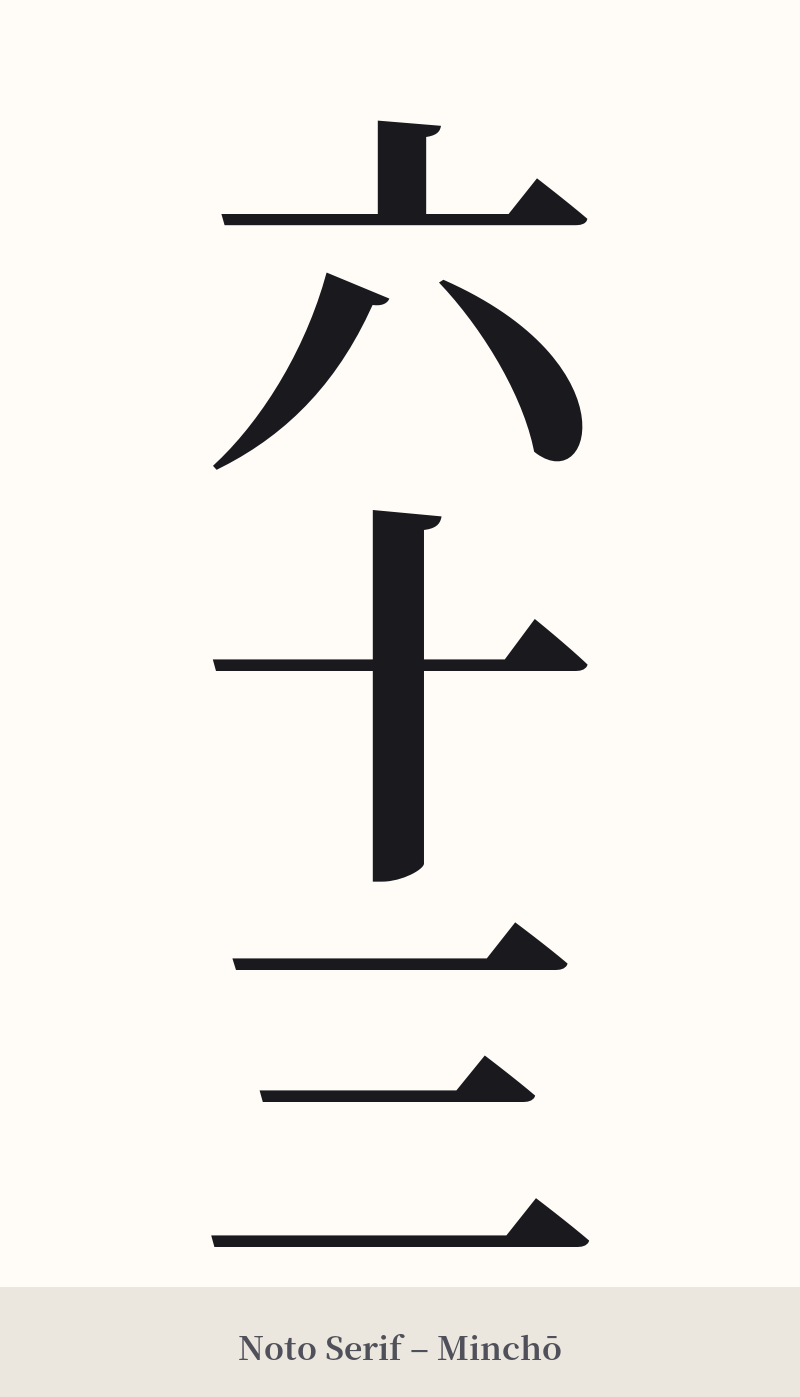
🖌️ Font Styles for 六十三
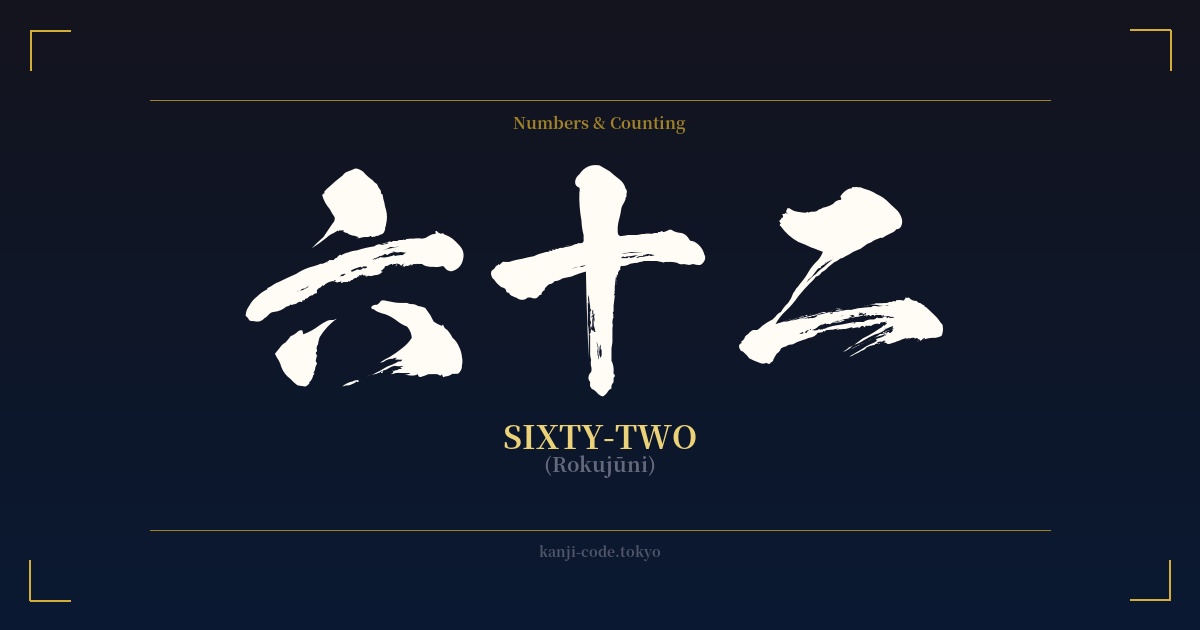
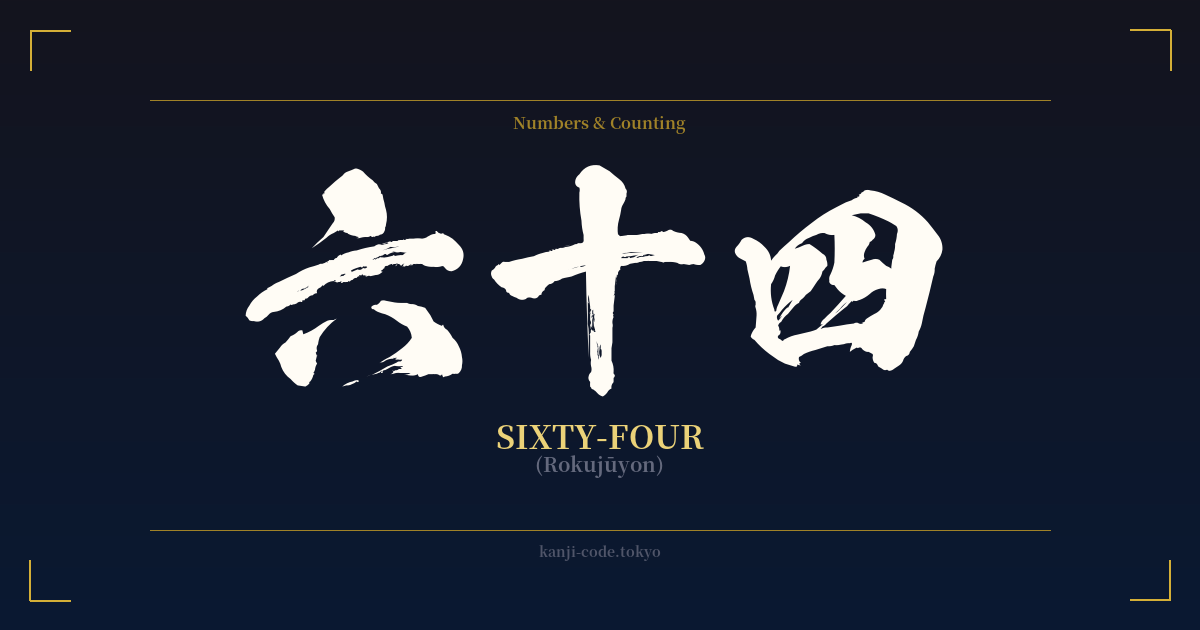
The same kanji can look dramatically different depending on the calligraphy style. Choose a font that matches the mood you want for your tattoo or design.
🎨 Tattoo Suitability
📐 Tattoo Design Guide
For a tattoo of 六十三, the design's success heavily relies on its composition and font style, as the characters themselves are quite simple. A vertical arrangement is highly recommended, as it aligns with traditional Japanese writing and creates a more elegant, flowing design. Placements like the spine, forearm, or along the calf work well for this orientation.
Consider these stylistic approaches: – Calligraphic Styles: A dynamic, semi-cursive (gyōsho) or cursive (sōsho) brushstroke style can inject energy and artistry into the simple characters, making them feel less like a mere label. – Mincho Style: For a more classic and refined look, a Mincho (serif) font provides sharp, elegant lines that feel both traditional and timeless. This style emphasizes the architectural beauty of the characters. – Gothic/Block Style: A bold, modern block font can give the number a strong, impactful presence. This works well if the number 63 represents a source of strength or a significant achievement.
Because the meaning is personal, you could also incorporate a small, related visual element. For example, if it represents a 63rd birthday, a single cherry blossom petal could be placed near the kanji to symbolize the beauty of a particular year.
Comments