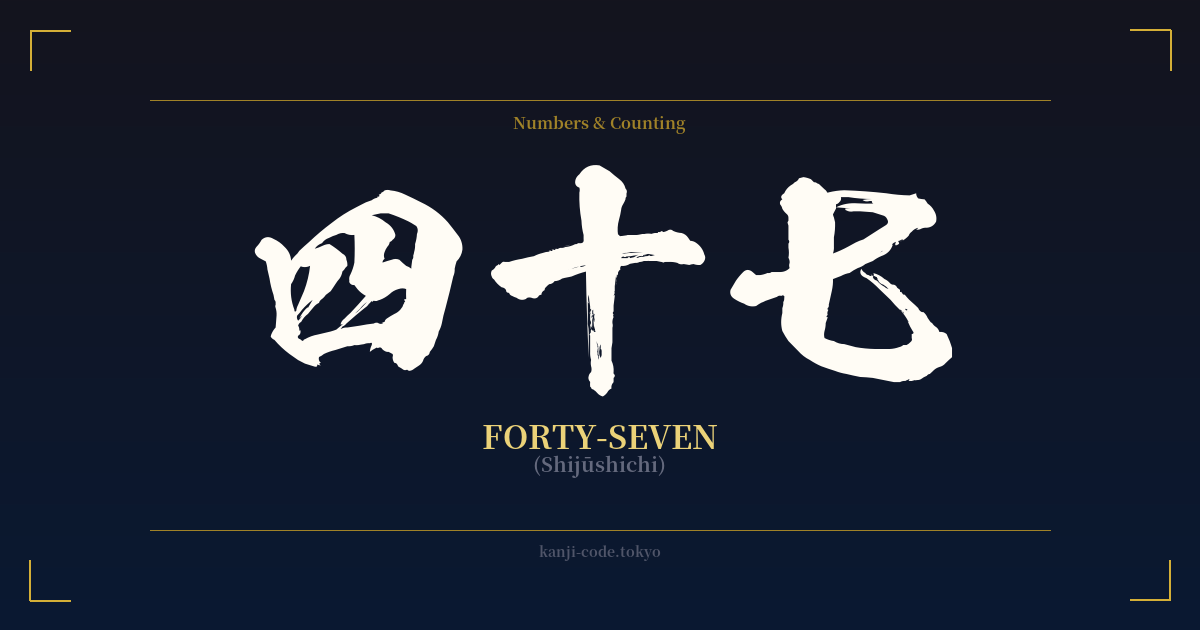
✍️ 四十七 (Shijūshichi) — Cultural Context
In Japan, the number forty-seven, written as 四十七 (Shijūshichi), transcends its simple numerical value. It is inextricably linked to one of the nation's most celebrated and powerful historical tales: the story of the Forty-seven Rōnin. This event, known as the Akō Incident (赤穂事件, Akō Jiken), has become a cornerstone of Japanese identity, embodying the ultimate ideals of loyalty, honor, and sacrifice.
The story began in 1701 when Lord Asano Naganori of the Akō domain was provoked into drawing his sword against a powerful court official, Kira Yoshinaka, within the walls of Edo Castle. This act, a grave breach of etiquette, led to Asano being sentenced to commit seppuku (ritual suicide), while Kira went unpunished. As a result, Asano's domain was confiscated, and his samurai retainers became masterless—or rōnin.
Forty-seven of these rōnin, led by Ōishi Kuranosuke, made a secret pact to avenge their fallen master. For nearly two years, they patiently plotted, dispersing and living as disgraced men to lull their enemies into a false sense of security. Ōishi himself pretended to descend into a life of debauchery, all while meticulously planning the attack.
On a snowy night in December 1702, the forty-seven loyal retainers launched a surprise assault on Kira's mansion in Edo. They successfully fought their way through his guards, captured him, and offered him the chance to die honorably by seppuku. When he refused, they took his head and marched across the city to lay it on their master's grave at Sengaku-ji temple.
Having fulfilled their duty, they turned themselves in to the authorities. The shogunate, faced with a difficult decision—they had illegally carried out a vendetta but had acted according to the warrior code of loyalty—sentenced them all to commit seppuku. This was considered an honorable death, and it cemented their status as heroes. Their graves at Sengaku-ji temple remain a popular site of pilgrimage to this day.
Because of this enduring legacy, immortalized in countless kabuki plays, bunraku puppet shows, and films under the title Chūshingura (The Treasury of Loyal Retainers), the number 四十七 is not just a count. It is a powerful symbol of bushidō, the warrior's code, representing unwavering loyalty to a cause, the importance of honor over life, and the perseverance to see a difficult duty through to the end.
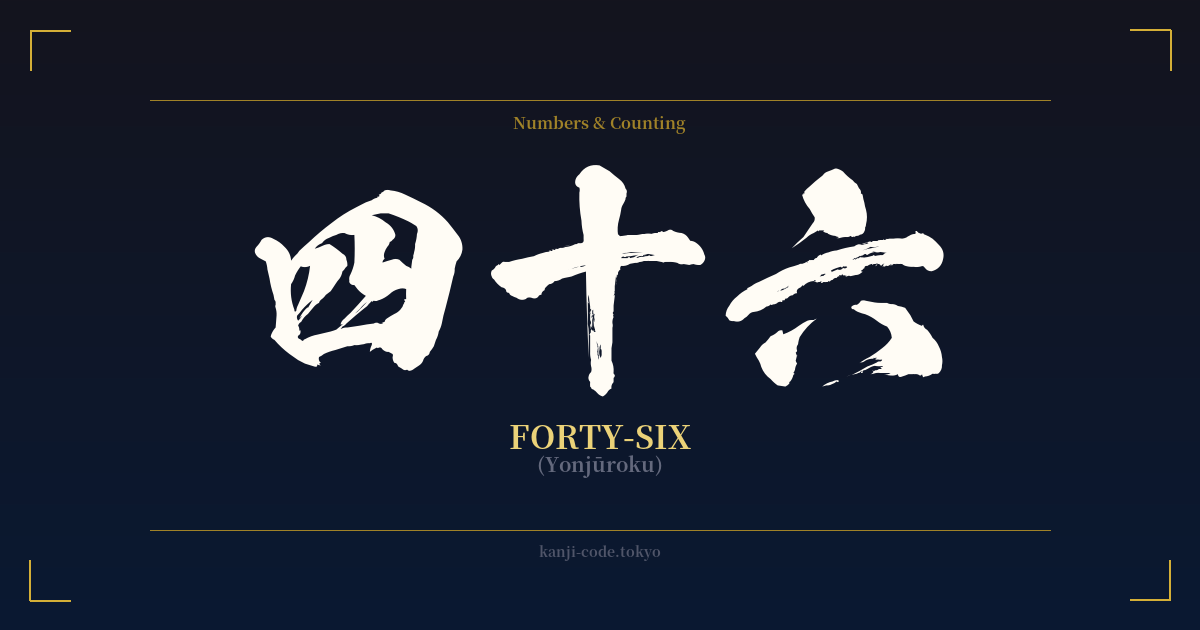
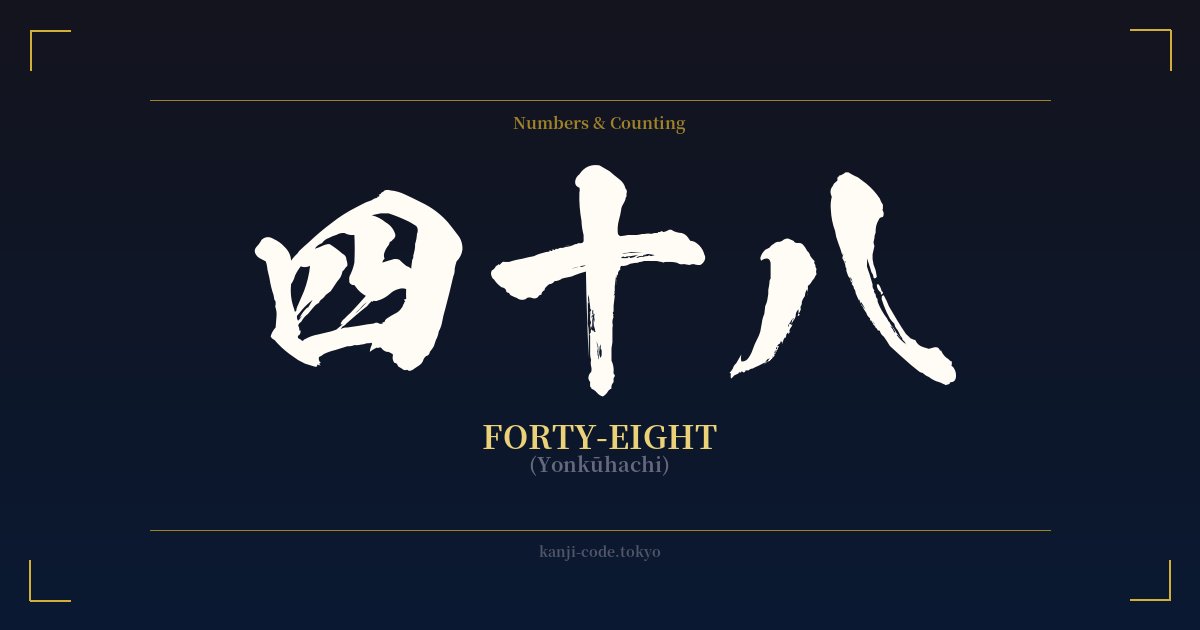
🖌️ Font Styles for 四十七
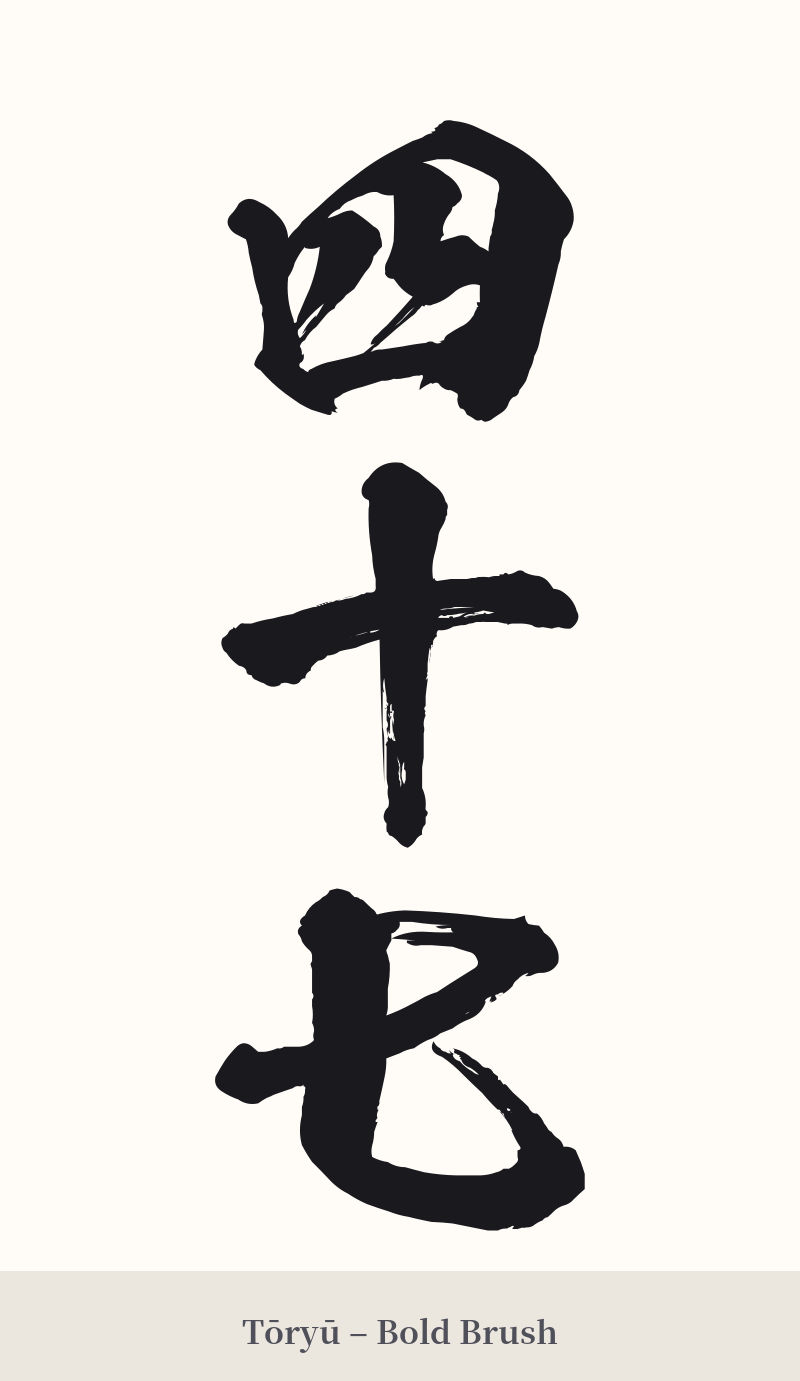
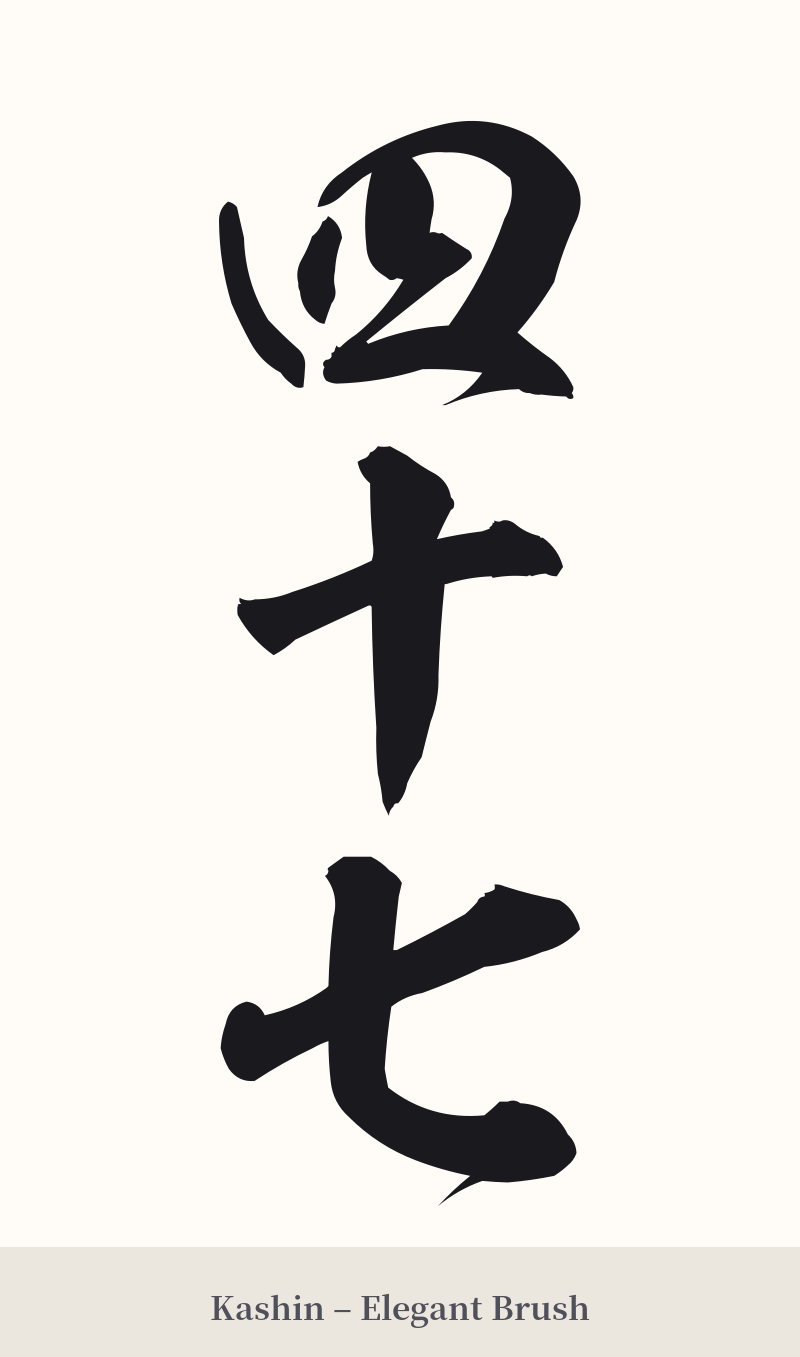
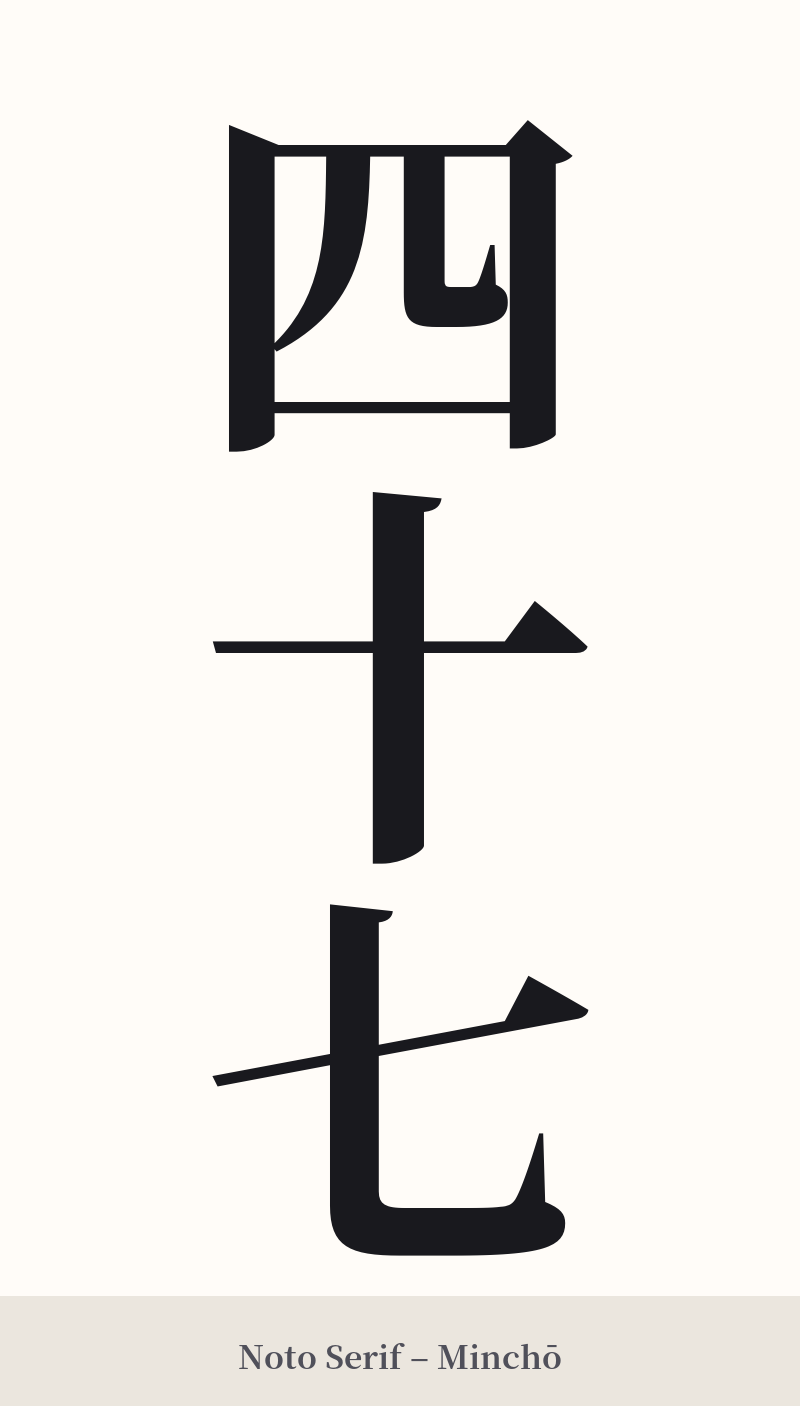
The same kanji can look dramatically different depending on the calligraphy style. Choose a font that matches the mood you want for your tattoo or design.
🎨 Tattoo Suitability
📐 Tattoo Design Guide
A tattoo of 四十七 is a statement of respect for the ideals of the 47 Ronin. The design should reflect the solemnity and historical weight of the story.
– Alignment: A vertical orientation is strongly recommended. This is the traditional way of writing in Japanese and evokes the look of historical scrolls, banners, or the grave markers at Sengaku-ji temple.
– Placement: For a vertical design, the forearm, calf, or along the spine are excellent placements that allow the characters to flow naturally. A horizontal design could work across the chest or upper back.
– Font Style: The font is key to conveying the right mood. A strong, classic calligraphy script (shodō) is ideal. Consider a 'kaisho' (block script) for clarity and gravity, or a slightly more fluid 'gyōsho' (semi-cursive script) to add a sense of action and emotion. Avoid overly modern or stylized fonts that would detract from the historical feel.
– Complementary Elements: While the three kanji are powerful enough to stand alone, they can be paired with related imagery. Common additions include the Asano clan's 'kamon' (family crest) of crossed hawk feathers, falling cherry blossoms to symbolize the samurai's transient life, or a subtle background of a snowy landscape to reference the night of the raid.
Comments