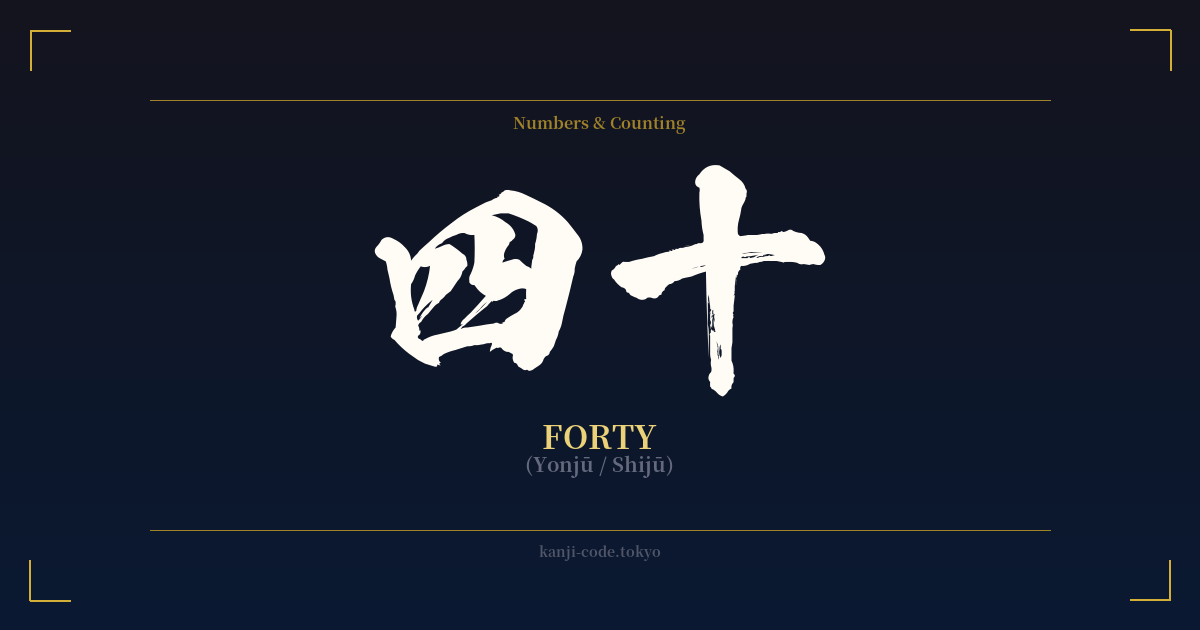
✍️ 四十 (Yonjū / Shijū) — Cultural Context
The kanji compound 四十 combines 'four' (四) and 'ten' (十) to logically form the number 'forty'. While its construction is straightforward, its pronunciation and cultural weight are more complex. It has two primary readings: Yonjū and Shijū.
In modern, everyday Japanese, Yonjū is the more common and preferred pronunciation. This is largely due to a linguistic superstition known as 'imi kotoba' (忌み言葉), or taboo words. The reading for four, 'shi' (シ), is a homophone for death (死). To avoid this unlucky association, the native Japanese reading 'yon' is often substituted, making Yonjū a more neutral and comfortable way to say forty.
The reading Shijū, however, is far from obsolete. It carries a more classical, literary, and philosophical weight, primarily due to its connection with the Chinese philosopher Confucius. In his Analects, Confucius outlines his own spiritual and intellectual journey through life's stages. He famously stated, 「四十にして惑わず」 (shijū ni shite madowazu), which translates to, "At forty, I had no doubts."
This single phrase has profoundly shaped the cultural perception of the age of forty in East Asia, including Japan. The milestone is known as 'fuwaku' (不惑), literally 'no doubts' or 'unperplexed'. It represents a point in life where one has gained enough wisdom, experience, and self-awareness to navigate the world with a firm, unwavering heart. It's an age of conviction, not confusion.
On a more mundane level, the number forty also appears in common Japanese medical vocabulary. The term 'shijūkata' (四十肩), literally "forty-year-old shoulders," is the common name for adhesive capsulitis, or a frozen shoulder, an ailment that often affects people in middle age. Similarly, 'gojūkata' (五十肩), or "fifty-year-old shoulders," refers to the same condition, acknowledging it can strike later as well. This embeds the number directly into the physical experience of aging.
Therefore, 四十 is more than just a number. It exists on a spectrum from the pragmatic (a simple count) to the profound (a philosophical milestone). It marks a pivotal transition from the turbulence of youth to the settled wisdom of maturity, a concept deeply ingrained in Japanese cultural consciousness.
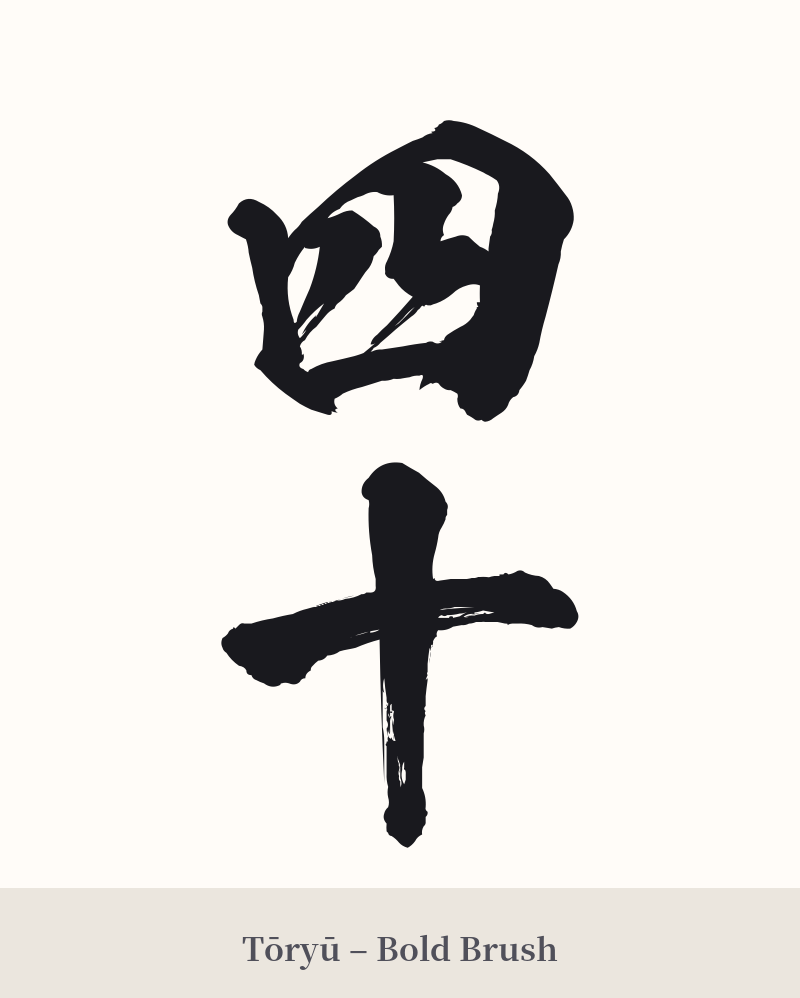
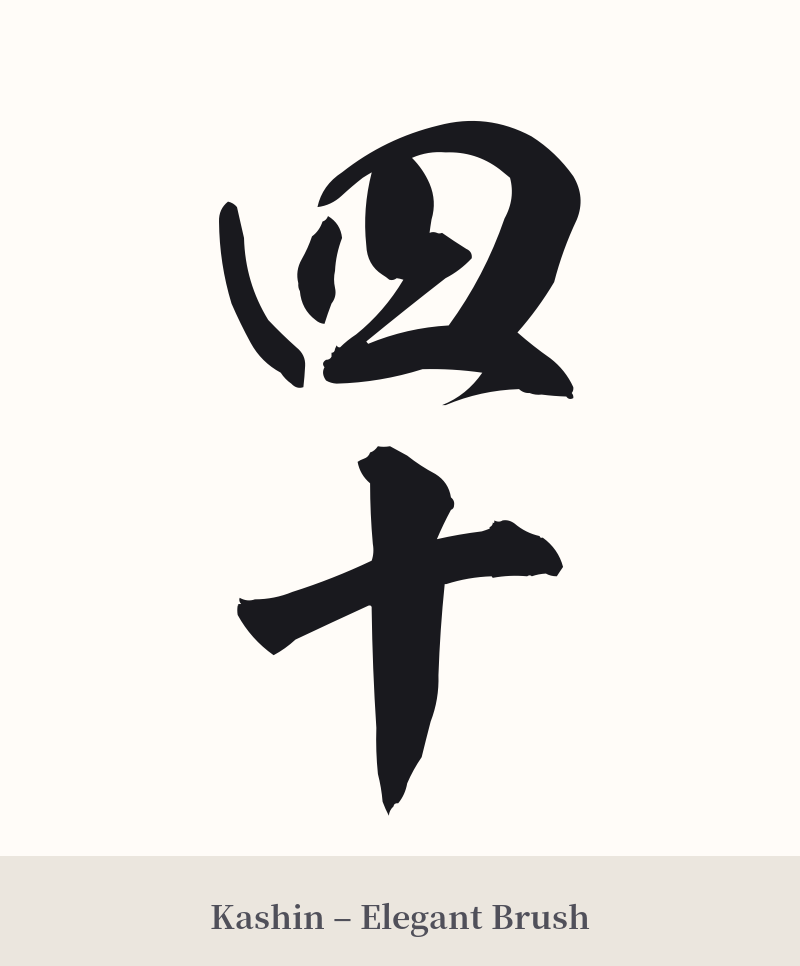
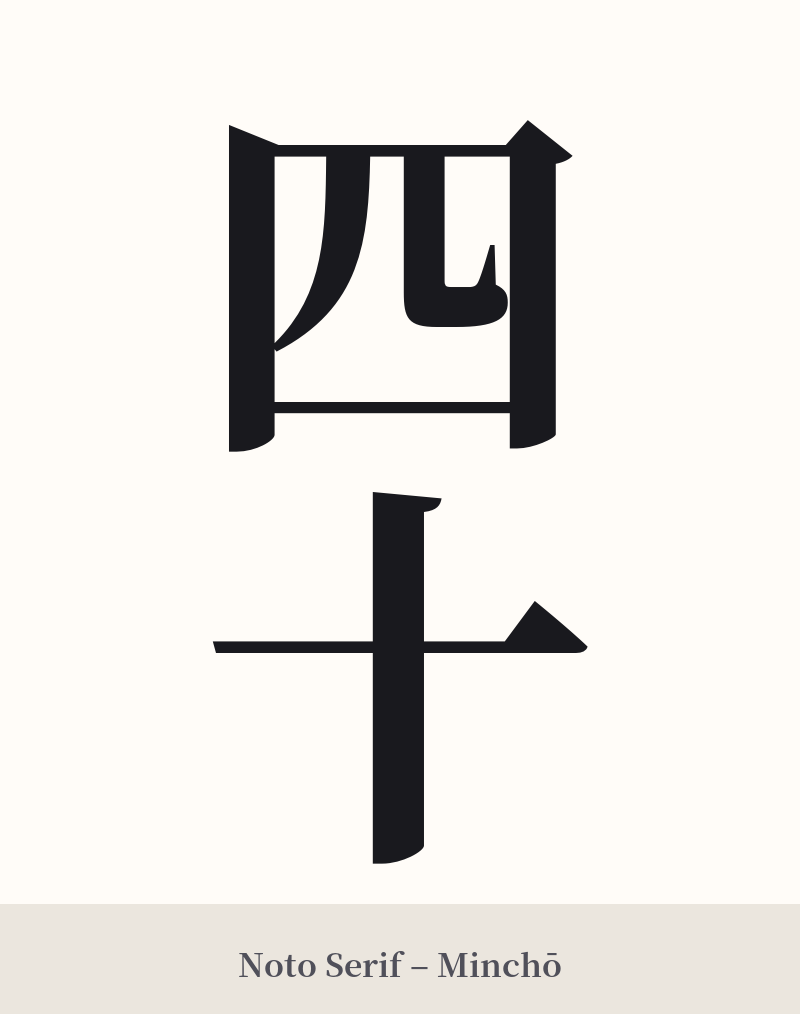
🖌️ Font Styles for 四十
The same kanji can look dramatically different depending on the calligraphy style. Choose a font that matches the mood you want for your tattoo or design.
🎨 Tattoo Suitability
📐 Tattoo Design Guide
Due to its simplicity, 四十 works best as a small, minimalist tattoo. Its clean, geometric shapes can feel lost or empty if rendered too large on their own.
– Placement: Consider discreet areas like the inner wrist, behind the ear, on the ankle, or along the collarbone. It can also be integrated into a larger design, such as a significant date or as part of a numerical sequence.
– Style: A clean, crisp Kaisho (block) or Mincho (serif) font emphasizes its straightforward nature. For a touch more personality, a subtle Gyosho (semi-cursive) script can add a bit of flow without obscuring the simple characters.
– Orientation: It looks balanced both horizontally (四十) and vertically. The vertical orientation tends to have a more traditional Japanese aesthetic and can fit well along the spine or forearm.
Comments