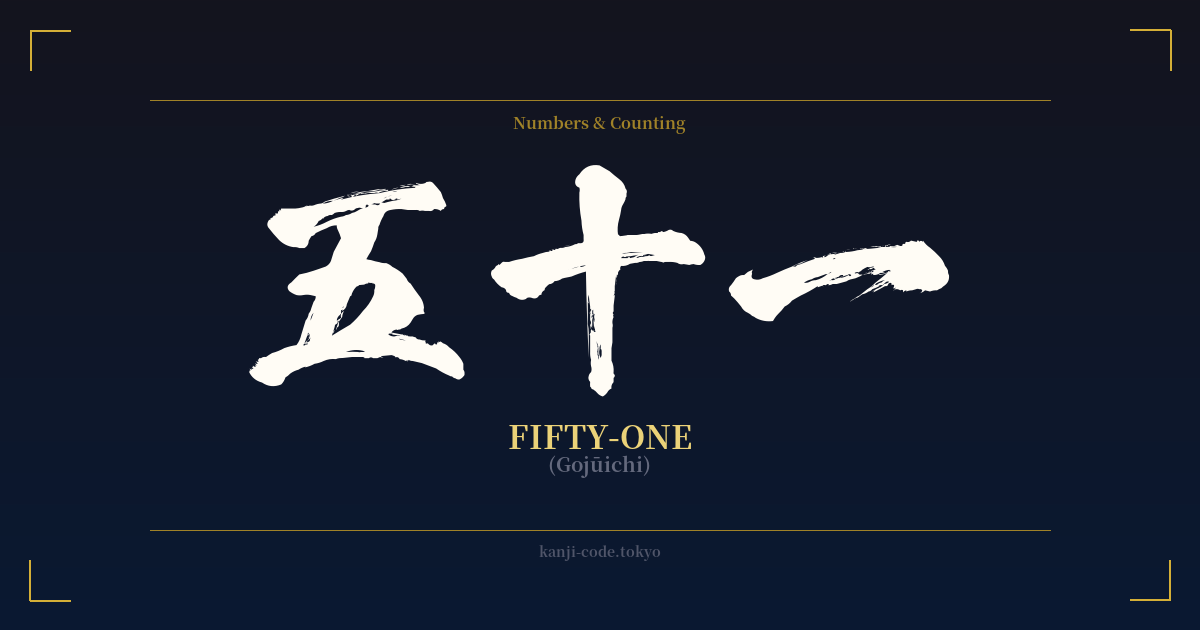
✍️ 五十一 (Gojūichi) — Cultural Context
The Japanese word for fifty-one, 五十一 (Gojūichi), is a perfect example of the logical and systematic nature of the kanji-based counting system. Unlike English, which has unique words like 'eleven' or 'twenty', Japanese builds its numbers with straightforward, mathematical precision. The word is composed of three characters: 五 (go – five), 十 (jū – ten), and 一 (ichi – one). Read together, they literally mean 'five tens and one', a direct construction that makes learning to count in Japanese quite intuitive once you know the basic numbers one through ten.
In Japanese culture, numbers are not just for counting; they can carry significant meaning, with some being lucky (like seven and eight) and others unlucky (like four and nine). The number fifty-one, however, does not hold any widespread cultural significance, either positive or negative. It is a neutral, everyday number, used for everything from prices and ages to addresses and measurements. Its primary identity is purely functional.
While kanji are the traditional characters for numbers, you will also see Arabic numerals (51) used extensively in modern Japan, especially in horizontal text, on digital displays, and for prices in stores. Kanji numerals, known as 'daiji' (大字) in their more complex forms (e.g., 壱, 弐, 参), are often reserved for formal documents, legal contracts, and banknotes. This is a traditional practice to prevent forgery, as the simple characters for one, two, and three (一, 二, 三) could easily be altered by adding a single stroke. The standard form, 五十一, is common in vertical writing, such as in novels, traditional letters, and artistic calligraphy.
For someone considering this number for a personal reason, its lack of cultural baggage can be an advantage. It is a blank slate. Its meaning is not dictated by centuries of folklore or superstition but is instead defined entirely by the individual. Whether it represents a 51st birthday, a significant year, or an athletic number, its story is yours alone to tell.
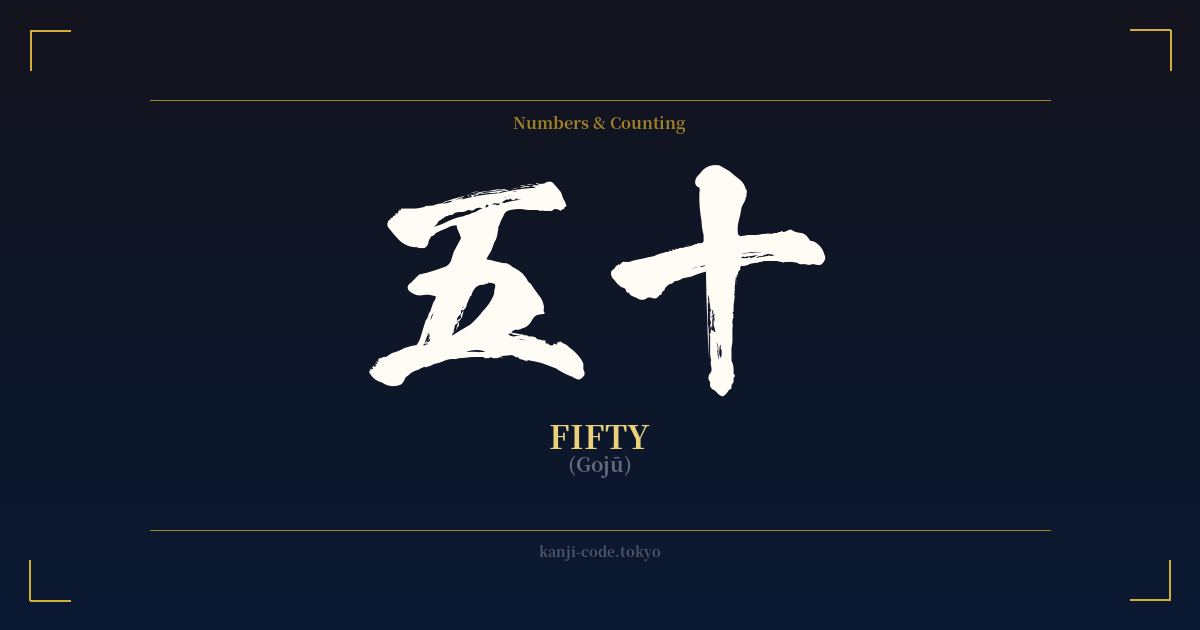
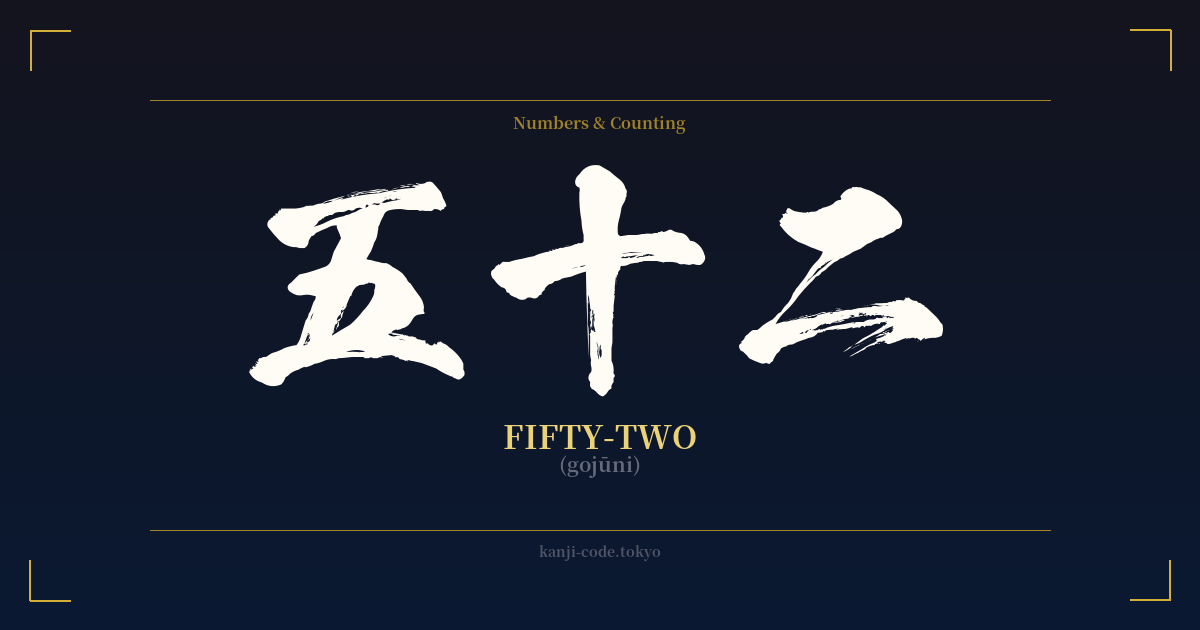
🖌️ Font Styles for 五十一
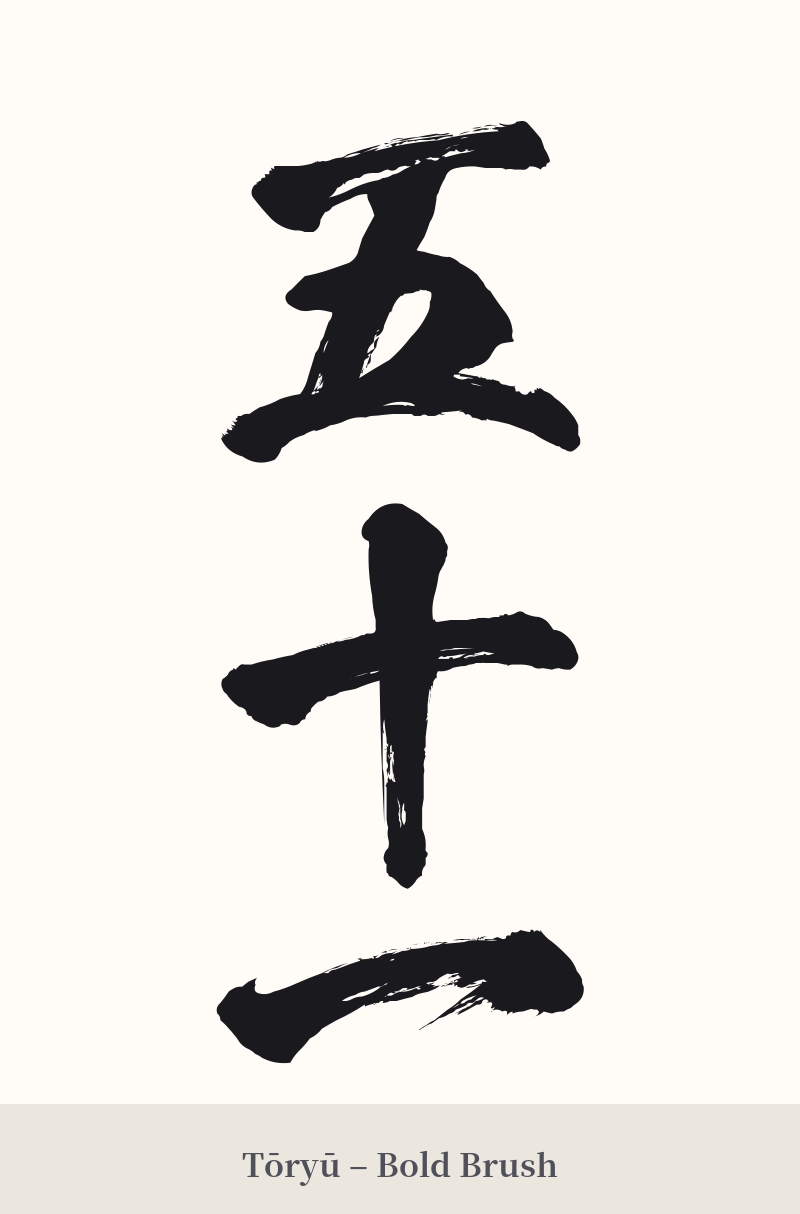
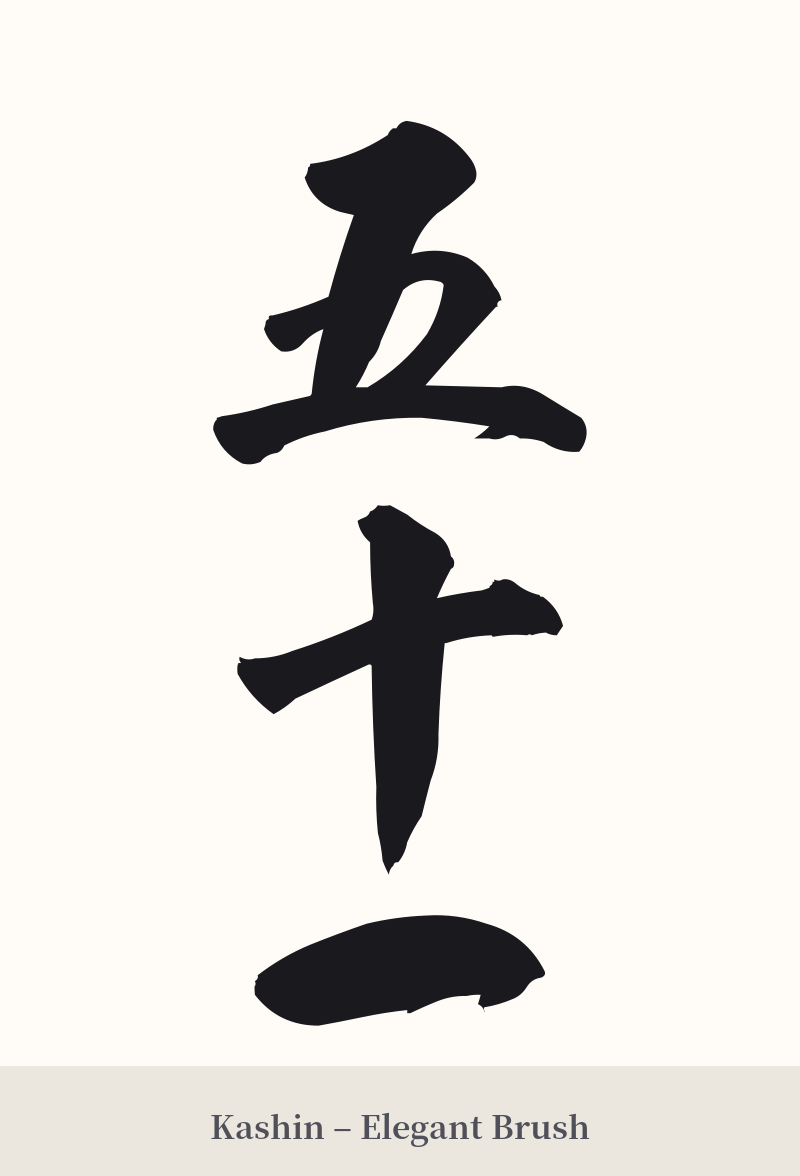
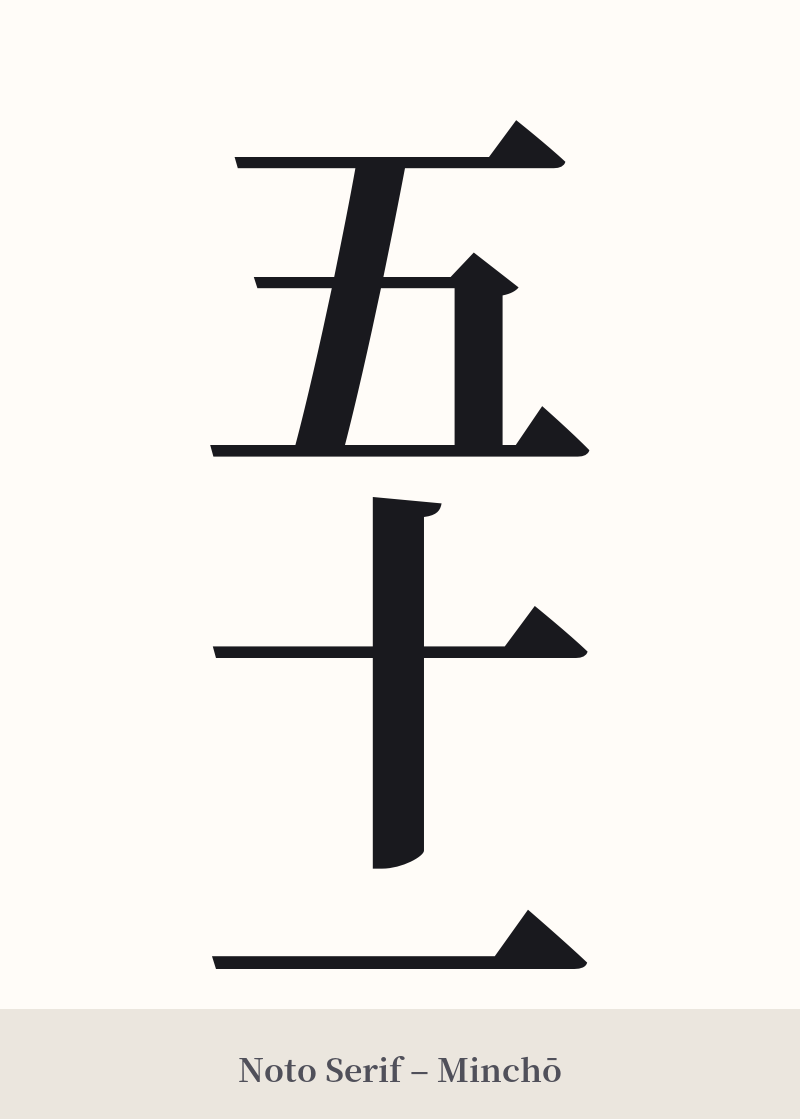
The same kanji can look dramatically different depending on the calligraphy style. Choose a font that matches the mood you want for your tattoo or design.
🎨 Tattoo Suitability
📐 Tattoo Design Guide
A tattoo of 五十一 works best when its design philosophy reflects the simplicity and structure of the characters themselves.
– Placement: Due to its literal and specific nature, this is not typically a large centerpiece tattoo. It's better suited for smaller, more personal placements like the inner wrist, along the forearm, on the ankle, or behind the ear. A vertical orientation is the most traditional and visually appealing way to display these characters.
– Font Style: A clean, blocky font like Mincho or a modern sans-serif style emphasizes the mathematical, straightforward nature of the number. Conversely, a flowing, semi-cursive (Gyosho) or cursive (Sosho) calligraphy style can add an artistic and personal touch, transforming the simple number into a piece of art.
– Visual Tips: Consider integrating 五十一 into a larger design that gives it context. For example, it could be part of a date on a scroll, inscribed on a symbolic object, or placed alongside an image that represents the reason the number 51 is important to you. This adds a layer of narrative that is otherwise absent.
Comments