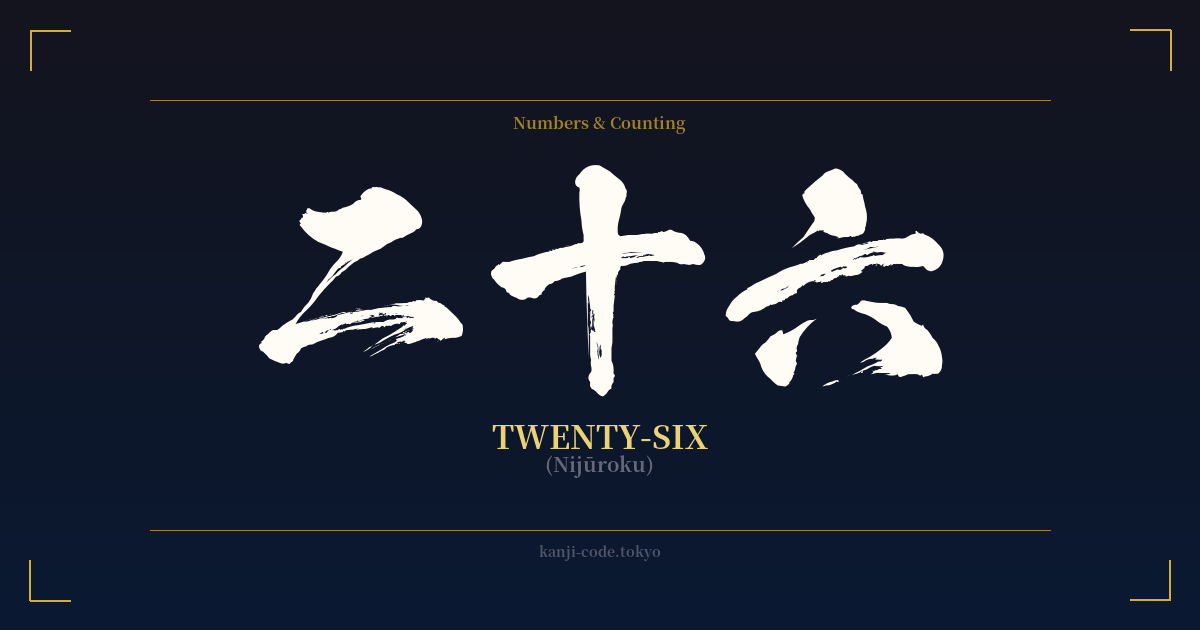
✍️ 二十六 (Nijūroku) — Cultural Context
In Japanese, the number twenty-six is written as 二十六 (Nijūroku). The construction is logical and straightforward, following a simple multiplicative and additive principle common to East Asian numbering systems. It breaks down to 'two-tens-six' (二十 + 六), or (2 x 10) + 6.
While Arabic numerals (26) are ubiquitous in modern Japan for everyday tasks like price tags and phone numbers, kanji numerals are still essential. They are used in formal documents, traditional calendars, and vertical writing to maintain stylistic consistency. Seeing 二十六 on a legal document or in a historical text would be completely normal.
On its own, the number 26 does not carry strong inherent superstitions or symbolic meanings in the way that numbers like four (shi, a homophone for death) or nine (ku, a homophone for suffering) do. It is a neutral, functional number.
However, the number 26 is inextricably linked to one of the most dramatic and tragic events in Japanese religious history: the Twenty-Six Martyrs of Japan (日本二十六聖人, Nihon Nijūroku Seijin). In 1597, by order of the powerful regent Toyotomi Hideyoshi, twenty-six Christians—including both foreign missionaries and Japanese converts—were arrested, mutilated, and marched from Kyoto to Nagasaki.
Upon reaching a hill overlooking Nagasaki bay, they were crucified and executed. This event marked a brutal escalation in the persecution of Christianity in Japan. The group consisted of six Franciscan missionaries, three Japanese Jesuits, and seventeen Japanese lay members, including three young boys who served as altar servers. Their steadfast faith in the face of death became a powerful story for Christians in Japan and around the world.
Today, the site of their martyrdom in Nagasaki is a national monument, featuring a museum and the St. Philip's Church. The story of the Twenty-Six Martyrs is a somber yet profound part of Japan's history, lending the number 二十六 a deep, historical weight that transcends its simple numerical value. It stands as a symbol of faith, persecution, and the complex relationship between Japan and the outside world during the 16th century.
🖌️ Font Styles for 二十六
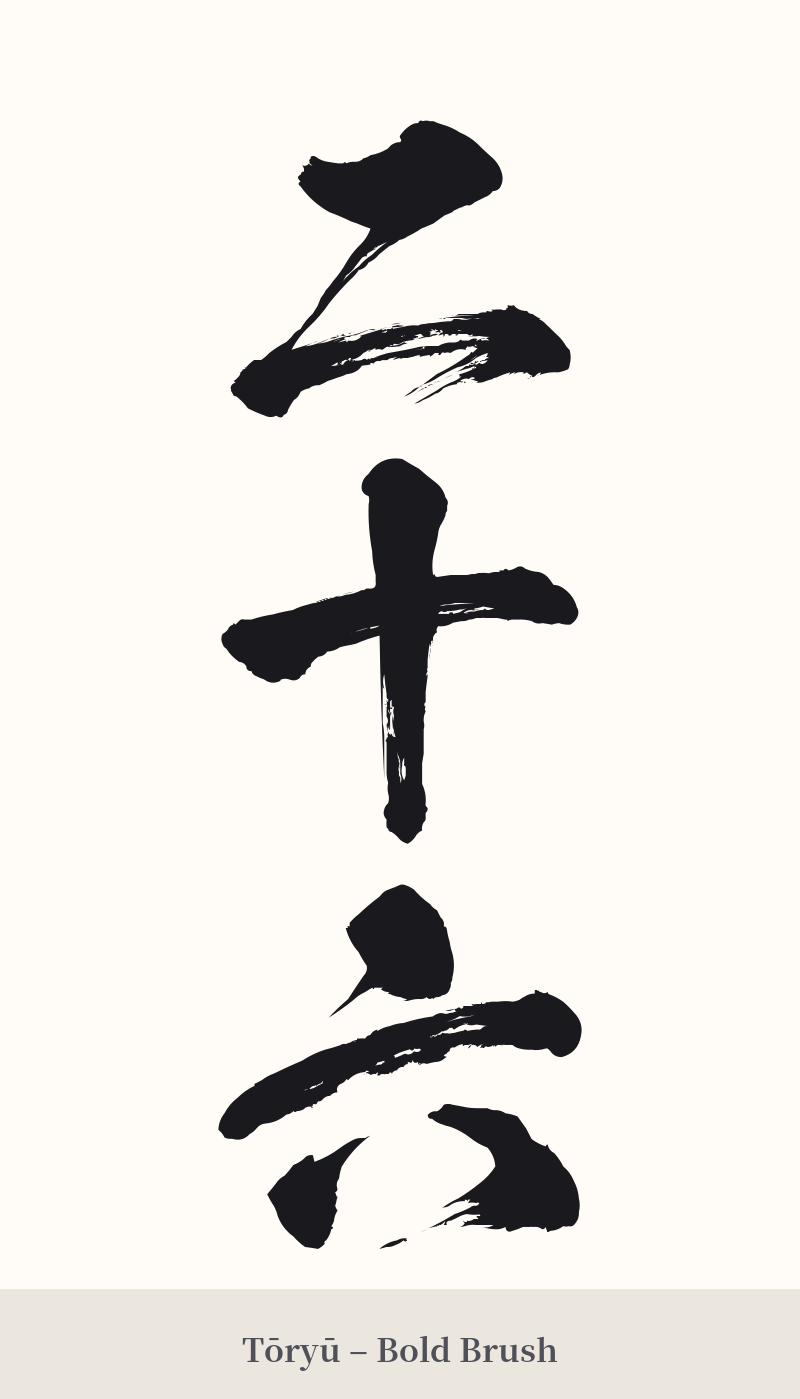
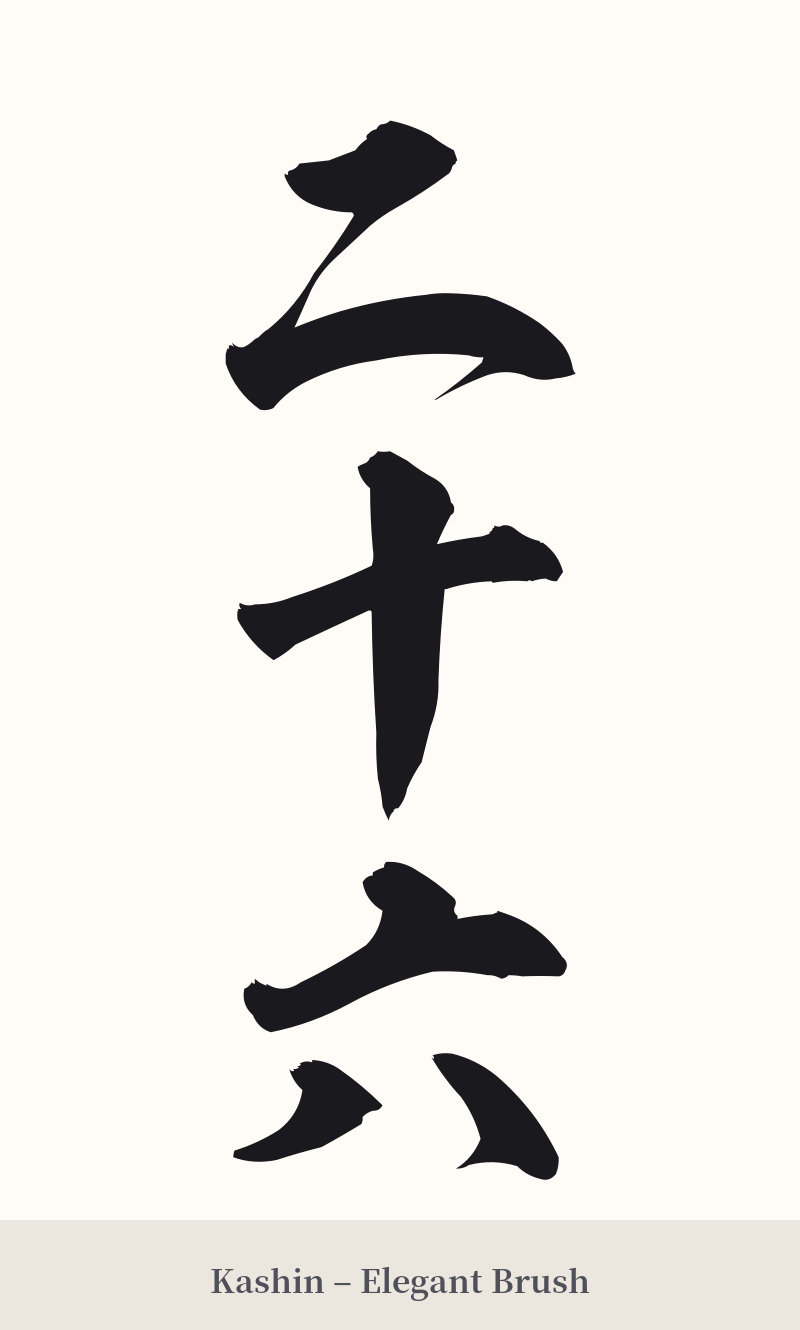
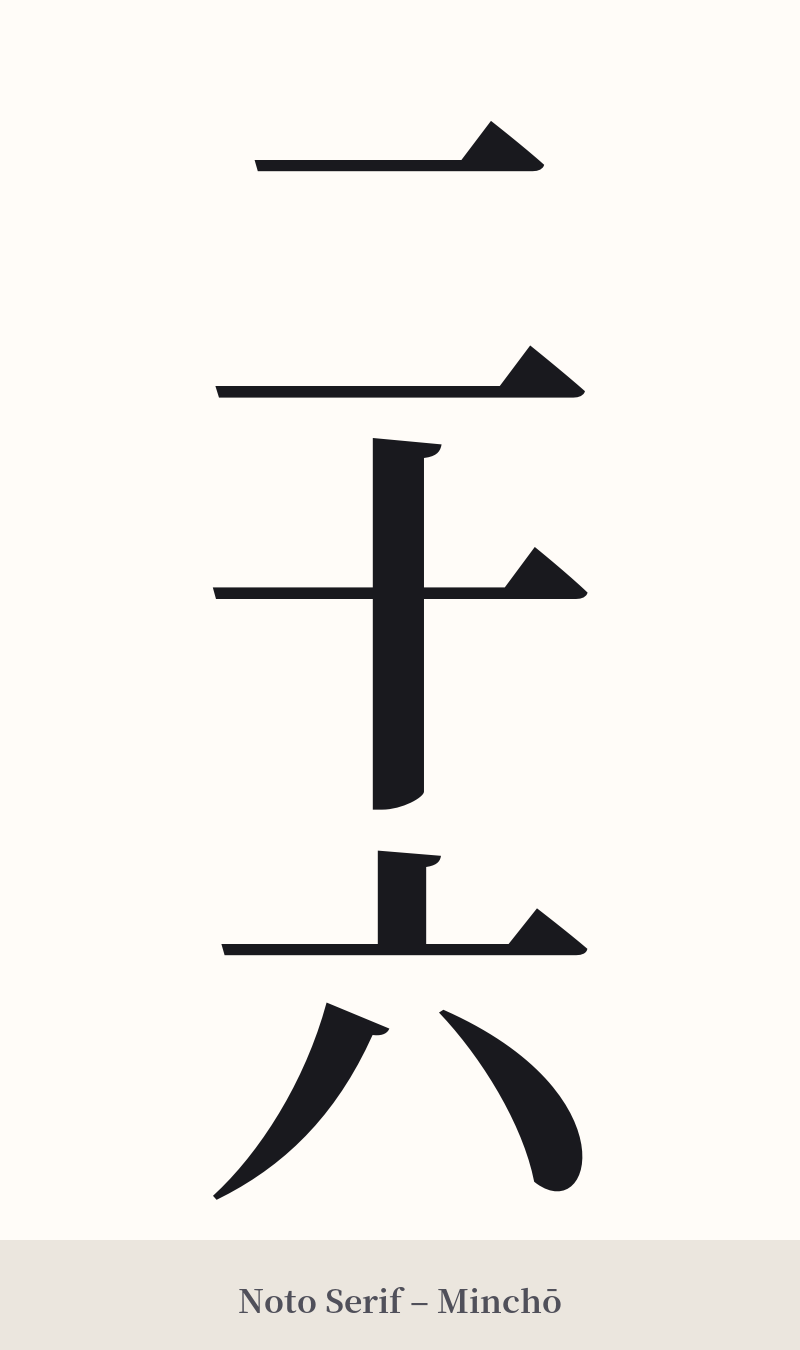
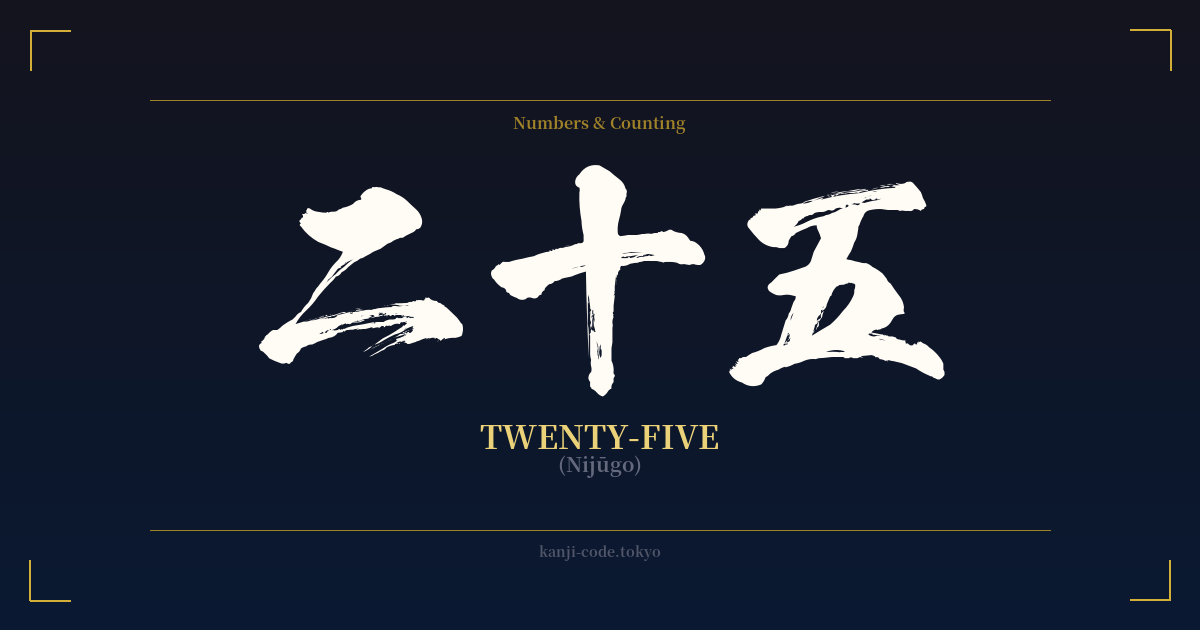
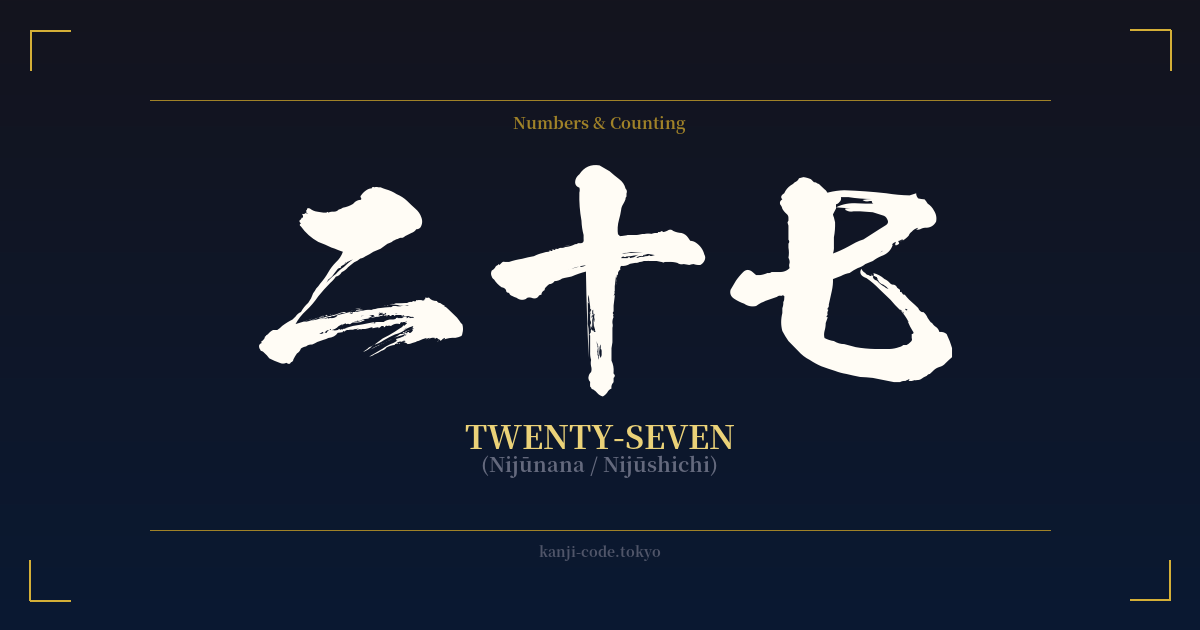
The same kanji can look dramatically different depending on the calligraphy style. Choose a font that matches the mood you want for your tattoo or design.
🎨 Tattoo Suitability
📐 Tattoo Design Guide
Because 二十六 is composed of very simple characters, the design's impact relies heavily on style and placement.
– Font Style: A standard digital font will make this look plain, like a label. Opt for a more artistic script. A bold, blocky kaisho (block script) can give it a sense of weight and formality. Conversely, a flowing, dynamic sōsho (cursive script) can turn the simple lines into a work of art.
– Placement: This is not a design for a large back piece, as the simple characters would look lost in a vast space. It's better suited for smaller, more discreet locations like the inner wrist, behind the ear, along the ankle, or on the ribs.
– Composition: The characters are almost always written vertically (二, 十, 六 stacked top to bottom) in traditional contexts. This vertical orientation is highly recommended for a tattoo to maintain an authentic feel. You could also consider incorporating it into a larger piece, such as a date on a memorial tattoo or as an element within a design related to the 26 Martyrs of Japan.
Comments