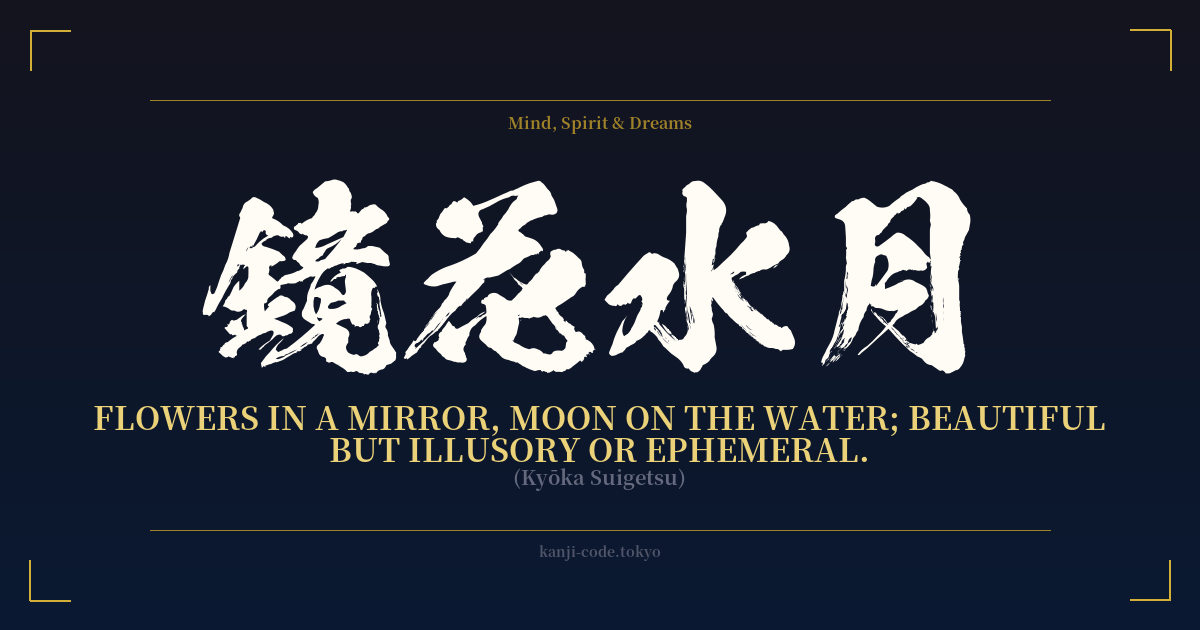
✍️ 鏡花水月 (Kyōka Suigetsu) — Cultural Context
鏡花水月 (Kyōka Suigetsu) is a four-character idiom, or yojijukugo, that beautifully captures a fundamental concept in East Asian philosophy. Literally, it translates to "flower in a mirror, moon on the water." This imagery creates a powerful and immediate sense of its meaning: something that is visible but cannot be touched, a beautiful but ultimately illusory or ephemeral thing.
The phrase evokes a tangible scene. You can see a perfect, vibrant flower reflected in a mirror, yet you cannot smell its fragrance or feel its petals. You can see the serene, silver light of the moon shimmering on the surface of a pond, but you can never scoop it up into your hands. This is the essence of Kyōka Suigetsu—the gap between perception and reality, the allure of things that are unattainable.
Its roots are deeply entwined with Buddhist teachings, particularly the concept of śūnyatā, often translated as "emptiness" or "voidness." This philosophy posits that all phenomena are transient and lack intrinsic, independent existence. What we perceive as solid and real is, like the flower in the mirror, a temporary reflection. Kyōka Suigetsu serves as a poetic metaphor for this profound idea, reminding us that attachment to fleeting forms leads to suffering.
Beyond its philosophical origins, Kyōka Suigetsu became a staple in Japanese literature and art. It is closely related to the aesthetic of "mono no aware," the gentle sadness or pathos of things, which recognizes and appreciates the beauty in impermanence. A falling cherry blossom, a fading sunset, a love that cannot be—all can be described as forms of Kyōka Suigetsu. It speaks to a beauty that is heightened, not diminished, by its transient nature.
In the modern era, the term has found a prominent place in pop culture, most notably in the popular manga and anime series Bleach. It is the name of the main antagonist Sōsuke Aizen's sword (Zanpakutō), which has the ability to create perfect, unbreakable illusions. This usage perfectly aligns with the idiom's original meaning, introducing it to a new generation and a global audience. Whether seen as a deep philosophical statement or a nod to a favorite story, Kyōka Suigetsu remains a powerful expression of the beautiful and the untouchable.
🖌️ Font Styles for 鏡花水月
The same kanji can look dramatically different depending on the calligraphy style. Choose a font that matches the mood you want for your tattoo or design.
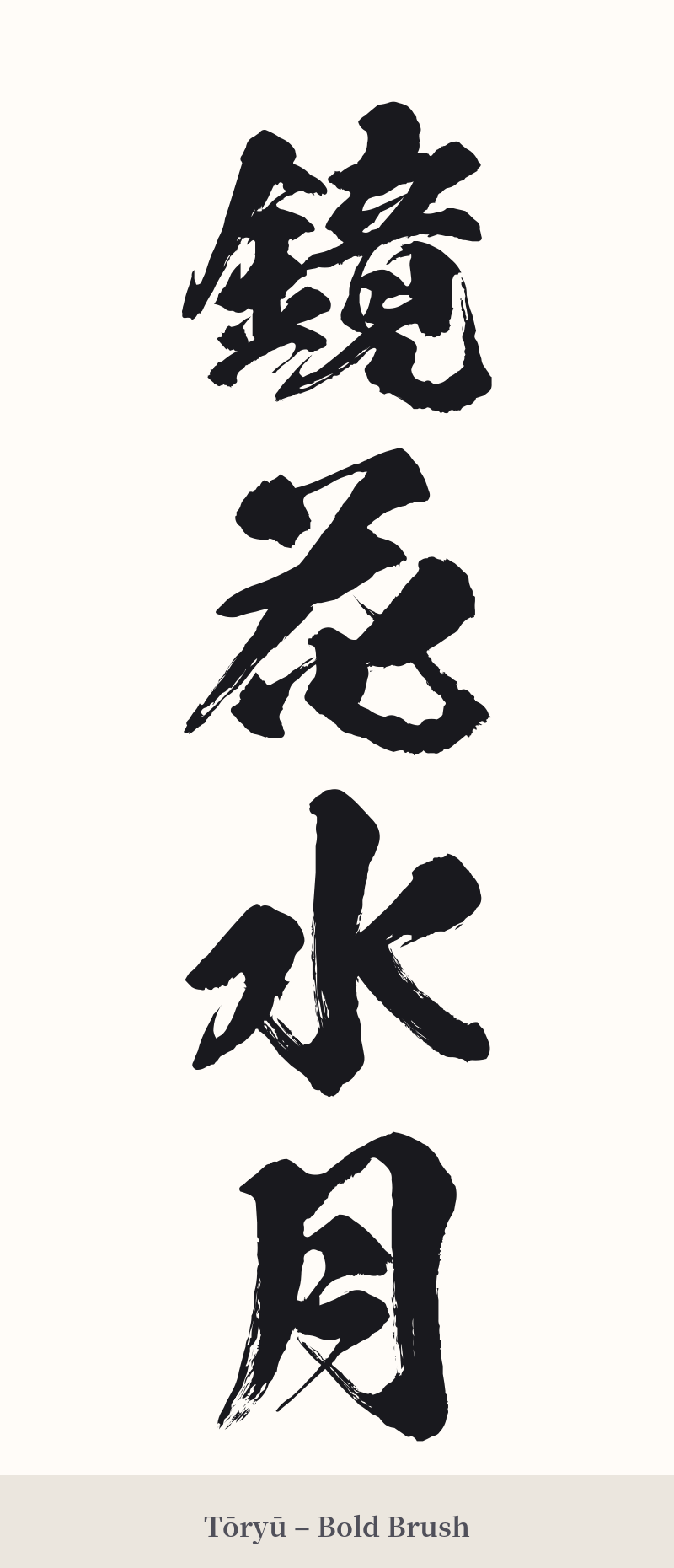
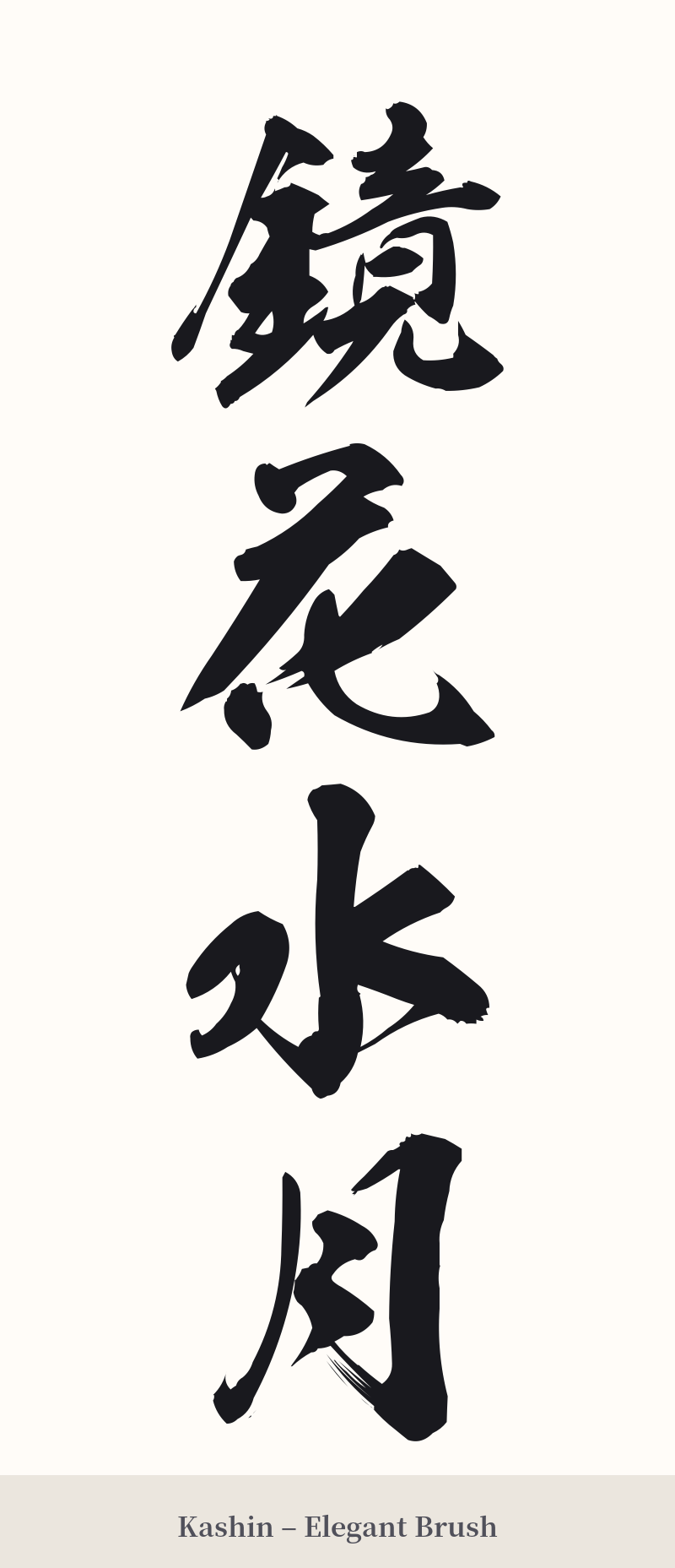
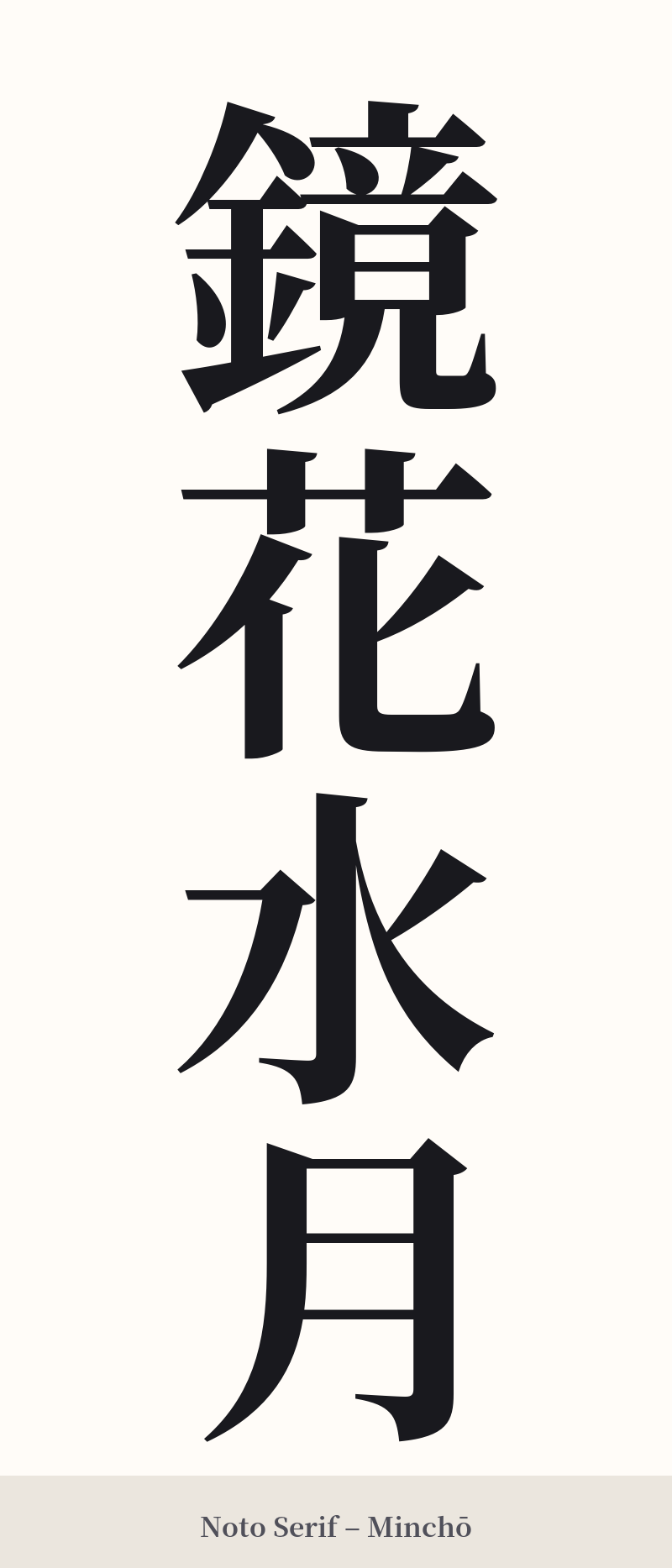
🎨 Tattoo Suitability
📐 Tattoo Design Guide
The four-character structure of Kyōka Suigetsu lends itself well to several classic tattoo designs.
– Placement: A vertical orientation is traditional and visually striking. It works perfectly along the spine, forearm, or calf. For a horizontal layout, the chest, upper back, or across the ribs are excellent choices.
– Font Style: A cursive or semi-cursive script (gyōsho or sōsho) can beautifully capture the fluid, ethereal feeling of the idiom. The flowing strokes mimic the movement of water and the fleeting nature of a reflection. For a more assertive look, a crisp, clean block script (kaisho) emphasizes the stark reality of the illusion.
– Visual Tips: Due to the 19 strokes in the first character, '鏡' (mirror), avoid making the design too small. Ensure your artist is skilled with fine-line work to prevent the character from becoming blurry over time. Consider incorporating imagery alongside the kanji, such as light ripples on water, a crescent moon, or falling cherry blossom petals to visually represent the idiom's meaning.
Comments