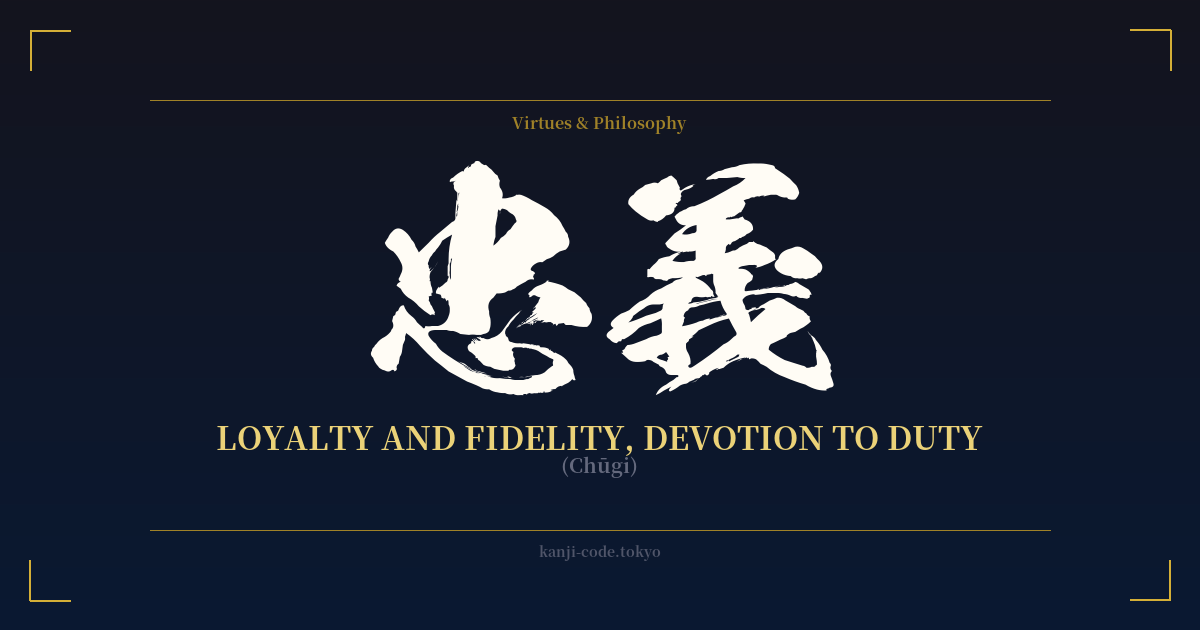
✍️ 忠義 (Chūgi) — Cultural Context
忠義 (Chūgi) is a Japanese word that translates to loyalty, fidelity, or devotion, but these English terms barely scratch the surface of its profound cultural weight. This is not the simple loyalty between friends; Chūgi is a foundational pillar of Bushido, the moral code of the samurai, and represents a deep, unwavering, and righteous devotion to a higher cause, a master, or a set of principles.
The word is a combination of two powerful kanji: 忠 (Chū) and 義 (Gi). Chū signifies loyalty and faithfulness, while Gi means righteousness and justice. Together, they create a concept that is more than just blind obedience. Chūgi implies that the loyalty given is directed towards a just and righteous path. It is a conscious choice to dedicate oneself to a person or ideal deemed worthy of such devotion.
Historically, Chūgi was the ultimate virtue for a samurai. A warrior's entire identity and honor were tied to their loyalty to their daimyo, or feudal lord. This bond was absolute, often superseding even family ties. The most famous and dramatic illustration of Chūgi in Japanese history is the tale of the Forty-Seven Rōnin. After their master was unjustly forced to commit seppuku (ritual suicide), his now-masterless samurai (rōnin) spent over a year planning their revenge. They successfully avenged their lord's honor, knowing full well that their actions would lead to their own mandated deaths. Their story is celebrated not as a tale of vengeance, but as the ultimate expression of Chūgi—a righteous loyalty that transcends life itself.
In modern Japan, the context of feudal lords has vanished, but the spirit of Chūgi endures. It has been transformed and adapted to new social structures. It can be seen in the legendary dedication of an employee to their company, the commitment of an artist to their craft, or the profound sense of duty one feels towards their family. It represents a promise, a bond that is not taken lightly.
Choosing Chūgi is to embrace a concept of immense gravity. It speaks of a principled commitment, a steadfastness in the face of adversity, and a life guided by honor and duty. It is a declaration that one's allegiance is not fickle but is a core part of their identity.
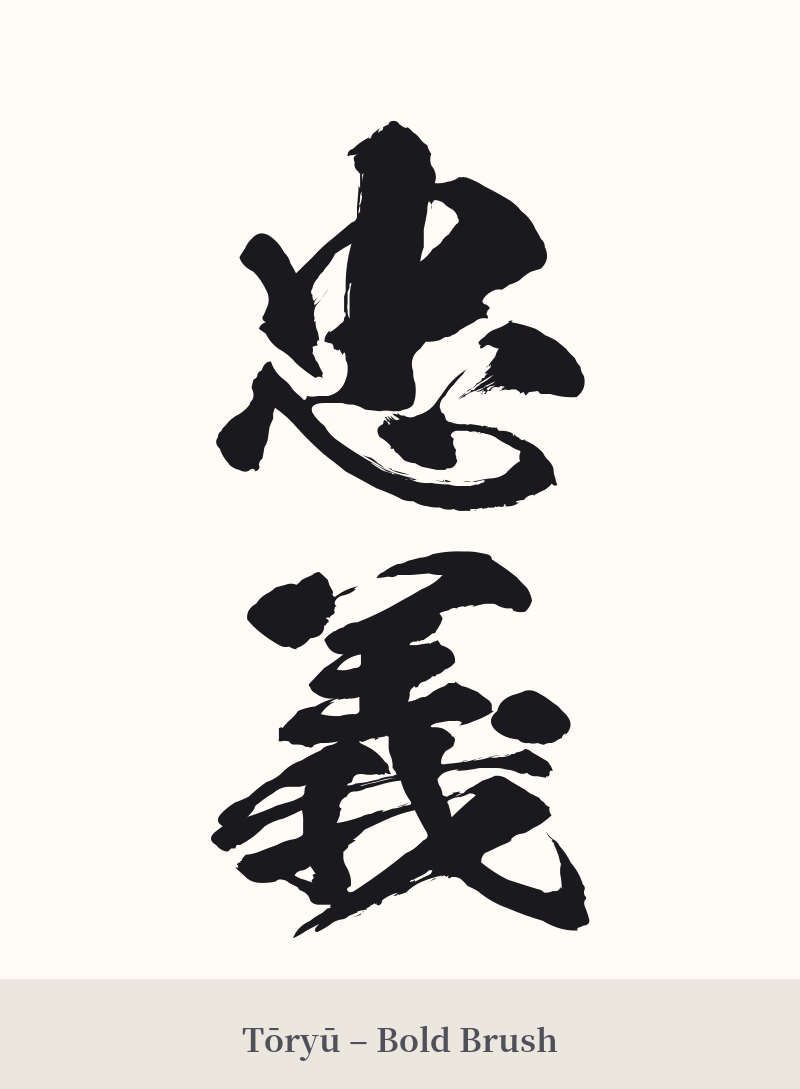
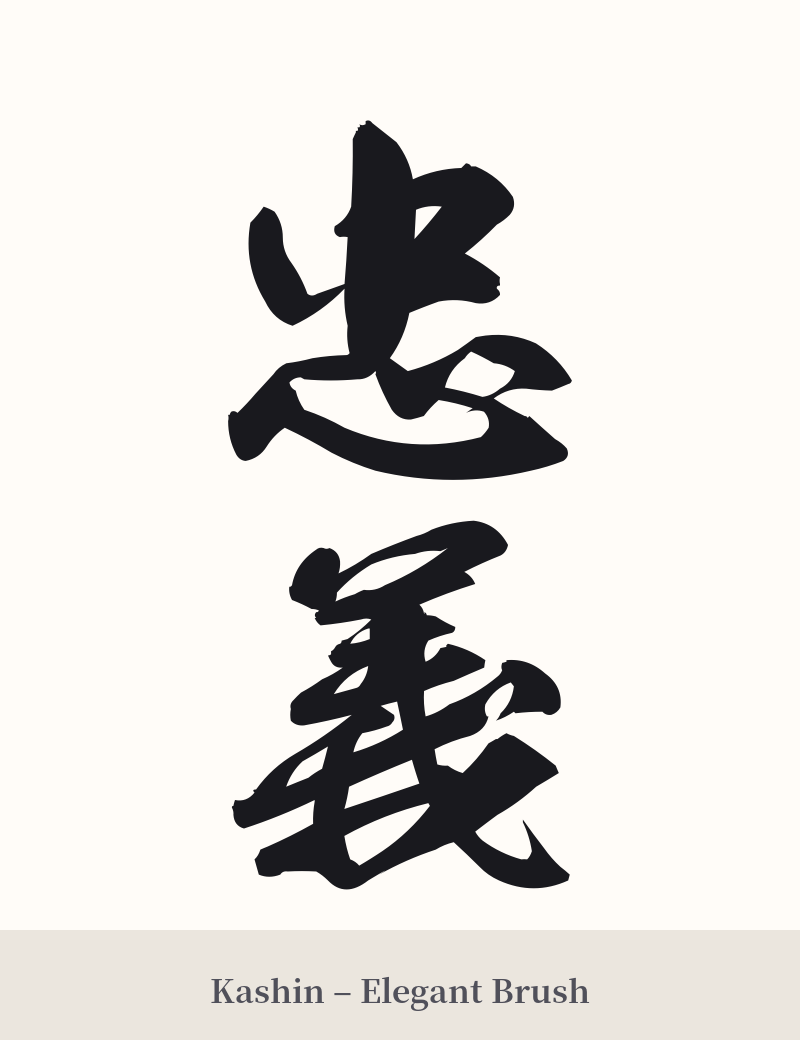
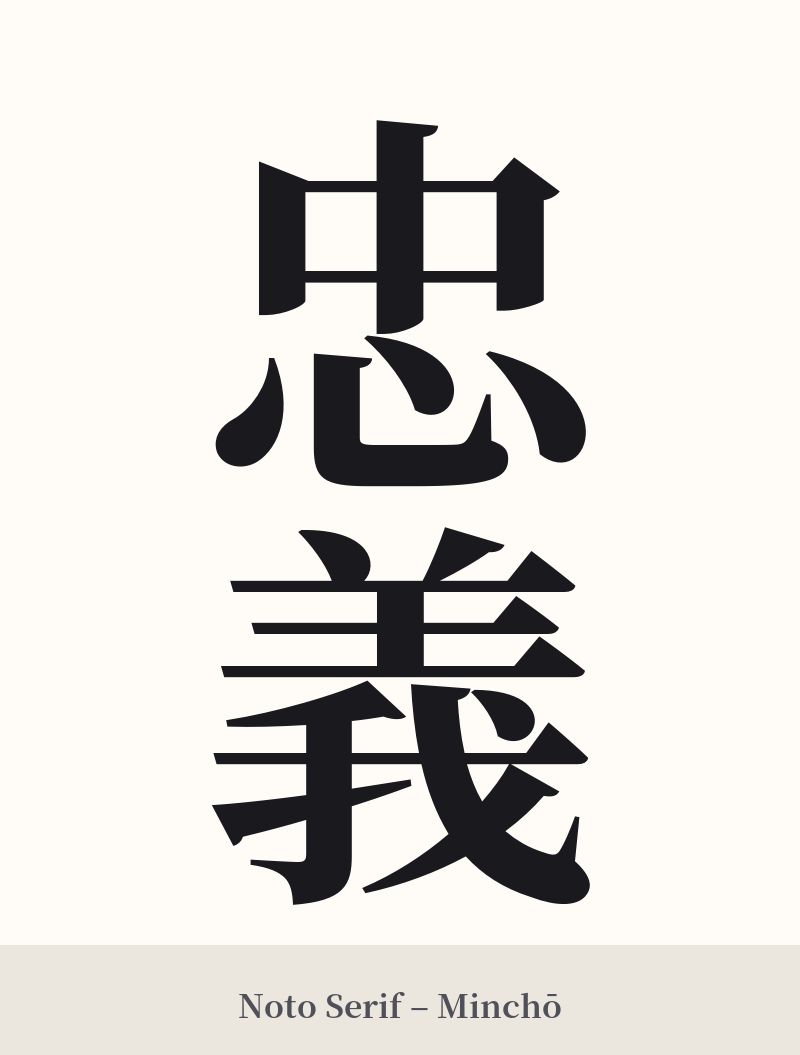
🖌️ Font Styles for 忠義
The same kanji can look dramatically different depending on the calligraphy style. Choose a font that matches the mood you want for your tattoo or design.
🎨 Tattoo Suitability
📐 Tattoo Design Guide
The vertical orientation is classic and highly recommended for 忠義, as it mirrors traditional Japanese calligraphy. This makes it ideal for placements like the forearm, the calf, or along the spine.
For a horizontal design, the chest or upper back provides a wide canvas that allows the characters to breathe.
– Font Style: A traditional brush script is best to honor the kanji's historical weight. Gyōsho (semi-cursive) offers a sense of fluid strength, while Kaisho (block script) provides a more formal and resolute feel. Avoid modern, digital, or overly stylized fonts that can detract from the meaning.
– Visual Elements: Consider pairing 忠義 with other classic Japanese motifs. A backdrop of a samurai's helmet (kabuto) or armor can directly link it to its Bushido origins. Cherry blossoms (sakura) can be added to symbolize the beauty and transient nature of the life lived in service of this ideal.
Comments