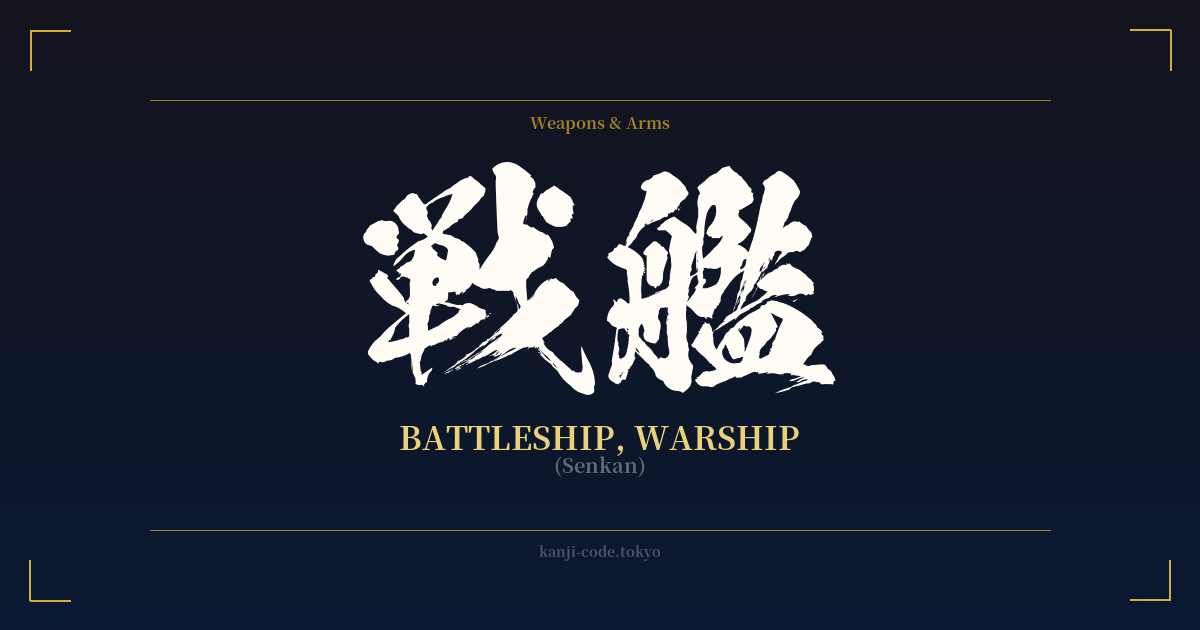
✍️ 戦艦 (Senkan) — Cultural Context
The Japanese word 戦艦 (Senkan) translates directly to 'battleship,' a term that conjures images of immense power, technological prowess, and the turbulent history of the 20th century. Composed of the kanji 戦 (sen) for 'war' or 'battle' and 艦 (kan) for 'warship,' the word is a literal and potent descriptor of these steel titans.
The cultural significance of 'Senkan' in Japan is deeply tied to the nation's rapid modernization during the Meiji era and its rise as a major naval power. The Imperial Japanese Navy (大日本帝国海軍 – Dai-Nippon Teikoku Kaigun) became a symbol of national strength, and its battleships were the crown jewels. This era was marked by a global naval arms race, and Japan was a key participant, culminating in the construction of some of the most famous warships in history.
No discussion of 'Senkan' is complete without mentioning the Yamato-class battleships: the Yamato (大和) and the Musashi (武蔵). These were the largest and most heavily armed battleships ever constructed, representing the zenith of battleship design. In the Japanese consciousness, they are powerful symbols of both supreme achievement and ultimate tragedy. They represented a massive national investment and a belief in naval supremacy, yet they were ultimately sunk by aircraft, signaling the end of the battleship era. Today, their names evoke a complex mix of pride, nostalgia, and sorrowful reflection on the futility of war.
After World War II, the image of the battleship was transformed in popular culture. The most significant example is the legendary anime series Space Battleship Yamato (宇宙戦艦ヤマト – Uchū Senkan Yamato). In this story, the sunken wreck of the Yamato is resurrected as a star-faring vessel to save humanity. This series was revolutionary, imbuing the name and the concept of 'Senkan' with new meaning for generations of Japanese and international fans. It shifted the narrative from one of historical conflict to one of futuristic hope, heroism, and adventure.
Therefore, 'Senkan' is not just a word for a type of ship. It is a cultural touchstone that encompasses Japan's modern history, its technological ambitions, the devastation of war, and its powerful imagination in fiction. It represents a story of power, pride, loss, and rebirth.
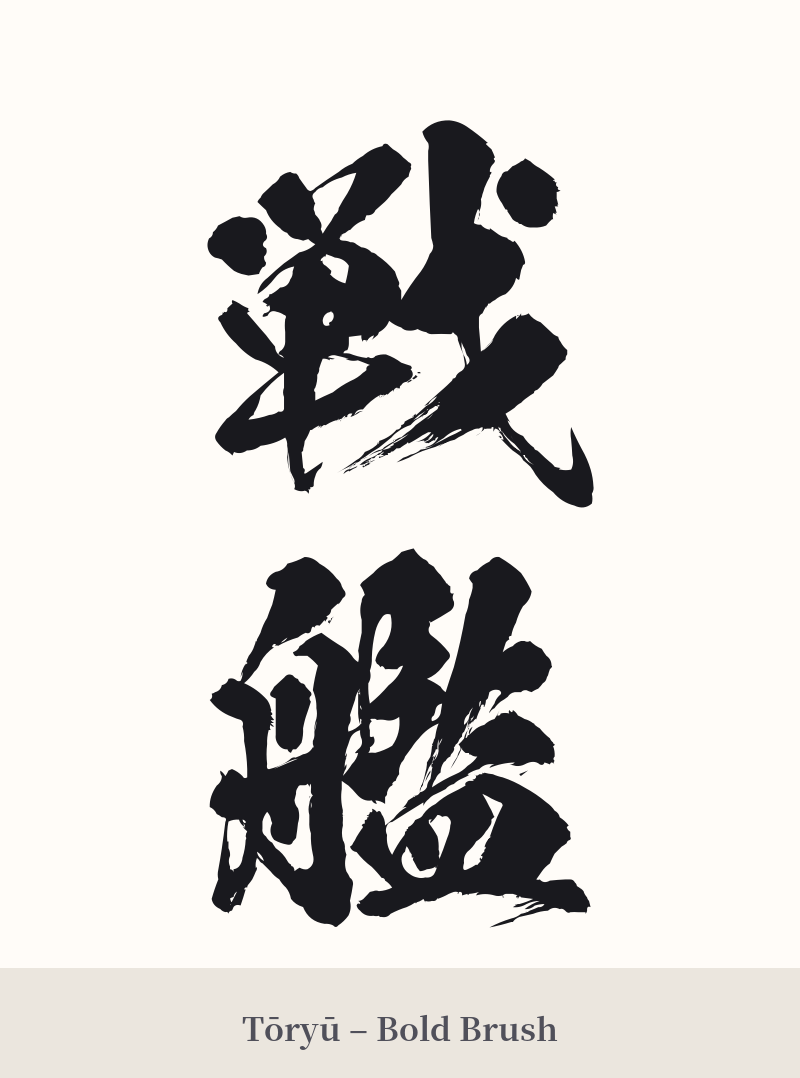
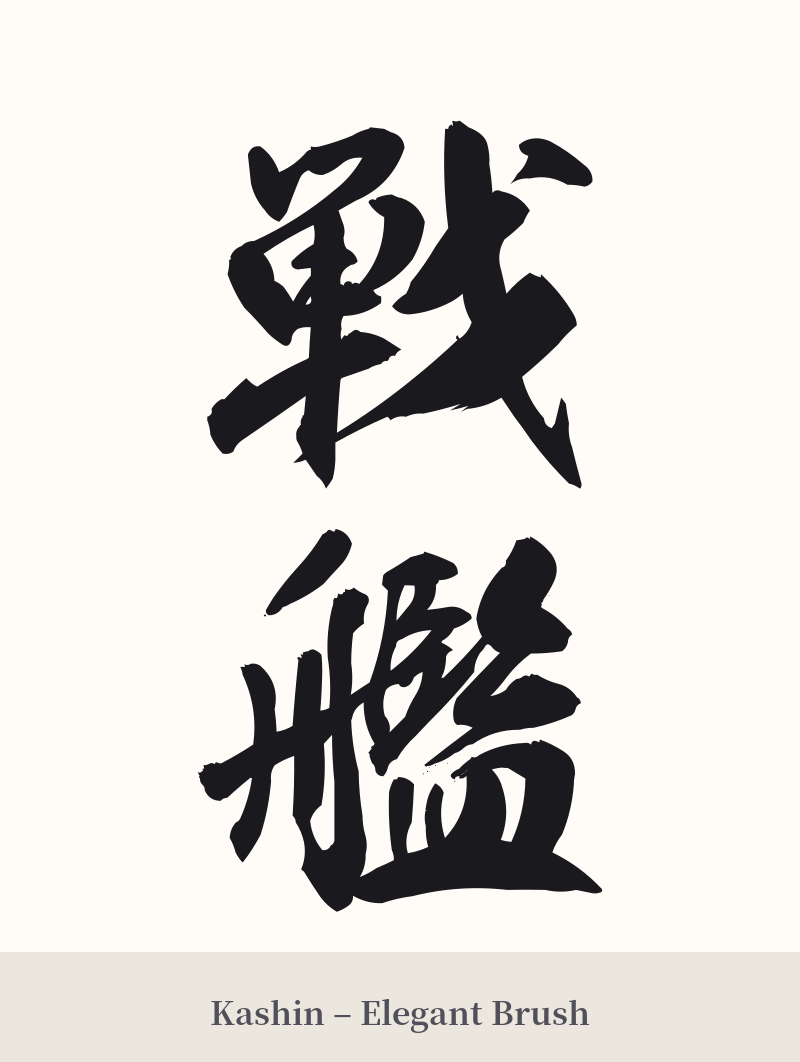
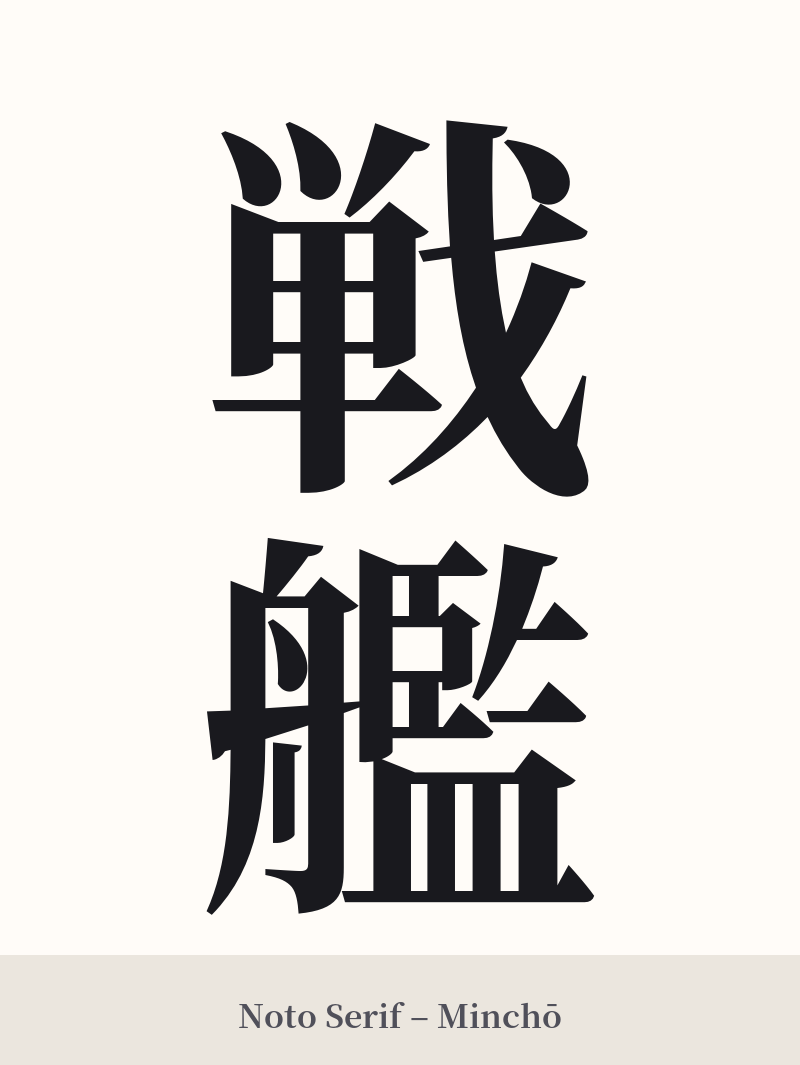
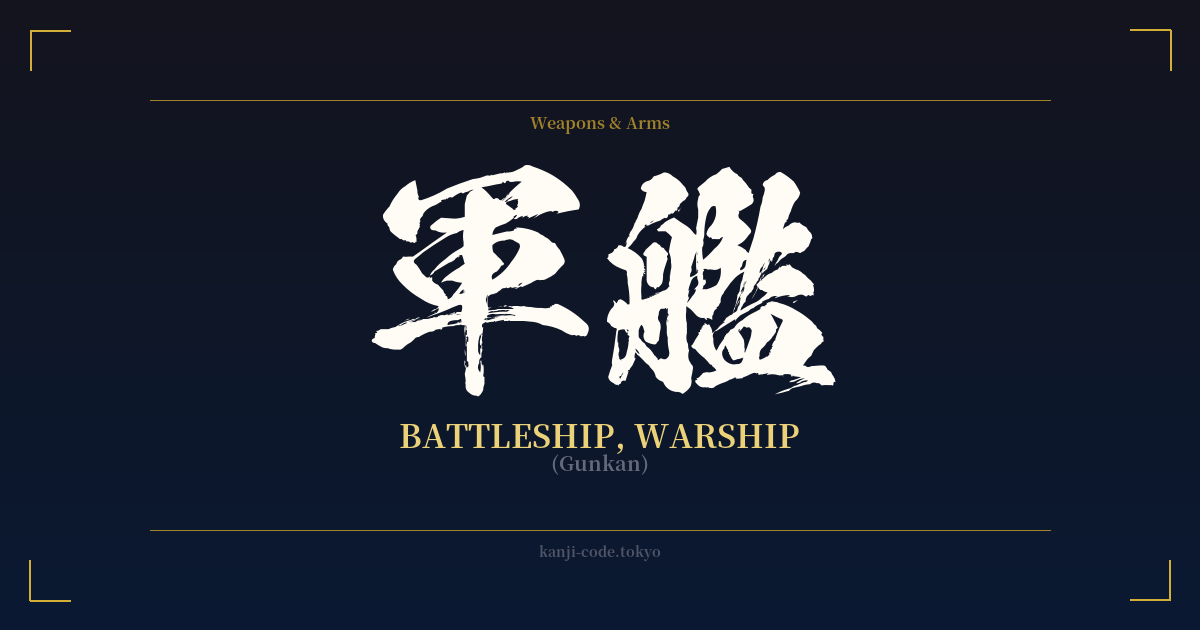
🖌️ Font Styles for 戦艦
The same kanji can look dramatically different depending on the calligraphy style. Choose a font that matches the mood you want for your tattoo or design.
🎨 Tattoo Suitability
📐 Tattoo Design Guide
Due to the complexity and detail of the kanji in 戦艦, a successful tattoo requires careful planning of placement and style.
– Placement: This design needs space to be legible and impactful. Large, flat areas of the body are ideal, such as the back, chest, or the outer thigh. A vertical placement along the spine or forearm can be particularly striking.
– Style: A bold, aggressive calligraphy style (Shodō) can emphasize the 'battle' aspect of the word, making it feel dynamic and powerful. Alternatively, a stencil-like, mechanical font could evoke the feeling of lettering on a ship's hull, connecting the design to its literal meaning.
– Visuals: Consider pairing the kanji with related imagery. A background of turbulent waves in a traditional Japanese style (Ukiyo-e) can create a dramatic scene. Other thematic elements could include an anchor, a compass rose, or even a subtle silhouette of a famous battleship like the Yamato.
Comments