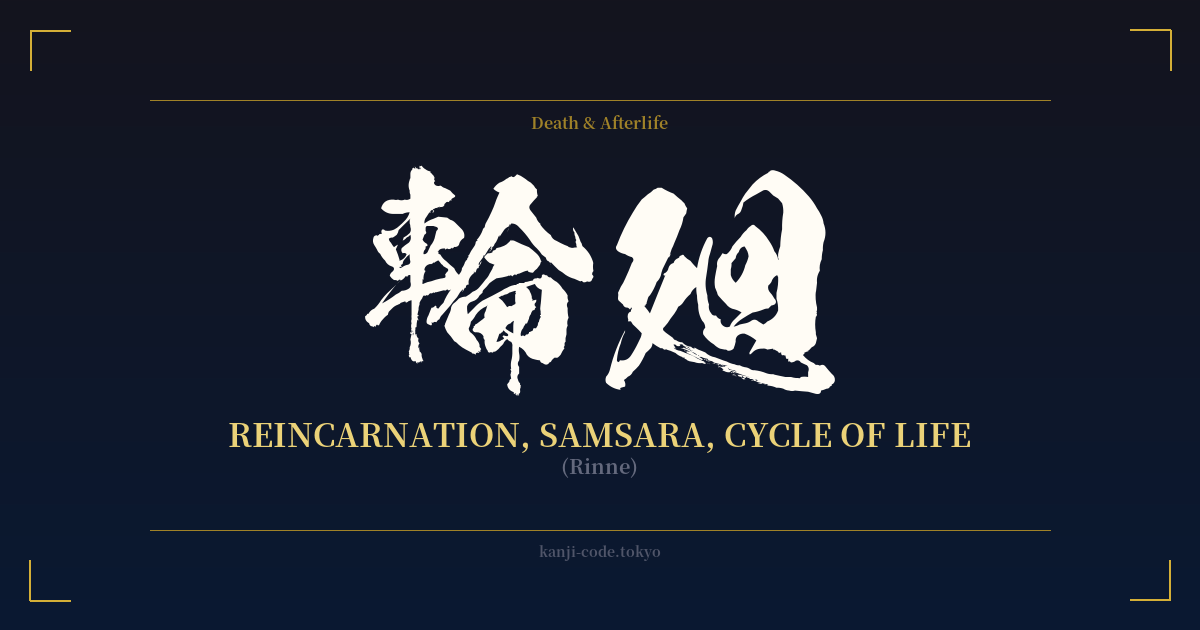
✍️ 輪廻 (Rinne) — Cultural Context
輪廻 (Rinne) is the Japanese word for a concept that lies at the heart of many Eastern philosophies, most notably Buddhism. It is the direct equivalent of the Sanskrit term 'Saṃsāra,' referring to the endless, cyclical journey of existence — a perpetual loop of birth, death, and rebirth.
This idea traveled from ancient India to Japan along with Buddhist teachings. It presents a worldview profoundly different from the linear concept of a single life often found in Western thought. In the Buddhist framework, Rinne is not a desirable state. It is a cycle of suffering, driven by karma (因果, inga), the law of cause and effect, where actions in one life determine the circumstances of the next.
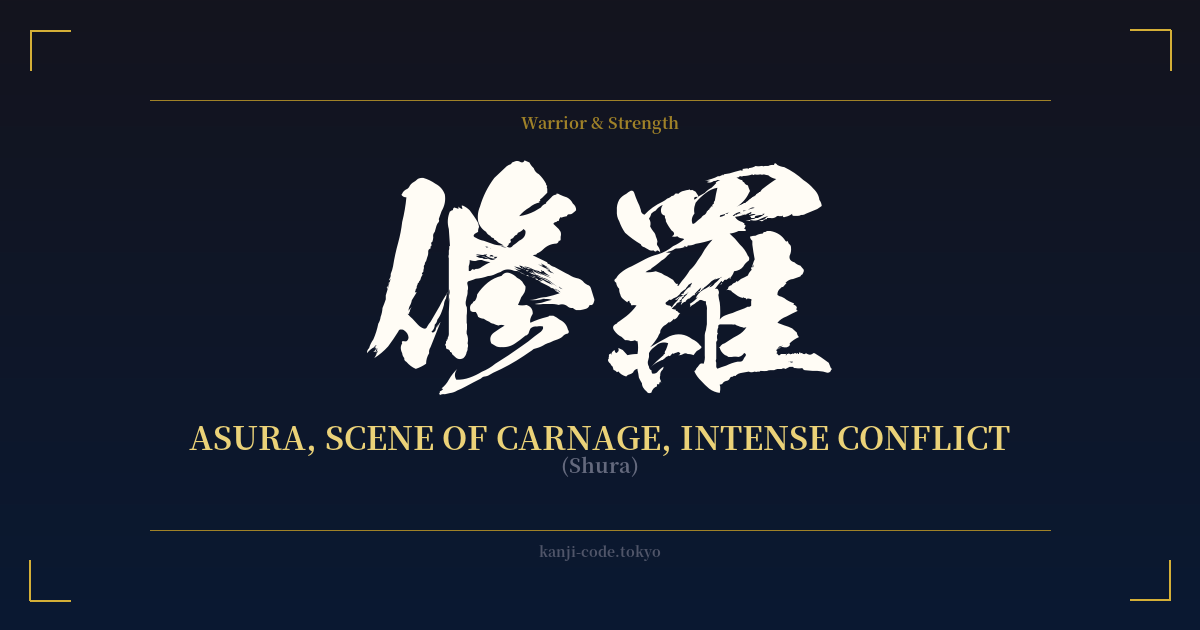
Souls are believed to be reborn into one of the Six Realms (六道, Rokudō): the realms of heavenly beings, demigods (Ashura), humans, animals, hungry ghosts, and hell. The human realm is considered precious because it offers the best opportunity to break free from the cycle.
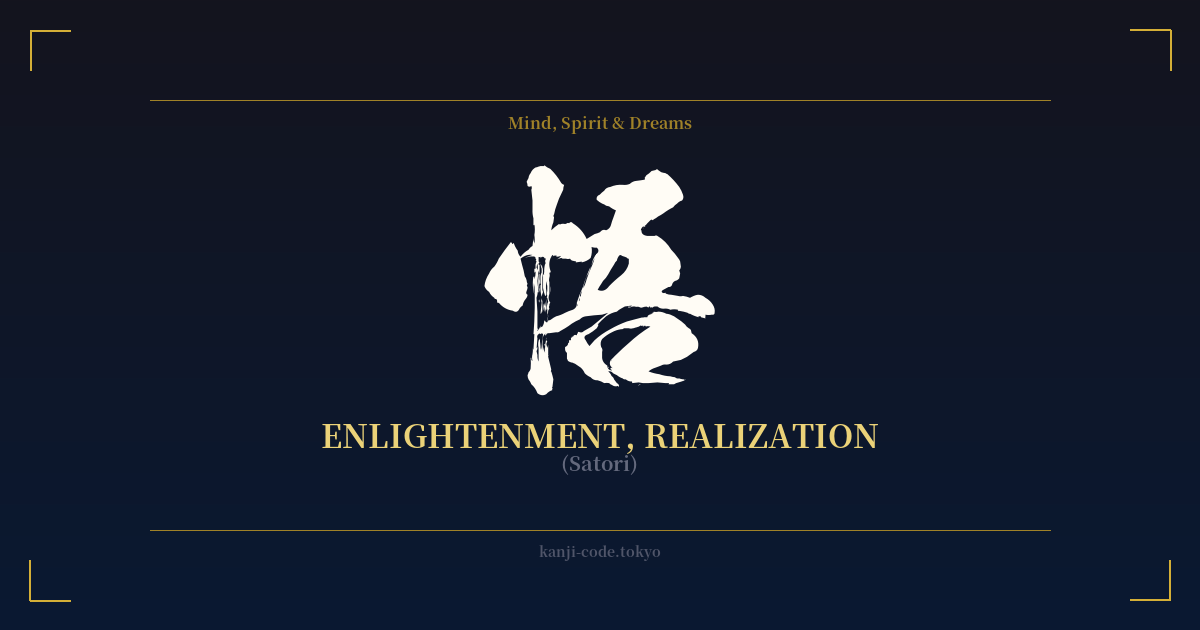
The ultimate goal of a Buddhist practitioner is to escape Rinne entirely. This liberation is known as Nirvana (涅槃, Nehan), a state of true peace and the cessation of suffering, achieved by extinguishing all desires and attachments and attaining enlightenment (悟り, Satori).
The imagery of a 'wheel' is central to this concept, as reflected in the first kanji, 輪. Life is not a straight line but a turning wheel, endlessly revolving through different forms and states of being. This powerful metaphor highlights the themes of impermanence (無常, mujō) and continuity.
In modern Japan, while the religious adherence may have softened for some, the concept of Rinne is deeply embedded in the cultural psyche. It's a ubiquitous theme in literature, film, and especially in popular anime and manga like 'Naruto,' where the 'Rinnegan' eye grants god-like powers related to life and death. This has given the term a new layer of meaning for global audiences, blending ancient philosophy with contemporary fantasy, and symbolizing immense power and cosmic understanding.
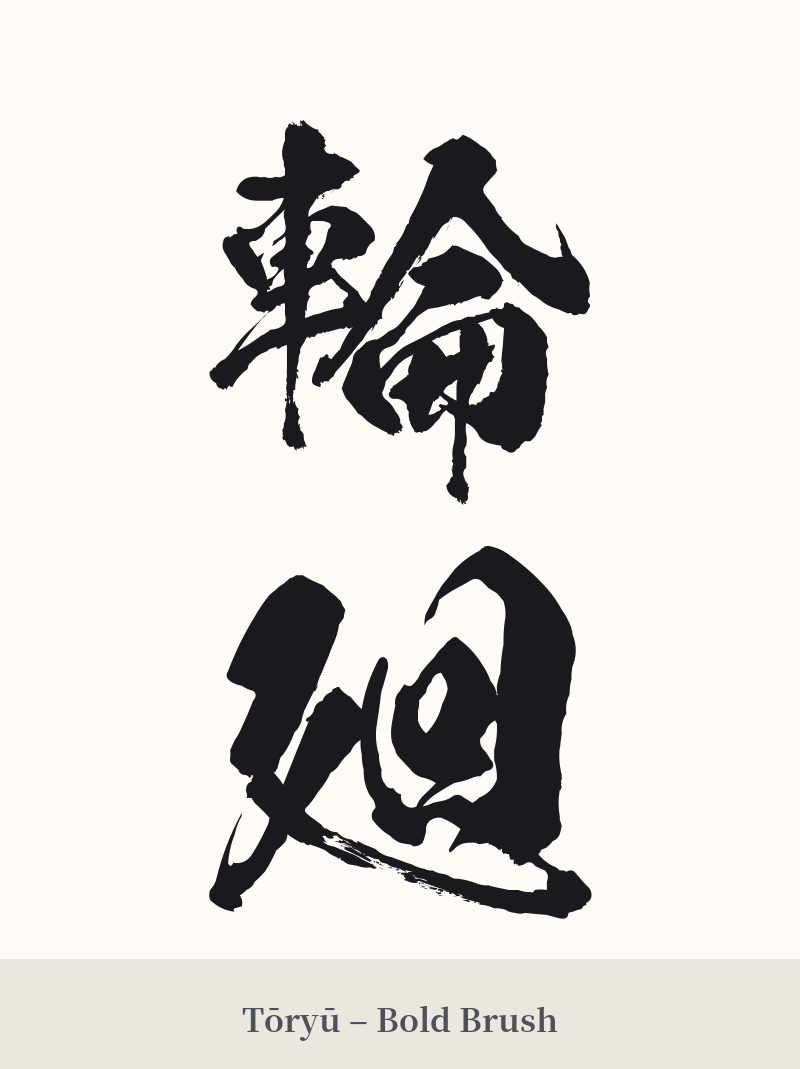
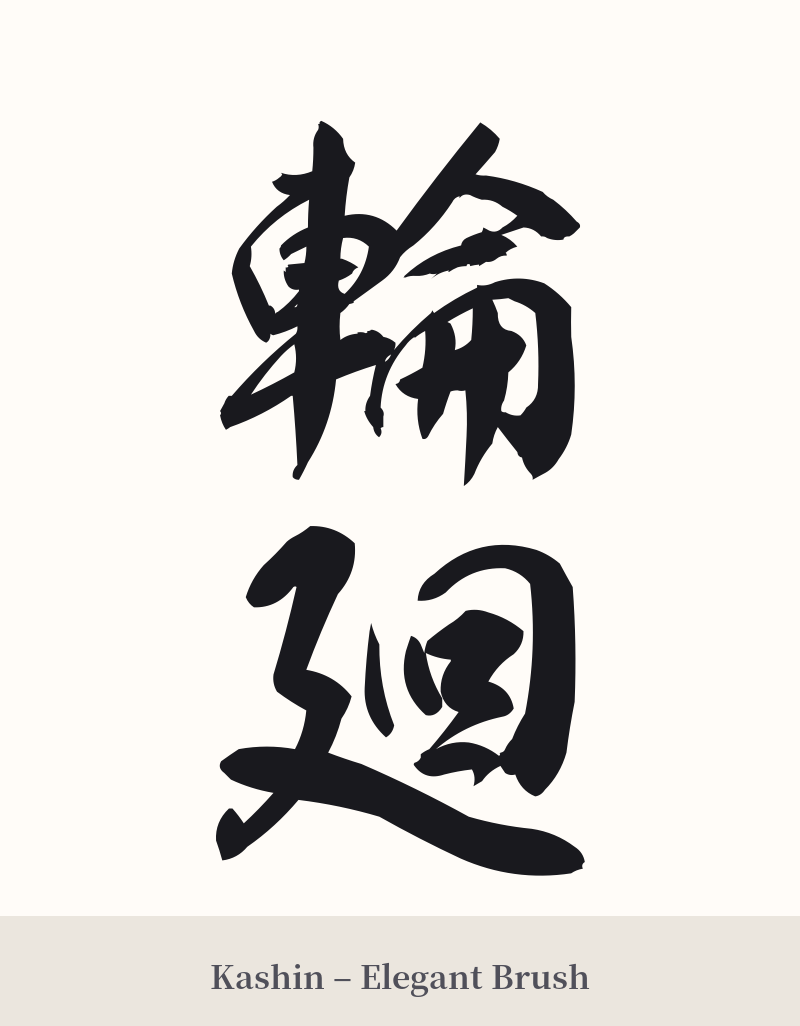
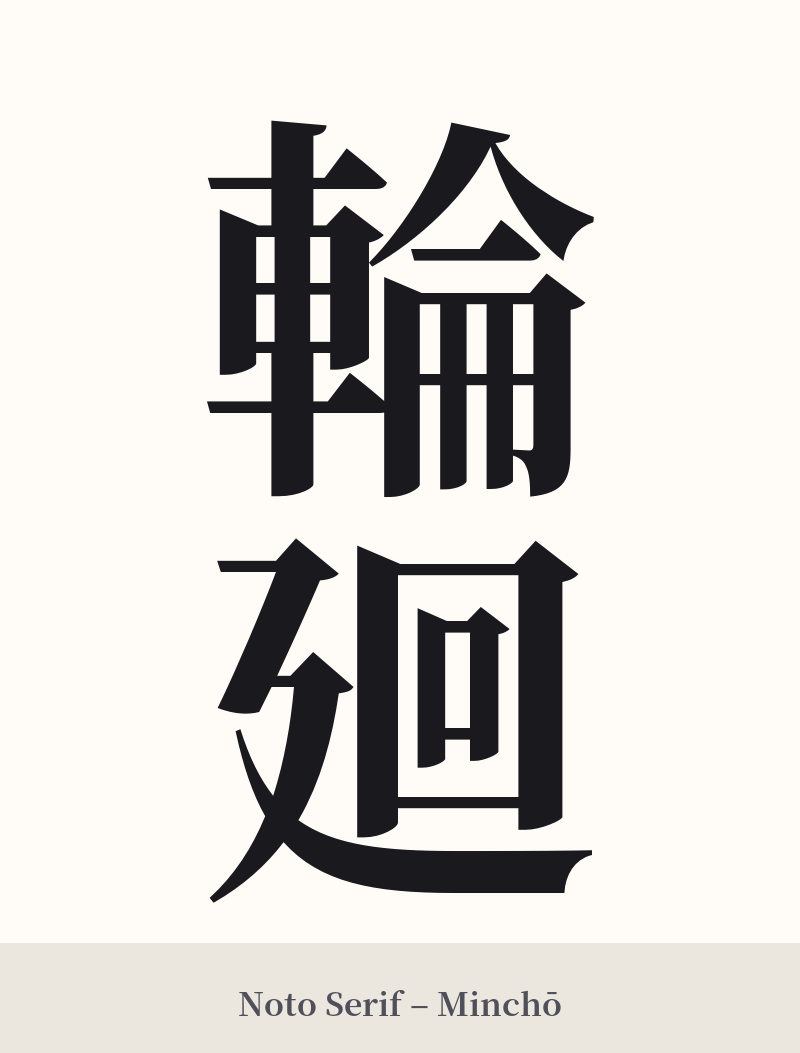
🖌️ Font Styles for 輪廻
The same kanji can look dramatically different depending on the calligraphy style. Choose a font that matches the mood you want for your tattoo or design.
🎨 Tattoo Suitability
📐 Tattoo Design Guide
The profound nature of 輪廻 (Rinne) lends itself to thoughtful design choices. As a two-character compound, it is most powerful when presented vertically, which is the traditional Japanese writing orientation.
– Placement: A vertical design looks striking on the spine, forearm, or calf. For a horizontal layout, the upper back or chest provides a wide canvas that honors the word's significance.
– Font Style: For a classic and spiritual feel, a calligraphy style like Gyosho (semi-cursive) or Sosho (cursive) adds a sense of flow and history. If you prefer clarity and boldness, a crisp Mincho or Kaisho (block) font works beautifully.
– Visual Elements: Consider incorporating imagery that complements the theme. An Enso (Zen circle) drawn around or behind the kanji can visually represent the cycle. A lotus flower, which grows from mud to blossom beautifully, is a powerful symbol of purity and enlightenment that can be paired with Rinne.
Comments