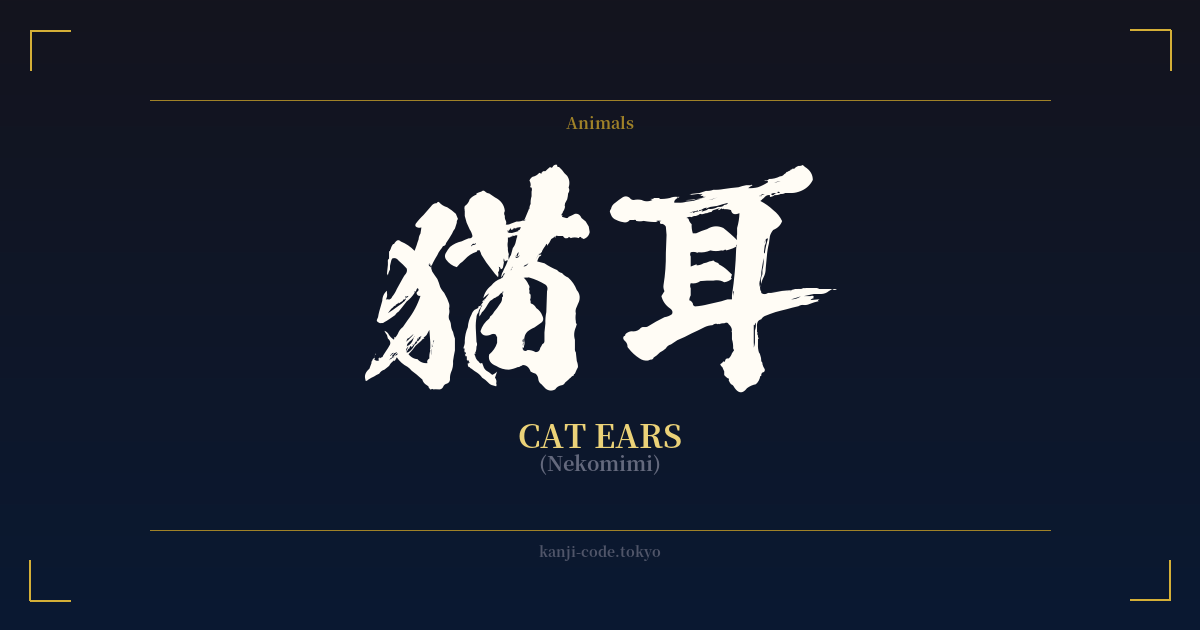
✍️ 猫耳 (Nekomimi) — Cultural Context
猫耳 (Nekomimi) literally translates to 'cat ears.' It refers to human characters who have cat ears, often along with a cat's tail or other feline characteristics. While cats have a long history in Japanese folklore, the concept of Nekomimi as we know it today is a thoroughly modern invention, born from post-war manga and anime.
This term is a cornerstone of the broader 'kemonomimi' (animal ears) trope, but Nekomimi is by far the most popular and recognizable iteration. Its widespread popularity can be traced back to the 1978 manga 'The Star of Cottonland' (Wata no Kuni Hoshi), which depicted a cat-girl with large, expressive feline ears. This set the visual template for decades to come.
In Japanese pop culture, Nekomimi are not just a physical trait; they are a powerful visual shorthand for a specific set of character archetypes. A character with cat ears is often portrayed as playful, mischievous, agile, and coquettish. They might also display a cat-like independence, switching between being affectionate and aloof. This blend of cute vulnerability and playful unpredictability makes them incredibly appealing.
Nekomimi are a prime example of a 'moe' attribute. 'Moe' is a Japanese slang term referring to a strong feeling of affection, adoration, and protectiveness towards fictional characters. The addition of cat ears to a character is a calculated design choice to evoke this 'moe' response from the audience, enhancing their cuteness and appeal.
Beyond anime and manga, the Nekomimi aesthetic has crossed over into video games, virtual YouTubers (VTubers), and real-world fashion. Cat ear headbands are common accessories at anime conventions, in Harajuku street style, and during Halloween. They represent a fun, temporary way to adopt the playful persona associated with the trope.
It's crucial to understand that Nekomimi has no connection to ancient samurai codes, Zen philosophy, or traditional Japanese spirituality. It is a product of contemporary entertainment, a symbol of a specific subculture. While beloved by many, its meaning is rooted in fandom, cuteness, and playfulness rather than deep historical significance.
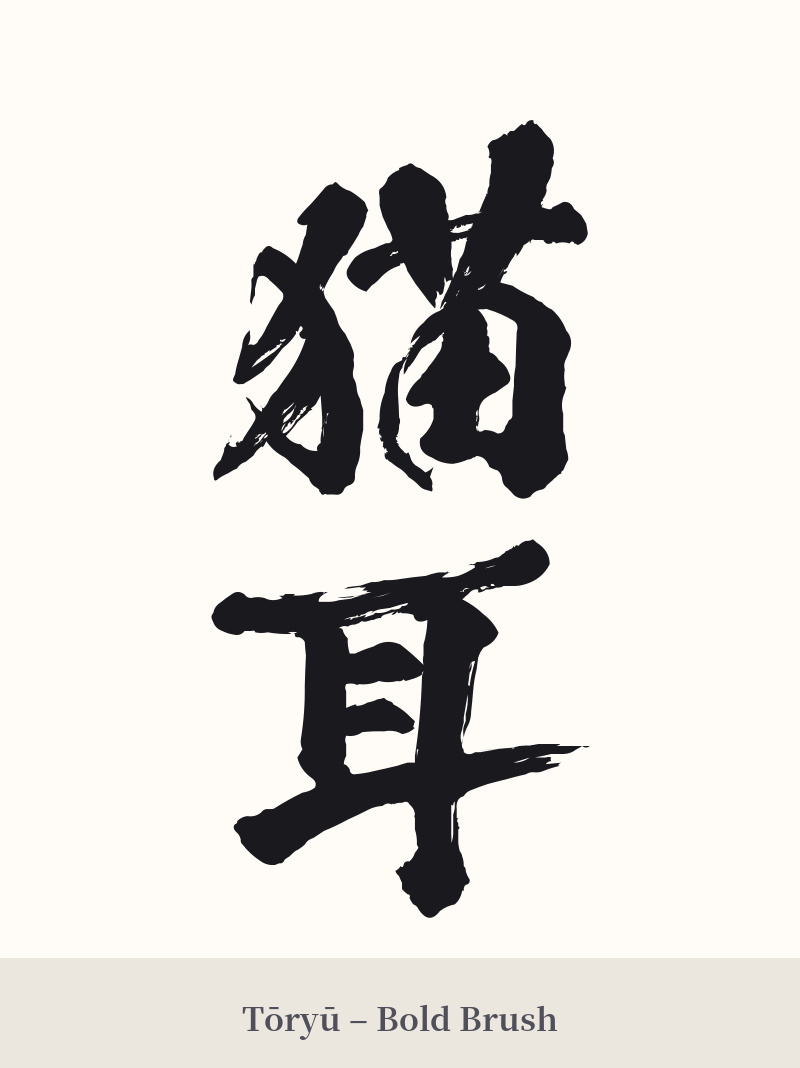
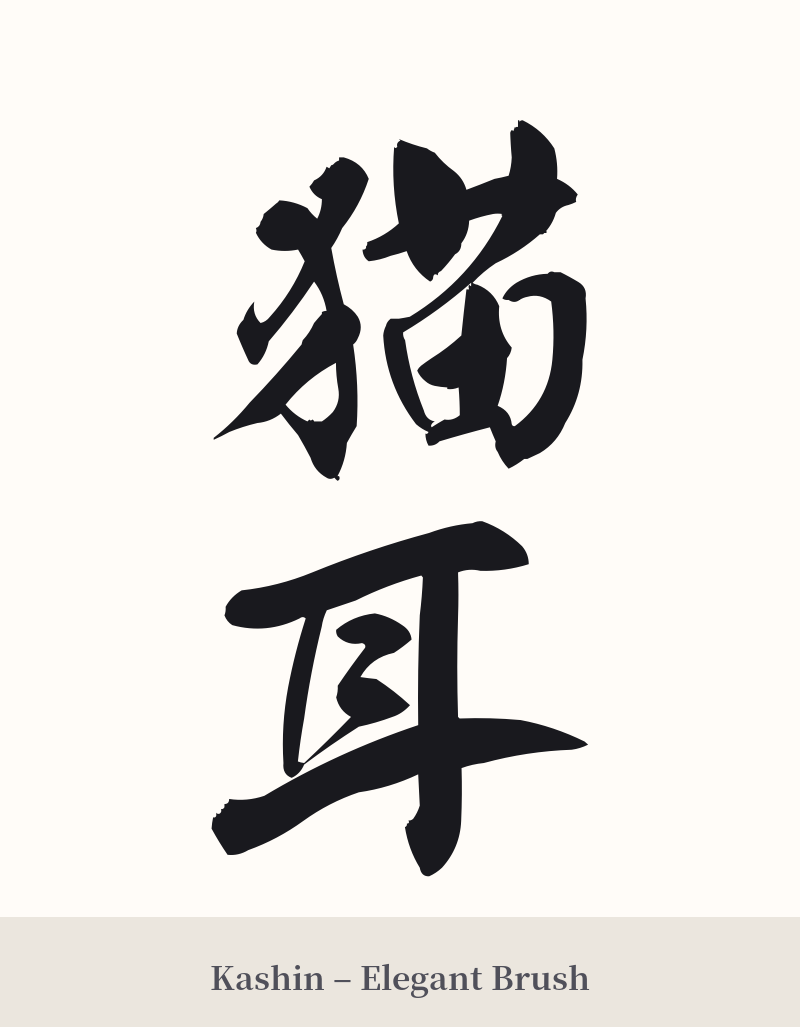
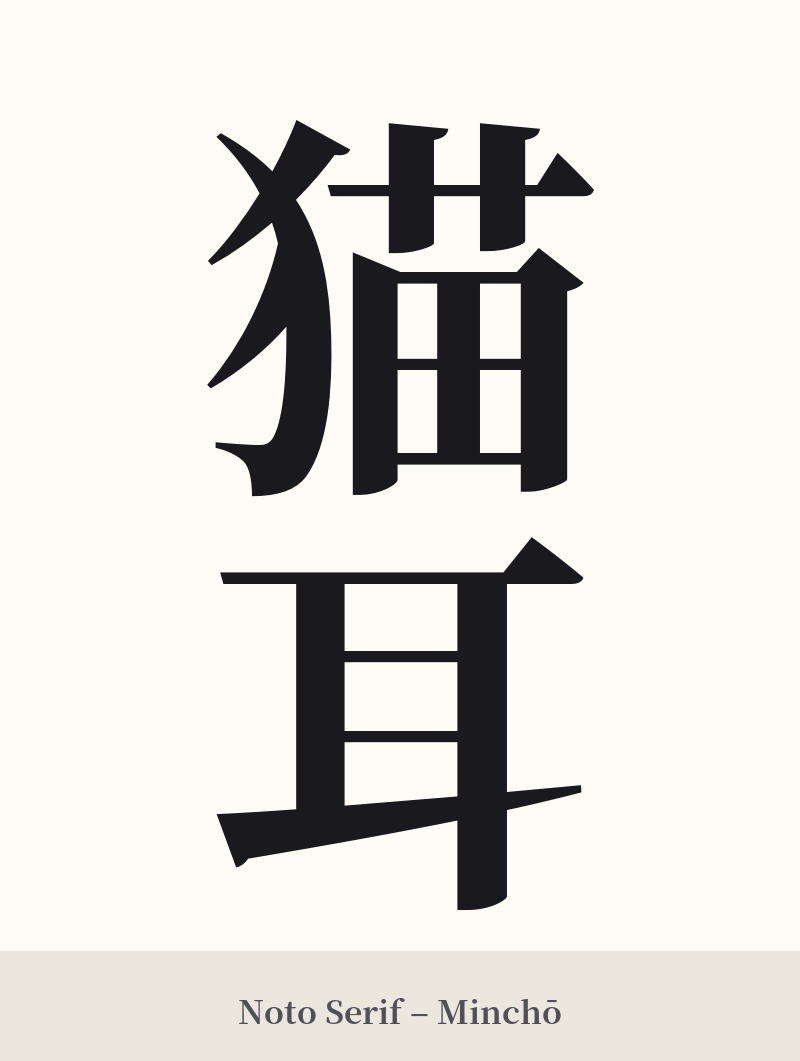
🖌️ Font Styles for 猫耳
The same kanji can look dramatically different depending on the calligraphy style. Choose a font that matches the mood you want for your tattoo or design.
🎨 Tattoo Suitability
📐 Tattoo Design Guide
A 猫耳 tattoo is a statement of affection for Japanese pop culture. The design should reflect its playful and cute nature.
– Placement: This kanji works well in smaller, more discreet locations. Consider the ankle, inner wrist, behind the ear (a fittingly playful spot), or on the collarbone. For a larger piece, it could be placed on the calf or shoulder blade, perhaps integrated with other imagery.
– Font Style: Opt for fonts that feel modern and cheerful. A rounded, sans-serif or even a slightly bubbly font can match the 'kawaii' (cute) aesthetic. For a more artistic take, a stylized, fluid brush script could work, but avoid overly traditional or aggressive styles that would clash with the term's meaning.
– Visual Tips: Consider incorporating the kanji into a larger design. The characters could be subtly placed within the illustration of a cat or a cat-girl character. Adding a small bell, a cat's tail, or paw prints around the kanji can reinforce the theme without being overly literal.
Comments