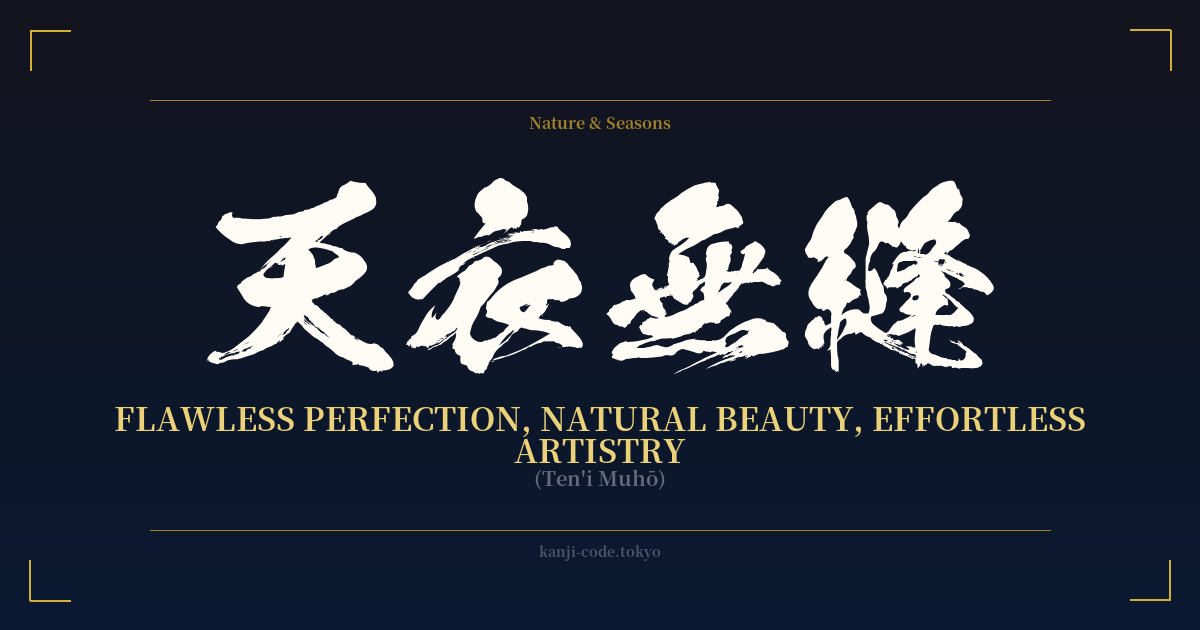
✍️ 天衣無縫 (Ten'i Muhō) — Cultural Context
天衣無縫 (Ten'i Muhō) is a Japanese four-character idiom that paints a beautiful picture with its words. Literally, it translates to "heavenly garment, no seams." This phrase encapsulates the idea of a perfection so natural and complete that it appears to have been created without any effort or artifice.
The origin of Ten'i Muhō lies in a classic Chinese text, the Taiping Guangji (太平廣記). The story describes a celestial maiden descending to earth to visit a scholar. The scholar, intrigued by her divine clothing, notices that it has no stitches. When he asks how it was made, she replies, "Heavenly garments are not sewn with needle and thread." They are simply perfect by their very nature.
This story became the foundation for the idiom's figurative meaning. In Japan, Ten'i Muhō is the highest form of praise for any creation or performance. It describes a work of art, a piece of music, or an athletic display that is so fluid and masterful that the technique behind it becomes invisible. It is the opposite of labored, forced, or ostentatious skill. The artist or performer has reached a level of mastery where their craft is as natural as breathing.
Beyond the arts, the term can also describe a person's character. Someone described as Ten'i Muhō is pure, innocent, and guileless. Their words and actions are genuine and unpretentious, flowing from a sincere heart without calculation. They are naturally themselves, without any of the "seams" of social pretense.
In the context of Japanese aesthetics, Ten'i Muhō resonates with Zen principles of effortless action and finding beauty in naturalness. It is not about a sterile, machine-like perfection, but a living, breathing flawlessness that feels both inevitable and miraculous. It’s the poet who finds the perfect words without struggle, the swordsman whose movements are a seamless dance, and the potter whose hands shape a vessel that seems to have grown from the earth itself. It represents an ideal where skill transcends itself and becomes pure, unadulterated expression.
🖌️ Font Styles for 天衣無縫
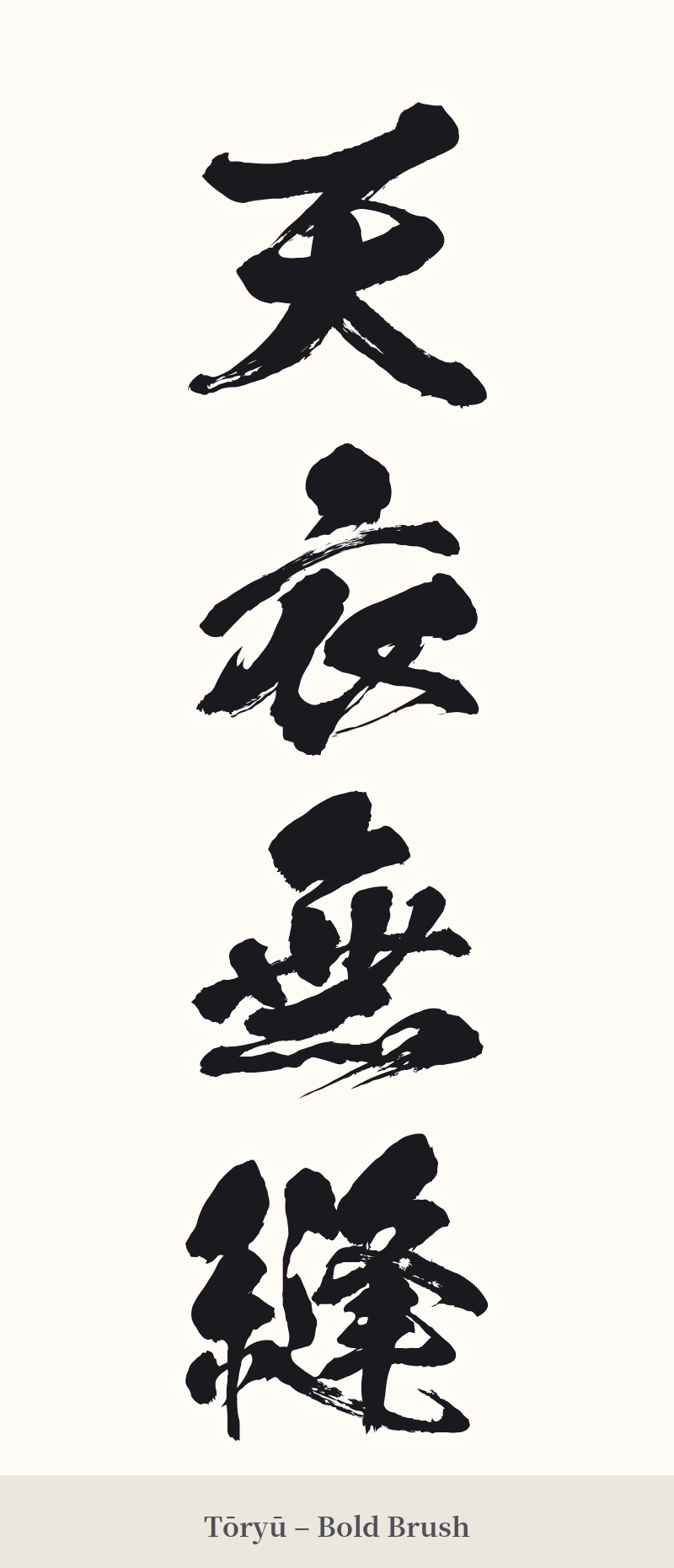
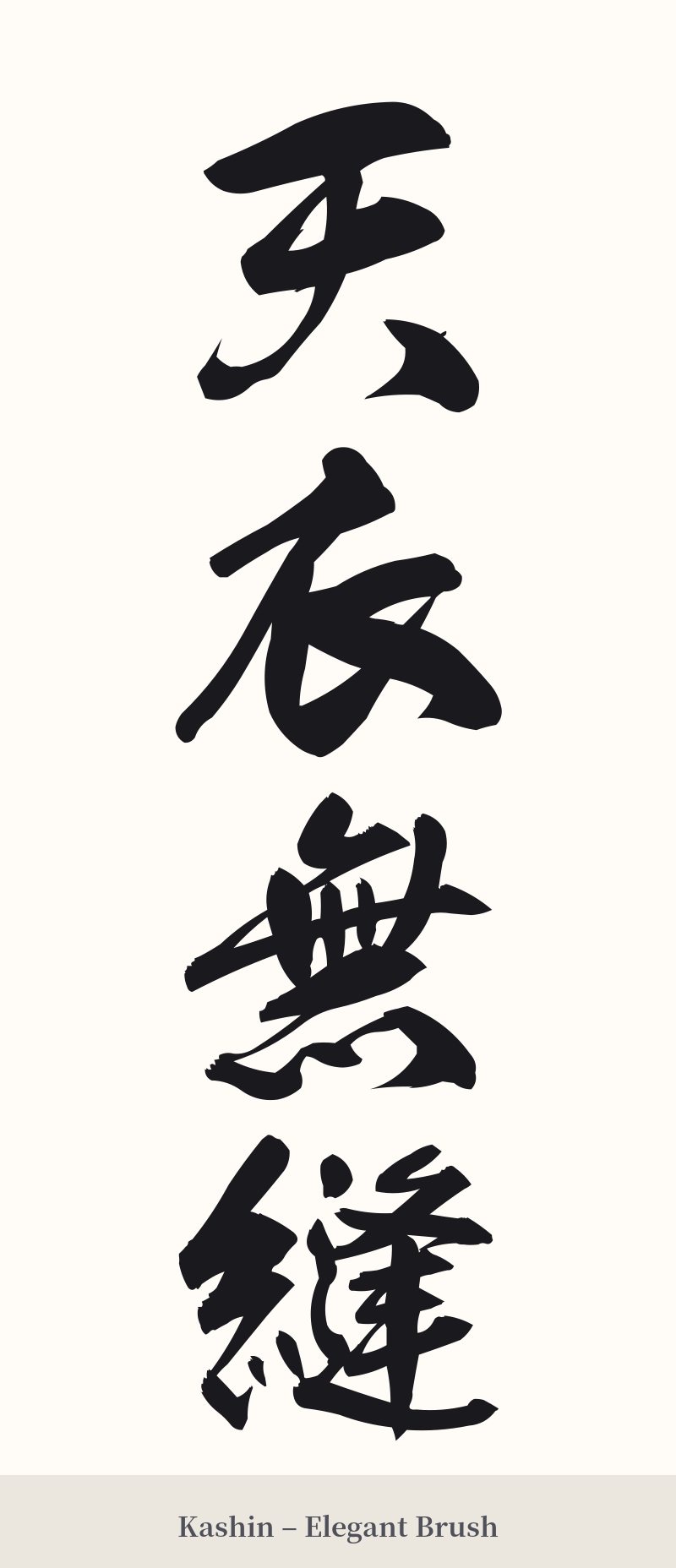
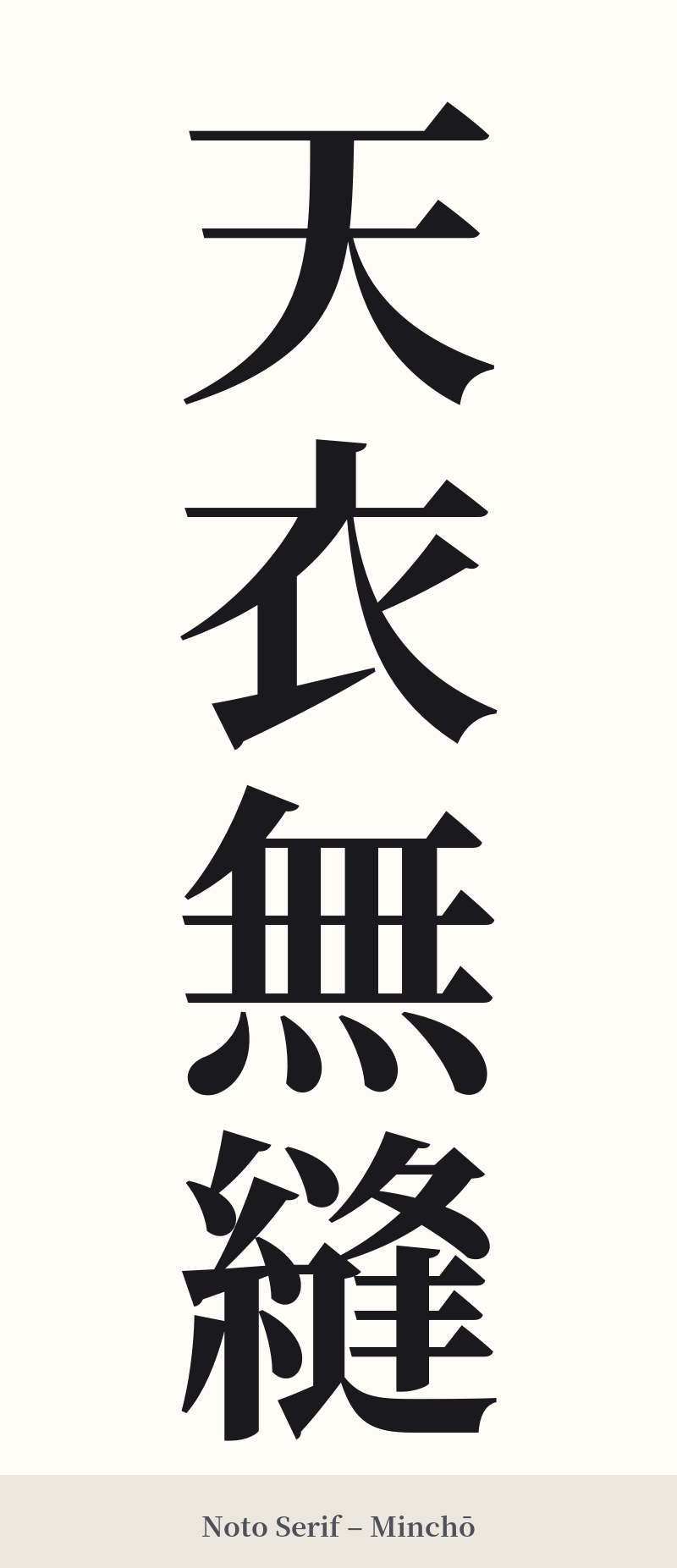
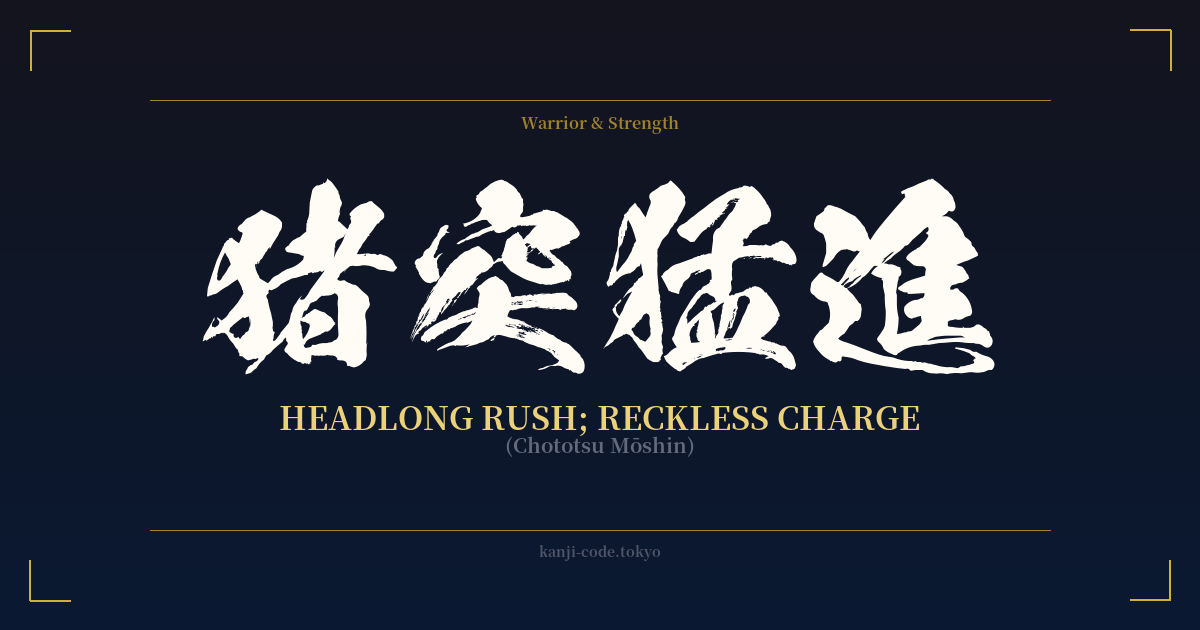
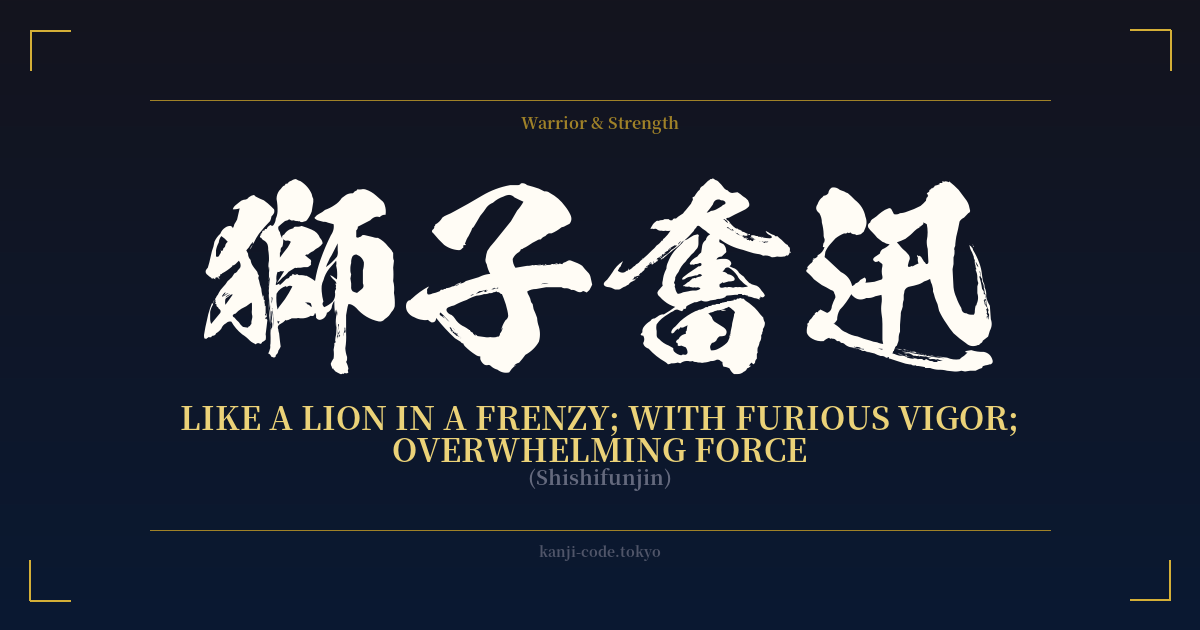
The same kanji can look dramatically different depending on the calligraphy style. Choose a font that matches the mood you want for your tattoo or design.
🎨 Tattoo Suitability
📐 Tattoo Design Guide
For a 天衣無縫 tattoo, the design should honor the elegance and flow of the concept itself. The phrase is a classic 'yojijukugo' (four-character idiom), which has strong traditional aesthetics.
– Placement: Vertical alignment is the most traditional and visually appealing way to present this phrase. The spine, inner forearm, or along the calf or ribs are excellent placements that allow for the vertical flow.
– Font Style: The choice of script is crucial. A semi-cursive style like Gyōsho (行書) is highly recommended. Its flowing, connected strokes perfectly capture the 'effortless' and 'seamless' nature of Ten'i Muhō. A formal block script, Kaisho (楷書), can also work for a bold, clear statement, but it requires precision to avoid making the complex characters look dense. A full cursive Sōsho (草書) might be too abstract and risk illegibility.
– Visual Tips: Work with an artist who understands Japanese calligraphy (shodō). The balance and spacing (ma, 間) between the four characters are vital. The design must accommodate the high stroke count of 無 and 縫, so avoid making the tattoo too small. A medium to large size is necessary to ensure the details of the final character remain clear over time.
Comments