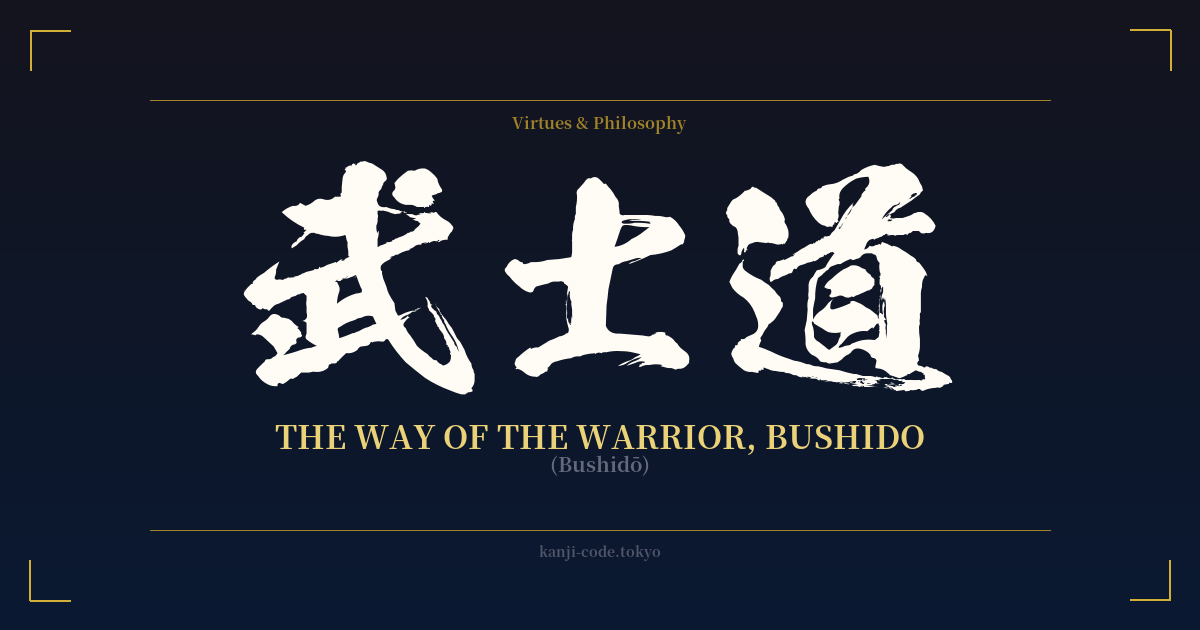
✍️ 武士道 (Bushidō) — Cultural Context
武士道 (Bushidō) translates to "the Way of the Warrior." It is a complex moral and ethical code that governed the lives of the samurai, Japan's noble warrior class. While often imagined as an ancient, monolithic doctrine, Bushidō was not a single written text but a living philosophy that evolved over centuries.
The term itself combines three kanji: 武 (bu), meaning "martial" or "military," 士 (shi), meaning "gentleman" or "scholar," and 道 (dō), meaning "the Way" or "path." This combination is key: it wasn't just about fighting prowess, but about being a disciplined, cultured, and honorable individual. The "Way" implies a lifelong journey of self-improvement and adherence to a strict set of principles.
The concept of Bushidō was most famously introduced to the Western world by Nitobe Inazō's 1900 book, "Bushido: The Soul of Japan." Written in English for a foreign audience, Nitobe's work presented an idealized and romanticized version of the code, comparing samurai ethics to European chivalry. He outlined what are now considered the core virtues of Bushidō: Righteousness (義, gi), Courage (勇, yū), Benevolence (仁, jin), Respect (礼, rei), Honesty (誠, makoto), Honor (名誉, meiyo), and Loyalty (忠義, chūgi).
However, it's important to understand that this codification largely happened during the peaceful Edo period (1603-1868), a time when samurai were transitioning from battlefield warriors to administrators. The code served to justify their continued status as a ruling class. The historical reality of the samurai during times of war was often far more brutal and pragmatic than the lofty ideals suggest.
In modern Japan, Bushidō has a complex legacy. It is revered as a symbol of discipline, dedication, and the pursuit of excellence, often invoked in the context of martial arts (budō) or even corporate culture. At the same time, its association with the ultra-nationalism and militarism of Imperial Japan before and during World War II makes it a sensitive topic. For many Japanese people, it represents a historical ideal that is both admired and viewed with a degree of caution. Therefore, to truly appreciate Bushidō is to embrace its full story—the noble philosophy, the romanticized ideal, and the complicated history.
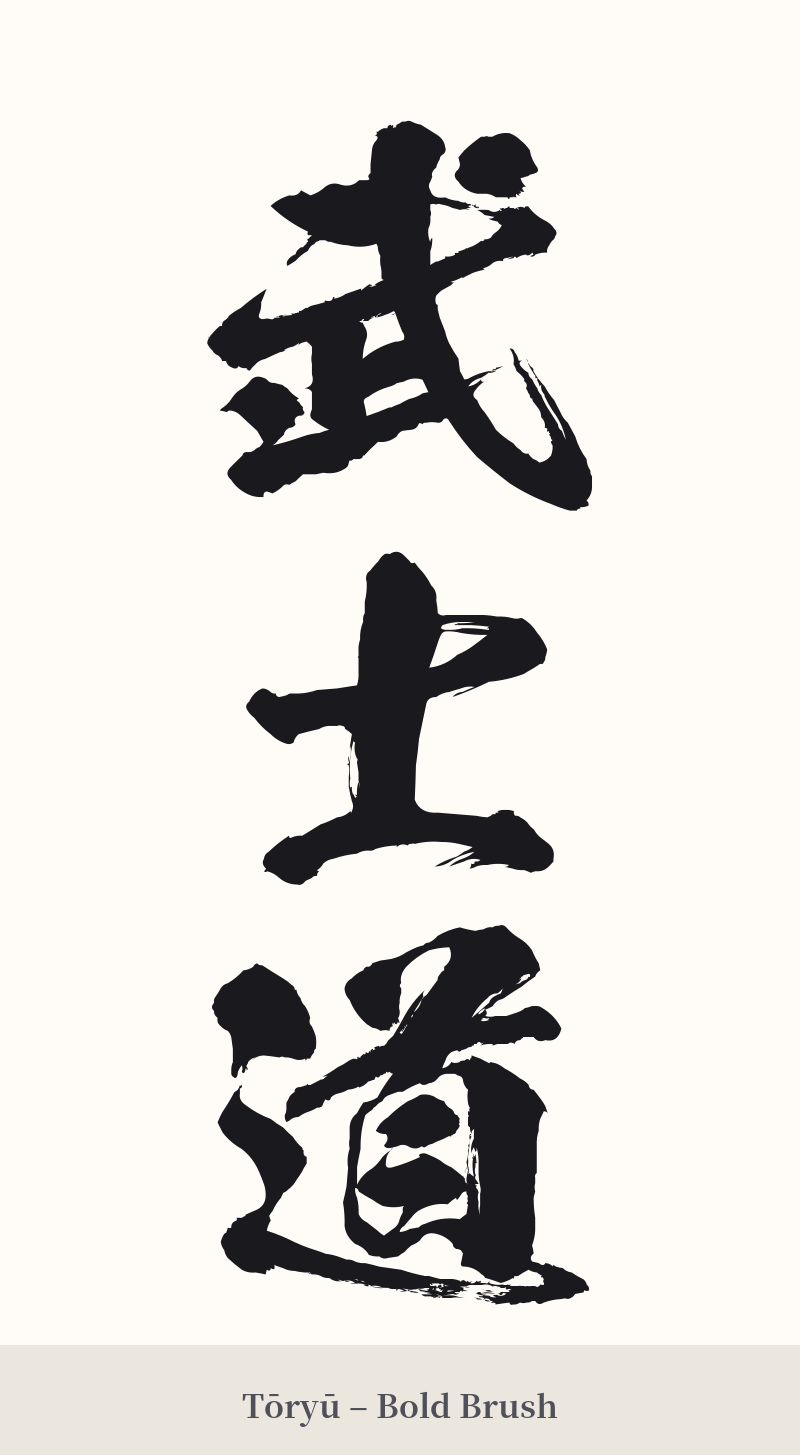
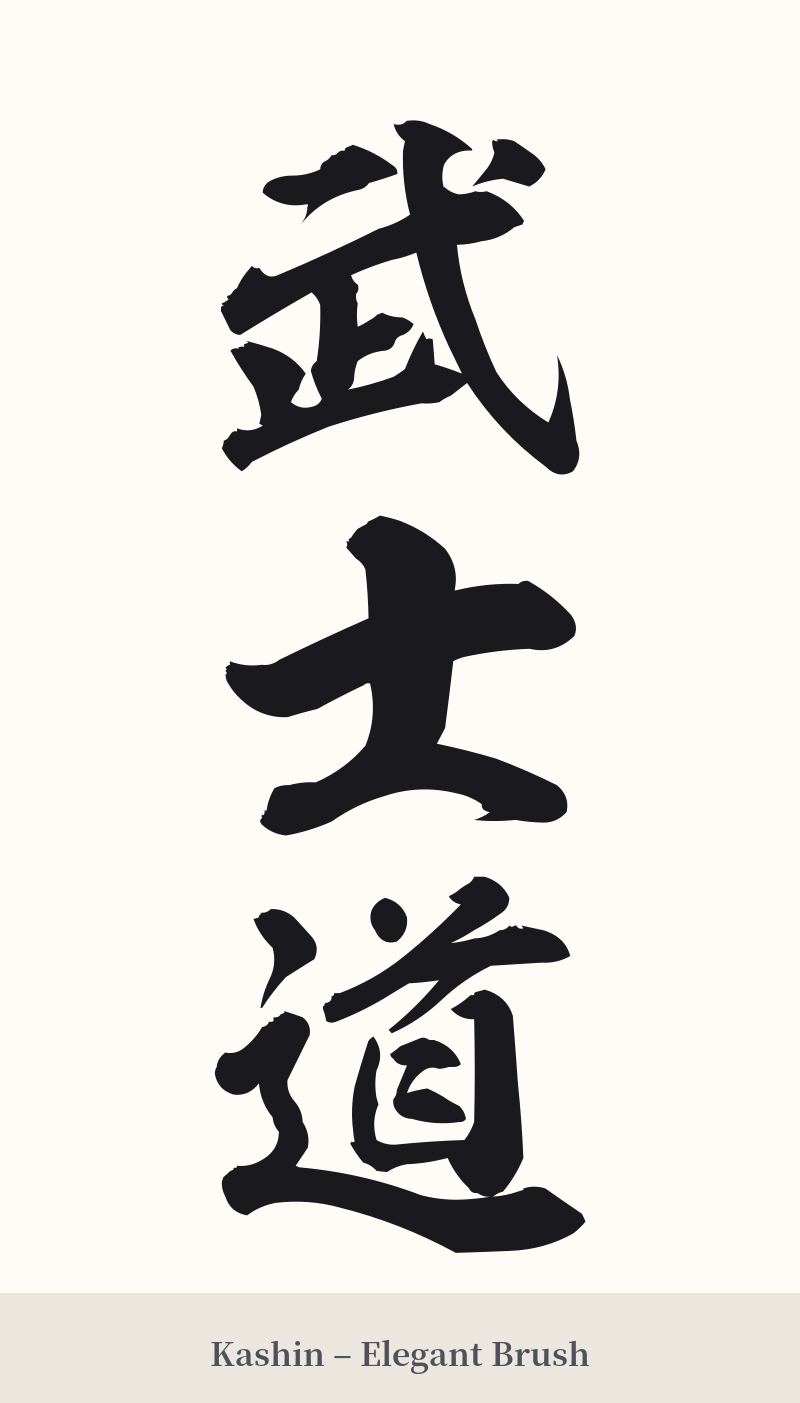
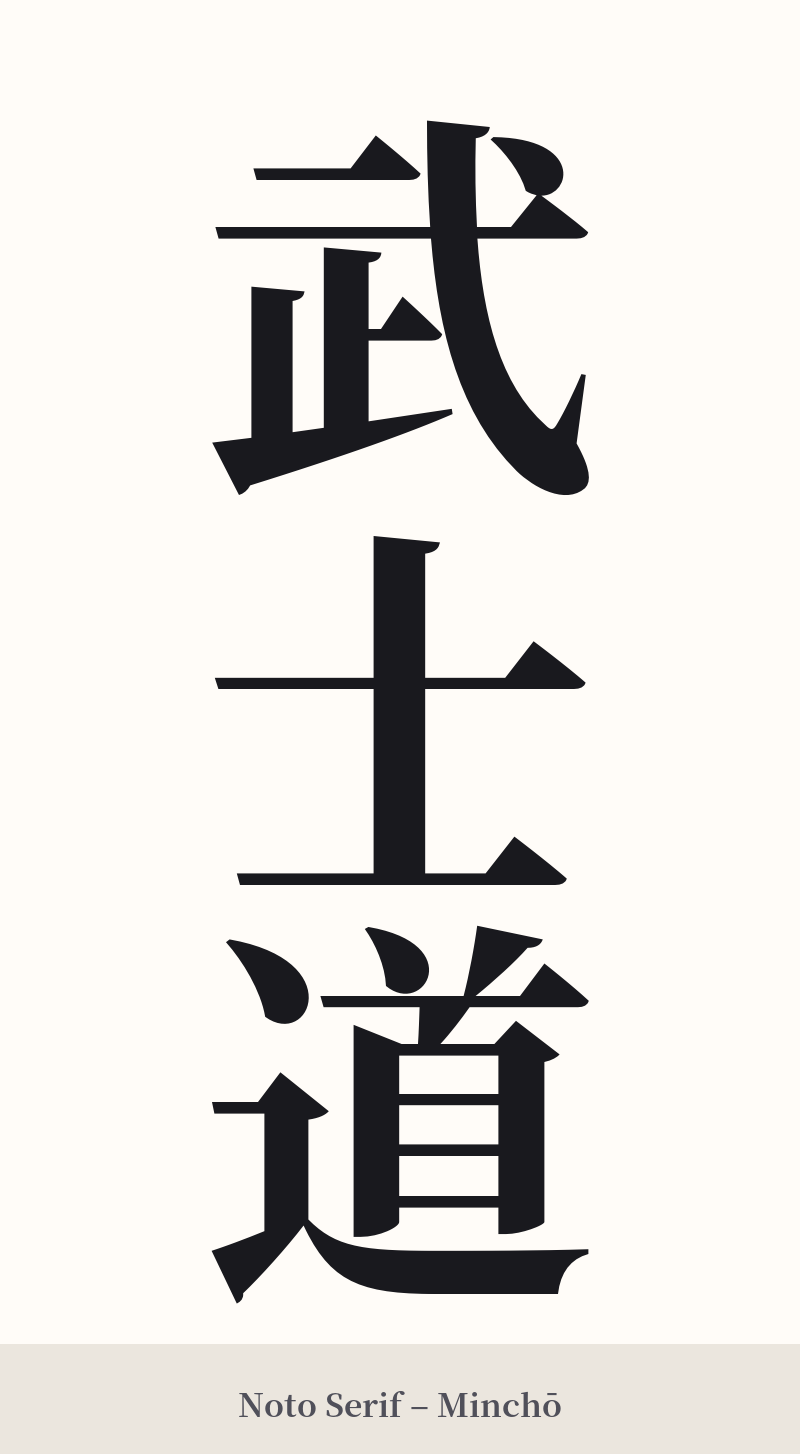
🖌️ Font Styles for 武士道
The same kanji can look dramatically different depending on the calligraphy style. Choose a font that matches the mood you want for your tattoo or design.
🎨 Tattoo Suitability
📐 Tattoo Design Guide
The three characters of Bushidō offer a balanced and powerful aesthetic. Its vertical orientation is classic and highly recommended.
– Placement: A vertical design works exceptionally well on the forearm, the calf, or running down the spine or ribs. For a horizontal layout, the chest or upper back provides a strong canvas.
– Font Style: For a feeling of strength and tradition, a bold `Kaisho` (block script) is an excellent choice. For a more artistic and fluid look, a `Gyosho` (semi-cursive) or `Sosho` (cursive) style can be stunning, but requires an artist with specific expertise in Japanese calligraphy to execute correctly.
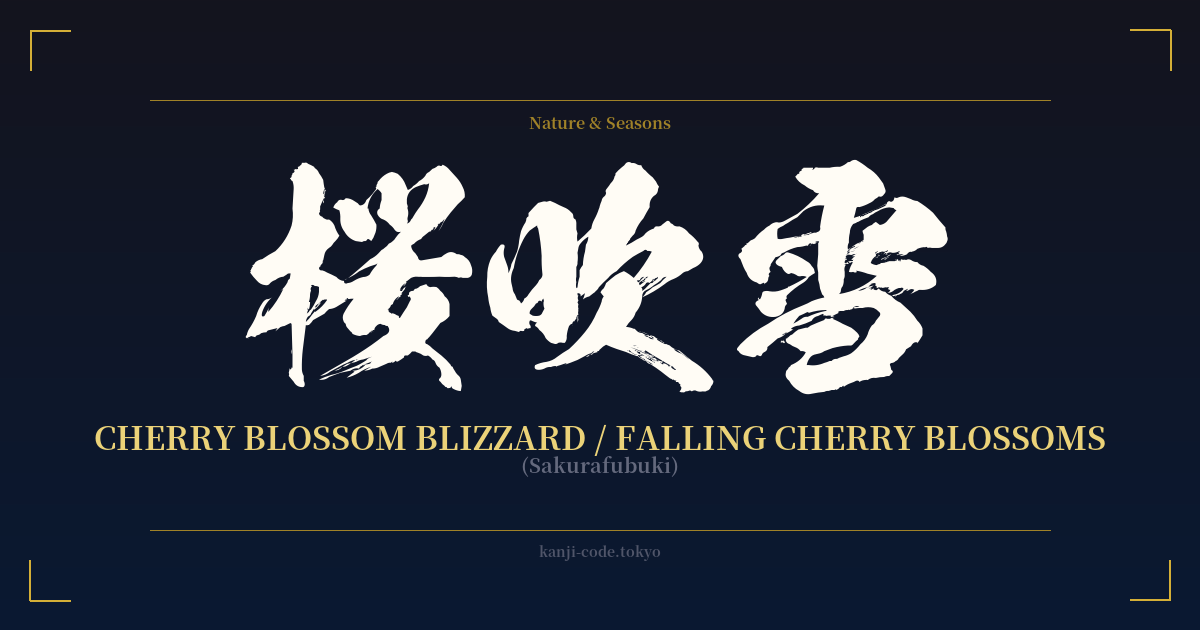
– Visual Tips: The design is powerful on its own, but can be paired with other elements. Consider adding a red `hanko` (seal stamp) for a touch of authenticity. It can also be integrated into a larger piece with imagery like cherry blossoms (sakura) to symbolize the transience of life, or a samurai helmet (kabuto).
Comments