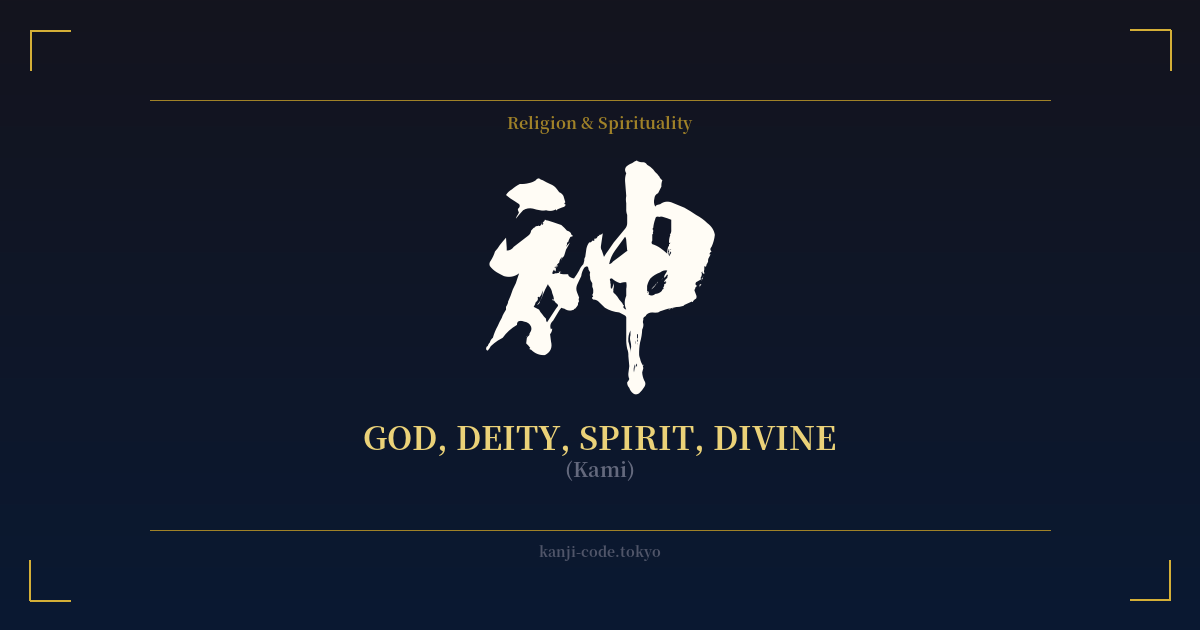
✍️ 神 (Kami) — Cultural Context
The kanji 神, read as 'Kami,' is one of the most profound and culturally significant characters in the Japanese language. While often translated as 'God' or 'deity,' this simple English equivalent fails to capture its vast and nuanced meaning, which is deeply rooted in Japan's indigenous religion, Shintoism.
Unlike the singular, omnipotent God of Abrahamic religions, Kami are plural, numerous, and exist throughout the natural world. The Shinto tradition speaks of the 'Yaoyorozu no Kami' (八百万の神), or the eight million gods, a poetic expression signifying an infinite number. This reflects an animistic worldview where divinity is not separate from the world but inherent within it.
A Kami can be anything that inspires a sense of awe or reverence. This includes powerful forces of nature, such as the sun goddess Amaterasu Ōmikami, the stormy sea god Susanoo-no-Mikoto, or the spirits residing in mountains, rivers, trees, and rocks. Extraordinary human beings, including emperors, clan ancestors, and heroes, can also be enshrined and revered as Kami after their death.
The character's origin beautifully illustrates this concept. The left radical, 示 (shimesu), is a pictogram of an altar, representing things related to ritual and the divine. The right side, 申 (mōsu), is thought to have originally depicted lightning striking down from the sky, symbolizing a powerful, heavenly utterance or phenomenon. Together, they form a character that signifies a divine presence or revelation, something awe-inspiring that is worthy of worship.
In modern Japanese, the influence of 神 is widespread. It forms the basis of words like 神道 (Shintō – 'The Way of the Gods'), 神社 (jinja – Shinto shrine), and 神風 (kamikaze – 'divine wind'). It also extends to more abstract concepts, such as 精神 (seishin – spirit/mind) and 神経 (shinkei – nerve), where it lends a sense of vital essence or core energy. To understand 神 is to glimpse the very heart of Japanese spirituality—a world where the divine is not a distant ruler but a constant, tangible presence in all things.
🖌️ Font Styles for 神
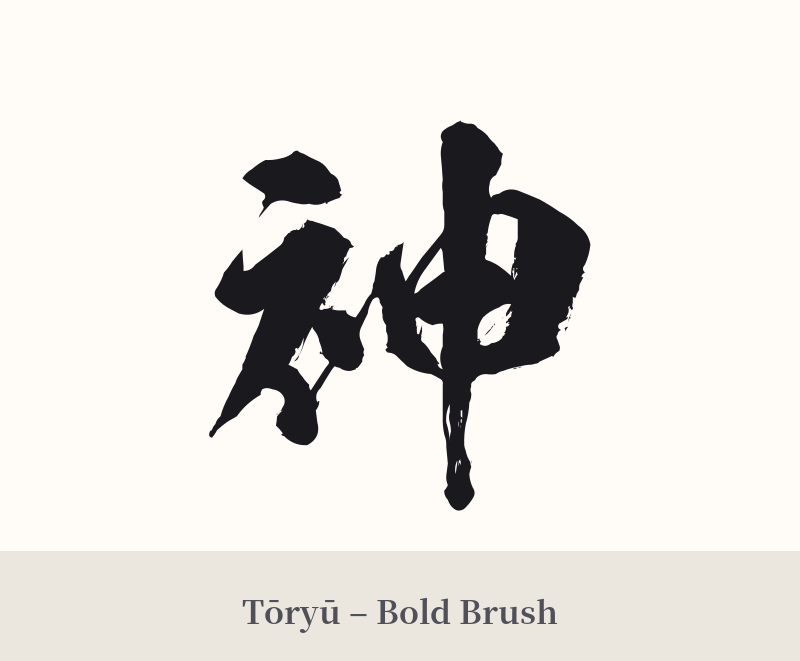
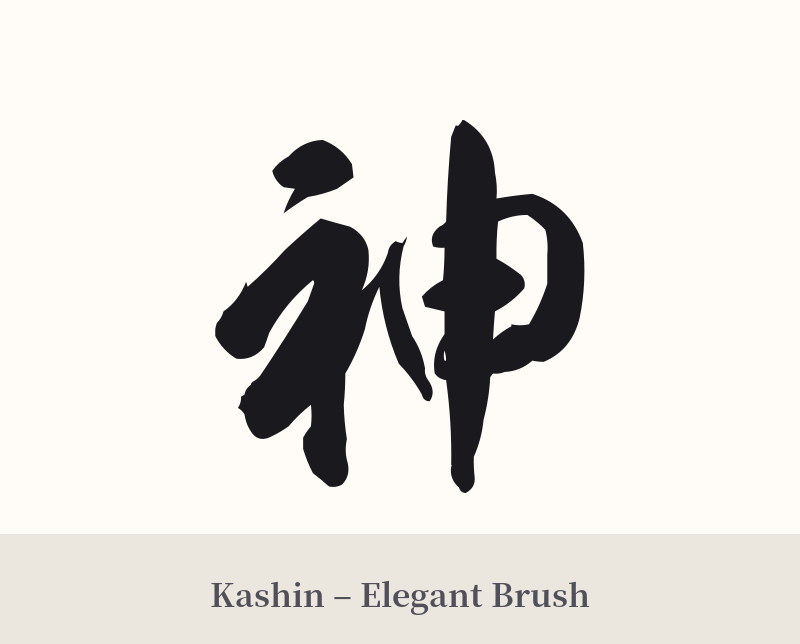
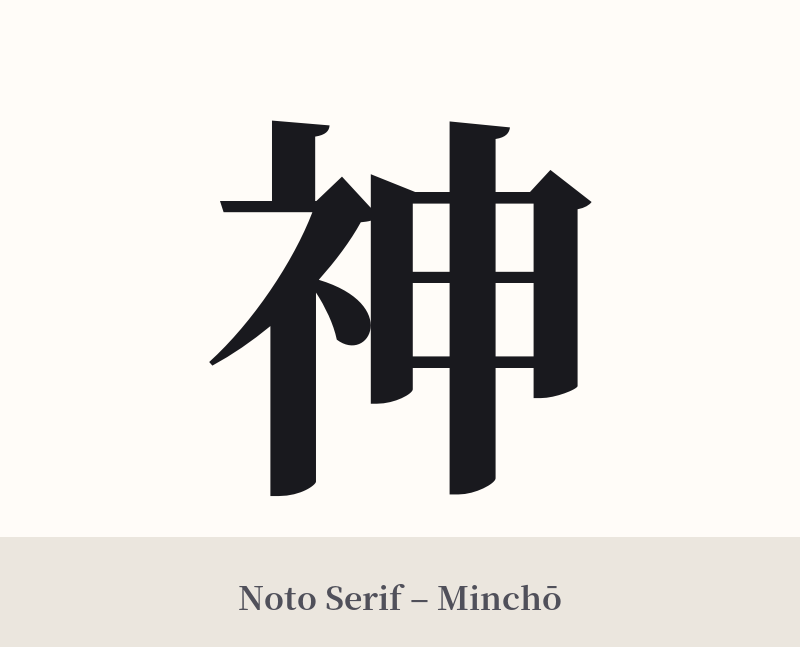
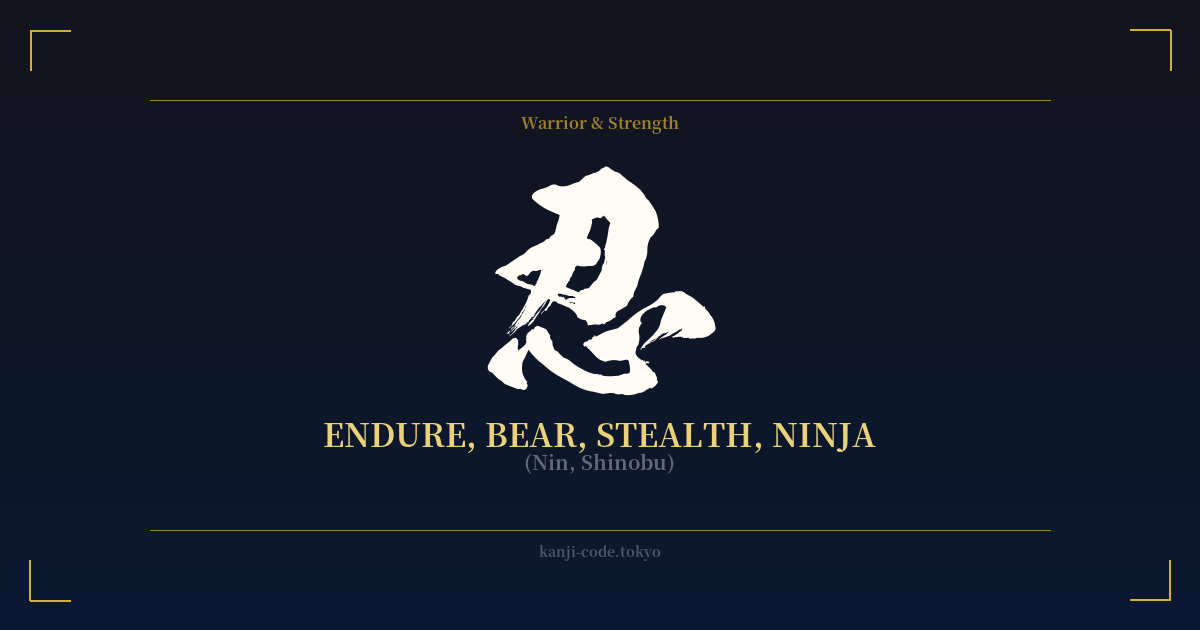
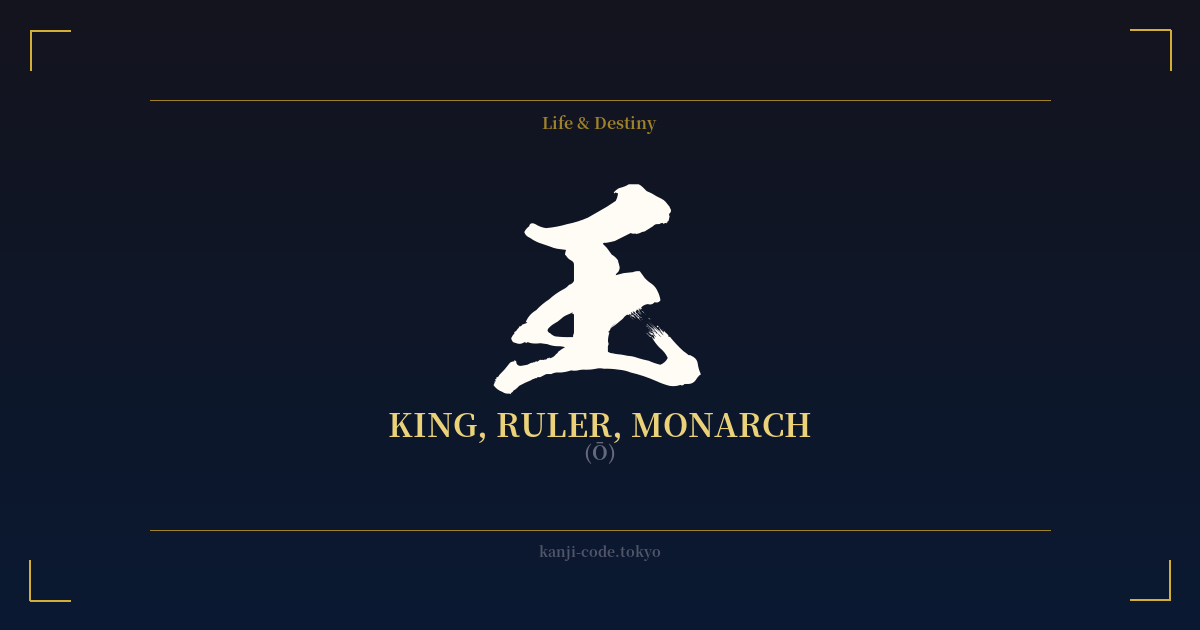
The same kanji can look dramatically different depending on the calligraphy style. Choose a font that matches the mood you want for your tattoo or design.
🎨 Tattoo Suitability
📐 Tattoo Design Guide
The kanji 神 is a powerful and visually balanced character, making it a versatile choice for a tattoo design. Its sacred nature calls for thoughtful placement and styling.
– Placement Suggestions: For a single, impactful statement, consider placing it on the back of the neck, the center of the upper back, the forearm, or the calf. These locations provide a flat, clear canvas that respects the character's symmetry. A larger, more central placement on the chest can also be very powerful.
– Font Style Recommendations: The style can dramatically alter the feeling of the tattoo. A formal, crisp 'Kaisho' (block script) emphasizes its authority and divine status. For a more fluid and organic feel that connects to the nature-spirit aspect of Kami, a 'Gyōsho' (semi-cursive) or 'Sōsho' (cursive) script is an excellent choice. A bold, expressive 'Shodō' (calligraphy) brushstroke style can capture the raw, primal energy of the 'divine wind' or a mountain god.
– Visual Tips: While 神 is strong enough to stand alone, it can be integrated with other Japanese motifs to provide context. Consider pairing it with a torii gate, a shimenawa (sacred rope), or natural elements like waves, clouds, or a specific animal associated with a particular Kami (like a fox for Inari). This helps anchor the design in its Shinto roots and moves it away from a generic 'God' interpretation.
Comments