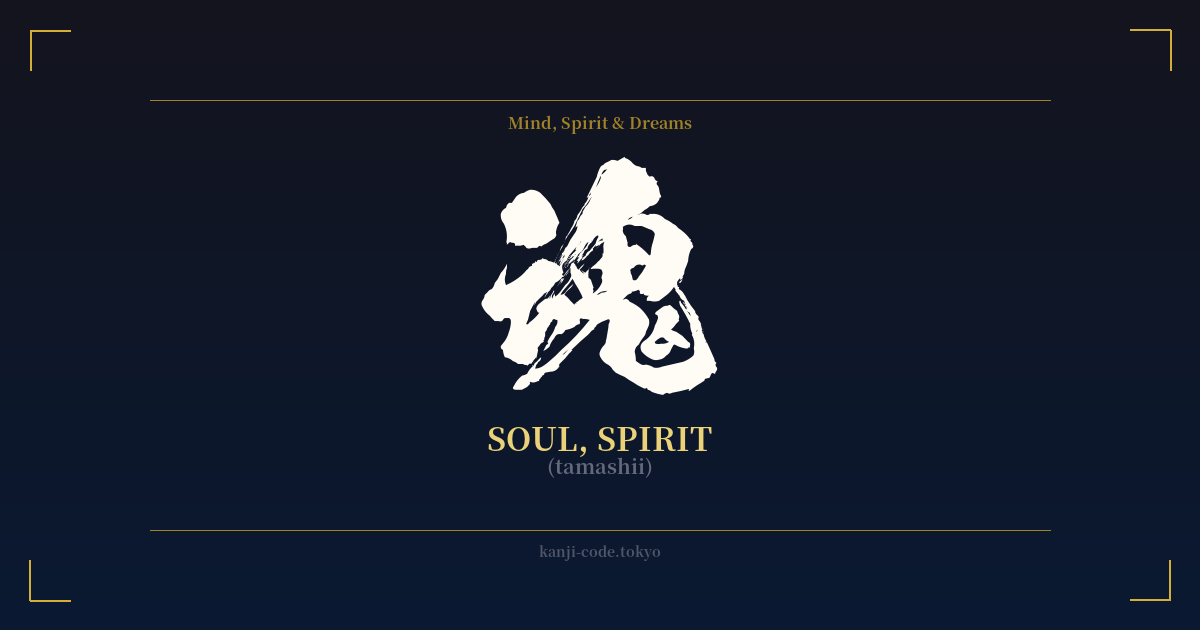
✍️ 魂 (tamashii) — Cultural Context
The kanji 魂 (tamashii) delves into one of the most profound concepts in human thought: the soul. It represents the immortal, ethereal essence of a living being, the core of consciousness that is believed to persist even after the physical body has perished. This is distinct from the related kanji 心 (kokoro), which refers to the heart, mind, and emotions—the seat of feelings and thoughts within a living person. Tamashii is the spiritual life force itself.
The character's very structure tells a story. It is composed of two radicals: 云 (cloud) and 鬼 (oni/demon). The 'cloud' radical symbolizes something ethereal, celestial, and intangible, floating between heaven and earth. The 'demon' radical, while it can mean 'demon' or 'ogre', originally depicted a spirit or a ghost, representing the unseen world and the supernatural. Together, they create a powerful image: a spiritual entity, an ethereal force, the disembodied essence of a person.
In Japanese spiritual traditions, the concept of 'tama' is central. Shintoism, Japan's indigenous faith, posits that 'tama' is a spiritual essence that can inhabit not just people, but also animals, objects, and even natural phenomena like mountains and rivers. This belief underscores a deep respect for the spiritual energy pervading the world. When a person dies, their tamashii is believed to journey to the afterlife, a belief that shapes many Japanese funerary rites and ancestor veneration practices.
Buddhism, which arrived in Japan later, introduced concepts like reincarnation (輪廻, rinne), adding another layer to the understanding of 魂. The soul became seen as a consciousness that transmigrates from one life to the next, on a journey through cycles of rebirth until it achieves enlightenment.
The idea of tamashii also resonates strongly within the samurai ethos of Bushido. The term 大和魂 (Yamato-damashii), or "the Japanese Spirit," encapsulates a set of virtues like courage, integrity, and honor. For a warrior, to pour one's soul into their sword, their art, or their duty was the highest calling. This signifies a total, unwavering commitment that transcends mere physical effort.
Today, 魂 continues to be a potent symbol in modern Japan, frequently appearing in song lyrics, movie titles, and especially in manga, anime, and video games. It's a testament to the kanji's enduring power to capture the ineffable, a single character that speaks volumes about life, death, and the spirit that connects them.
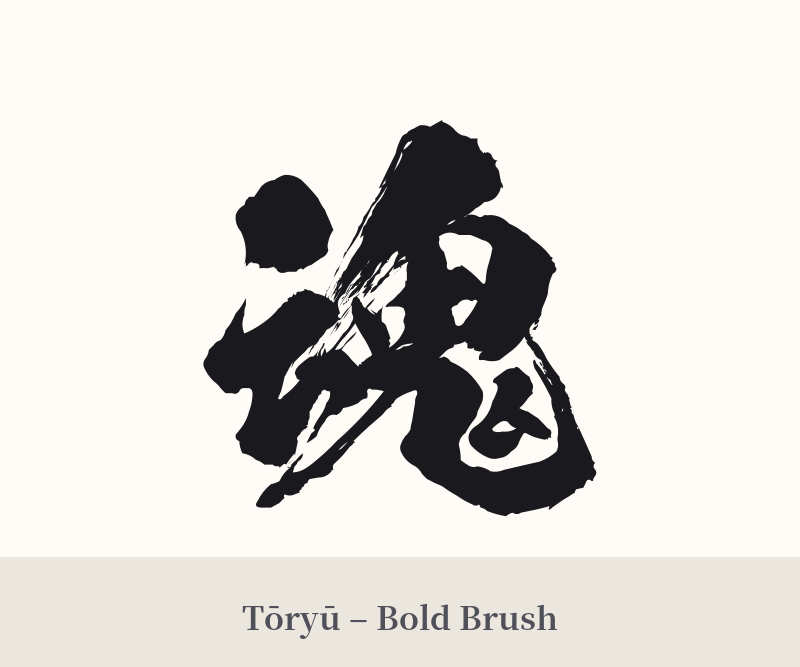
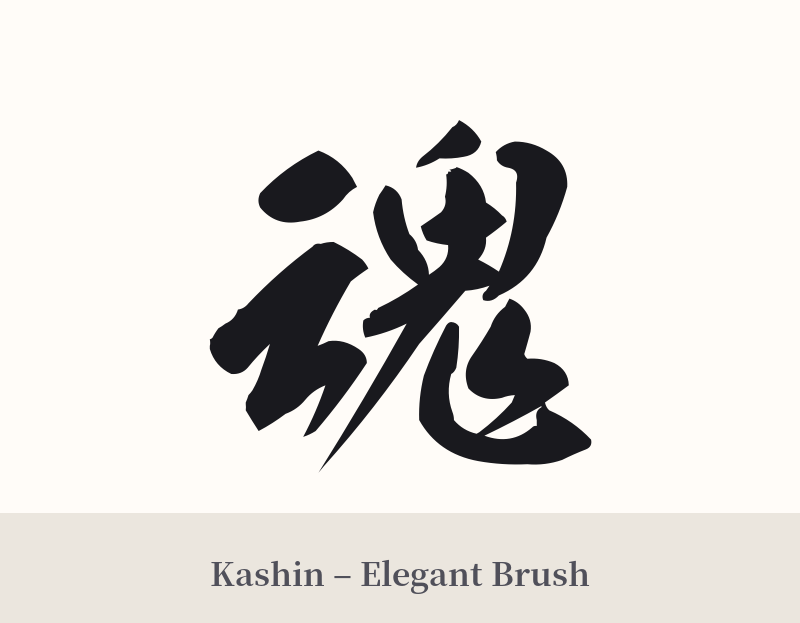
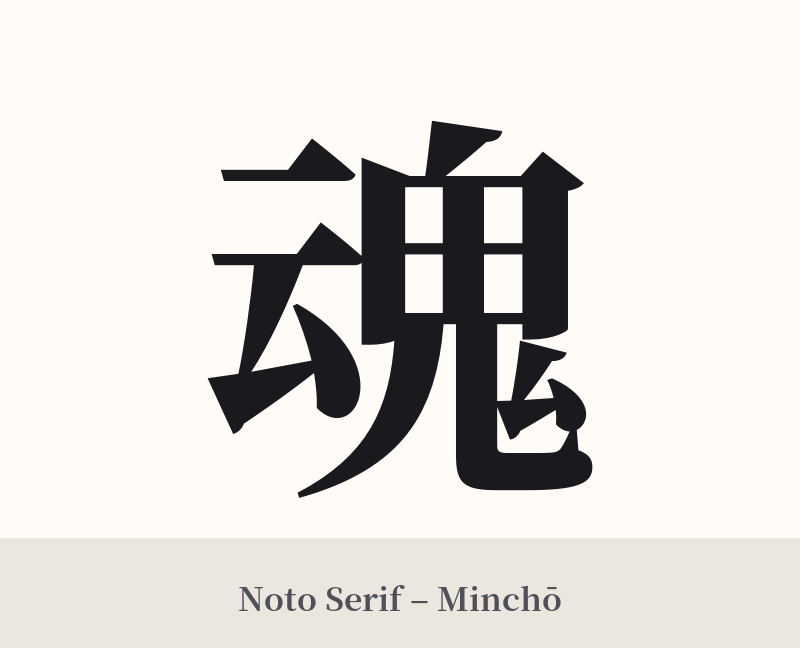
🖌️ Font Styles for 魂
The same kanji can look dramatically different depending on the calligraphy style. Choose a font that matches the mood you want for your tattoo or design.
🎨 Tattoo Suitability
📐 Tattoo Design Guide
The kanji 魂 is a visually striking character that works well in a variety of tattoo styles and placements.
– Placement: Due to its moderate complexity (14 strokes), it's best placed where it has room to breathe. The forearm, calf, or back (especially between the shoulder blades) are excellent choices. Avoid making it too small, as the details within the '鬼' radical can blur together.
– Font Style: The style you choose can dramatically alter the feel. A strong, traditional 'Kaisho' (block) script emphasizes stability and power. For a more fluid and energetic look, a semi-cursive 'Gyosho' or fully cursive 'Sosho' style is ideal, mimicking the flow of spiritual energy. A dynamic 'shodo' (calligraphy) brushstroke style is also highly recommended to capture its artistic and ethereal nature.
– Visual Tips: While 魂 is powerful on its own, it can be paired with other elements. Consider incorporating it into a larger design with an 'enso' circle (symbolizing enlightenment and the universe), wisps of smoke or spirit energy, or a lotus flower to represent purity and rebirth. The key is to complement the kanji, not overwhelm it.
Comments