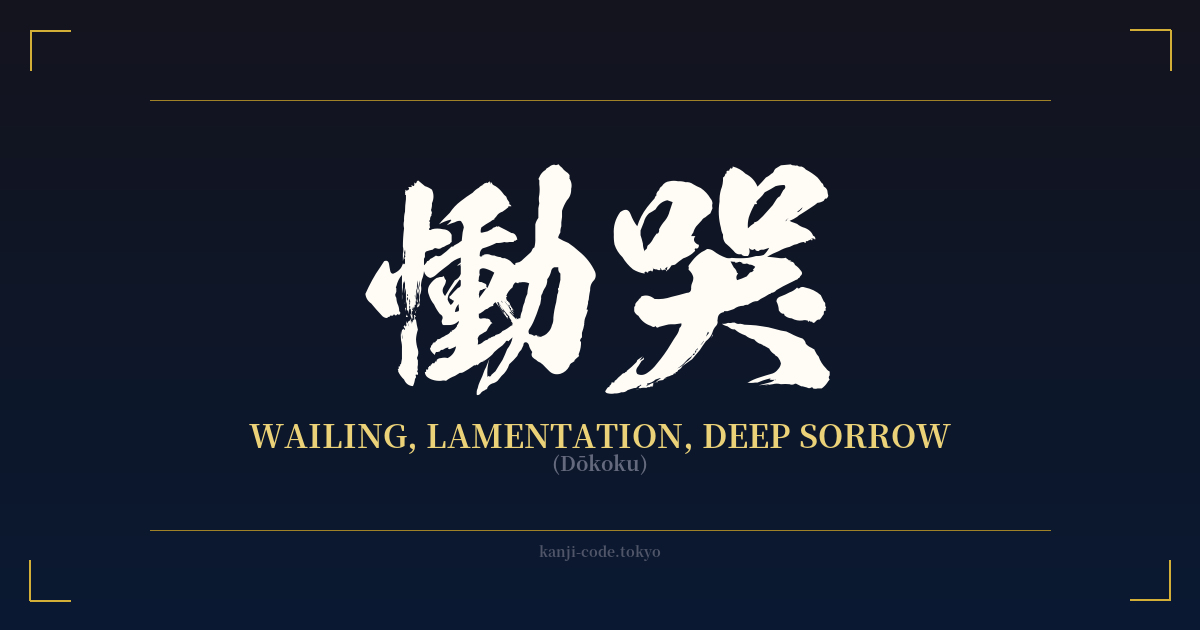
✍️ 慟哭 (Dōkoku) — Cultural Context
慟哭 (Dōkoku) is a word that echoes with the sound of profound human suffering. It is not merely sadness or grief; it is the physical, audible manifestation of that sorrow. It is the act of wailing, crying out loud, or lamenting with one's entire being. This is not the quiet tear of melancholy (哀愁, aishū) or the general state of being sad (悲しみ, kanashimi). Dōkoku is a storm of emotion, a raw and unrestrained release of pain.
The power of the word comes from its constituent kanji. The first, 慟 (dō), combines the 'heart' radical (忄) with the character for 'move' (動). This beautifully illustrates the core meaning: a heart that is literally moved, shaken, or agitated by grief. The second character, 哭 (koku), is even more primal. Its structure is often interpreted as depicting a person wailing with open mouths, or even a dog (犬) howling, capturing the visceral, almost animalistic sound of pure despair.
In Japanese culture, which often prizes restraint and endurance (我慢, gaman), the concept of 慟哭 holds a special place. While public displays of emotion are generally subdued, Dōkoku represents a moment so overwhelming that cultural norms are shattered. It is the grief seen at a funeral for a loved one, the cry of a character in a Noh or Kabuki play who has lost everything, or the collective mourning of a nation after a tragedy. It is a recognized, albeit extreme, part of the human emotional spectrum.
This term is frequently encountered in literature, film, and manga to signify a climactic point of despair. A character who reaches the point of 慟哭 is at their absolute breaking point, having endured suffering beyond their limits. It is the sound of a soul laid bare by tragedy. For example, a scene might be described as 「慟哭の声が響き渡った」(dōkoku no koe ga hibikiwatatta), meaning "The sound of wailing echoed all around." This single word paints a powerful and unforgettable auditory and emotional landscape, making it one of the most potent terms for sorrow in the Japanese language.
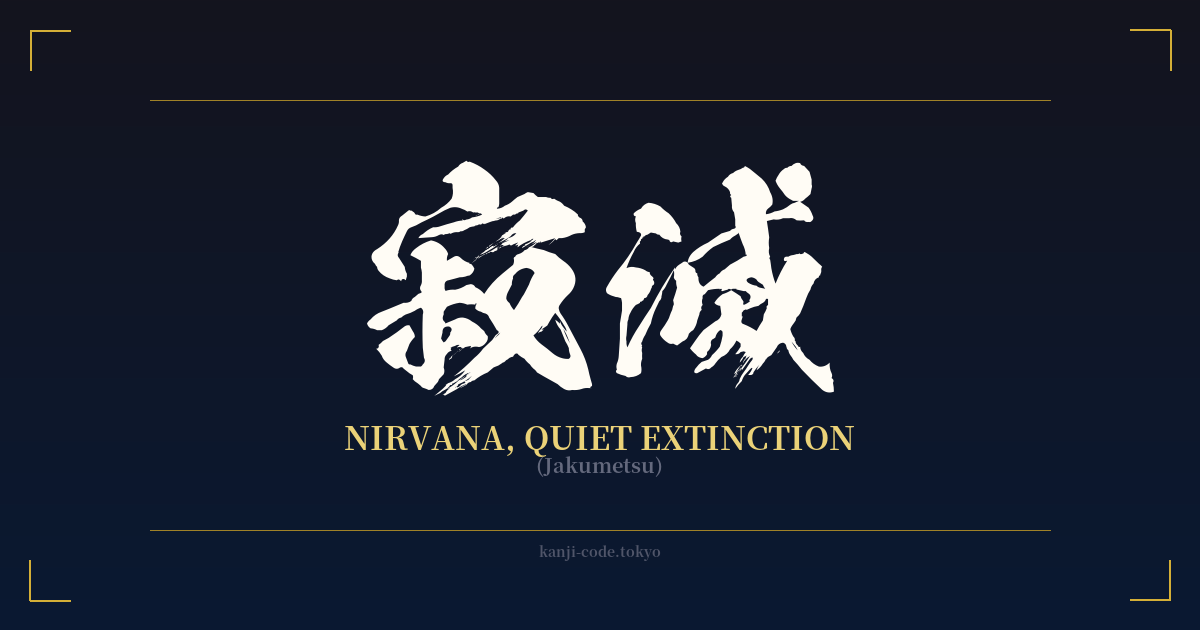
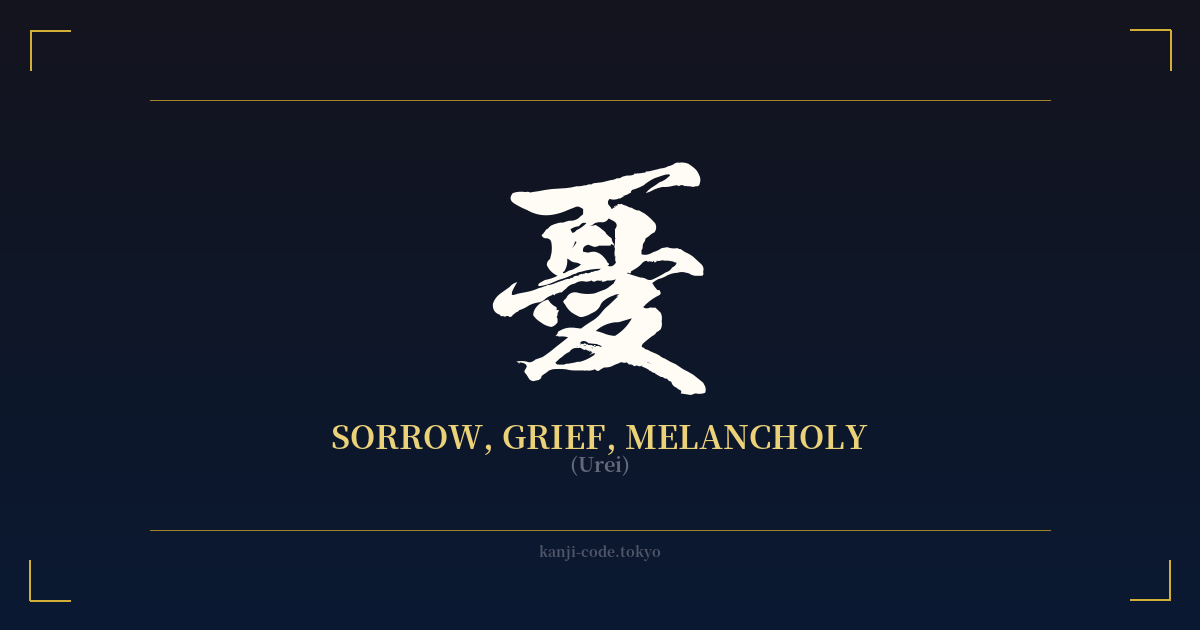
🖌️ Font Styles for 慟哭
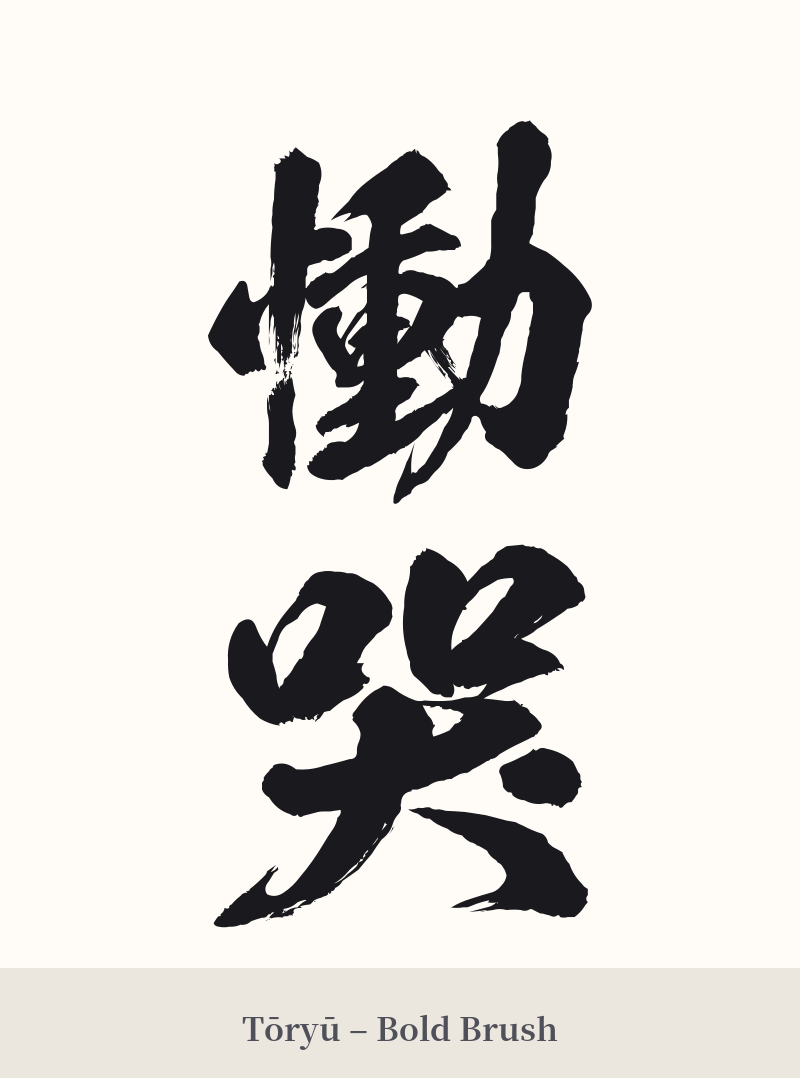
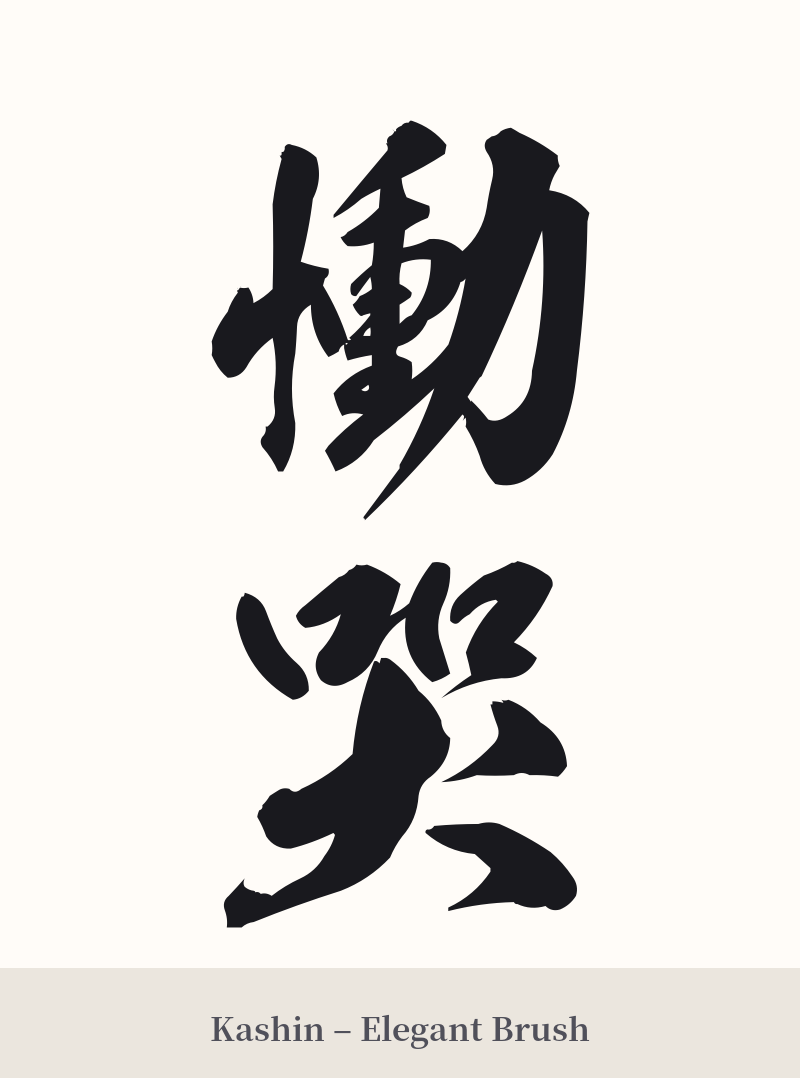
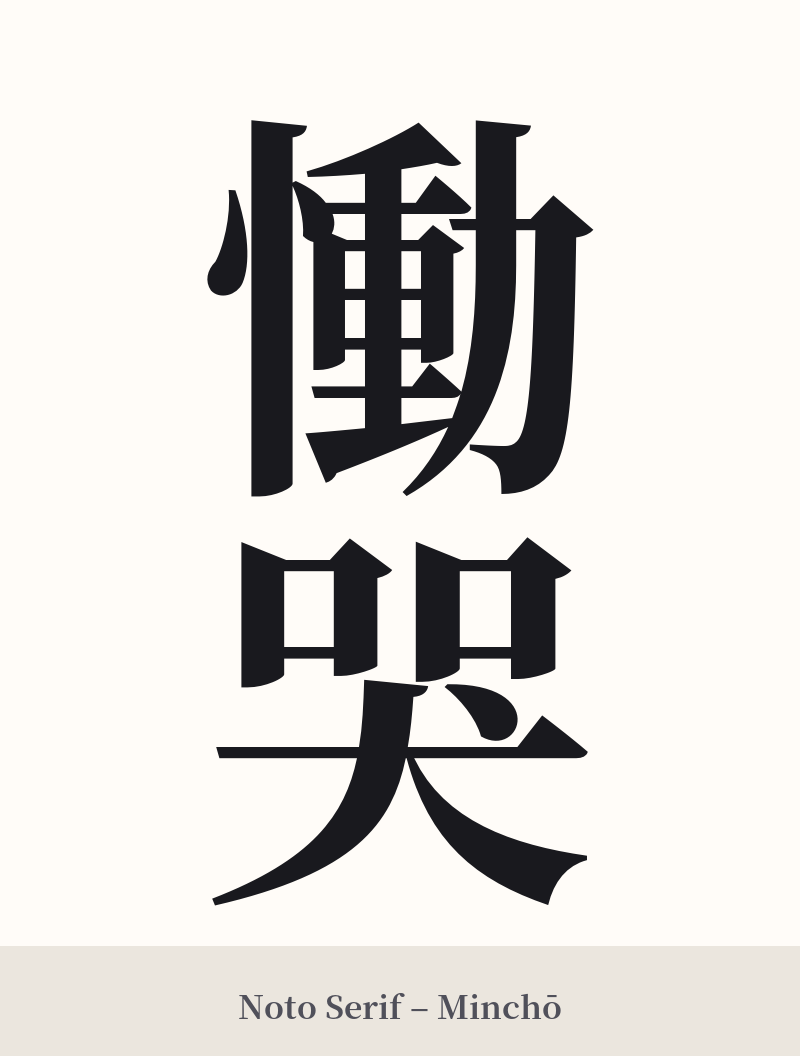
The same kanji can look dramatically different depending on the calligraphy style. Choose a font that matches the mood you want for your tattoo or design.
🎨 Tattoo Suitability
📐 Tattoo Design Guide
For a 慟哭 (Dōkoku) tattoo, the design should match the intensity of the word's meaning. A vertical orientation is highly recommended, as it flows naturally down the arm, spine, or ribs, enhancing the 'falling' or 'weeping' sensation associated with grief.
– Font Style: An expressive, semi-cursive or cursive brushstroke style (gyōsho or sōsho) is ideal. The dynamic strokes, ink splatters, and variation in thickness can physically represent the raw, chaotic emotion of wailing. A bold, jagged font could also work, conveying a sense of being broken or shattered by sorrow.
– Placement: Consider areas that allow for a vertical layout. The forearm, the spine, or along the side of the torso are excellent choices. These placements provide a canvas long enough to prevent the complex characters from feeling cramped.
– Size: Due to the high stroke count of both kanji (14 and 10 strokes), this design should not be made too small. A larger size will ensure the individual strokes remain clear and legible over time, preventing them from blurring into an indistinct shape.
– Visual Accompaniments: While 慟哭 is powerful enough to stand alone, it can be paired with imagery like falling rain, wilting flowers (especially a higanbana/spider lily), or shattered glass to amplify the theme of sorrow and loss.
Comments