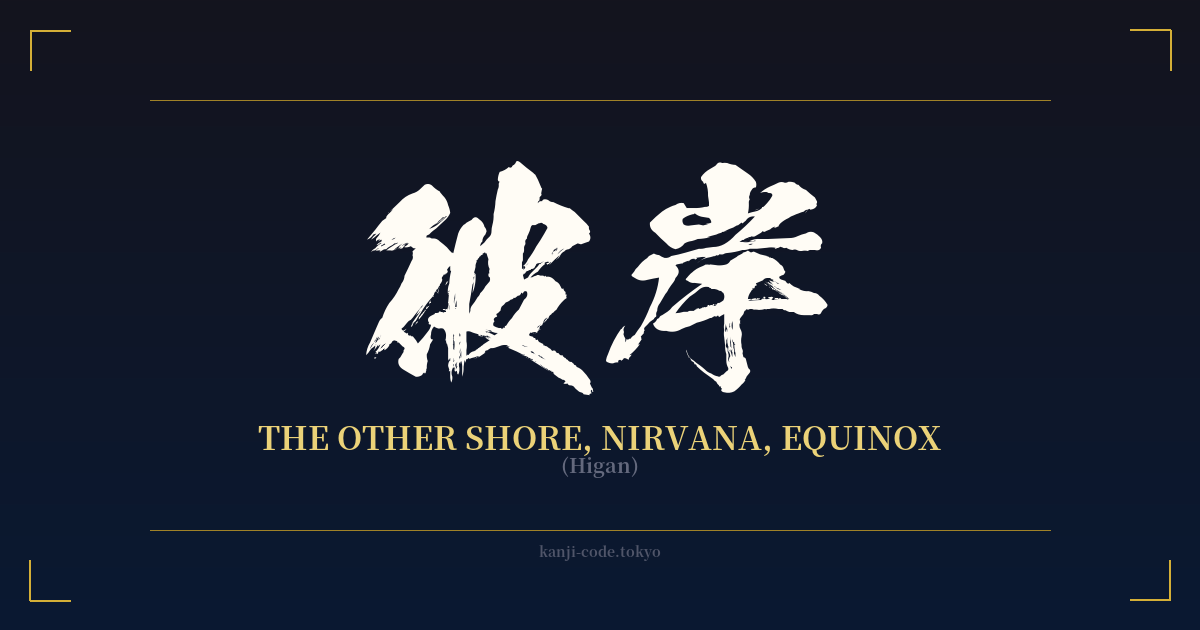
✍️ 彼岸 (Higan) — Cultural Context
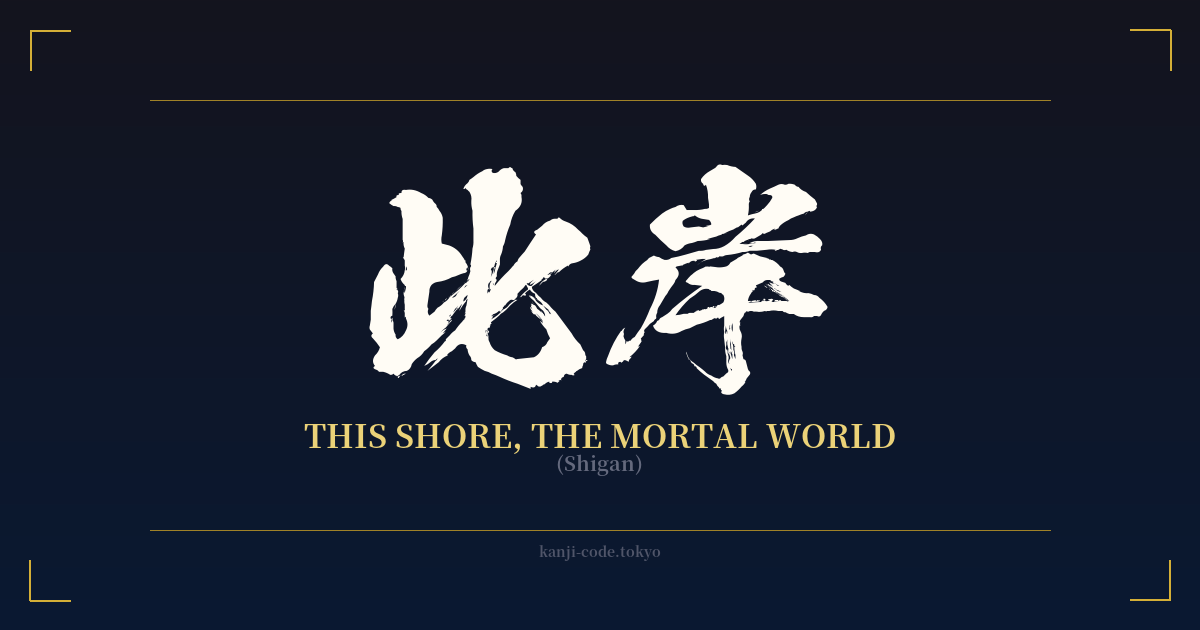
彼岸 (Higan) is a word steeped in Japanese Buddhism, literally translating to 'the other shore.' It represents a profound spiritual journey, contrasting our current world of suffering, known as 此岸 (shigan, 'this shore'), with a distant realm of enlightenment and peace.
At its core, Higan is the destination of the Buddhist path: Nirvana. The two shores are said to be separated by the 三途の川 (Sanzu no Kawa), the river of three crossings, which represents the trials and tribulations of life and death. To cross from 'this shore' to the 'other shore' is to transcend the cycle of rebirth and attain a state of ultimate peace, free from worldly desires and suffering.
This powerful metaphor is also embodied in a major Japanese cultural tradition. Twice a year, during the spring and autumn equinoxes, Japan observes a week-long period also called Higan (お彼岸, Ohigan). This is a time dedicated to remembering and honoring ancestors, bridging the gap between the living and the dead.
During Higan week, families travel to their ancestral gravesites to clean the tombstones, offer fresh flowers and incense, and leave food and drink for their departed loved ones. Special foods, such as botamochi (in spring) and ohagi (in autumn)—sweet rice balls covered in azuki bean paste—are traditionally made and offered.
The timing of the equinox is deeply significant. On these two days of the year, day and night are of equal length, symbolizing a balance between the physical and spiritual worlds. Furthermore, the sun sets directly in the west, a direction that, in Pure Land Buddhism, is associated with the Western Paradise (浄土, Jōdo) of Amida Buddha. This alignment is believed to make it easier for the living to connect with the spirits on the 'other shore.'
Beyond its religious and festive context, 彼岸 serves as a poignant metaphor in Japanese literature and art for any distant, idealized goal or a state of final rest. It evokes a sense of tranquility, finality, and the serene acceptance of life's ultimate journey.
🖌️ Font Styles for 彼岸
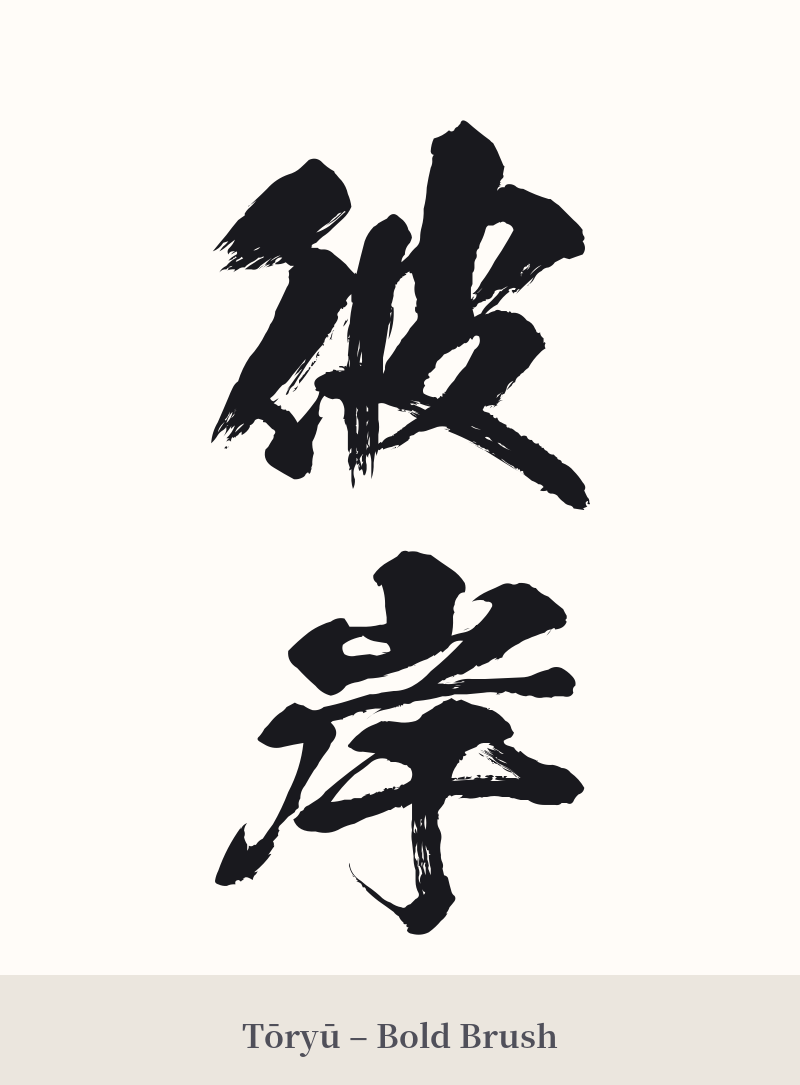
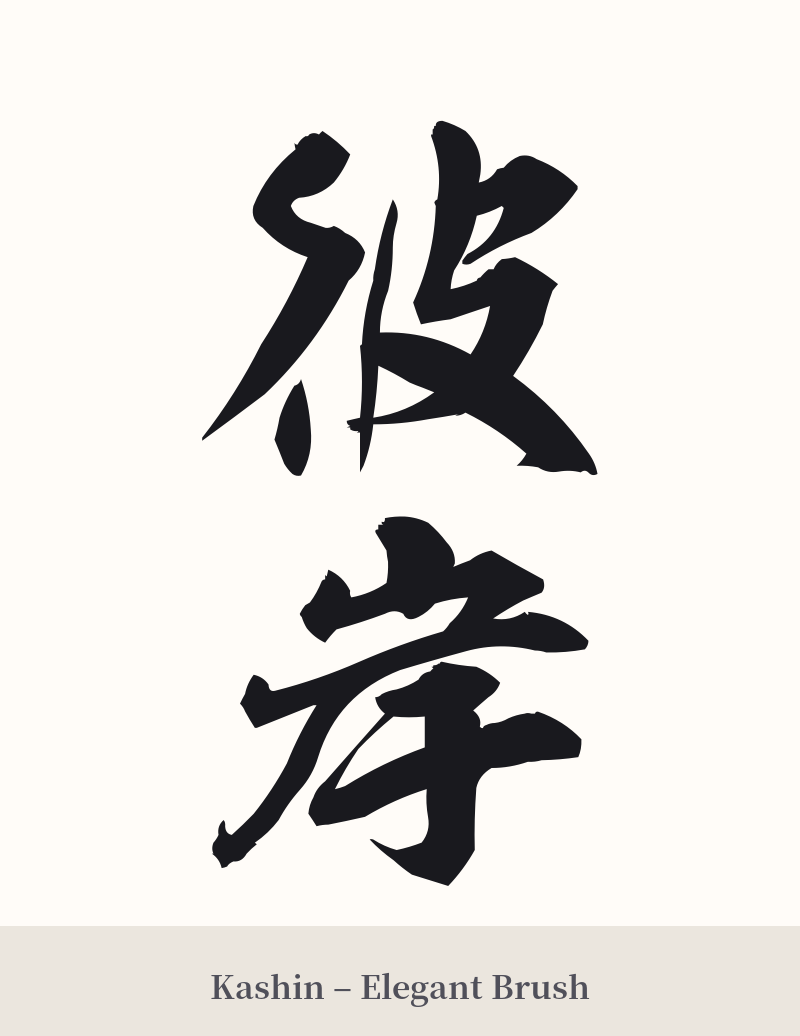
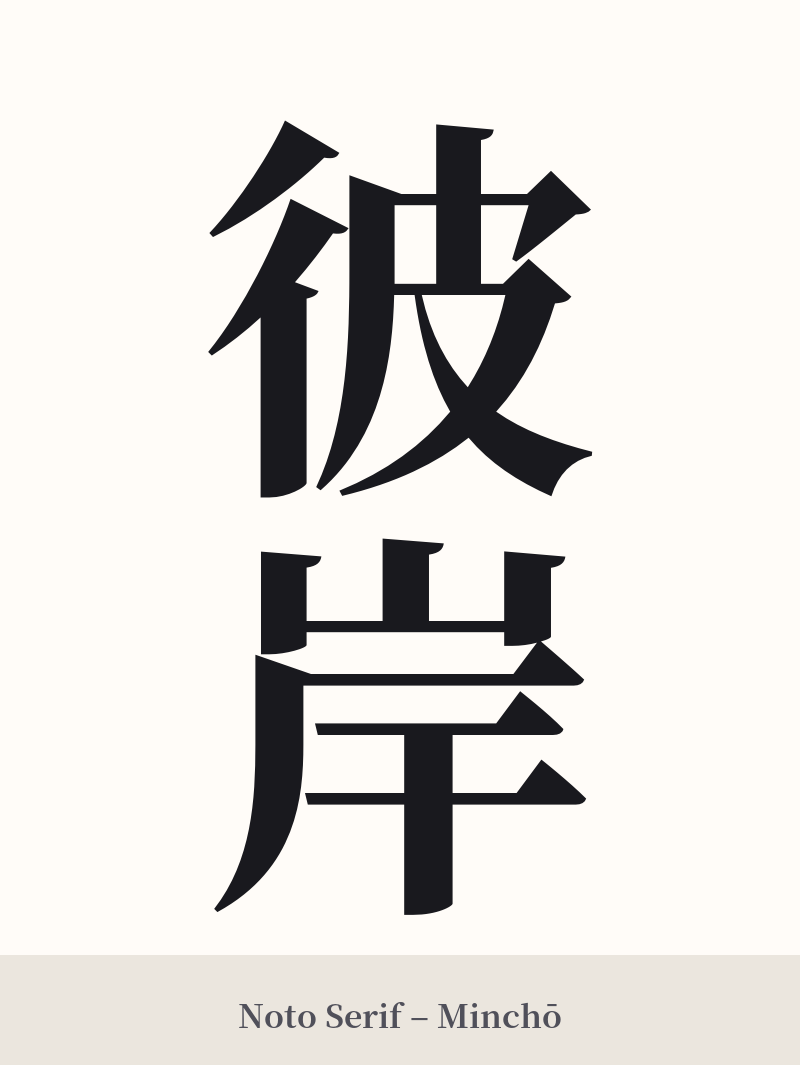
The same kanji can look dramatically different depending on the calligraphy style. Choose a font that matches the mood you want for your tattoo or design.
🎨 Tattoo Suitability
📐 Tattoo Design Guide
The spiritual and transitional nature of 彼岸 lends itself to thoughtful tattoo designs.
– Placement: A vertical orientation is highly recommended, mirroring traditional Japanese calligraphy. Placing it along the forearm, calf, or spine can symbolize a path or journey. The back, over the heart, or on the ribs are also suitable placements for such a personal and contemplative piece.
– Font Style: The choice of script can dramatically alter the feel. A formal, blocky Kaisho script emphasizes the solemnity and stability of Nirvana. Conversely, a more fluid, semi-cursive Gyōsho or cursive Sōsho style can evoke the feeling of crossing a river or the gentle transition between worlds.
– Visual Elements: While the kanji can stand alone powerfully, they can also be integrated with related imagery. Common pairings include lotus flowers (symbolizing purity and enlightenment), a simple boat, gentle waves representing the Sanzu River, or a minimalist depiction of a distant, misty shoreline. The Enso circle, representing infinity and the void, can also be a fitting frame for the characters.
Comments