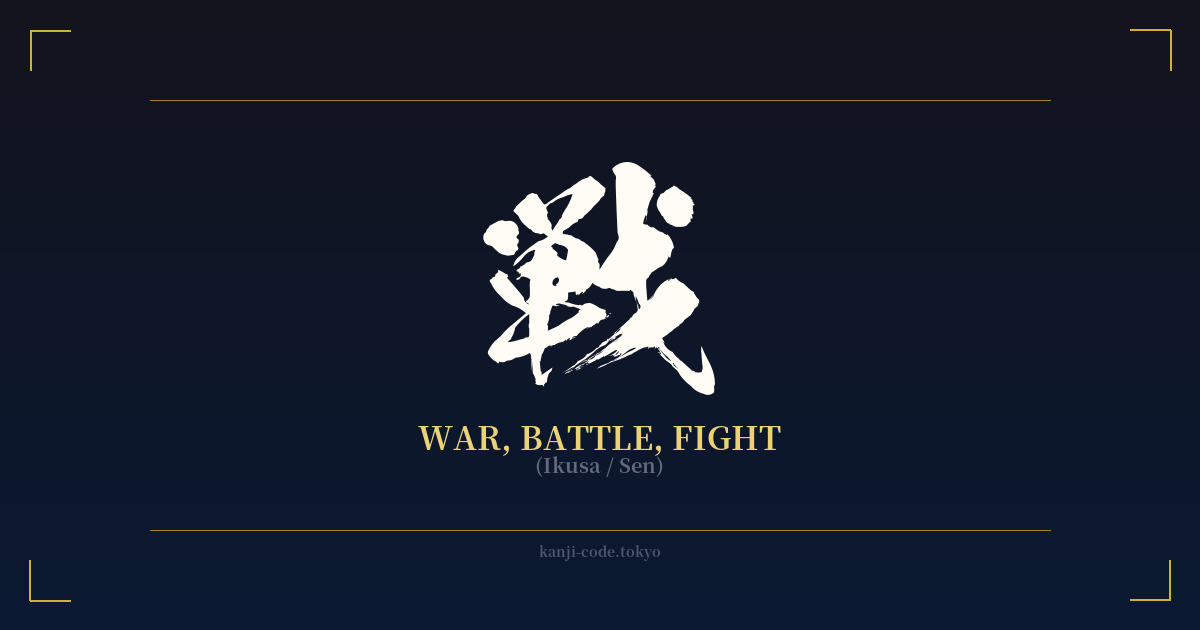
✍️ 戦 (Ikusa / Sen) — Cultural Context
The kanji 戦, read as 'ikusa' or 'sen', is one of the most direct and potent characters in the Japanese language. Its very form tells a story of conflict. The character is a combination of a radical meaning 'single' or 'simple' (単) and another representing a 'halberd' or 'spear' (戈). Together, they paint a stark picture of a single weapon, embodying the essence of battle and warfare.
Historically, 'ikusa' is a word deeply intertwined with Japan's feudal past. It evokes images of samurai clashes on the battlefield and the turbulent Sengoku Jidai, or the 'Warring States Period'. This era, a century-long civil war, cemented the character 戦 in the nation's cultural consciousness as a symbol of large-scale conflict, strategy, and the brutal reality of combat. In classical literature and historical accounts, 'ikusa' refers to these grand, life-altering battles that shaped the course of the nation.
However, the meaning of 戦 extends far beyond the physical battlefield. It powerfully encapsulates the concept of struggle in a much broader, more personal sense. The word can represent any form of fight, contest, or challenge. This is seen in terms like 'jinsei no tatakai' (人生の戦い), meaning 'the battle of life', which refers to the personal hardships and struggles one must overcome. This metaphorical usage is incredibly common and adds a profound layer of depth to the character.
In modern Japan, the 'sen' reading is frequently used in compounds related to competition and contest. For example, a sports match is a 'shiai' (試合), and a decisive final game is a 'kessen' (決戦). An athlete is a 'senshu' (選手). In this context, the character sheds its violent connotations and instead represents the spirit of competition, determination, and the drive to win. It speaks to the struggle against an opponent, but also the internal struggle to push one's own limits.
From the historical battlefields of samurai to the modern sports arena, and into the private realm of personal challenges, 戦 is a character of immense power and versatility. It symbolizes not just the act of fighting, but the underlying spirit of determination, resilience, and the will to confront and overcome adversity. It is a reminder that life, in many ways, is a series of battles, both large and small.
🖌️ Font Styles for 戦
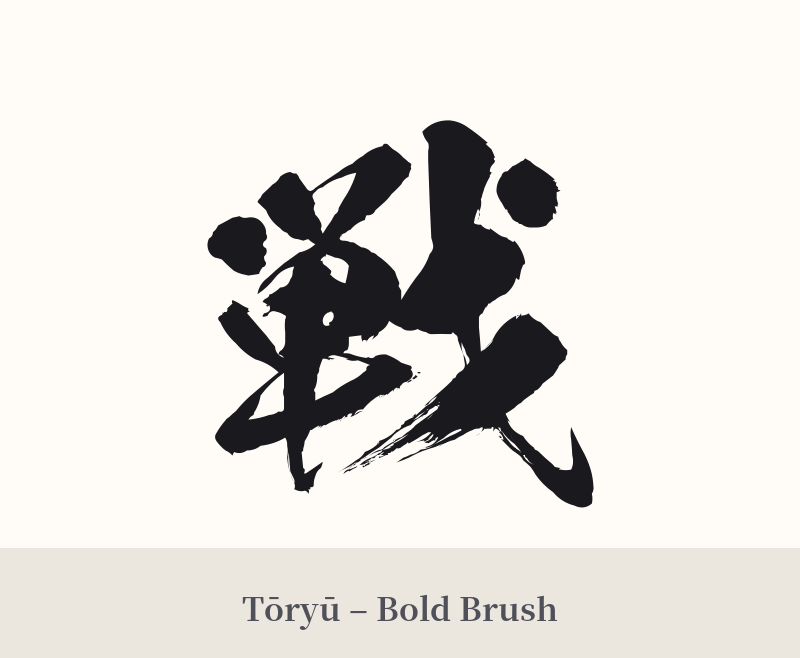
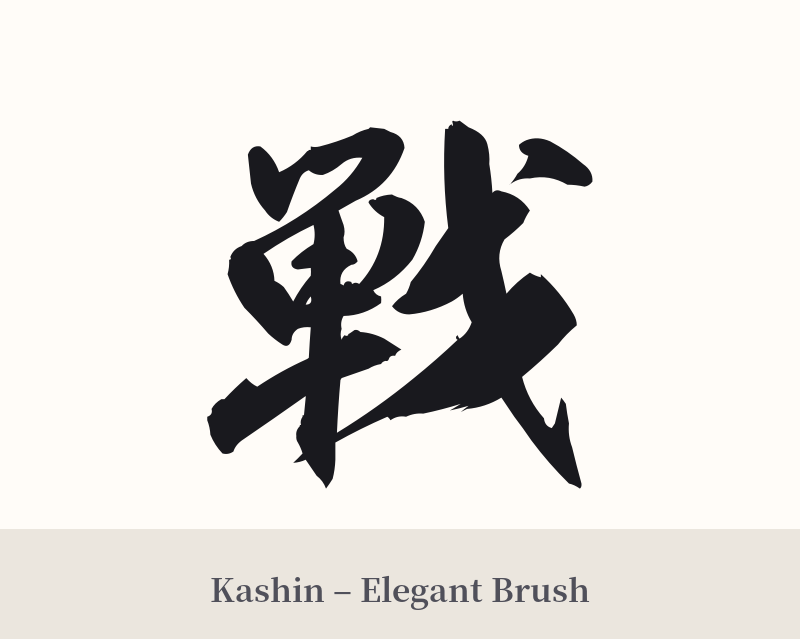
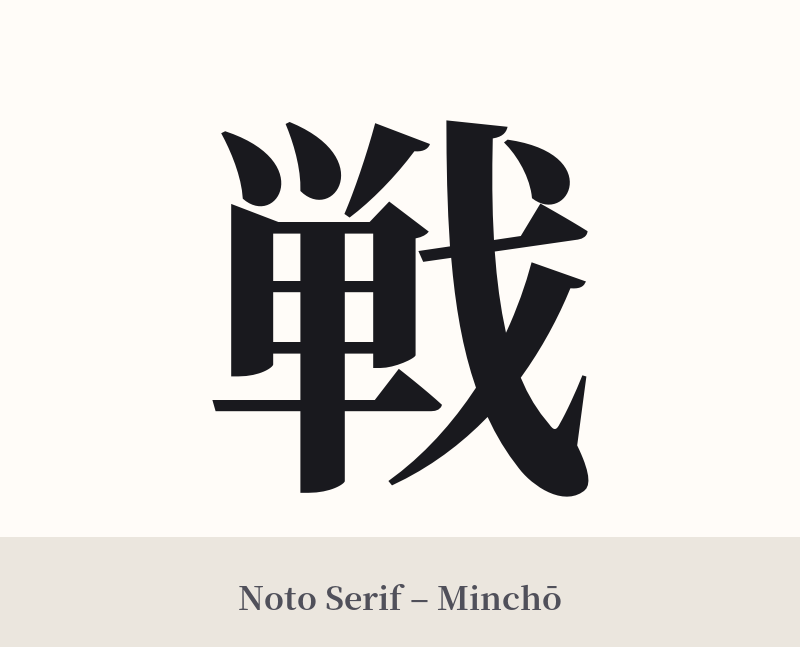
The same kanji can look dramatically different depending on the calligraphy style. Choose a font that matches the mood you want for your tattoo or design.
🎨 Tattoo Suitability
📐 Tattoo Design Guide
The kanji 戦 is a bold and dynamic choice for a tattoo, carrying significant visual weight. Its angular strokes and inherent sense of action make it a compelling centerpiece.
– Placement: This character works best in areas that allow for a strong, vertical statement. The forearm, calf, or along the spine are excellent choices. For a larger, more impactful piece, the chest or upper back provides a powerful canvas.
– Style: A traditional shodō (calligraphy) style is highly recommended. A rough, energetic Gyosho (semi-cursive) or Sosho (cursive) script can emphasize the chaos and energy of battle. Conversely, a clean, blocky Kaisho (block script) style will give it a more solid, disciplined, and resolute feeling, akin to a soldier standing at attention.
– Visual Combinations: While it stands strong on its own, 戦 can be integrated into larger designs. Pairing it with a dragon, tiger, or koi fish can symbolize a struggle against powerful forces. Placing it alongside a samurai or oni mask reinforces its martial roots. For a more subtle touch, consider using red ink for one or two strokes to symbolize passion, energy, or sacrifice, contrasting with black ink for the rest of the character.
Comments