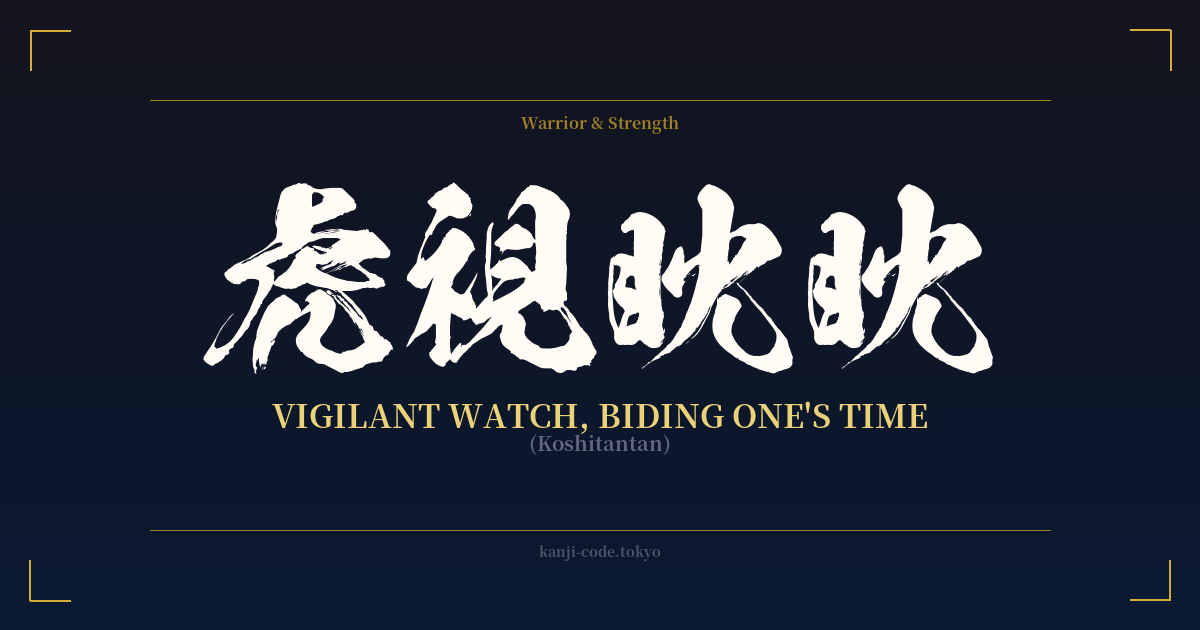
✍️ 虎視眈眈 (Koshitantan) — Cultural Context
虎視眈眈 (Koshitantan) is a powerful four-character idiom, known as a yojijukugo, that paints a vivid and primal picture. It translates to "a tiger's glare, an intense stare," and captures the essence of watching vigilantly for the perfect moment to seize an opportunity. This is not a passive wait; it is a focused, patient, and predatory observation, much like a tiger stalking its prey.
The phrase originates from the ancient Chinese classic, the I Ching (Book of Changes). The original text describes a tiger staring intently, its gaze fixed and unwavering. This powerful image was adopted into Japanese culture, becoming a metaphor for a state of keen alertness and underlying ambition. It embodies the spirit of a person or entity biding their time, gathering strength, and waiting for the opportune moment to act decisively.
In a historical context, 虎視眈眈 could describe a warlord carefully observing a rival's territory, waiting for a sign of weakness before launching an invasion. The phrase carries a sense of tension and potential energy, the quiet before the storm. It speaks to a deep understanding of strategy, where patience is not a weakness but a weapon.
Today, the idiom is used in various modern contexts, from business and politics to sports. A rival company might be described as "koshitantan," watching the market leader for any misstep. A political challenger might be observing the incumbent, formulating a strategy for the next election. In sports, it's the underdog team carefully studying the champion, looking for a chink in their armor.
The beauty of 虎視眈眈 lies in its duality. It can be seen as a positive trait—representing strategic foresight, patience, and readiness. It's the quiet confidence of someone who knows their own strength and doesn't need to act rashly. On the other hand, it can feel menacing and threatening. To be the one watched with such intensity is to be marked as prey, to feel the pressure of an impending challenge. This makes the phrase both respected and feared, a testament to its evocative power.
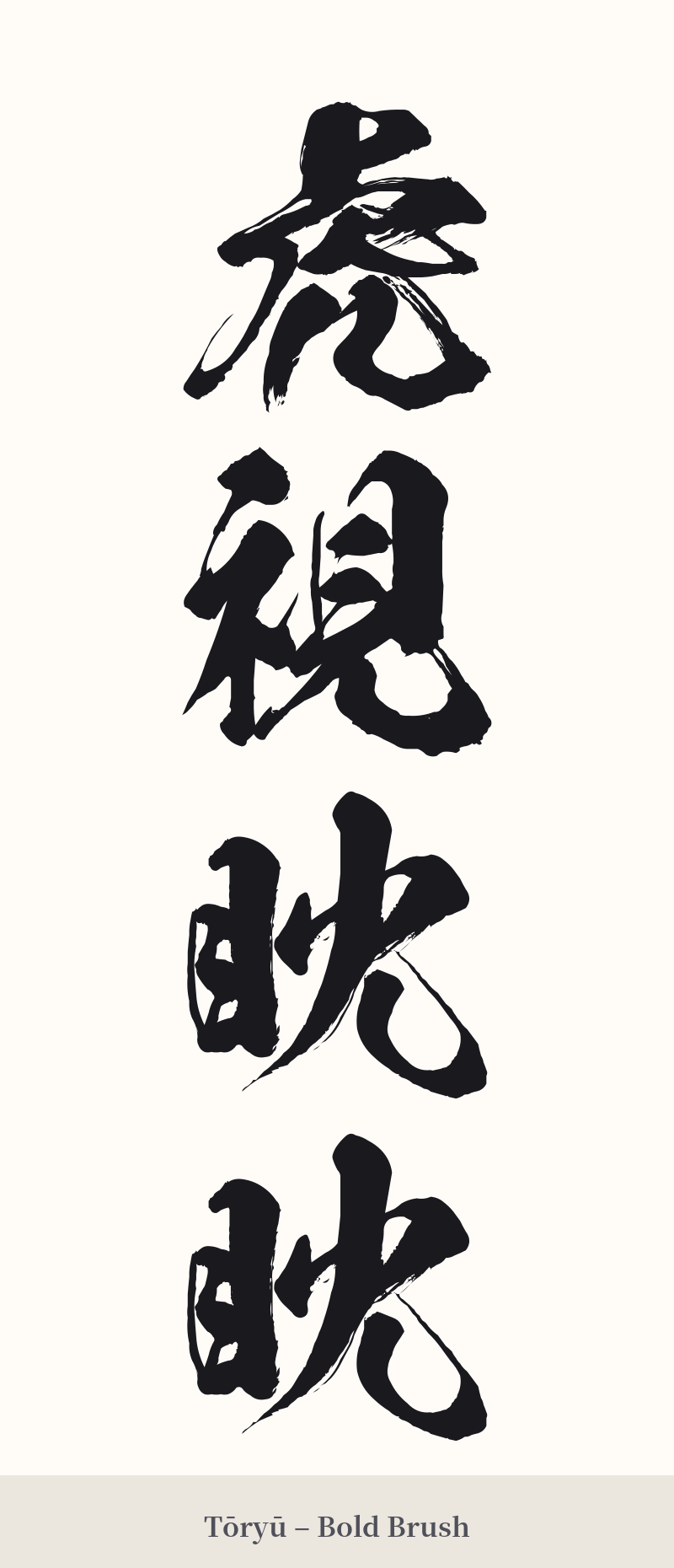
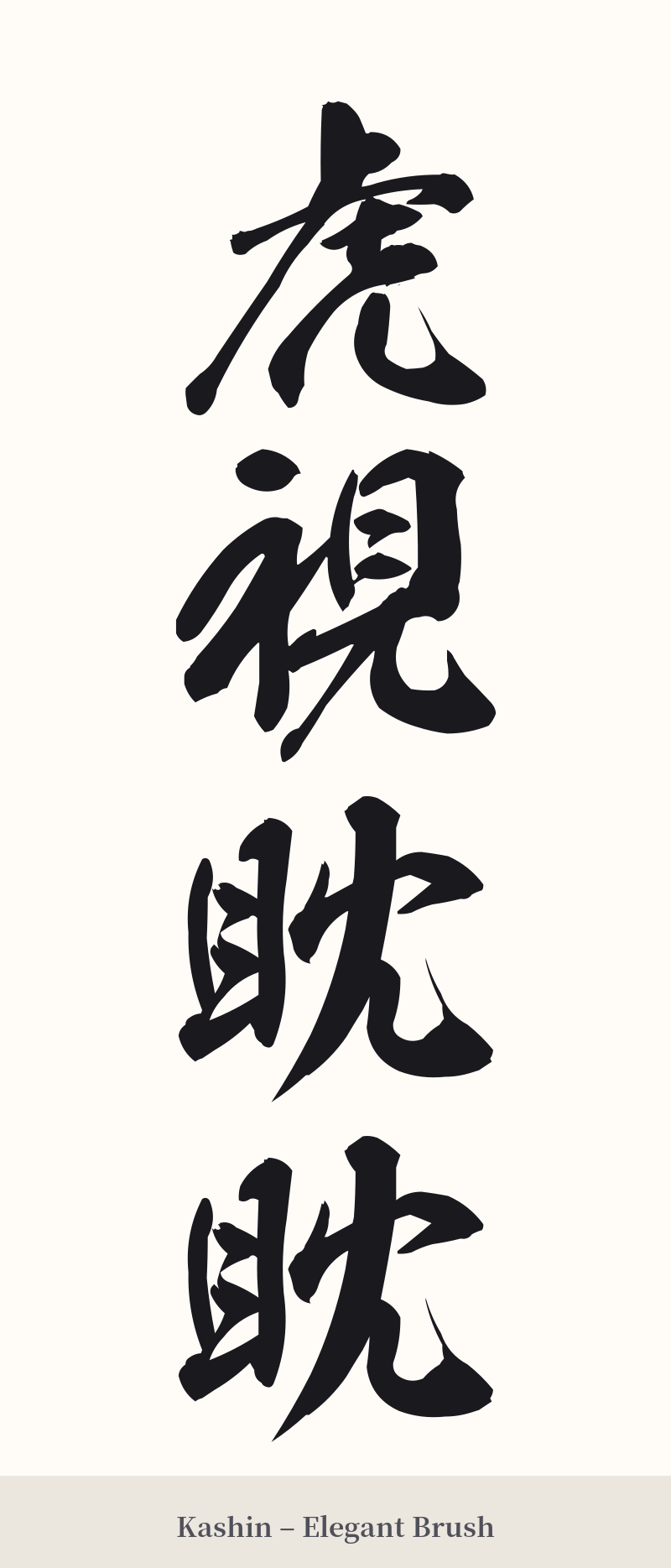
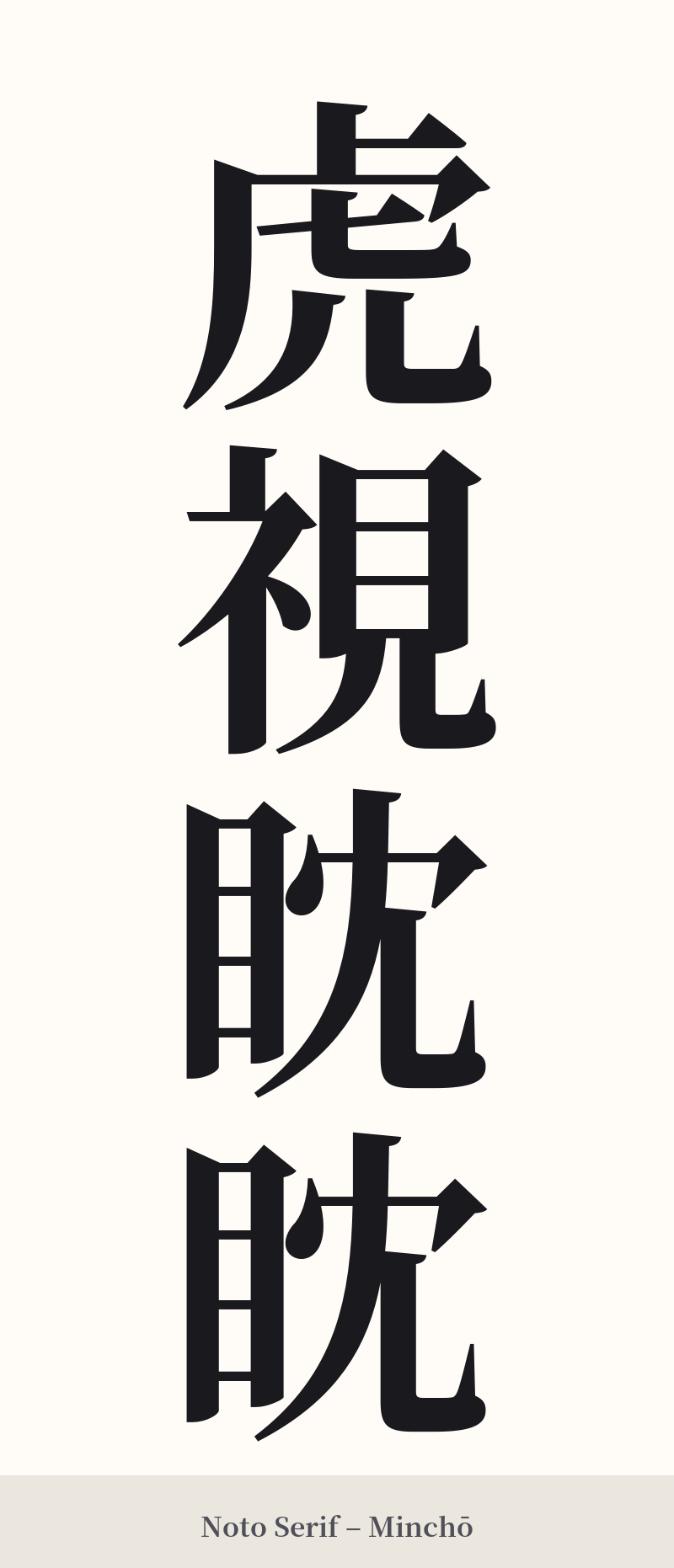
🖌️ Font Styles for 虎視眈眈
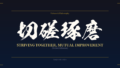
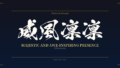
The same kanji can look dramatically different depending on the calligraphy style. Choose a font that matches the mood you want for your tattoo or design.
🎨 Tattoo Suitability
📐 Tattoo Design Guide
For a 虎視眈眈 tattoo, the design should emphasize its inherent power and strategic nature. As a four-character idiom, it has a natural flow that works best with specific placements and styles.
– Placement: Vertical orientation is traditional and highly recommended for yojijukugo. This allows the characters to flow downwards elegantly. Prime spots include the forearm, the calf, or along the spine, where there is enough length to give each character space to be clear and impactful.
– Font Style: The choice of script can dramatically alter the feel. A dynamic, semi-cursive style like gyōsho would capture the fluid, predatory energy of the tiger. For a more intense and powerful statement, a bold and angular kaisho (block script) can emphasize the unwavering focus and stability of the observer.
– Visual Tips: Consider integrating the kanji with imagery. The characters could be subtly woven into a tiger's stripes or placed vertically alongside a portrait of a tiger, particularly one with piercing eyes. Using negative space effectively is crucial; don't crowd the characters. A clean, minimalist approach focusing solely on the four kanji can also be incredibly striking.
Comments