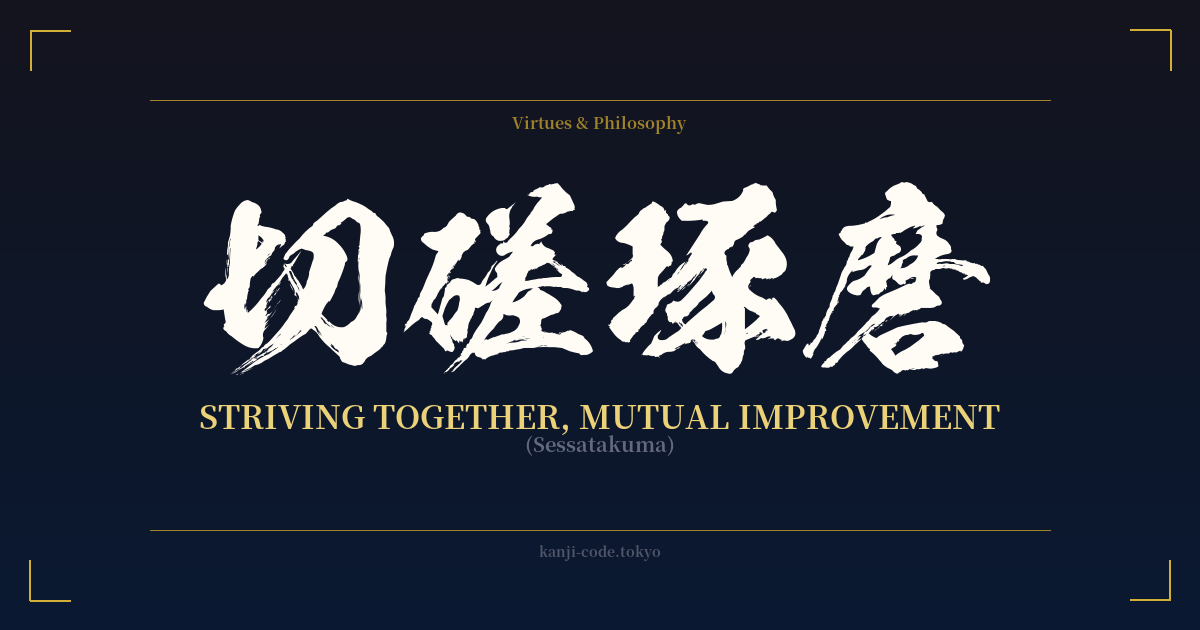
✍️ 切磋琢磨 (Sessatakuma) — Cultural Context
切磋琢磨 (Sessatakuma) is a four-character idiom, or yojijukugo, that embodies the spirit of continuous improvement through mutual effort and friendly competition. It’s a concept deeply woven into the fabric of Japanese culture, from the dojo to the classroom and the boardroom.
The phrase originates from classical Chinese literature, specifically the 'Book of Odes.' The characters literally describe the meticulous process of a craftsman fashioning precious materials. 切 (setsu) means 'to cut,' 磋 (sa) means 'to file' (like ivory), 琢 (taku) means 'to chisel' (like jade), and 磨 (ma) means 'to grind or polish' (like stone). Together, they form a powerful metaphor for the refinement of one's character, knowledge, and skills.
Just as a raw gemstone is transformed into a brilliant jewel through these painstaking steps, a person achieves excellence by undergoing rigorous training and polishing their abilities. However, the unique beauty of Sessatakuma in the Japanese context is its emphasis on the 'mutual' aspect. It’s not just about solitary self-improvement; it’s about striving together with peers, rivals, and friends who challenge and inspire you.
Imagine two martial artists in a dojo, sparring not out of animosity but out of a shared desire to push each other to their limits. They are both sharpening their own skills and, in doing so, sharpening their partner's. This is the heart of Sessatakuma. It’s the energy in a study group where students debate and question each other, elevating everyone's understanding. It's the dynamic between two athletes on the same team, competing for a starting position but also making the entire team stronger in the process.
This concept champions the idea that we become better versions of ourselves through our interactions with others. It celebrates a relationship built on respect, discipline, and a shared goal of excellence. It suggests that true growth doesn't happen in a vacuum, but in the challenging and supportive presence of our 'nakama'—our comrades and peers. It is a testament to the journey, not just the destination, and the bonds forged in the shared pursuit of perfection.
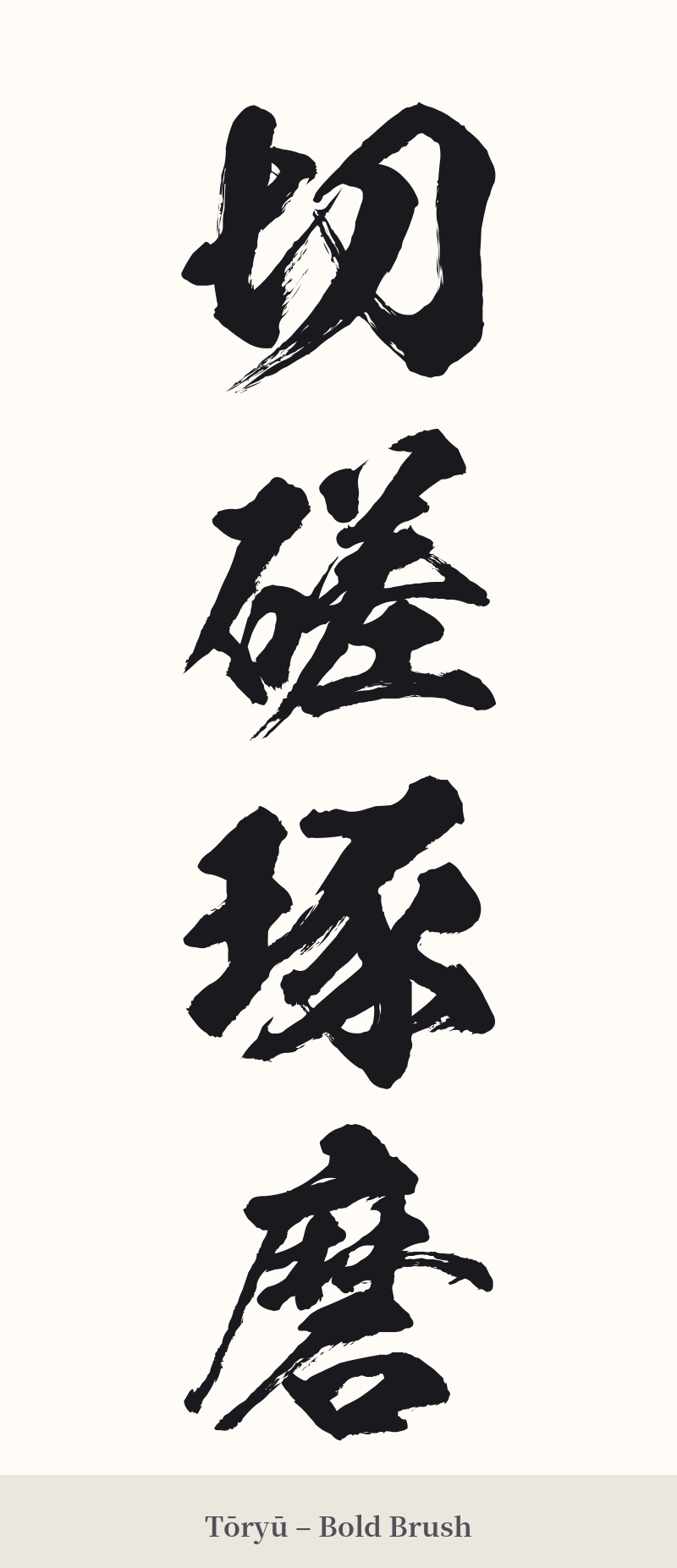
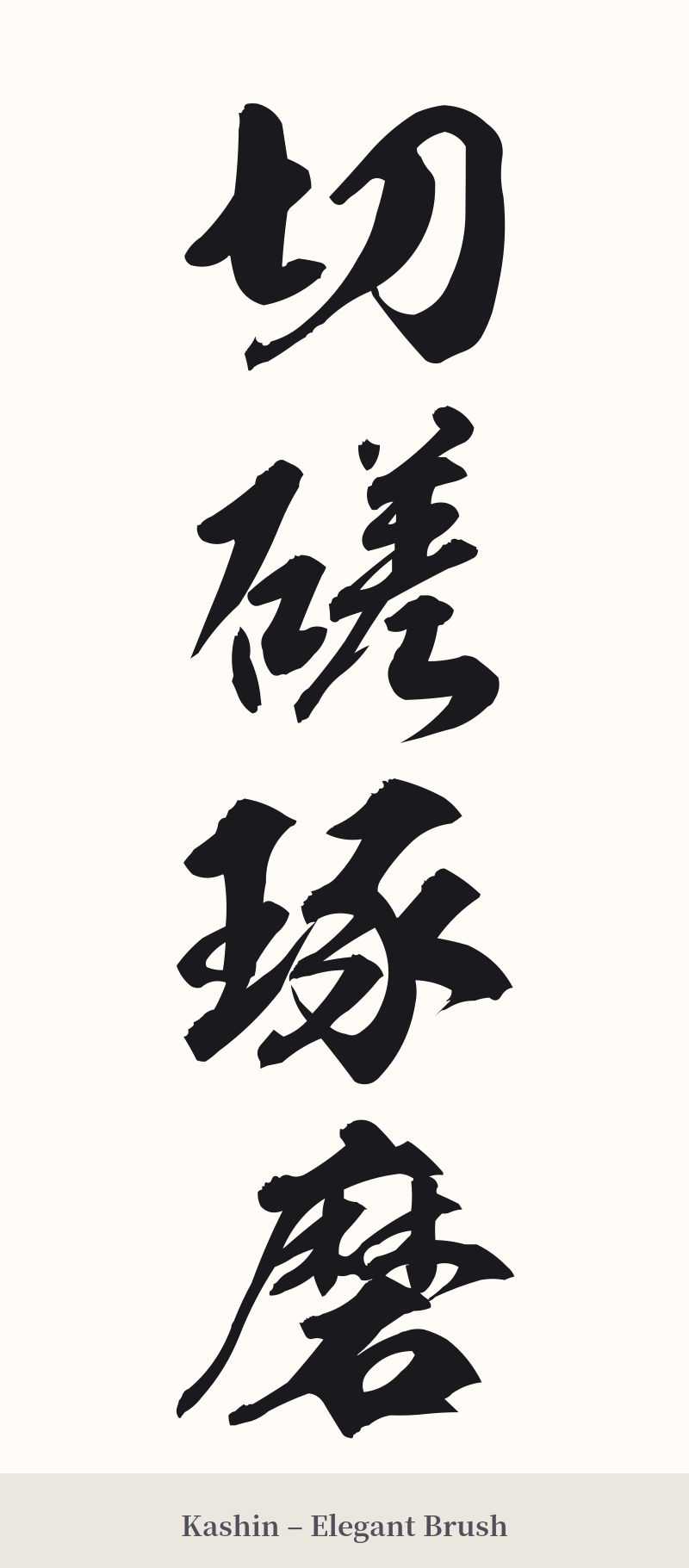
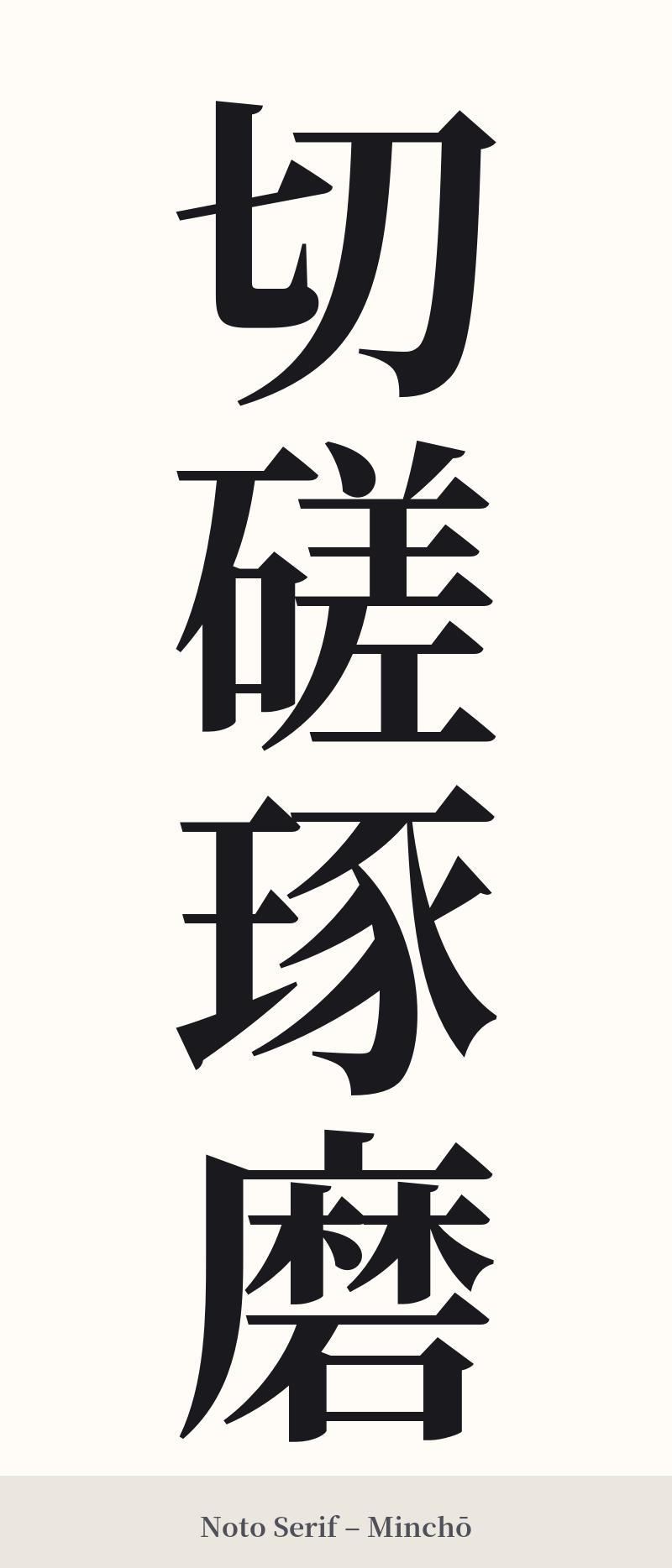
🖌️ Font Styles for 切磋琢磨
The same kanji can look dramatically different depending on the calligraphy style. Choose a font that matches the mood you want for your tattoo or design.
🎨 Tattoo Suitability
📐 Tattoo Design Guide
For a powerful and traditional look, a vertical orientation is highly recommended for 切磋琢磨. This layout works exceptionally well along the forearm, the calf, or down the spine, accentuating the natural lines of the body.
A horizontal arrangement can also be effective, particularly across the chest, upper back, or below the collarbone.
– Font Style: A dynamic, semi-cursive script like Gyosho (行書) can capture the feeling of energy and continuous movement inherent in the word's meaning. For a more stoic and disciplined feel, a crisp and clear block script like Kaisho (楷書) is an excellent choice, emphasizing the stability and strength of the concept. – Visual Tips: The four characters are the centerpiece and require no additional imagery. The complexity of the strokes is the art. Ensure your artist maintains good spacing (kerning) between characters so they can breathe and be read clearly. The design must be large enough to preserve the intricate details within each kanji over the years.
Comments