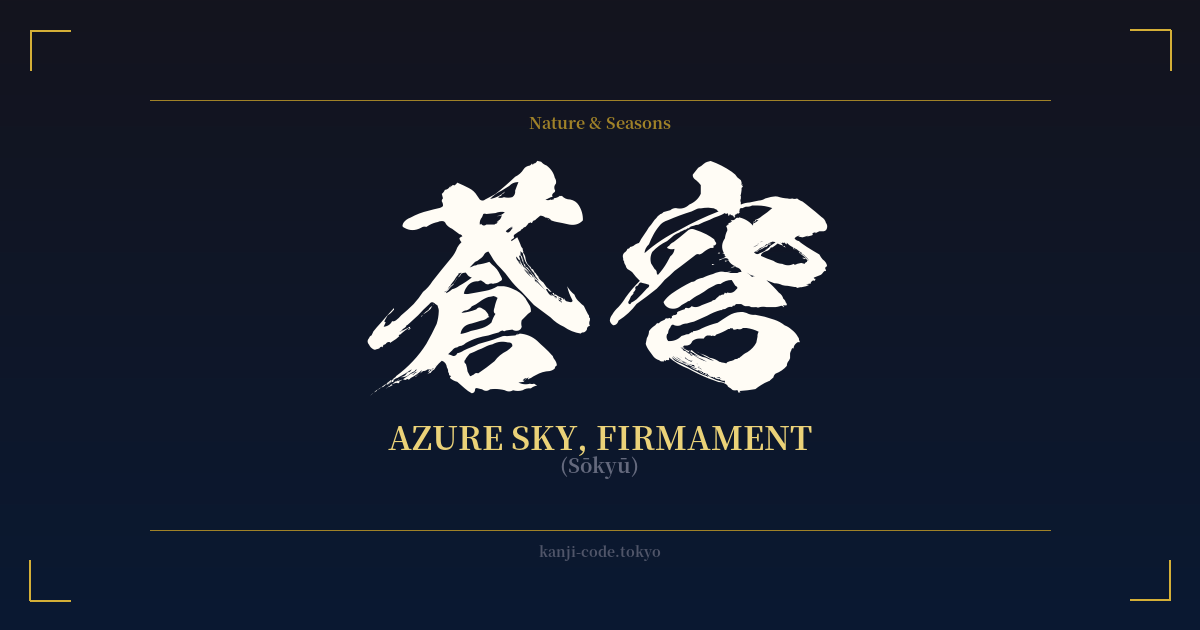
✍️ 蒼穹 (Sōkyū) — Cultural Context
蒼穹 (Sōkyū) is a beautiful and evocative Japanese word that translates to the 'azure sky' or 'firmament.' It is not the word you would use to casually comment on the weather; rather, it is a term steeped in poetry, literature, and a deep sense of awe for the natural world. It paints a picture of a vast, clear, and intensely blue sky, stretching endlessly toward the heavens.
The power of 蒼穹 comes from its two kanji. The first, 蒼 (sō), means 'blue' or 'pale,' but it carries a specific nuance. It isn't just any blue; it's a deep, rich, almost greenish-blue, often associated with the color of distant mountains, deep water, or lush, dense vegetation. This character sets a specific and profound color palette for the word.
The second character, 穹 (kyū), means 'sky' but more specifically refers to a 'vault' or 'dome.' Its components, a radical for 'hole' or 'cave' (穴) above the character for 'bow' (弓), create a powerful visual metaphor for the arched, hemispherical dome of the sky above us. It implies structure, immensity, and an all-encompassing presence.
Together, 蒼穹 (Sōkyū) describes the experience of looking up into a boundless, deep blue dome. It is a word that captures a feeling of tranquility, freedom, and the sublime majesty of the cosmos. While the everyday word for sky is 空 (sora) and the word for heavens is 天 (ten), 蒼穹 is reserved for moments of heightened emotion and artistic expression. You would find it in classic Chinese and Japanese poetry (kanshi), historical texts, and modern song lyrics that aim to evoke a sense of grandeur and timelessness.
In Japanese culture, the concept of the sky is deeply connected to both Shinto and Buddhist philosophies. It can represent purity, emptiness (in the Zen sense of potential), and the realm of the divine. 蒼穹, with its specific focus on the visual and emotional impact of the vast blue expanse, taps into this reverence. It symbolizes boundless potential, clarity of thought, and a peaceful state of mind. Choosing this word is choosing to express not just 'sky,' but the feeling of being humbled and inspired by its infinite beauty.
🖌️ Font Styles for 蒼穹
The same kanji can look dramatically different depending on the calligraphy style. Choose a font that matches the mood you want for your tattoo or design.
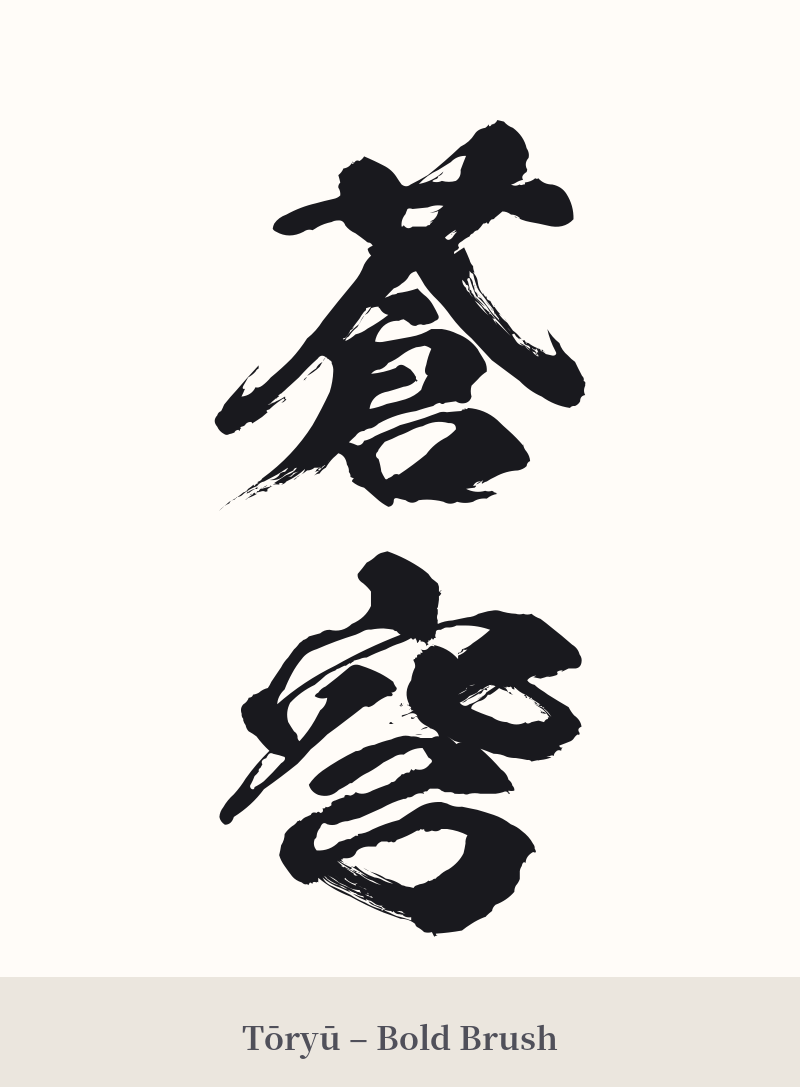
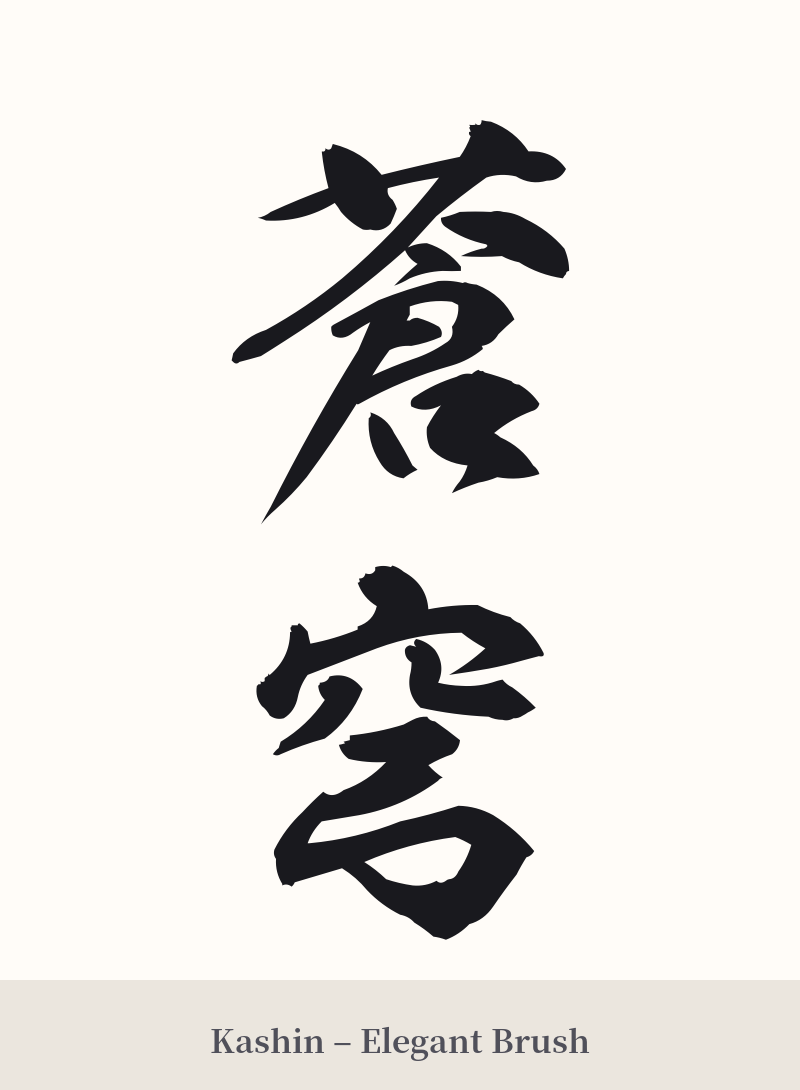
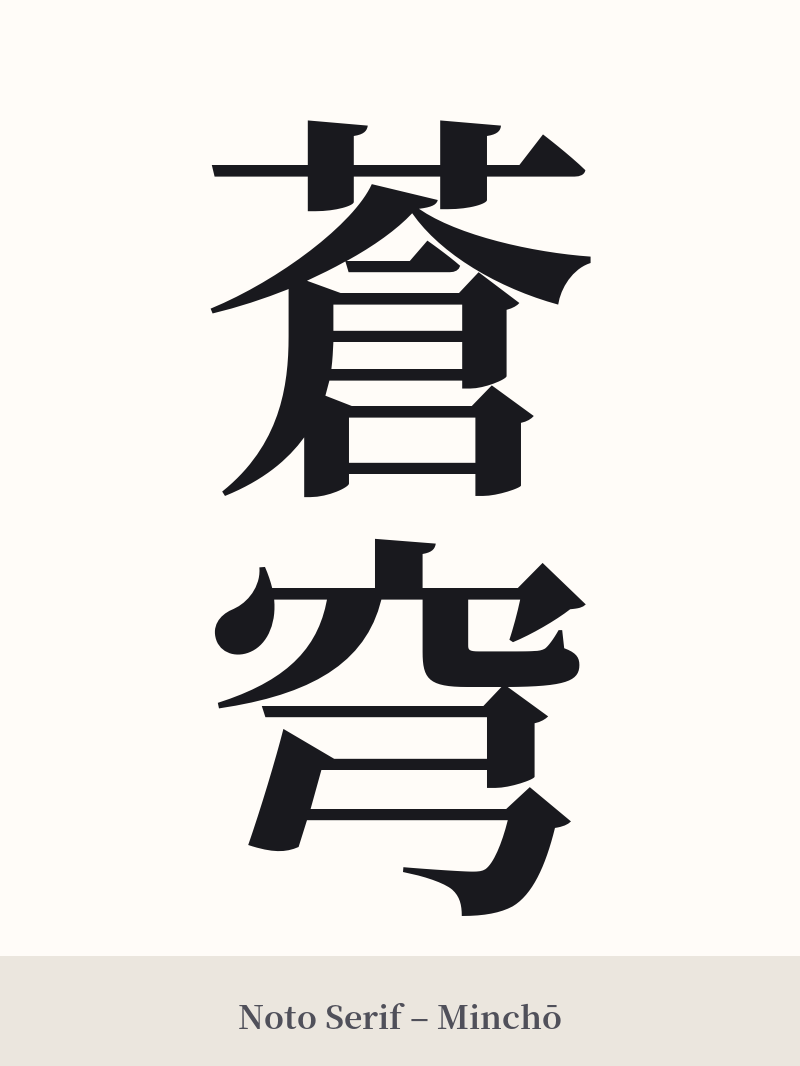
🎨 Tattoo Suitability
📐 Tattoo Design Guide
A word as elegant as 蒼穹 deserves a thoughtful design. Its poetic nature lends itself well to artistic and calligraphic styles.
– Placement: Vertical placement is ideal and visually striking. Consider the spine, forearm, or along the calf to allow the characters to flow downwards. For a horizontal design, the chest, upper back, or across the ribs can create a powerful statement.
– Font Style: A semi-cursive (Gyosho) or cursive (Sosho) script can beautifully capture the flowing, poetic feel of the word. For a more grounded and powerful look, a clean and precise block script (Kaisho) will emphasize the architectural structure of each kanji.
– Visual Tips: Consider complementing the kanji with minimalist imagery. A single, soaring bird like a hawk or swallow, a few wisps of cloud, or even a subtle watercolor background in shades of blue can enhance the theme. Using a deep blue ink instead of black, or adding blue accents, can also be a unique way to honor the meaning of 蒼.
Comments