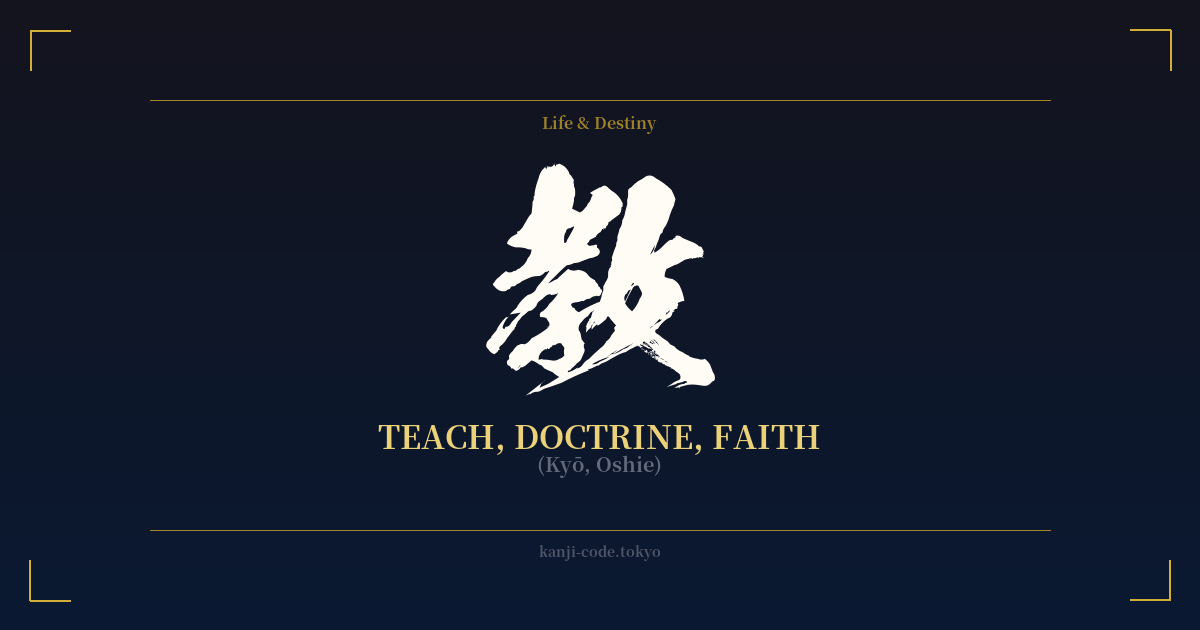
✍️ 教 (Kyō, Oshie) — Cultural Context
The Japanese kanji 教 (kyō) is a powerful symbol representing the act of teaching, the substance of doctrine, and the foundation of faith. Its meaning is deeply woven into the fabric of Japanese society, from the classroom to the temple.
The character's origin provides a vivid picture of its meaning. It is a composite of two older symbols: 孝 (kō) on the left and 攴 (boku) on the right. The left part, 孝, originally depicted a child supporting an elder, symbolizing filial piety and respect. The right part, 攴, is a radical representing a hand holding a stick, signifying an action like tapping or guiding. Together, they create the image of imparting wisdom and guidance upon the young, rooted in a foundation of respect. This isn't about harsh punishment, but about the active, authoritative shaping of character and knowledge.
In Japan, 教 is the cornerstone of the word for education, 教育 (kyōiku). This term combines 教 (teach) with 育 (nurture, raise), revealing a core cultural belief. Education is seen not just as transmitting facts, but as a holistic process of nurturing a person's morals, character, and potential. This philosophy is evident in the respectful dynamics between teachers (先生, sensei) and students, and the emphasis on moral education in schools.
Beyond academics, 教 is central to religion and philosophy. Its most prominent use is in 仏教 (Bukkyō), the Japanese word for Buddhism. Here, 教 refers specifically to the 'teachings' or 'doctrine' of the Buddha. To follow Buddhism is to follow the Buddha's 'kyō'. This extends to other schools of thought and belief systems, where the character denotes a specific set of guiding principles that structure one's life and worldview.
The character also forms the word 教え (oshie), which means 'a teaching,' 'a lesson,' or 'a precept.' An 'oshie' can be a piece of wisdom passed down from a grandparent, a hard-won life lesson, or the core tenets of a martial art. It embodies the Japanese value of lifelong learning and self-betterment, a continuous cycle of receiving and giving guidance that strengthens both individuals and the community.
🖌️ Font Styles for 教
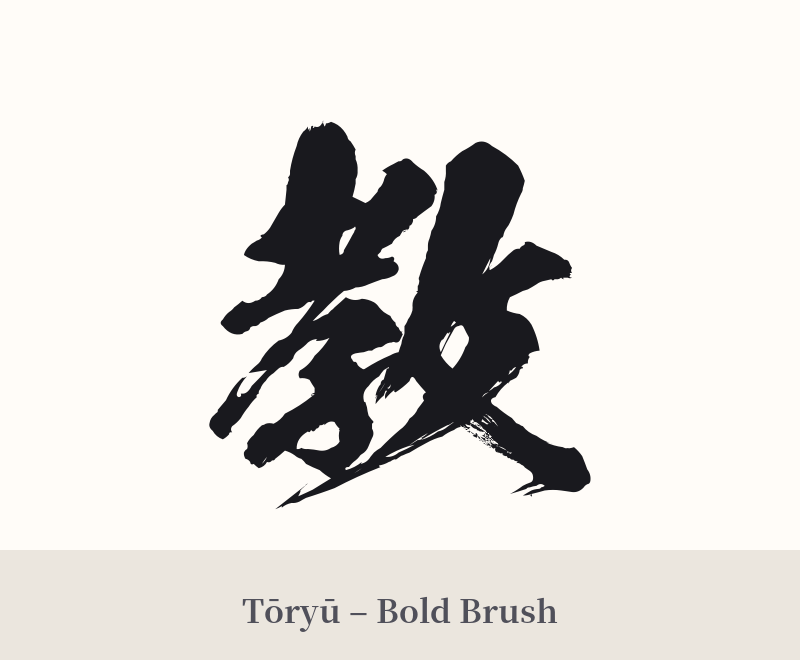
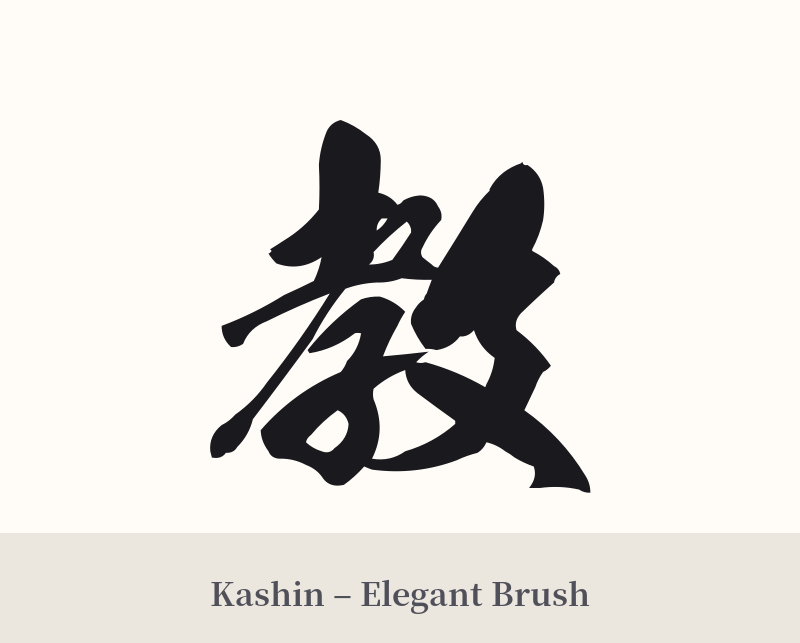
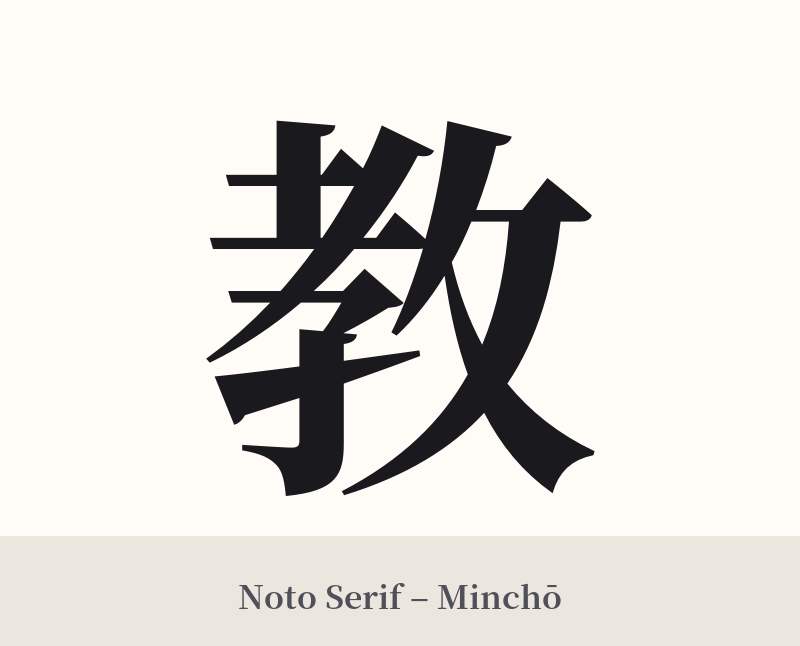
The same kanji can look dramatically different depending on the calligraphy style. Choose a font that matches the mood you want for your tattoo or design.
🎨 Tattoo Suitability
📐 Tattoo Design Guide
For a tattoo, the kanji 教 offers a design that is both meaningful and visually balanced. Its moderate complexity makes it suitable for various placements and styles.
– Placement: Consider areas that allow for clear legibility, such as the inner forearm, the calf, the shoulder blade, or the back of the neck. These spots provide a flat canvas that prevents distortion.
– Font Style: A dynamic, semi-cursive or brushstroke (shodō) style can emphasize the active nature of teaching and the flow of knowledge. For a more formal or reverent feel, a clean, architectural Kaisho or Minchō font is an excellent choice, highlighting its connection to established doctrine and academia.
– Complementary Elements: To add context, consider pairing 教 with related imagery. A lotus flower can connect it to Buddhist teachings (仏教). An enso circle can represent Zen enlightenment and the continuous cycle of learning. A simple scroll or book can ground it in the theme of knowledge and wisdom.
Comments