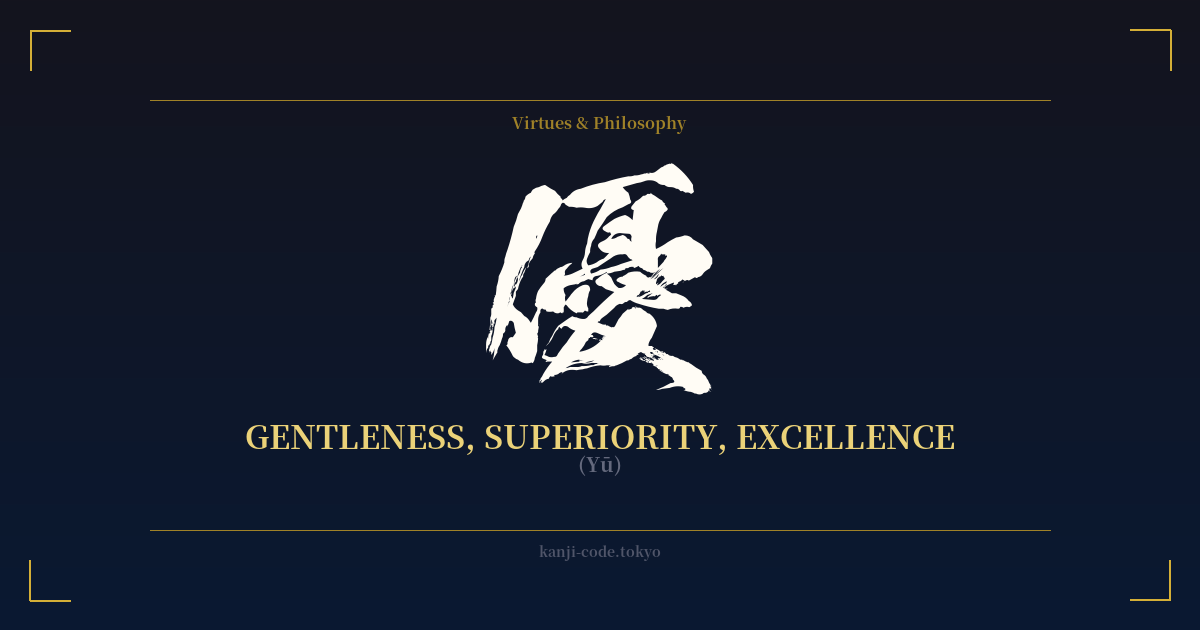
✍️ 優 (Yū) — Contexto cultural
El kanji 優 (Yū) es un carácter de una hermosa y profunda dualidad, que encarna conceptos que podrían parecer contradictorios en el pensamiento occidental, pero que se entrelazan armoniosamente en la cultura japonesa. Sus significados principales son "gentil" y "superior", creando un ideal sofisticado de excelencia atemperado por la bondad.
El origen del carácter nos permite vislumbrar su significado. Está compuesto por el radical de persona (亻) a la izquierda y un elemento complejo (憂) a la derecha. Este componente de la derecha originalmente representaba a una persona con el corazón apesadumbrado, quizás con una máscara ritual, sugiriendo un artista o chamán. Esta conexión con la actuación y la habilidad evolucionó hasta convertirse en el significado de "superior" o "excelente", como en el caso de un actor o artista talentoso. Por eso, 優 es el carácter que se usa en la palabra para actor, 俳優 (haiyū).
Sin embargo, el aspecto más fascinante de 優 es su fusión de fuerza y suavidad. En japonés, la palabra para gentil o amable es 優しい (yasashii), que utiliza este mismo kanji. Al mismo tiempo, forma palabras como 優勝 (yūshō), que significa campeonato o victoria general, y 優秀 (yūshū), que significa excelencia y superioridad. ¿Cómo puede un solo carácter representar tanto la gentileza como la victoria competitiva?
Esto no es una contradicción, sino un reflejo de una perspectiva filosófica madura. La verdadera superioridad, en este contexto, no es agresiva ni dominante. Es una excelencia tan profunda que se manifiesta con calma, confianza y gentileza. Es la fuerza de un maestro que no tiene nada que demostrar y, por lo tanto, puede permitirse ser amable. Esto contrasta con una concepción de la victoria basada en la fuerza bruta, promoviendo en cambio un ideal donde los verdaderos maestros son gráciles y benevolentes.
Esta idea está profundamente arraigada en la estética y la ética japonesas. El maestro calígrafo, el experimentado artista marcial o el experto maestro de té se esfuerzan por alcanzar un estado de destreza refinada que parezca natural y elegante, o 優雅 (yūga). Su superioridad no se demuestra mediante ostentosas demostraciones de poder, sino a través de una ejecución sutil, controlada y delicada.
Debido a estas cualidades positivas y ambiciosas, el carácter 優 es muy popular en nombres japoneses tanto para niños como para niñas, como Yū, Yūka, Yūsuke o Masaru (una lectura alternativa). Los padres eligen este kanji con la esperanza de que su hijo crezca para ser una persona talentosa y bondadosa, una persona de verdadera excelencia y gentileza.
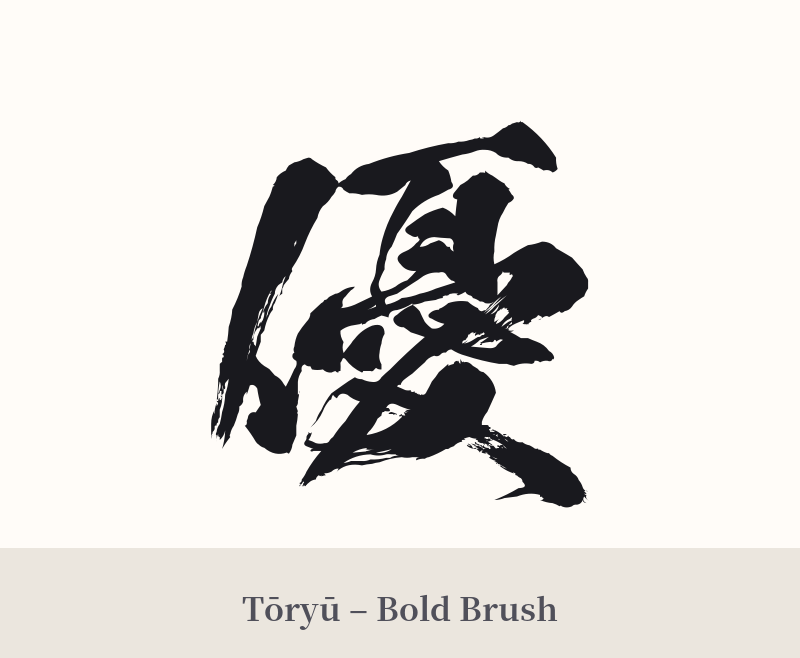
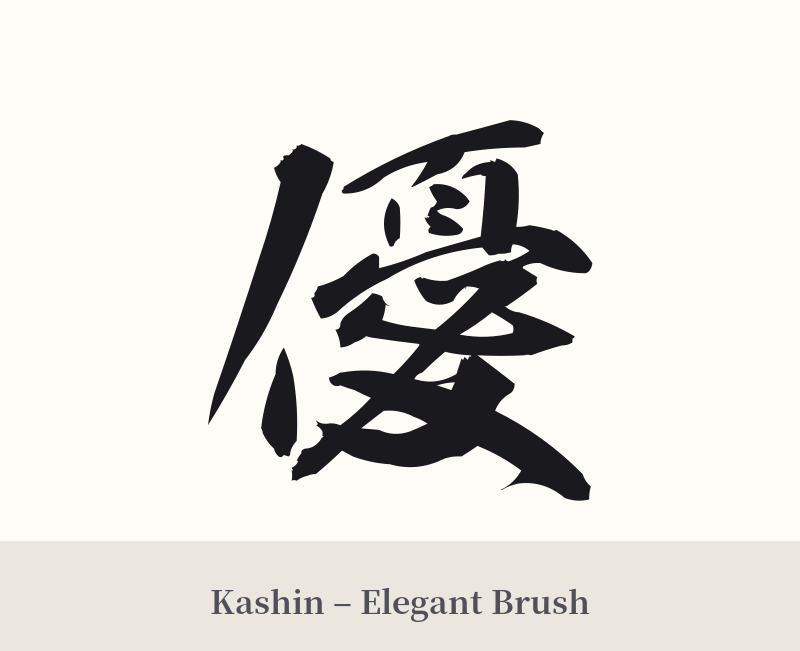
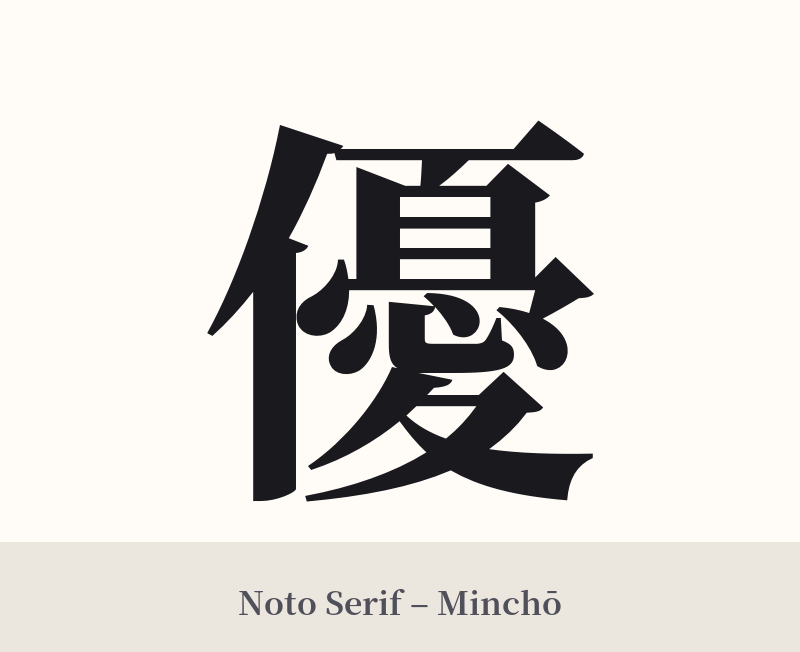
🖌️ Estilos de fuente para 優
Los mismos caracteres kanji pueden verse muy diferentes según el estilo de caligrafía. Elige una fuente que se ajuste al ambiente que deseas para tu tatuaje o diseño.
🎨 Idoneidad para tatuajes
📐 Guía de diseño de tatuajes
El kanji 優 es un carácter visualmente equilibrado y complejo, lo que lo convierte en una excelente opción para un tatuaje. Su estructura vertical se adapta bien a ciertas ubicaciones y estilos.
– Ubicación: La parte interna del antebrazo, la pantorrilla o la columna vertebral son ideales para un diseño vertical. Para un tatuaje más pequeño y discreto, la nuca o detrás de la oreja también pueden funcionar bien.
– Estilo de fuente: La elección del tipo de letra puede alterar drásticamente la apariencia del tatuaje. Una letra Kaisho (de imprenta) audaz y angular enfatizará los aspectos de 'superioridad' y 'victoria'. Por el contrario, un estilo Gyosho fluido y semicursivo, o un estilo Sosho completamente cursivo, resaltará la 'gentileza' y la 'elegancia' (優雅) inherentes al carácter.
Consejos visuales: Para jugar con los significados duales, puedes combinar 優 con otros elementos. Combinarlo con un elemento suave y fluido como el agua, una flor de loto o flores de cerezo puede realzar su aspecto delicado. Por el contrario, colocarlo cerca de una imagen más imponente como un dragón o un tigre puede crear una poderosa yuxtaposición de fuerza y gracia.
Comentarios