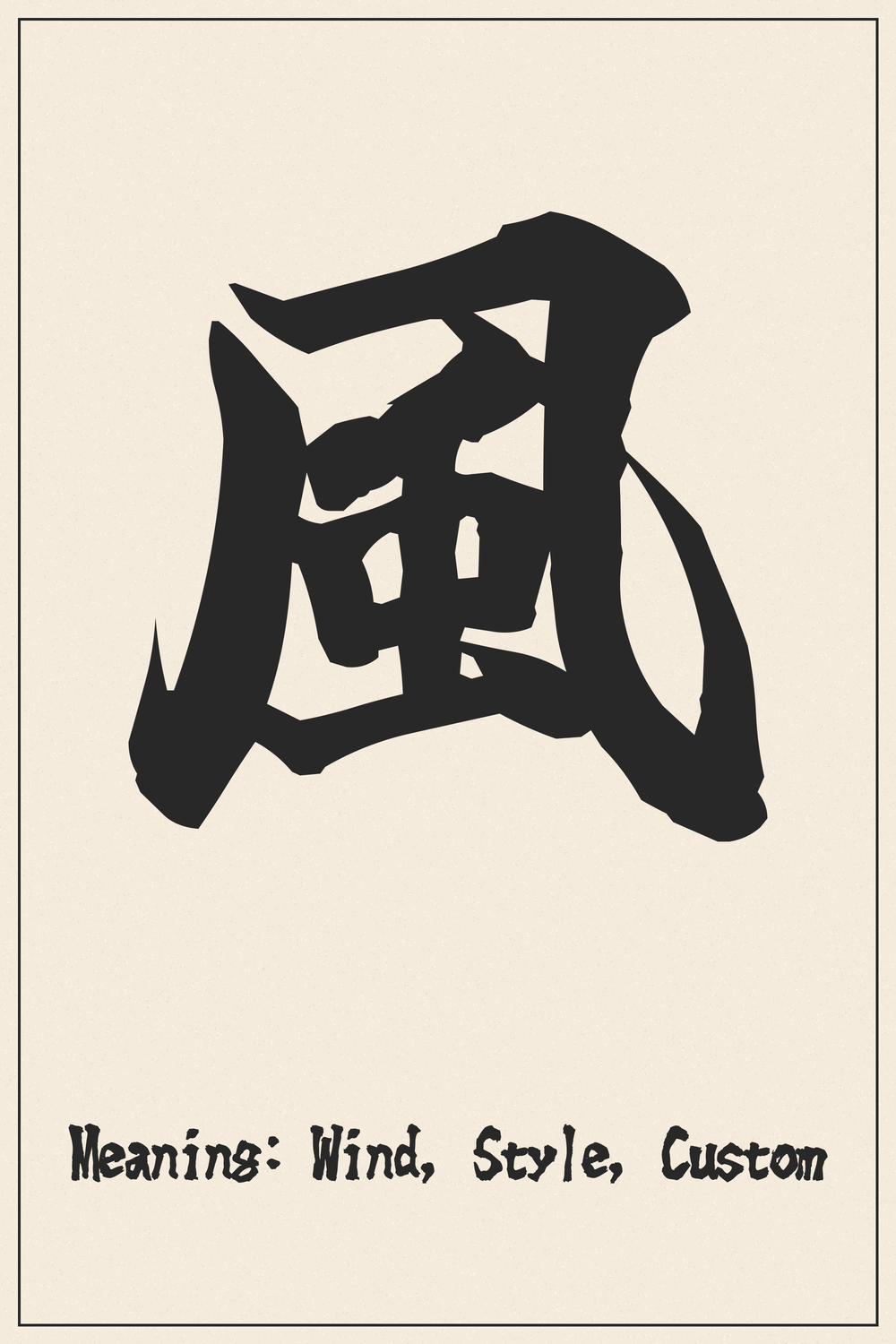
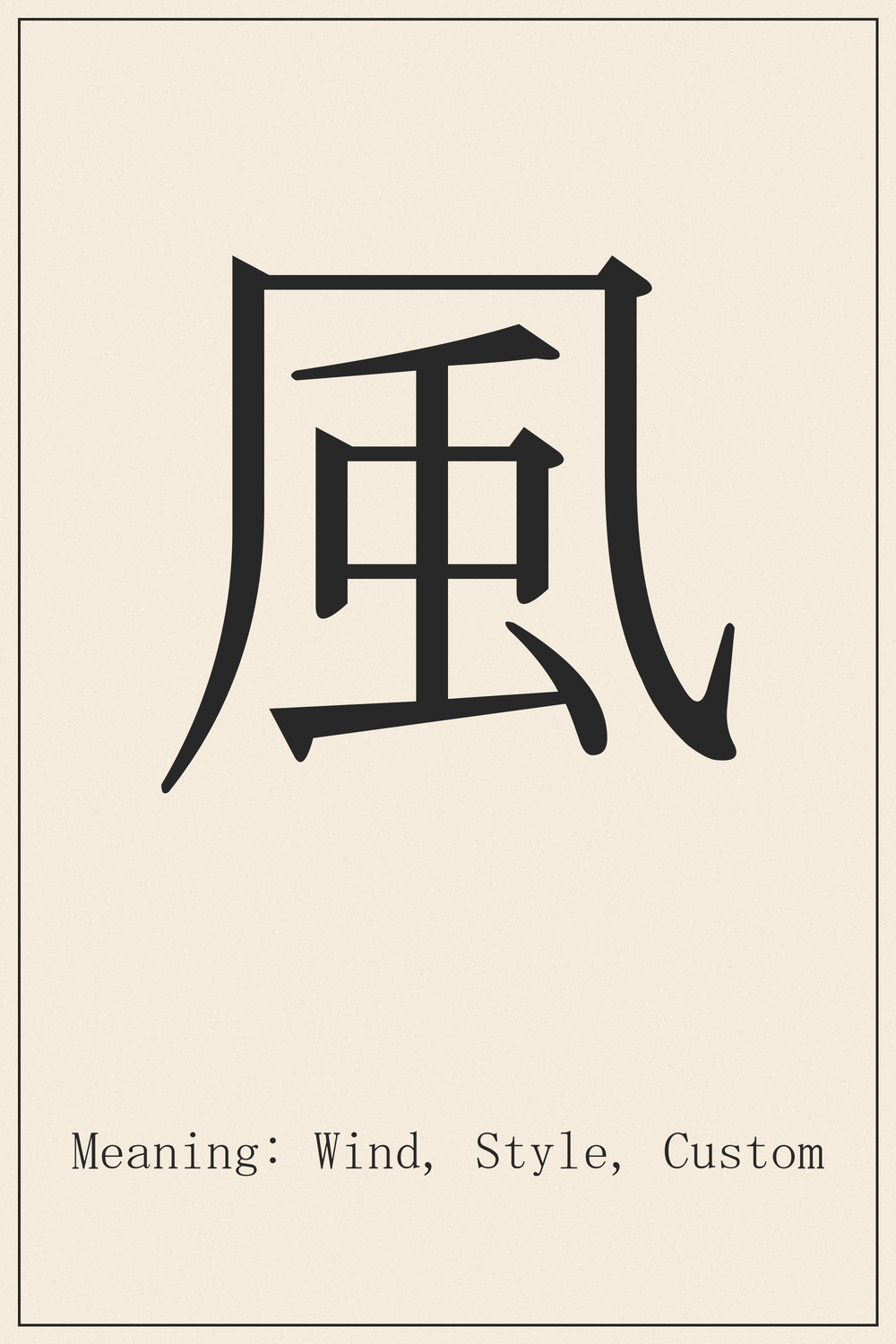
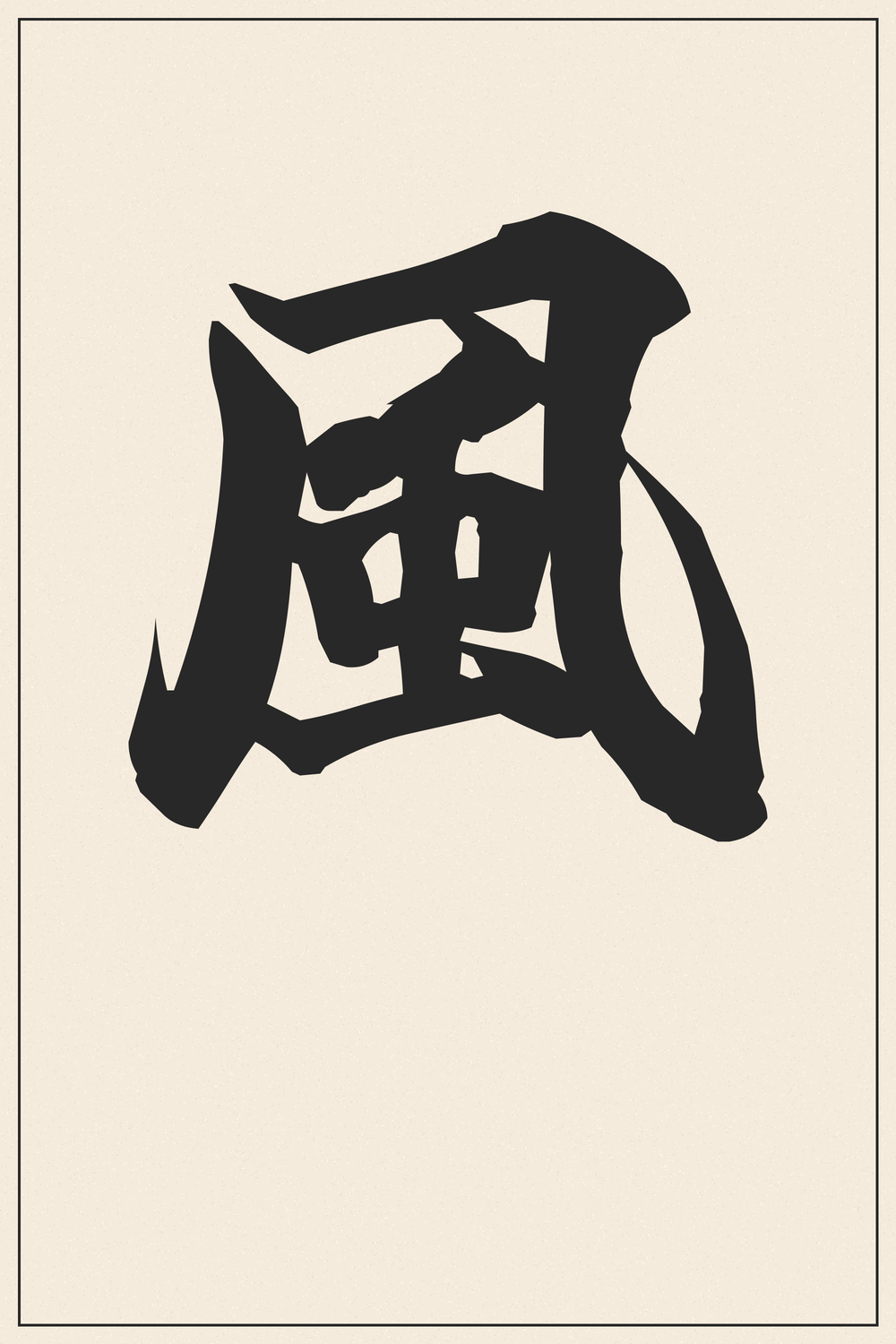
The Kanji 風 embodies the powerful, unseen force of wind, symbolizing dynamism and constant transformation. It speaks to the fluidity of life and the spirit of unhindered motion.
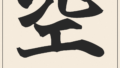
The atmosphere of a Kanji character changes dramatically depending on the font style. A character that looks elegant in a brush style might look bold and modern in a different font.
Recommendation:
Since a tattoo is permanent, we strongly recommend comparing various font styles beyond what is shown here. Use our designs as a trusted reference for the correct structure, but feel free to explore different artistic variations to find the perfect match for your vision.
The Deep Meaning Behind 風
The Kanji 風 (kaze) signifies ‘wind,’ ‘breeze,’ or ‘style.’ It represents the invisible, moving force of nature, capable of being both a gentle breath and a destructive gale.
In Japanese culture, wind is deeply spiritual, seen as a messenger of the gods (as in Kamikaze, or ‘Divine Wind’) and a symbol of freedom and change. It also implies ‘style,’ ‘manner,’ or ‘appearance’ (as in Wafū – Japanese style), suggesting an intangible atmosphere or aura that surrounds a person or object.
Kanji Breakdown
The character 風 is composed of an enclosing structure and an inner element, reflecting ancient beliefs about nature.
Meaning: Wind Enclosure. The outer frame is known as kaze-gamae (wind enclosure). Historically derived from the image of a spreading sail or a phoenix’s wings, it represents the encompassing movement of the air.
Meaning: Insect. The inner component is the character for ‘insect.’ This stems from an ancient belief that winds gave birth to insects or that insects were carried along by the wind. It symbolizes the life-generating or transforming power of nature.
Conclusion
The Kanji 風 is a profound symbol of the natural world, representing not just the wind but also the essence of change, freedom, and the pervasive flow of life. It encapsulates both the physical force of nature and the nuanced ‘flavor’ or ‘style’ of things.
Choosing 風 for a tattoo signifies an embrace of transformation, adaptability, and an appreciation for the unseen currents that guide existence. It’s an elegant choice for those who resonate with the dynamic and free spirit of the wind.
Comments