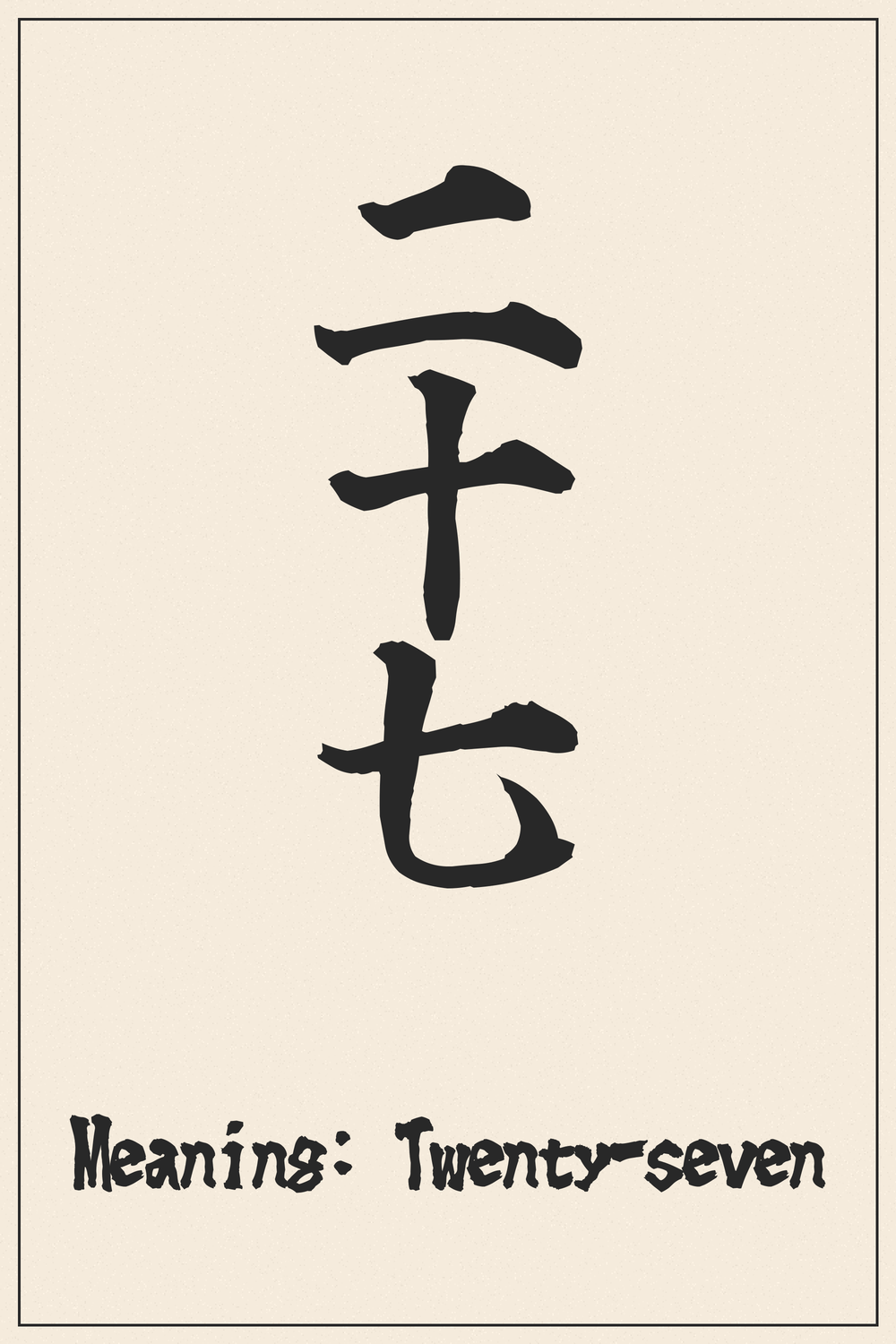
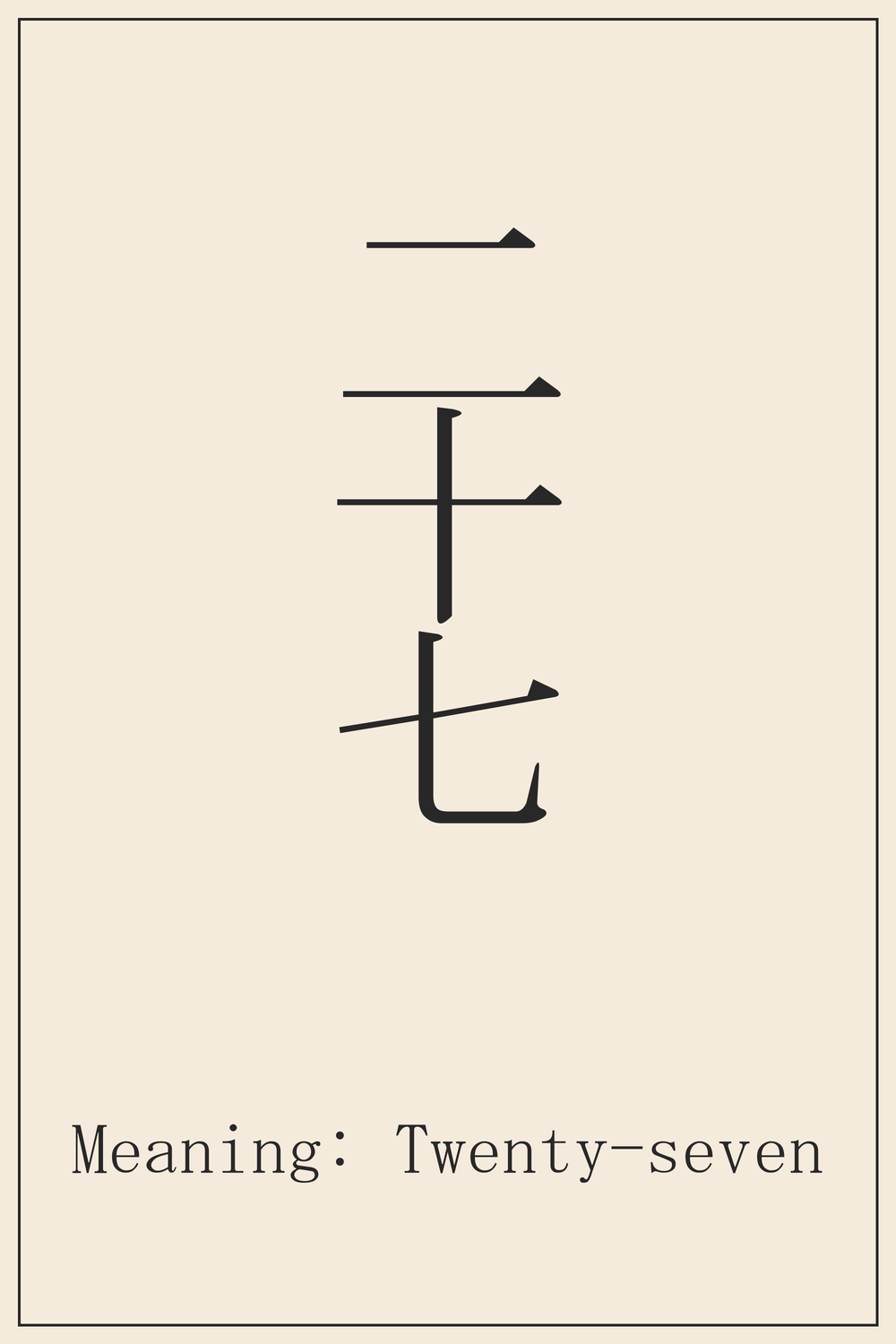
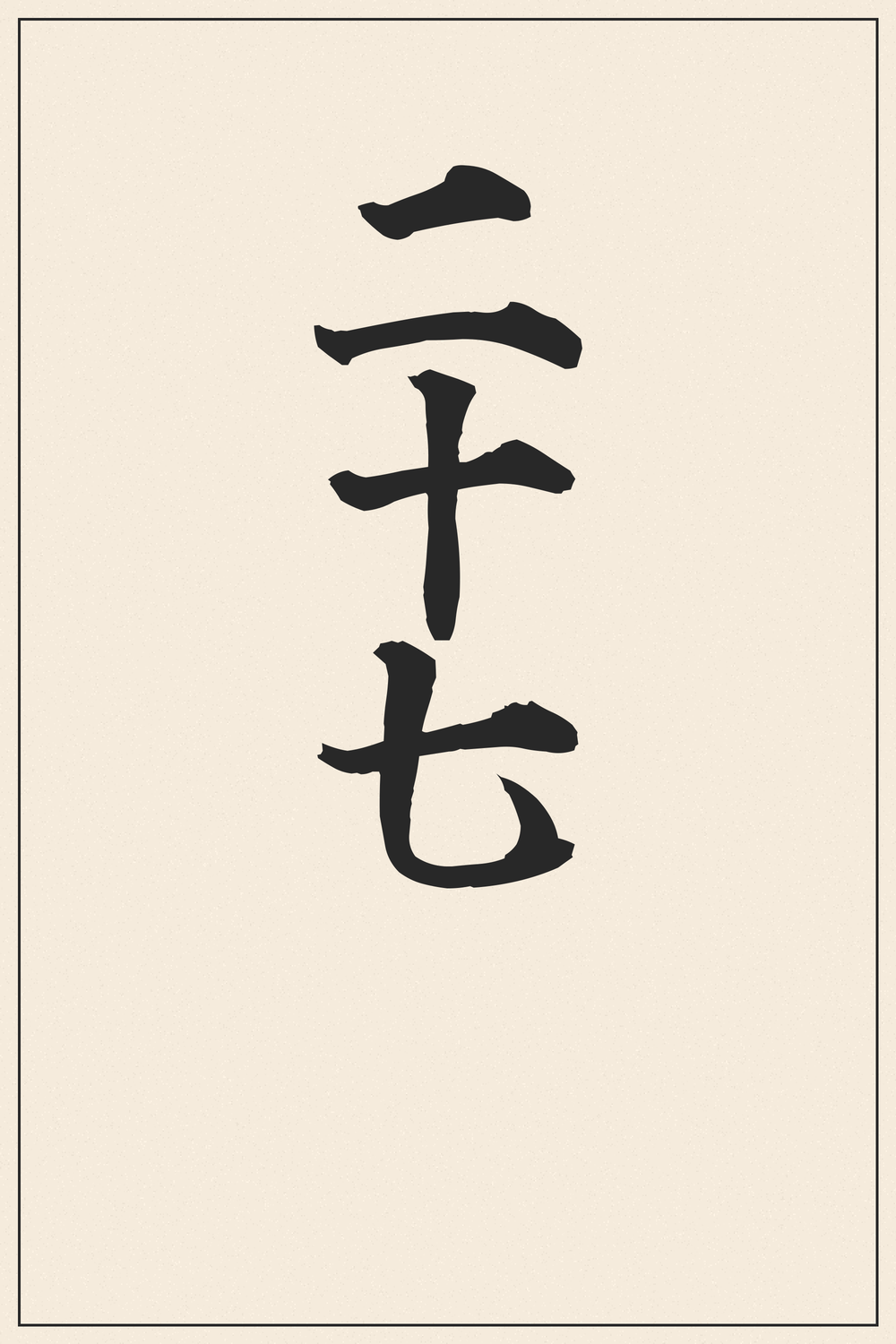
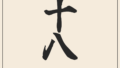
The Kanji compound “二十七” represents the specific quantity of twenty-seven. While a numerical value, it can symbolize a significant age, a memorable date, or a personal milestone on life’s journey.
The atmosphere of a Kanji character changes dramatically depending on the font style. A character that looks elegant in a brush style might look bold and modern in a different font.
Recommendation:
Since a tattoo is permanent, we strongly recommend comparing various font styles beyond what is shown here. Use our designs as a trusted reference for the correct structure, but feel free to explore different artistic variations to find the perfect match for your vision.
The Deep Meaning Behind 二十七
The Kanji for “twenty-seven,” 二十七, is a fundamental representation of quantity derived from combining basic numerical characters. It carries no inherent mystical or philosophical weight, but rather a direct numerical value that forms a building block for more complex expressions.
In Japanese culture, numbers are often pronounced in different ways, sometimes leading to wordplay or association with lucky or unlucky meanings (e.g., 四 ‘shi’ for death). However, twenty-seven (二十七, nijyuunana or nijyuushichi) doesn’t typically carry such broad, generalized cultural symbolism, making its significance largely personal and contextual to the individual.
Kanji Breakdown
The compound 二十七 is formed by three essential Kanji, each contributing to its overall numerical meaning:
Two: Represents the number two. Visually, it’s two horizontal strokes, symbolizing a pair or duality.
Ten: Represents the number ten. This character is often seen as a cross, symbolizing completion or a full cycle.
Seven: Represents the number seven. Its form is simple, conveying a distinct individual unit.
Conclusion
The Kanji “二十七” precisely denotes the number twenty-seven. Its strength lies in its clarity and directness, making it a powerful choice for those who wish to mark a specific quantity, an age, or a date of deep personal importance.
Choosing “二十七” for a tattoo is a statement of personal significance. It’s an elegant and timeless way to commemorate a unique moment or a valued number in one’s life, rendered in the classic beauty of Japanese script.
Comments