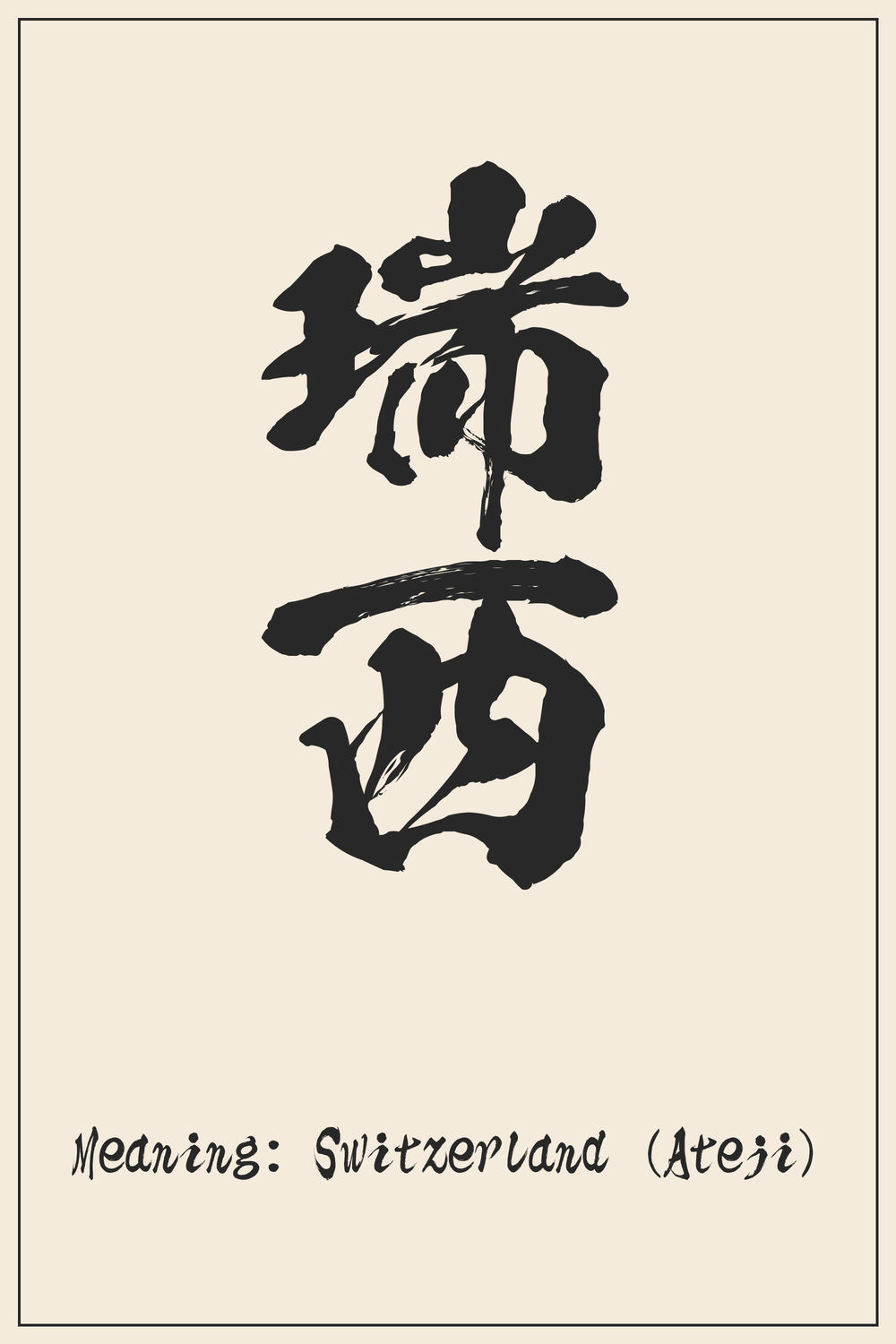
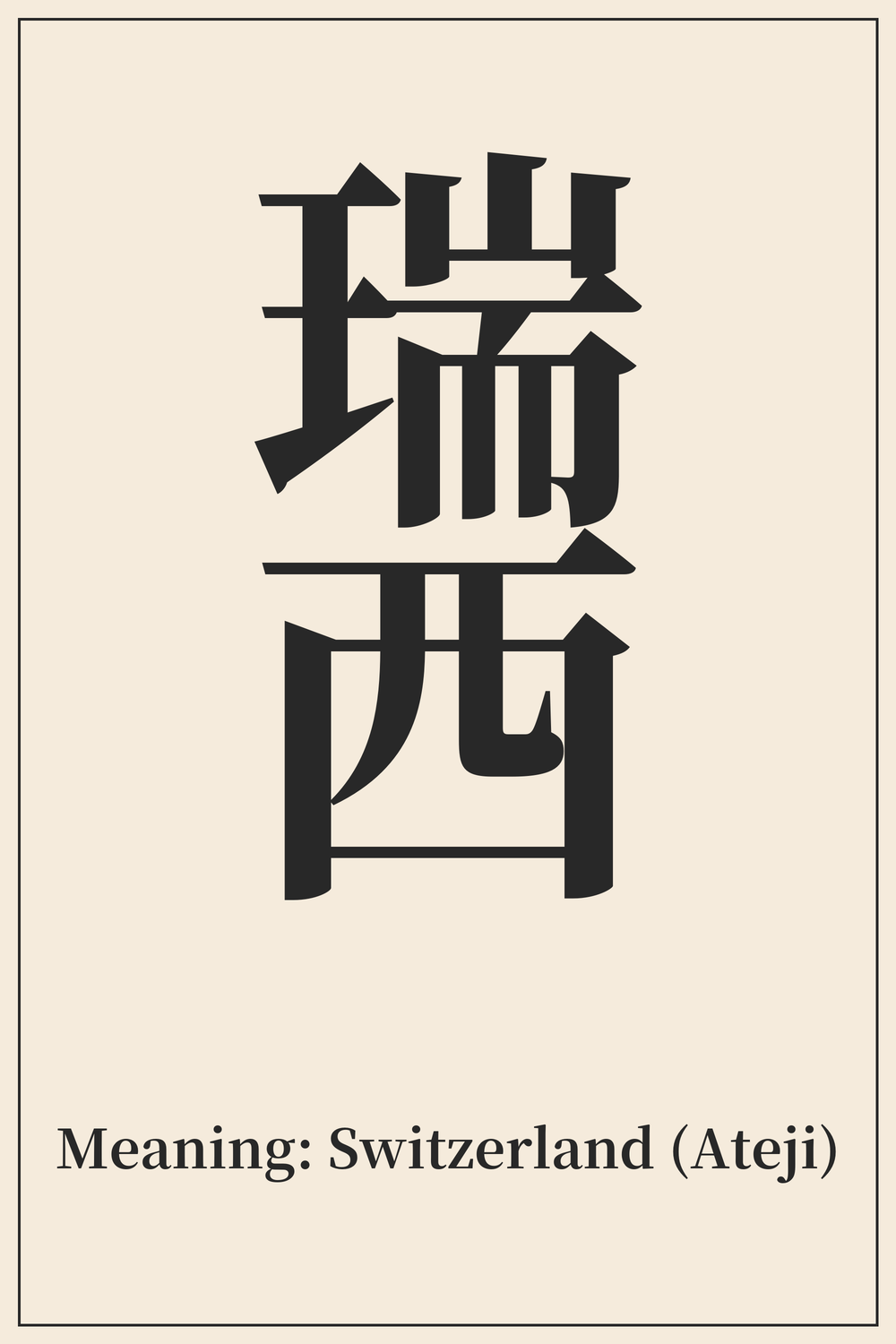
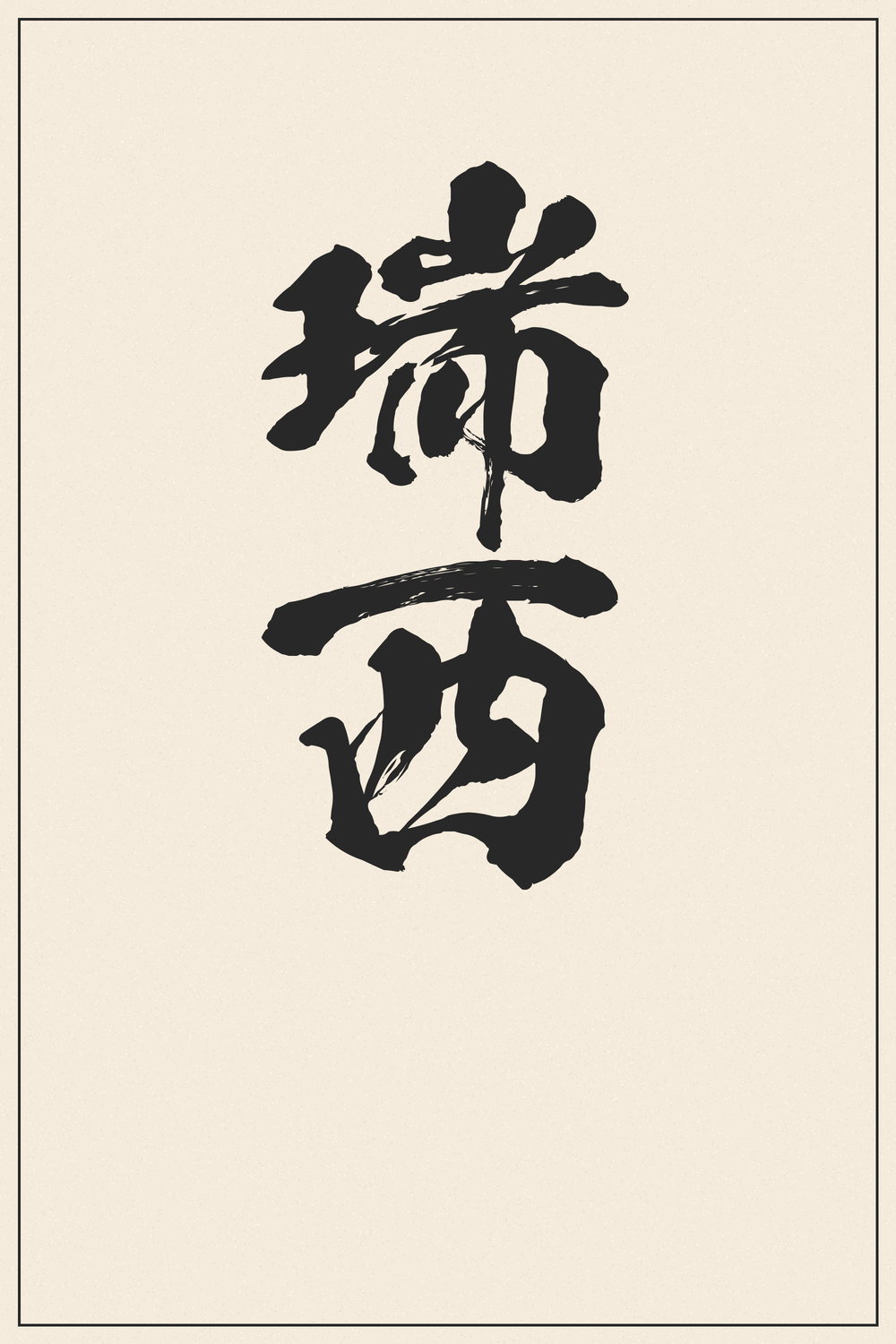
The Kanji combination 瑞西 represents ‘Switzerland’ through an ancient Japanese phonetic adaptation. It offers a unique blend of sound and symbolic meaning, though primarily chosen for pronunciation.
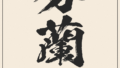
The atmosphere of a Kanji character changes dramatically depending on the font style. A character that looks elegant in a brush style might look bold and modern in a different font.
Recommendation: Since a tattoo is permanent, we strongly recommend comparing various font styles beyond what is shown here. Use our designs as a trusted reference for the correct structure, but feel free to explore different artistic variations to find the perfect match for your vision.
The Deep Meaning Behind 瑞西
The Kanji combination 瑞西 (Suisu) is a classic example of ‘ateji’ (当て字), a phonetic kanji usage where characters are chosen primarily for their sound rather than their intrinsic meaning. In this case, 瑞西 is used to phonetically represent the country name ‘Switzerland’.
While chosen for sound, the individual characters also carry objective meanings: 瑞 (zui) typically means ‘auspicious’ or ‘felicitous omen’, and 西 (nishi) means ‘west’. Thus, the literal interpretation could be ‘Auspicious West’, although this is secondary to its role as a phonetic representation of ‘Switzerland’.
Kanji Breakdown
The term 瑞西 is composed of two distinct Kanji characters, each contributing to its overall phonetic representation and subtle layers of meaning.
Meaning: Auspicious, felicitous omen. This character often refers to good fortune or a positive sign.
Meaning: West. This character denotes one of the cardinal directions.
Conclusion
瑞西 (Suisu) is primarily a phonetic representation for ‘Switzerland’ in Japanese, embodying the fascinating tradition of ateji. While its literal meaning of ‘Auspicious West’ is pleasant, its core identity lies in its cultural role as a descriptor for the European nation.
For those with a strong connection to Switzerland, this Kanji offers a unique and historically significant way to represent the country. It is a testament to how the Japanese language ingeniously adapted foreign concepts into its rich writing system, making it a meaningful choice for personal expression.
Comments