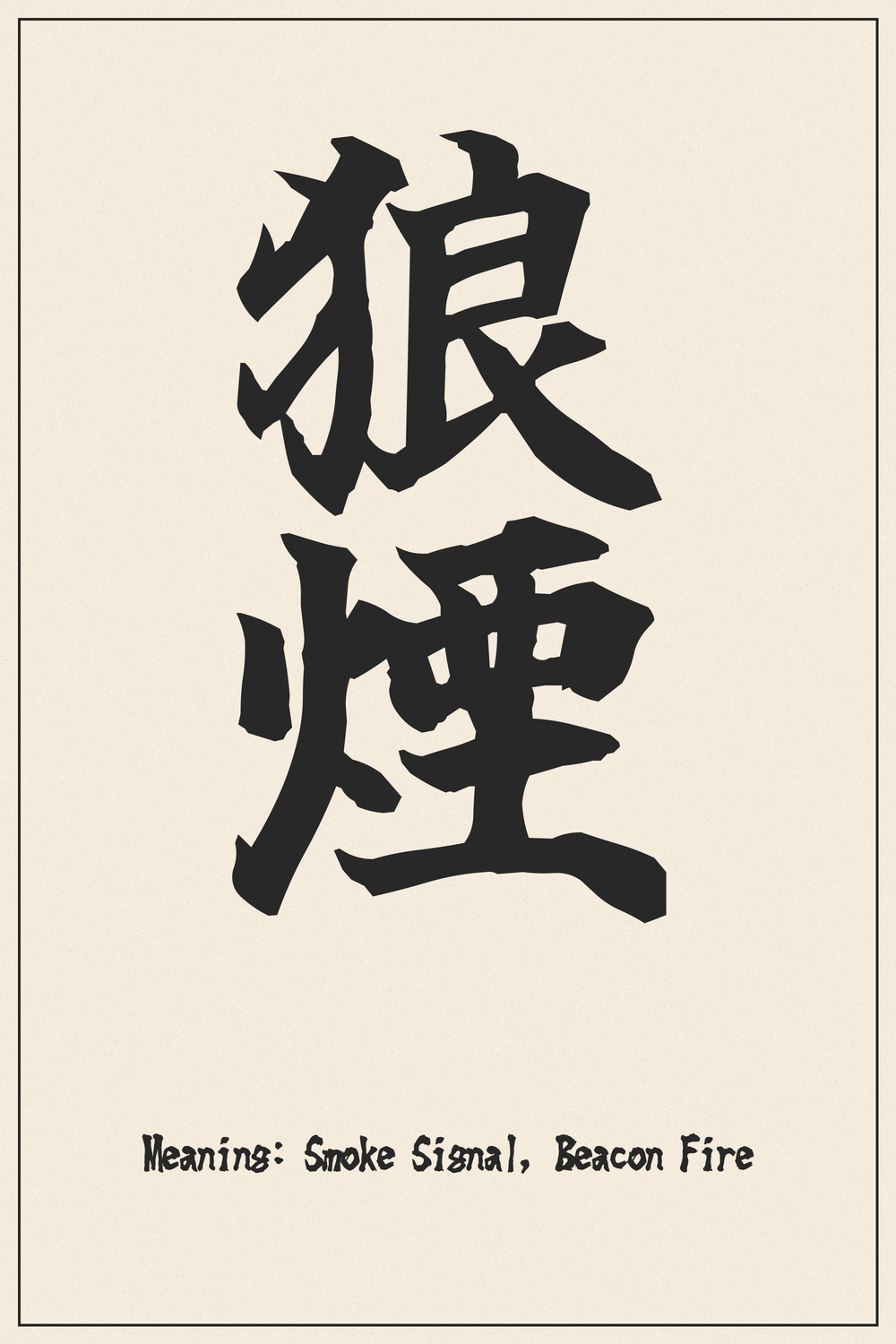
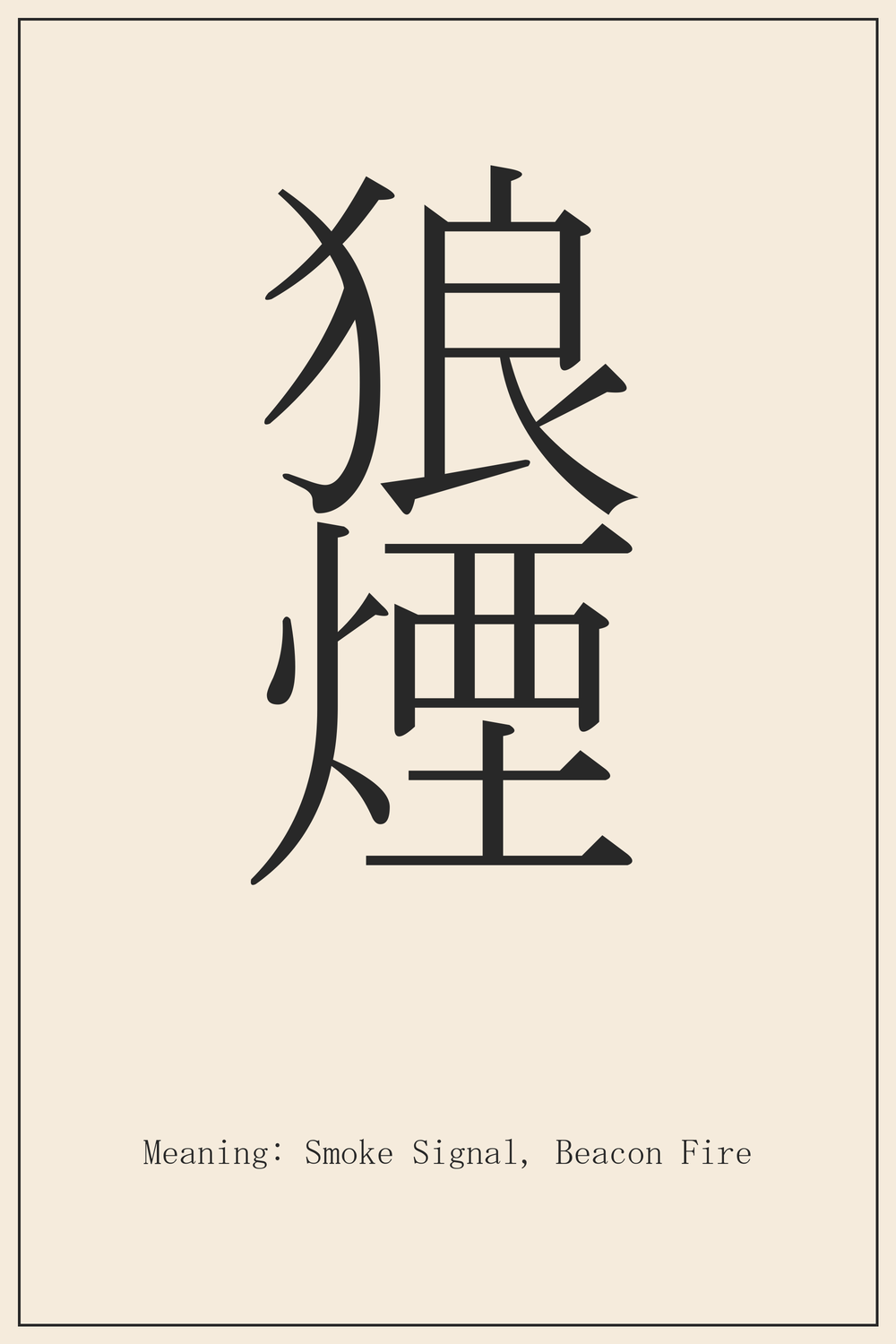
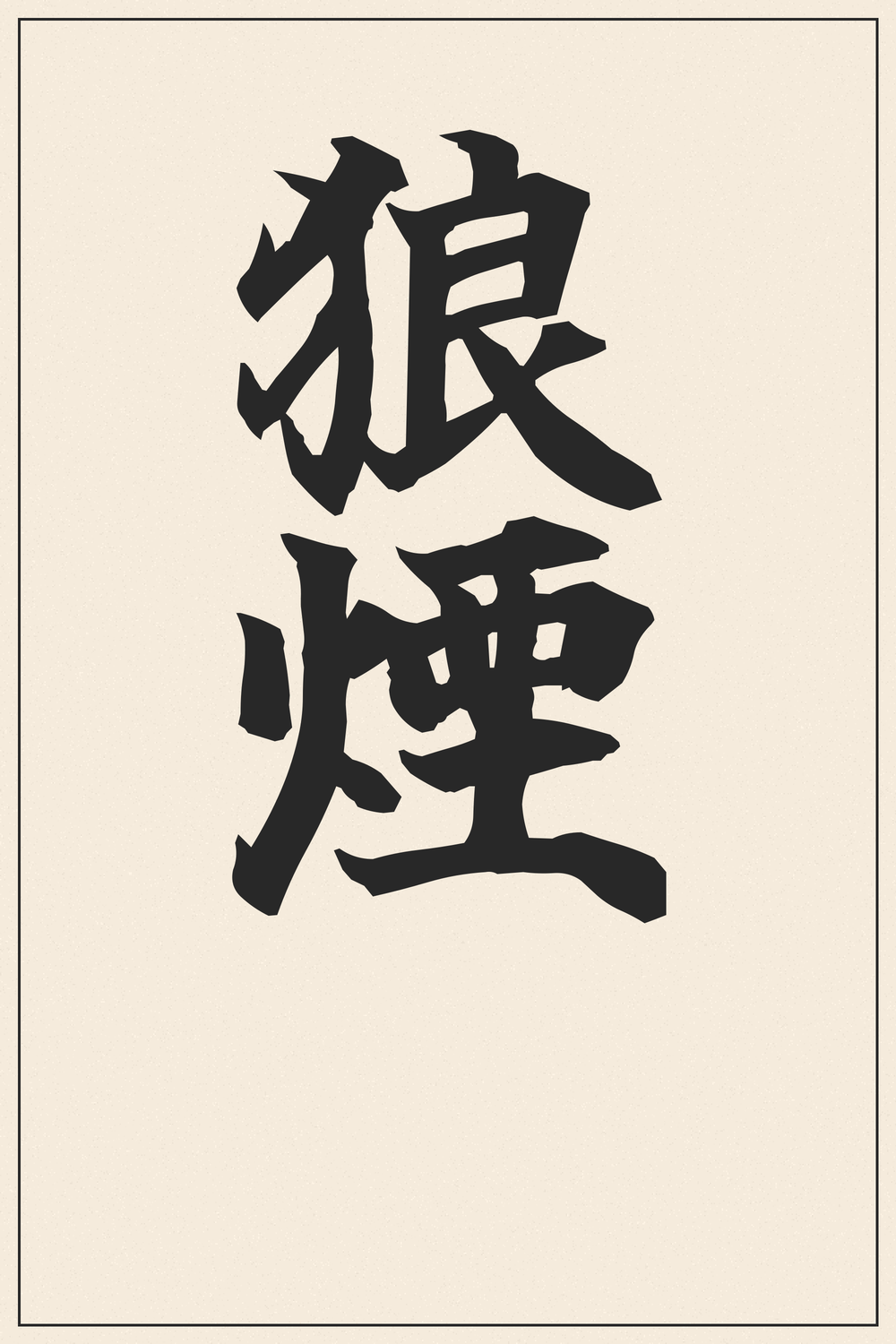
The Kanji 狼煙 (Noroshi) captures the dramatic essence of ancient communication, symbolizing urgent messages sent across vast landscapes.
It represents a critical signal, a call to action, or a vital warning etched into the sky.
The atmosphere of a Kanji character changes dramatically depending on the font style. A character that looks elegant in a brush style might look bold and modern in a different font.
Recommendation:
Since a tattoo is permanent, we strongly recommend comparing various font styles beyond what is shown here. Use our designs as a trusted reference for the correct structure, but feel free to explore different artistic variations to find the perfect match for your vision.
The Deep Meaning Behind 狼煙
The term 狼煙, pronounced Noroshi, literally combines ‘wolf’ (狼) and ‘smoke’ (煙). Historically, this refers to a smoke signal often created using wolf dung, which was believed to produce a particularly dense and long-lasting smoke.
This ancient method of communication was crucial for transmitting urgent messages, particularly in military contexts, signaling the approach of enemies or calling for reinforcements.
In Japanese culture and beyond, 狼煙 symbolizes a critical warning, a call to attention, or the initiation of an important event. It represents clarity and urgency in communication, often when conventional methods are unavailable.
Beyond its literal meaning, it evokes a sense of vigilance, preparedness, and the powerful impact of a single, well-placed signal in times of crisis or significant transition.
Kanji Breakdown
The compound Kanji 狼煙 is composed of two distinct characters, each contributing to its profound meaning.
Meaning: Wolf. This character depicts a ‘wolf,’ an animal known for its keen senses and wild nature. In the context of 狼煙, it specifically alludes to the use of wolf dung to produce thick, dark smoke, highlighting the resourceful and sometimes primal origins of this ancient communication method.
Meaning: Smoke. The character 煙 represents ‘smoke,’ a fundamental element of the signal itself. It consists of 火 (fire) at the bottom and 垔 (suppress/choke, here acting phonetically and semantically for rising plumes) above, clearly illustrating the rising plumes generated by fire, which carry the urgent message skyward.
Conclusion
The Kanji 狼煙 stands as a powerful emblem of ancient strategy and urgent communication. It embodies the historical necessity of swift warning and the ingenious methods employed to achieve it, connecting the wildness of the wolf with the ethereal nature of smoke.
Opting for 狼煙 as a tattoo signifies an appreciation for history, strategic foresight, and the potent impact of a clear signal. Its intricate form makes it a compelling and distinctive choice for those who value unique cultural narratives and visual depth in their body art, provided it is rendered with ample size to accommodate its detail.
Comments