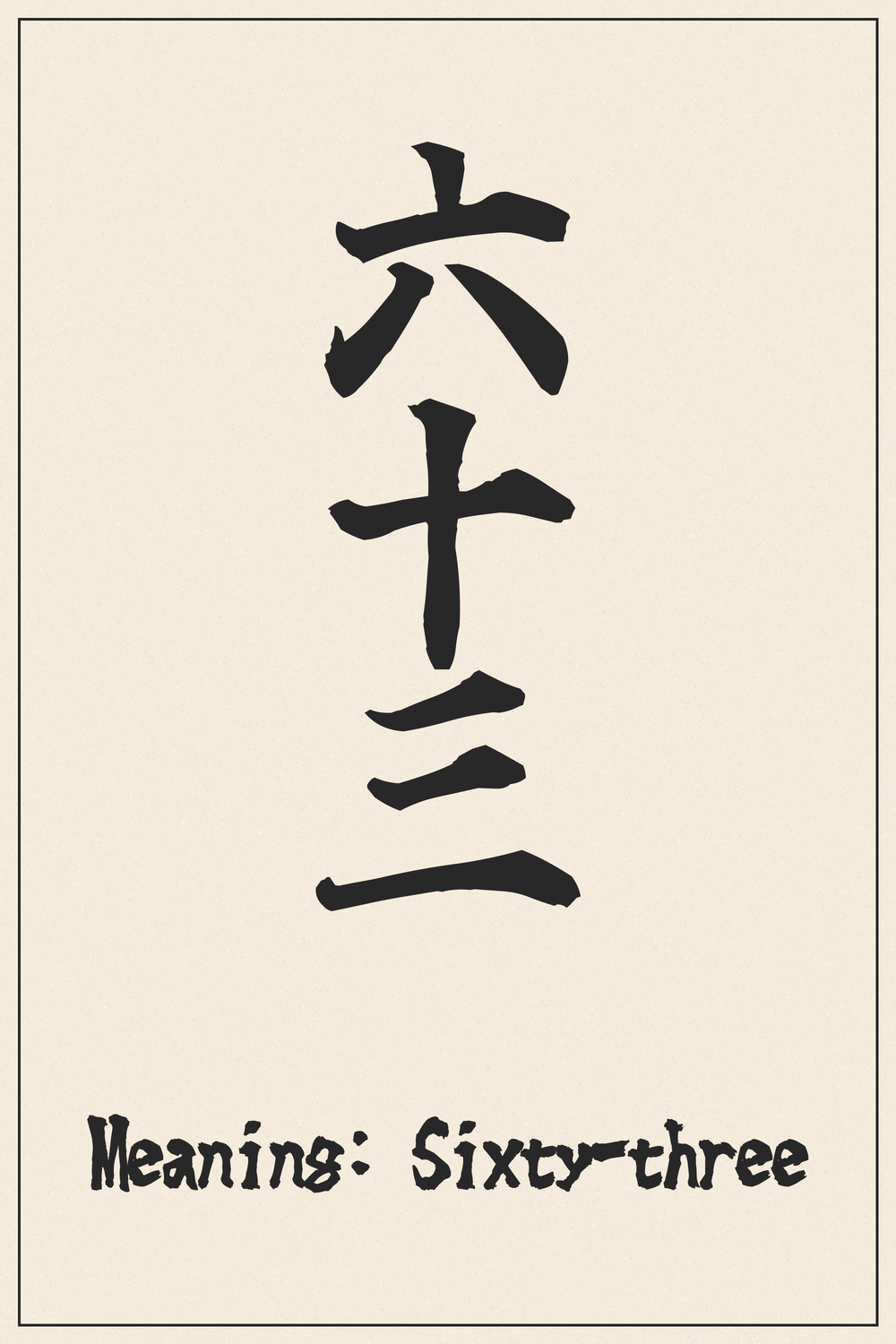
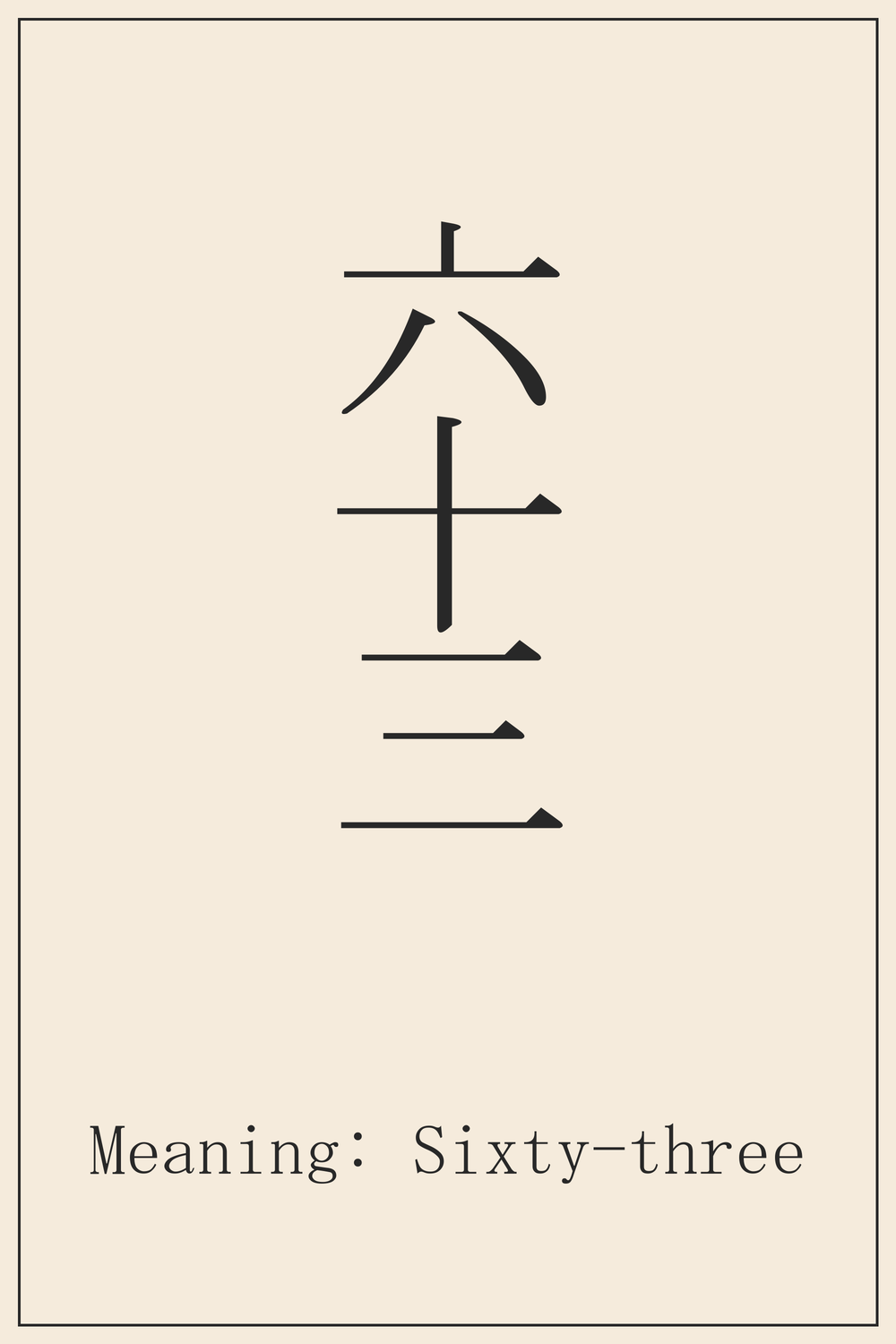
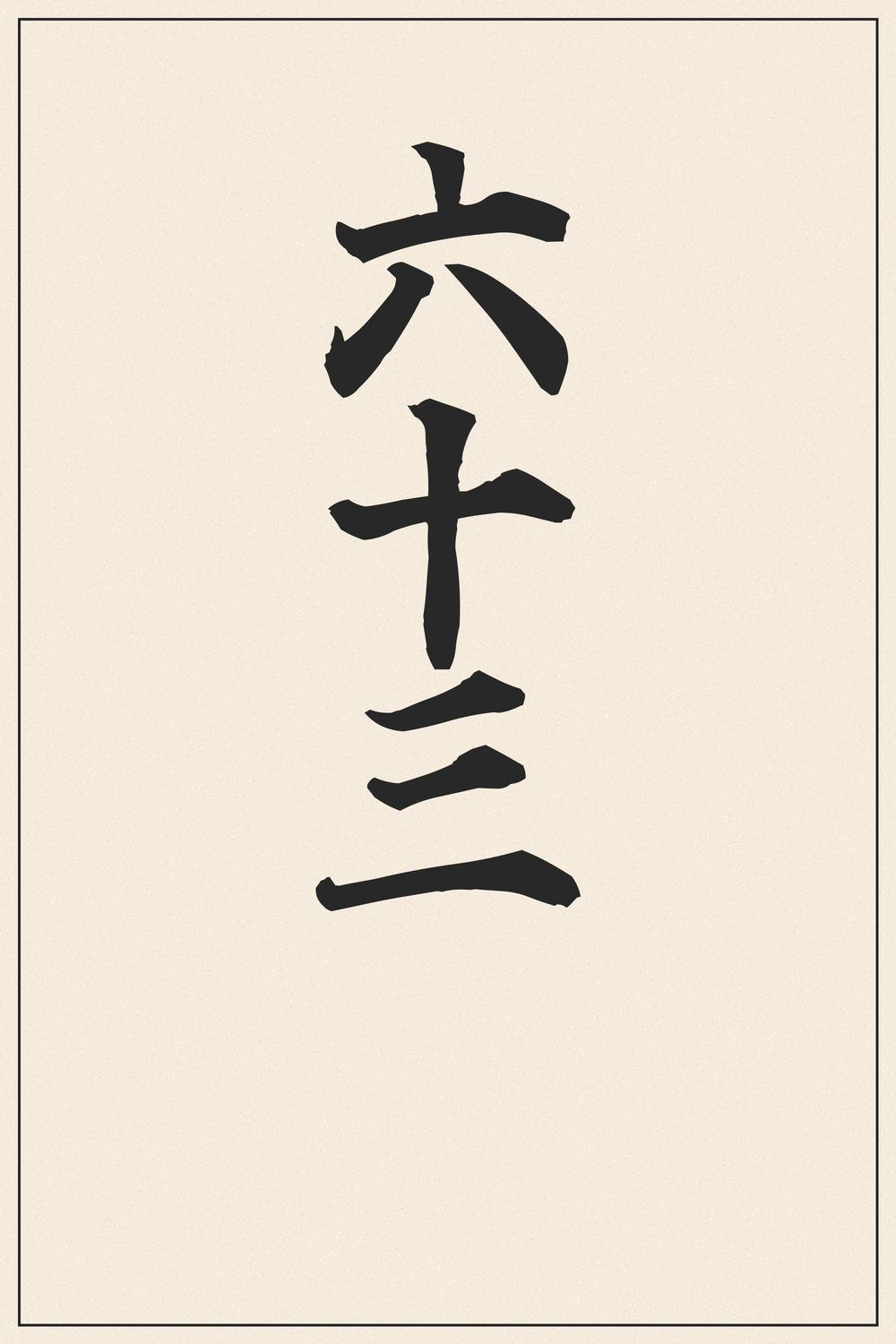
The Kanji compound 六十三 represents the precise numerical value ‘sixty-three’, often denoting a significant count or age. It embodies a specific point in time or quantity, reflecting a personal milestone or a simple measurement.
The atmosphere of a Kanji character changes dramatically depending on the font style. A character that looks elegant in a brush style might look bold and modern in a different font.
Recommendation:
Since a tattoo is permanent, we strongly recommend comparing various font styles beyond what is shown here. Use our designs as a trusted reference for the correct structure, but feel free to explore different artistic variations to find the perfect match for your vision.
The Deep Meaning Behind 六十三
The Kanji 六十三 is a direct numerical representation for ‘sixty-three’. In Japanese, numbers are typically formed by combining individual Kanji for digits and powers of ten. Here, 六 (roku) means ‘six’, 十 (jū) means ‘ten’, and 三 (san) means ‘three’, combining to form ‘six tens and three’, or sixty-three.
While numbers like sixty-three do not carry the deep philosophical weight of a single symbolic Kanji, they hold immense personal and cultural context. They often mark significant ages, anniversaries, important dates, or represent a specific quantity relevant to an individual’s life journey. Its directness makes it a powerful choice for commemorating a precise moment or value.
Kanji Breakdown
The compound 六十三 is formed from three distinct Kanji, each contributing to its numerical value.
Meaning: Six. This character is an ancient representation of the number six, deriving from early forms depicting a structure with a roof and support, possibly symbolizing division or enclosure.
Meaning: Ten. Visually simple, this character represents the number ten, likely evolving from a tally mark or a needle, indicating completeness or a full count.
Meaning: Three. This character is one of the simplest Kanji, represented by three horizontal strokes, directly symbolizing the numerical value of three.
Conclusion
The Kanji 六十三 precisely articulates the number sixty-three, serving as a straightforward yet potent symbol. It can represent a significant age, a milestone anniversary, a personal lucky number, or any specific quantity that holds deep meaning to the bearer.
Choosing 六十三 for a tattoo is a declaration of a specific value or moment. Its clean lines and distinct components ensure a visually appealing and highly legible design, making it a perfect choice for those who wish to immortalize a number of personal importance with elegant Japanese script.
Comments