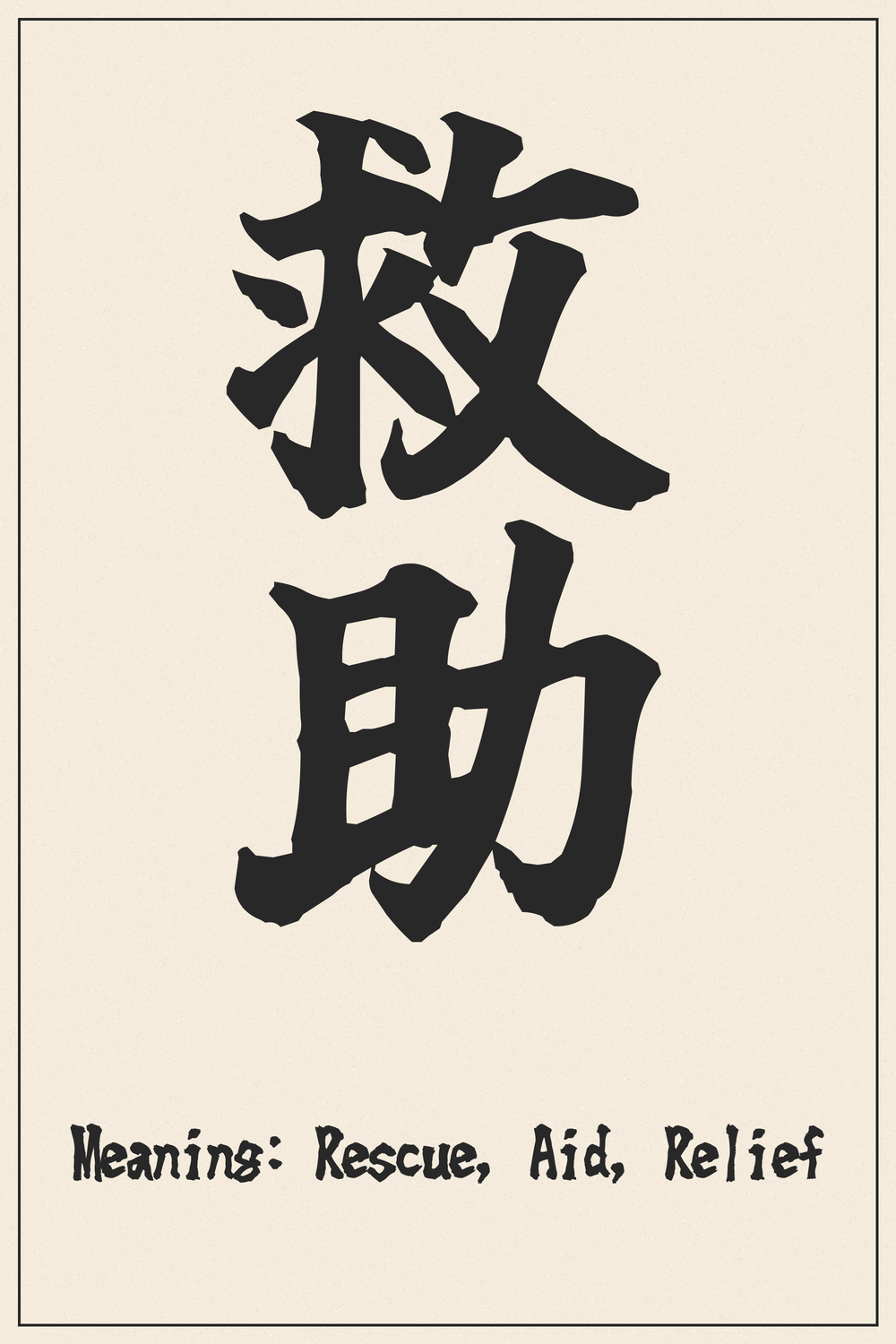
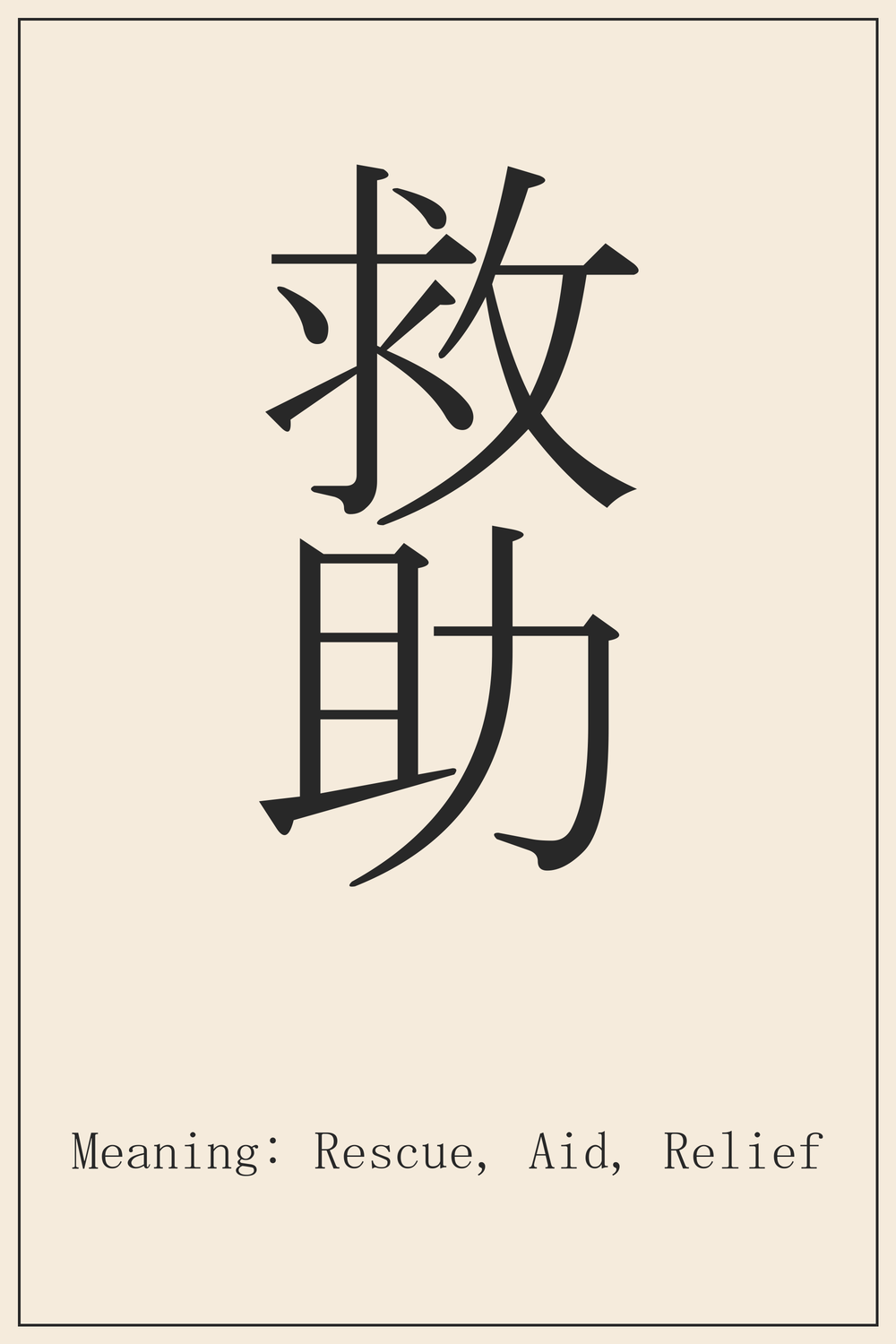
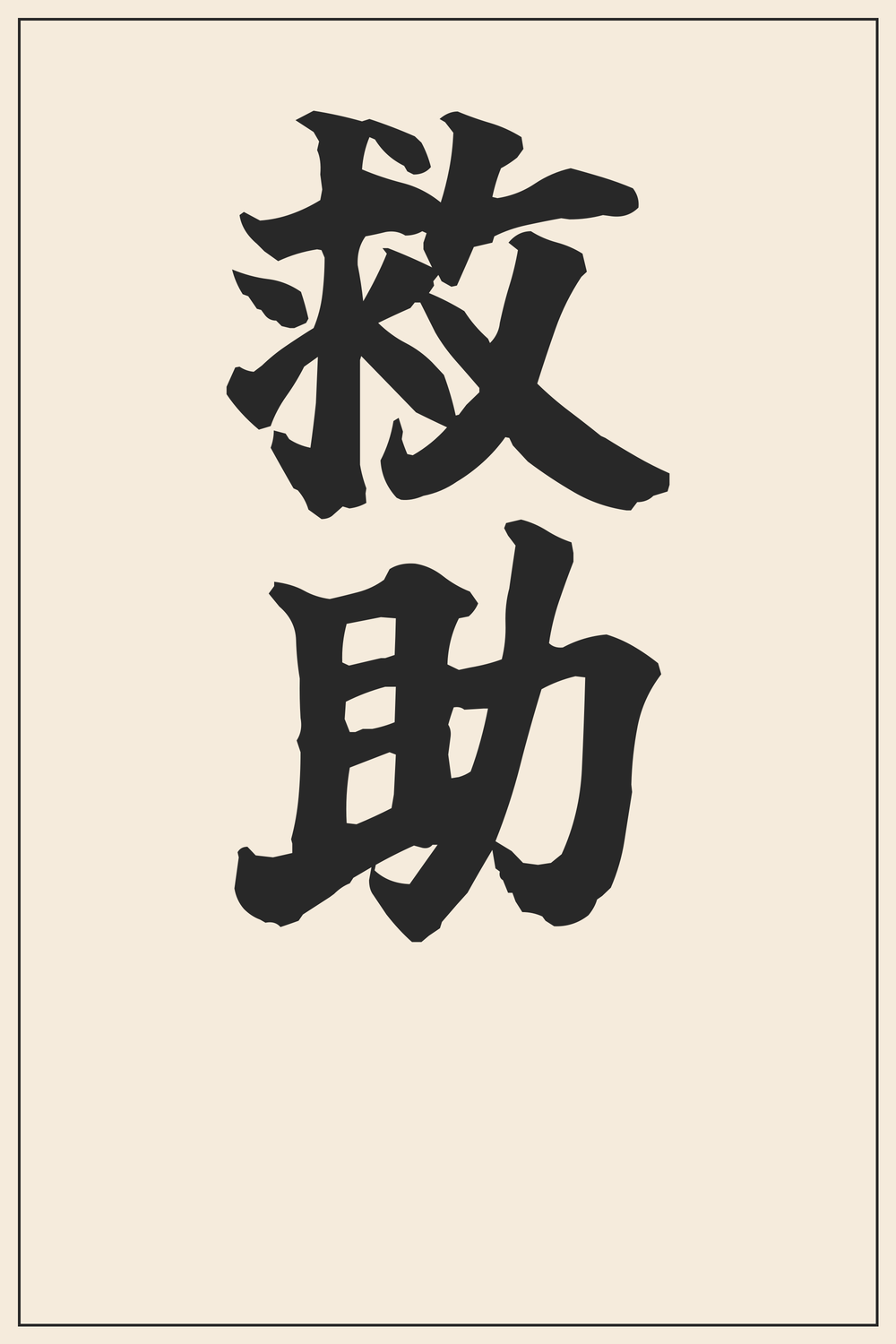
The Kanji compound 救助 (Kyūjo) embodies the vital act of rescue and aid, reflecting humanity’s deepest instincts to help those in peril. It symbolizes swift intervention and compassionate support in moments of crisis.
The atmosphere of a Kanji character changes dramatically depending on the font style. A character that looks elegant in a brush style might look bold and modern in a different font.
Recommendation:
Since a tattoo is permanent, we strongly recommend comparing various font styles beyond what is shown here. Use our designs as a trusted reference for the correct structure, but feel free to explore different artistic variations to find the perfect match for your vision.
The Deep Meaning Behind 救助
The compound Kanji 救助 (Kyūjo) signifies ‘rescue’ or ‘aid,’ encompassing the act of saving someone from danger or distress. It highlights the essential human impulse to protect and support one another in times of need.
Culturally, 救助 is a foundational concept, particularly in emergency services, disaster relief, and medical care in Japan. It embodies a spirit of collective responsibility and swift, decisive action, reflecting the deep value placed on mutual assistance and human life.
Kanji Breakdown
The compound 救助 is formed by two characters, each contributing to its overall meaning of active assistance.
Meaning: To save, to rescue. The character combines 求 (seek, request) and 攵 (action, strike, an old form of a radical related to hitting or action). It evokes the act of intervening or seeking to save someone.
Meaning: To help, to assist, to aid. This character is composed of 力 (power, strength) and 且 (a phonetic component that can also imply ‘moreover’ or ‘further’). Together, it signifies lending one’s strength or providing additional support.
Conclusion
The Kanji 救助 stands as a powerful symbol of compassion, courage, and selfless action. It encapsulates the vital human endeavor to save and support others in their most vulnerable moments, making it a profound representation of intervention and care.
For those who dedicate their lives to helping others or who deeply value acts of heroism and assistance, a tattoo of 救助 serves as a constant reminder of the strength found in supporting one another and the profound impact of saving a life.
Comments