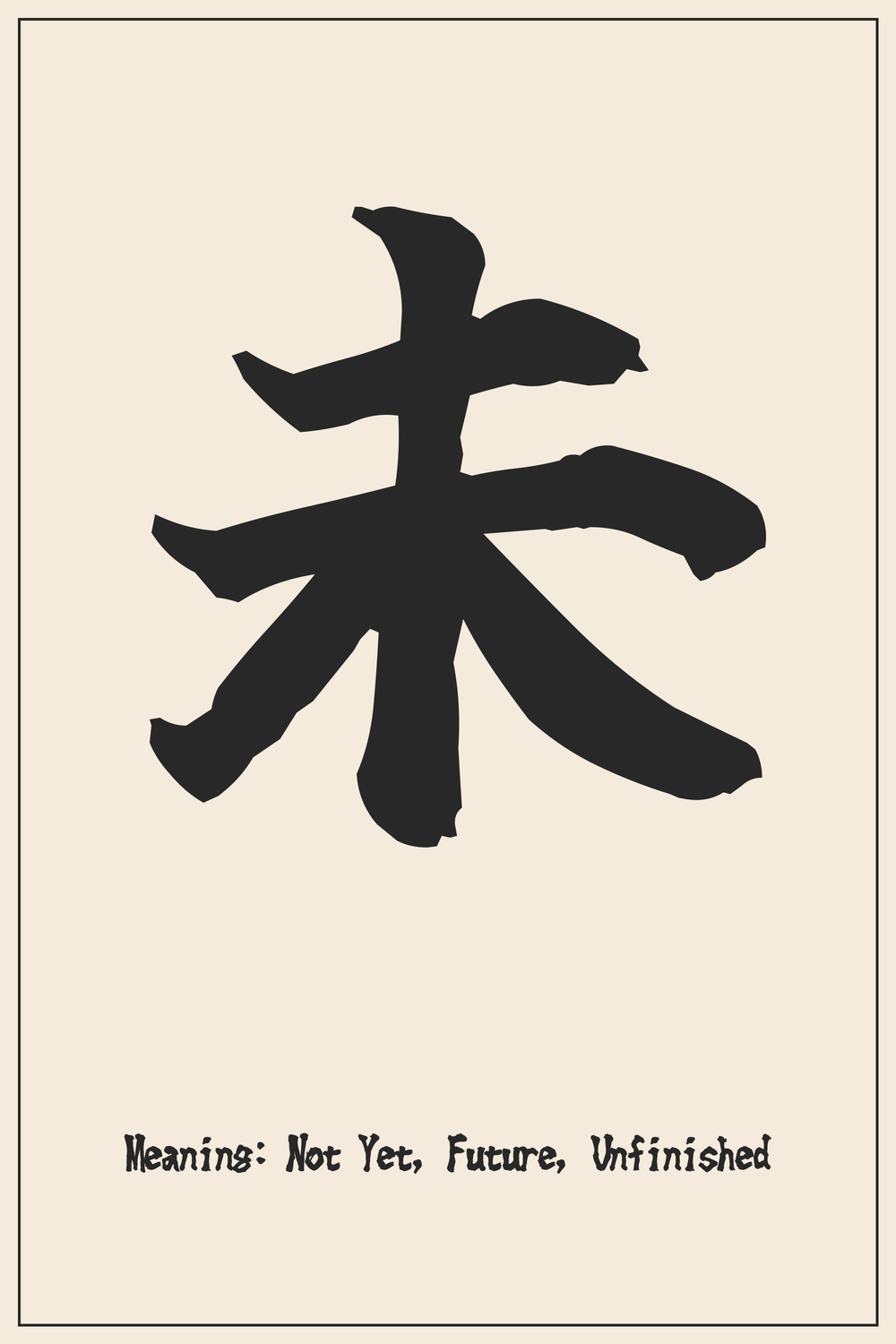
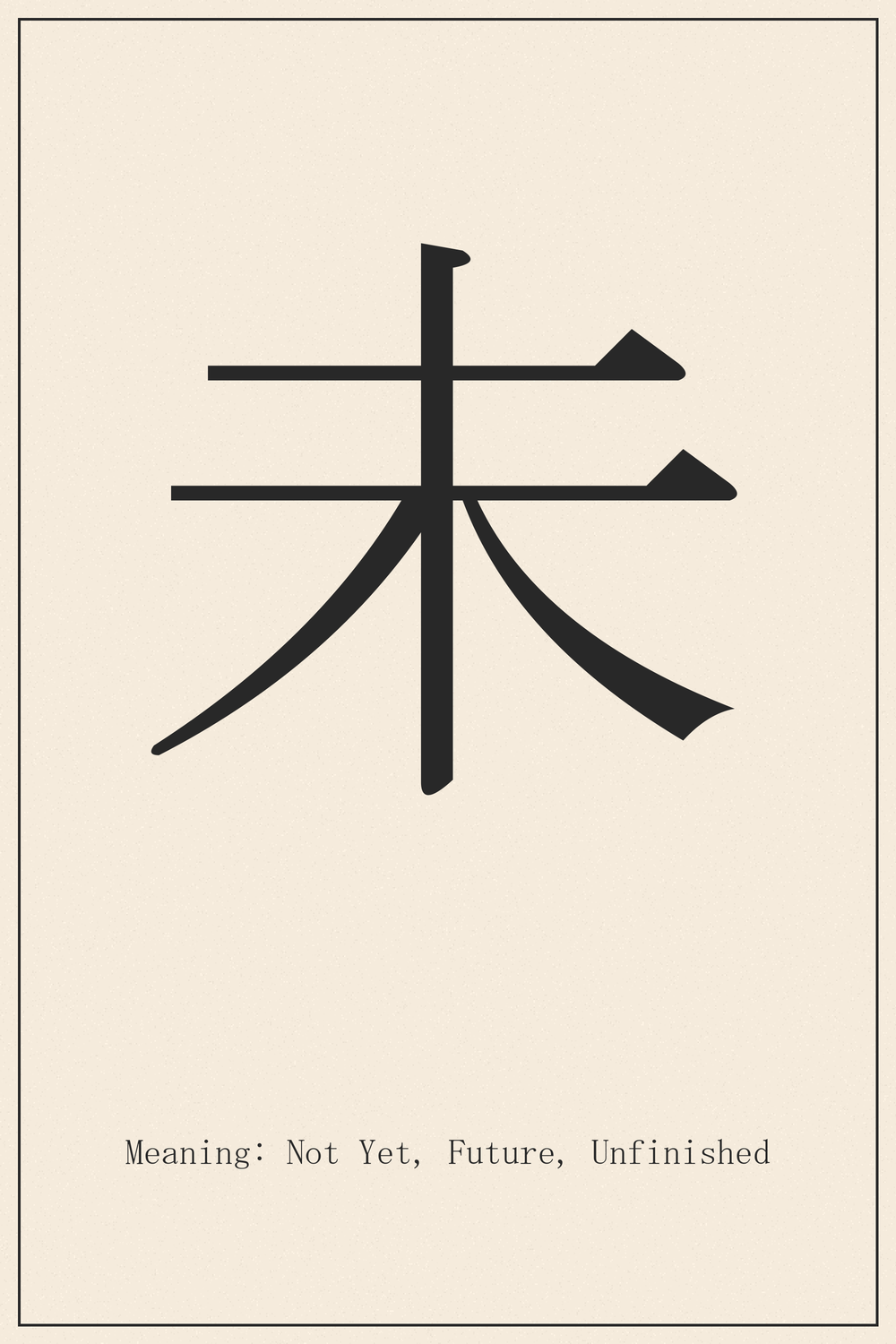
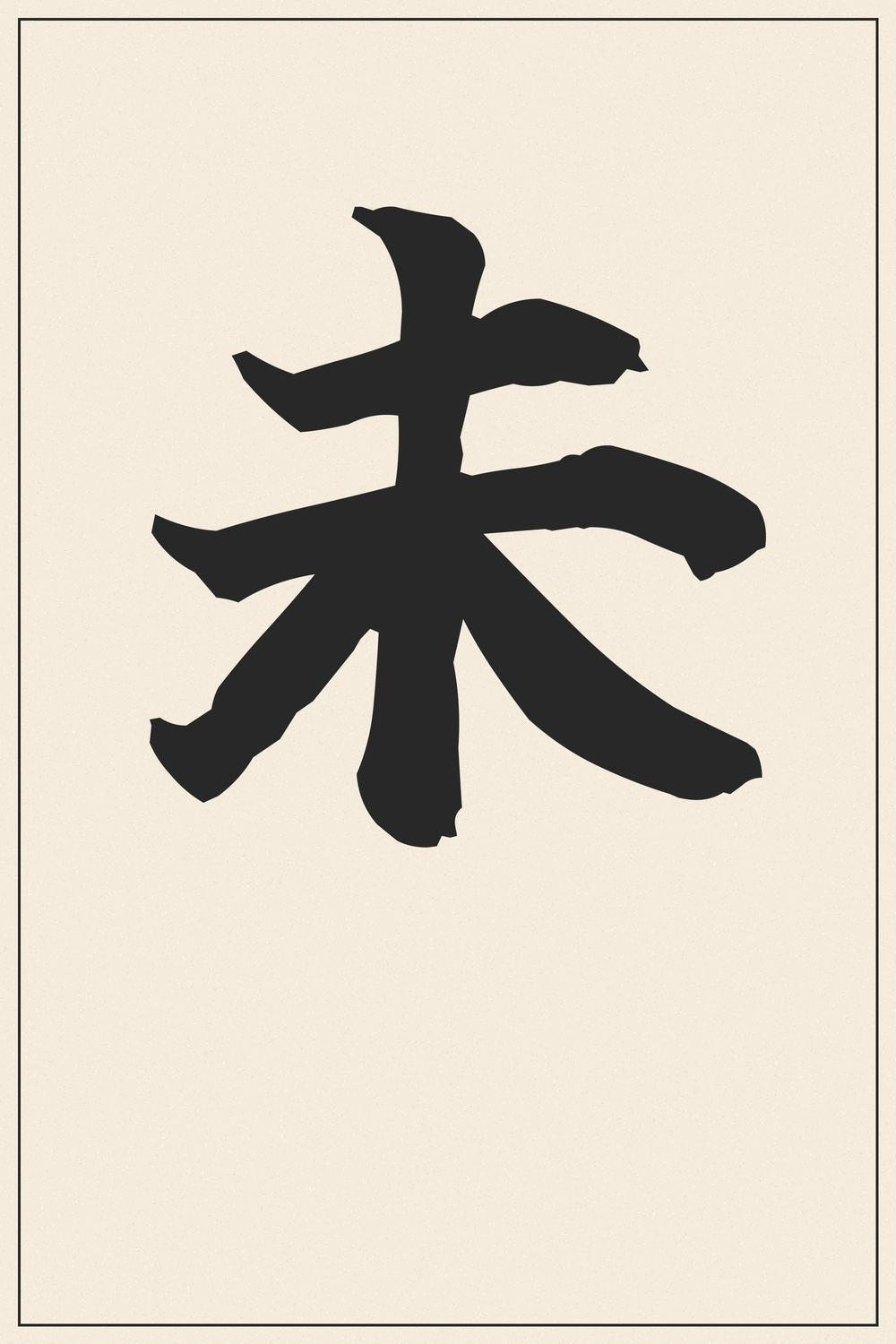
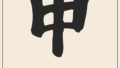
The Kanji ‘未’ embodies the profound concept of ‘not yet’ and ‘future,’ representing untapped potential and the journey ahead. It’s a powerful symbol for personal growth, anticipation, and an unwritten destiny.
The atmosphere of a Kanji character changes dramatically depending on the font style. A character that looks elegant in a brush style might look bold and modern in a different font.
Recommendation:
Since a tattoo is permanent, we strongly recommend comparing various font styles beyond what is shown here. Use our designs as a trusted reference for the correct structure, but feel free to explore different artistic variations to find the perfect match for your vision.
The Deep Meaning Behind 未
The Kanji 未 (mi, mada) has ancient roots, originating as a pictograph of a young tree with short branches that have not yet fully grown. This visual representation directly translates to its core meaning of ‘not yet,’ ‘unfinished,’ or ‘still to come.’
Culturally, 未 is frequently found in words signifying the future (未来 – mirai), undeveloped states (未開 – mikai), or decisions yet to be made (未定 – mitei). It inherently carries a sense of anticipation, potential, and the boundless possibilities that lie ahead, distinguishing it from concepts of conclusion or finality.
Kanji Breakdown
The Kanji 未 is a single character whose form itself illustrates its meaning through a subtle modification of the radical for ‘tree’.
Tree with short branches: This ancient depiction shows a tree whose uppermost branches are cut short or have not fully extended, symbolizing youth, immaturity, and things that are not yet complete or have not reached their full potential. This contrasts with 末 (sue, end), which depicts a tree with longer branches, signifying completion.
Conclusion
The Kanji ‘未’ is a beautifully concise representation of the ‘not yet’ – a powerful concept embracing the future, untapped potential, and ongoing growth. It speaks to the journey of life, where possibilities remain open and destiny is continually unfolding.
For a tattoo, ‘未’ serves as an inspiring reminder that your story is still being written, your potential is limitless, and every day brings new opportunities for becoming. It’s an elegant choice for those who value growth and look forward to what’s to come.
Comments