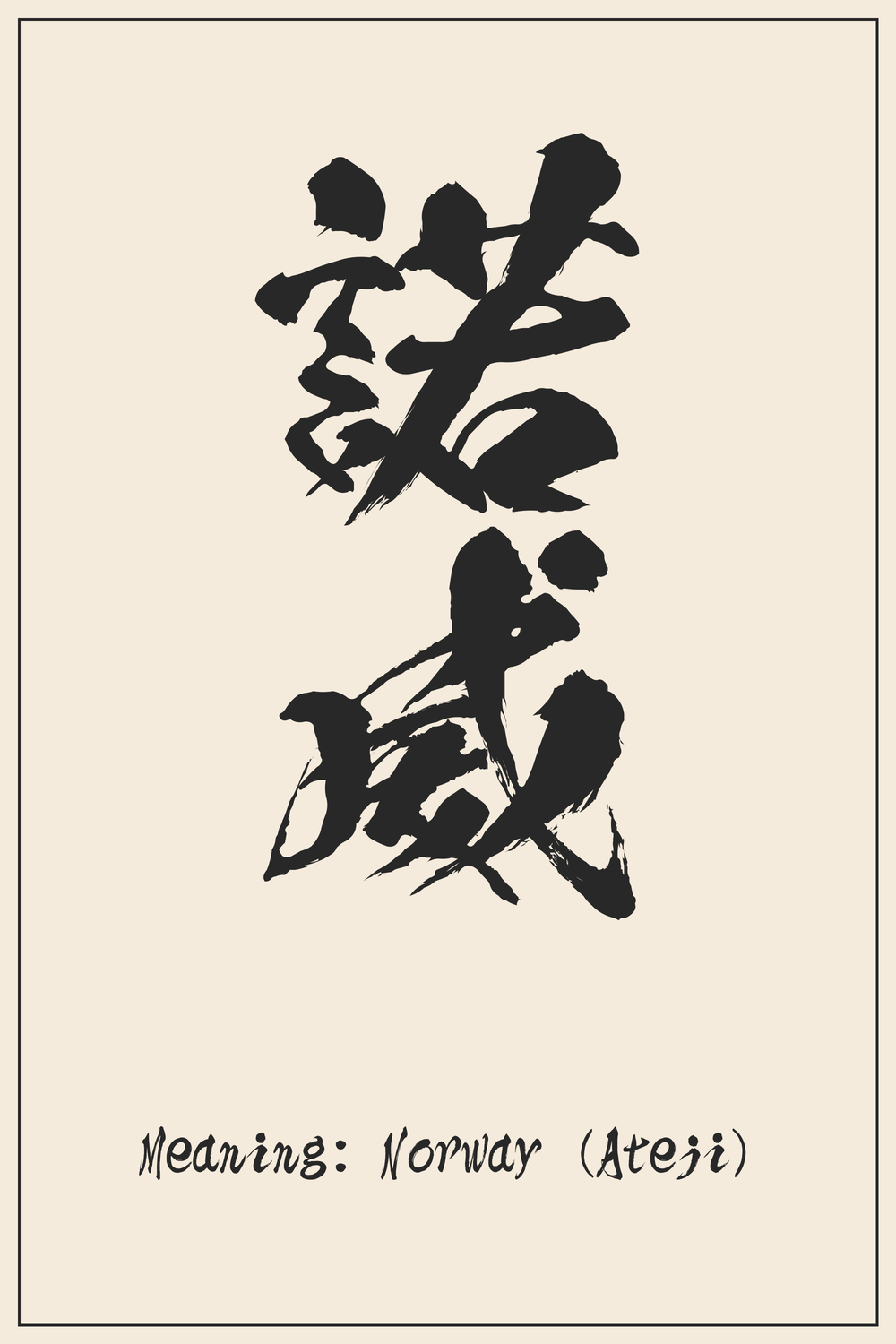
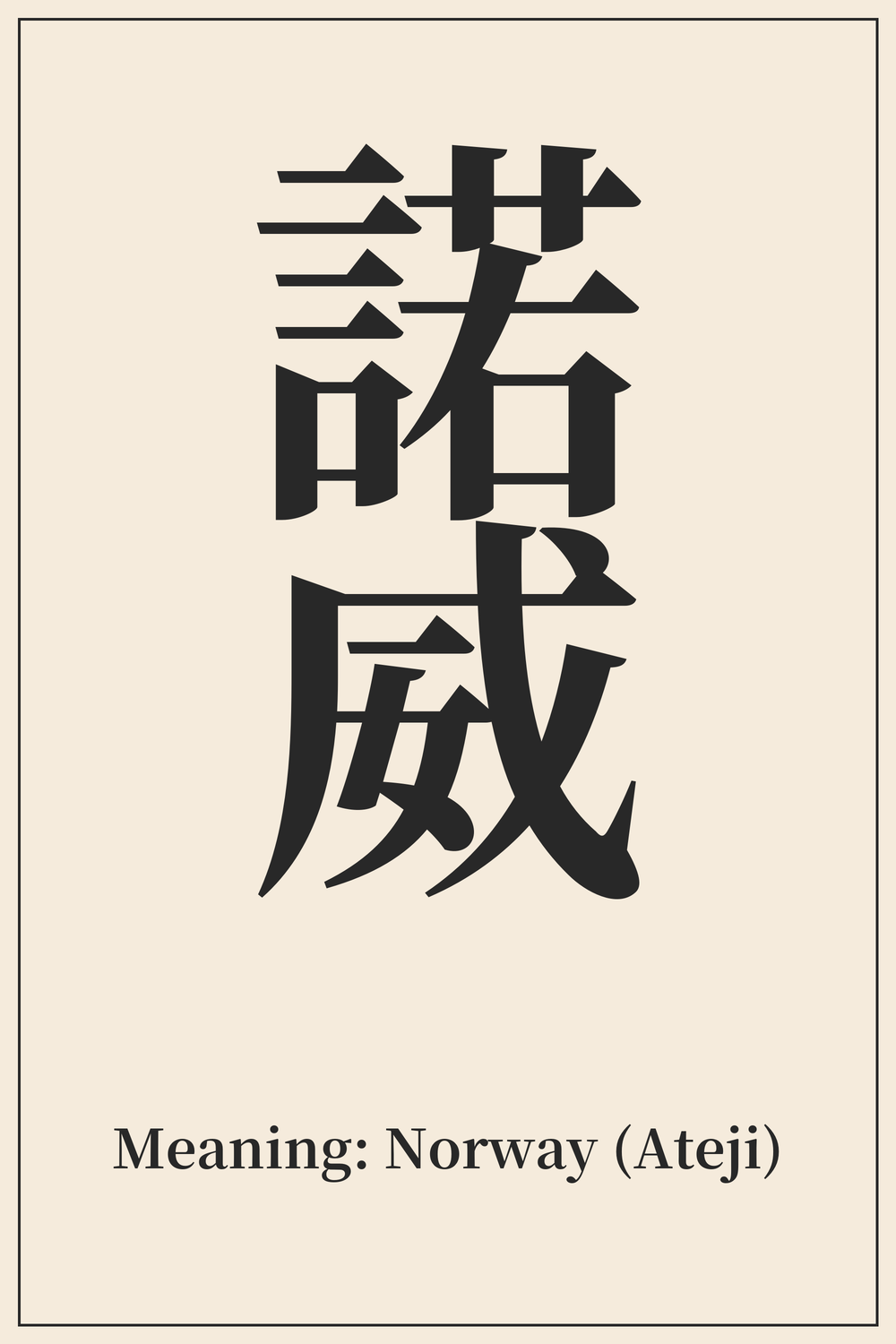
Explore the unique Japanese representation of Norway, known as Noruei. This fascinating Kanji combination highlights the creative ways Japanese adapts foreign names into its writing system.
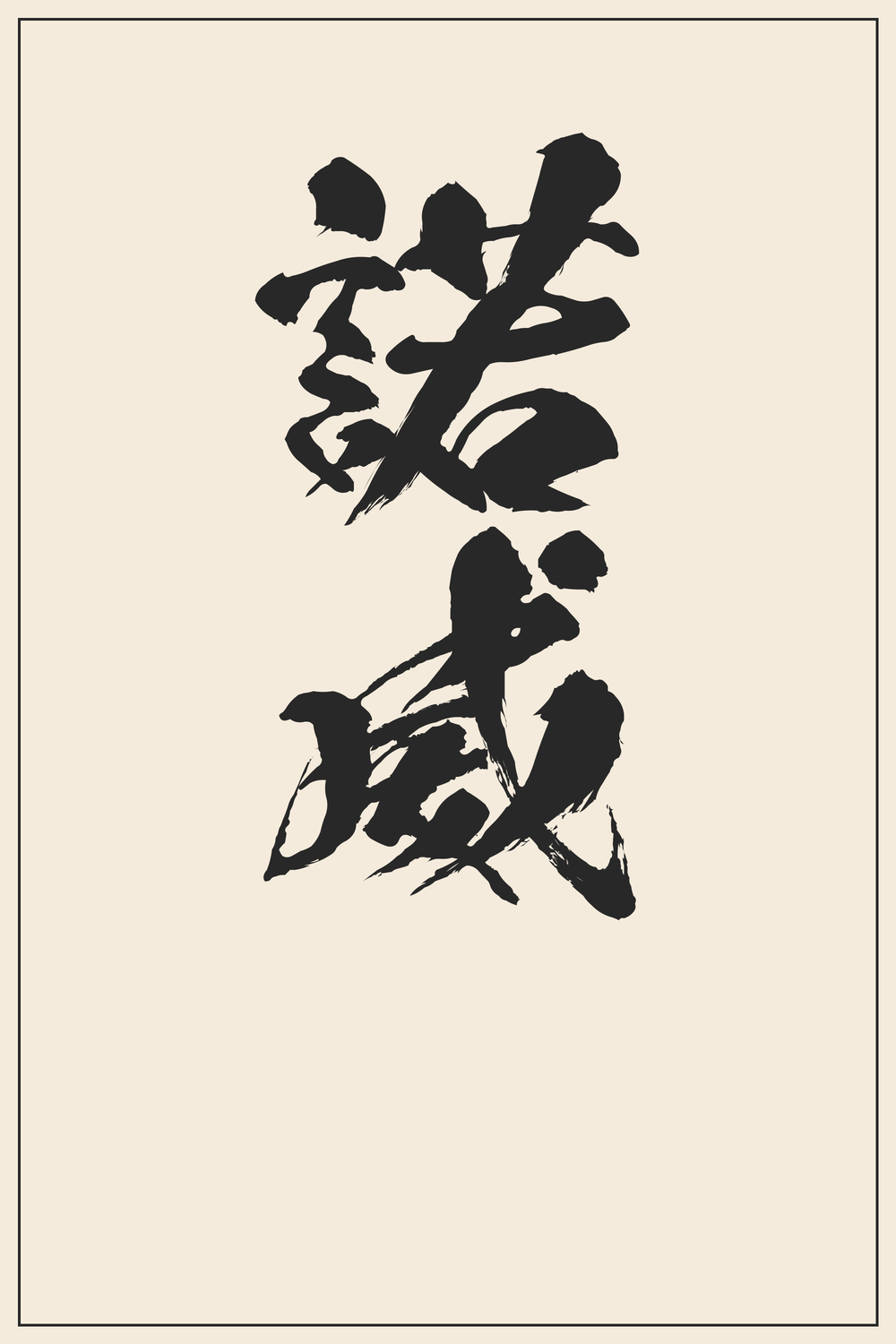
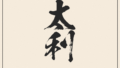
The atmosphere of a Kanji character changes dramatically depending on the font style. A character that looks elegant in a brush style might look bold and modern in a different font.
Recommendation: Since a tattoo is permanent, we strongly recommend comparing various font styles beyond what is shown here. Use our designs as a trusted reference for the correct structure, but feel free to explore different artistic variations to find the perfect match for your vision.
The Deep Meaning Behind 諾威
The Kanji combination 諾威 (Noruei) is a prime example of ‘Ateji’ (当て字), a phonetic transcription method where Kanji characters are used purely for their sounds, disregarding their intrinsic meanings. In this case, 諾威 is used to represent ‘Norway’ (ノルウェー, Noruwe). The choice of these specific characters is based on their approximate pronunciations rather than any conceptual link to the Nordic nation.
Historically, Japan adopted Kanji to transcribe many foreign place names, particularly during periods of increased international exchange. While each character possesses its own rich meaning, for Ateji like 諾威, the combined literal meaning (‘agree’ and ‘majesty’) does not describe Norway. Instead, it serves as a linguistic bridge, allowing the integration of foreign words into the Japanese script in a phonetically recognizable manner.
Kanji Breakdown
The characters in 諾威 are chosen for their sounds, but each carries its own independent meaning.
Meaning: Agree, consent, promise.
This character combines the radical 言 (word/speech) with 若 (young/if). It embodies the act of giving one’s word or assent, often implying acceptance or affirmation.
Meaning: Dignity, majesty, power, intimidate.
The character 威 conveys a sense of imposing authority or impressive power. It often refers to a commanding presence or the ability to inspire awe or respect.
Conclusion
The Kanji 諾威 (Noruei) is a fascinating linguistic artifact, representing Norway not through its inherent meaning but through its sound. It stands as a testament to the adaptable nature of the Japanese writing system, showcasing how it incorporates foreign concepts while retaining its unique character.
While the individual characters carry powerful meanings of ‘agreement’ and ‘majesty,’ their combination for ‘Norway’ is purely phonetic. Therefore, for a tattoo, one should appreciate its role as an Ateji for a specific country rather than seeking a deep symbolic meaning from the individual characters in this context. It’s a culturally specific way to represent a globally recognized name.
Comments