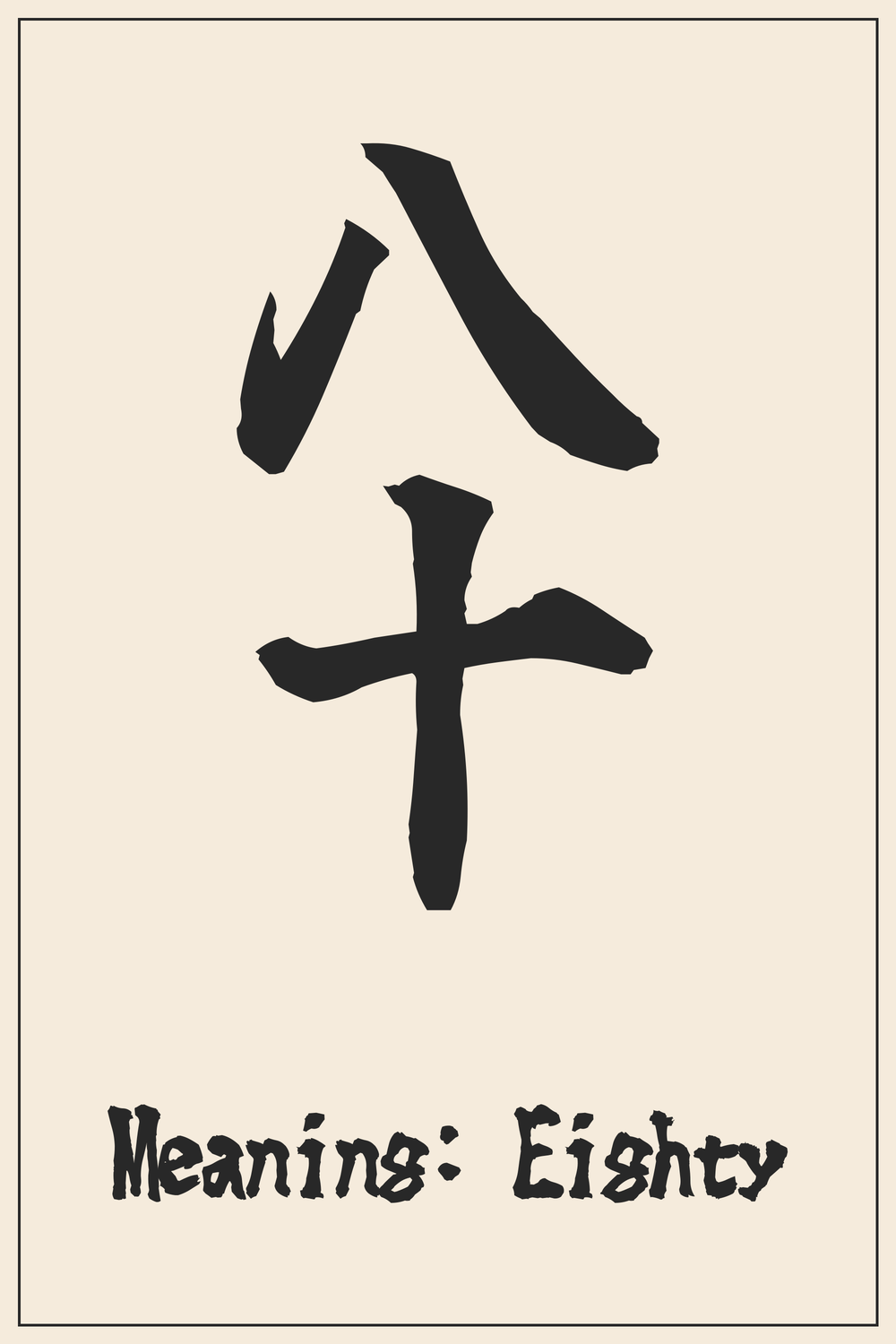
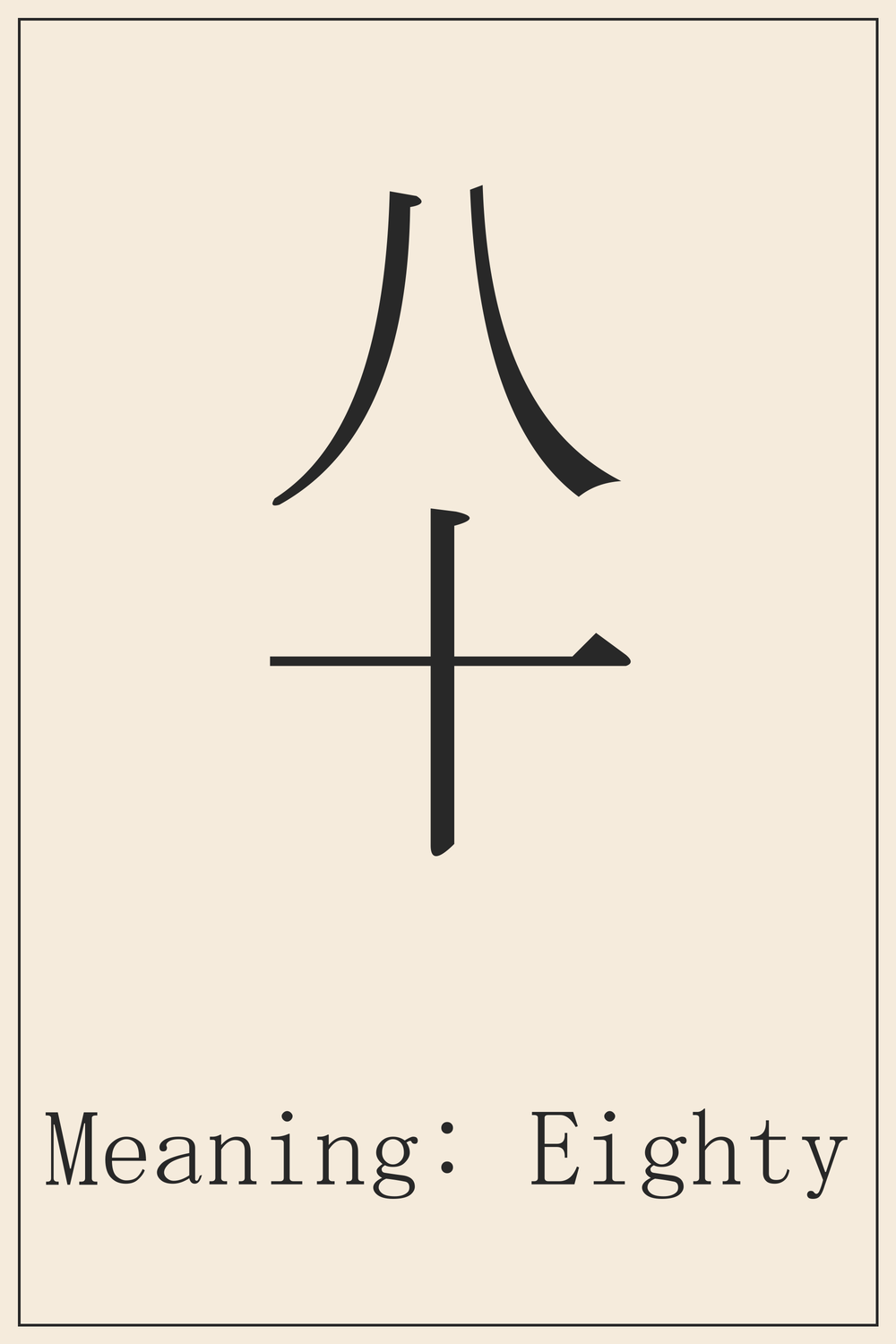
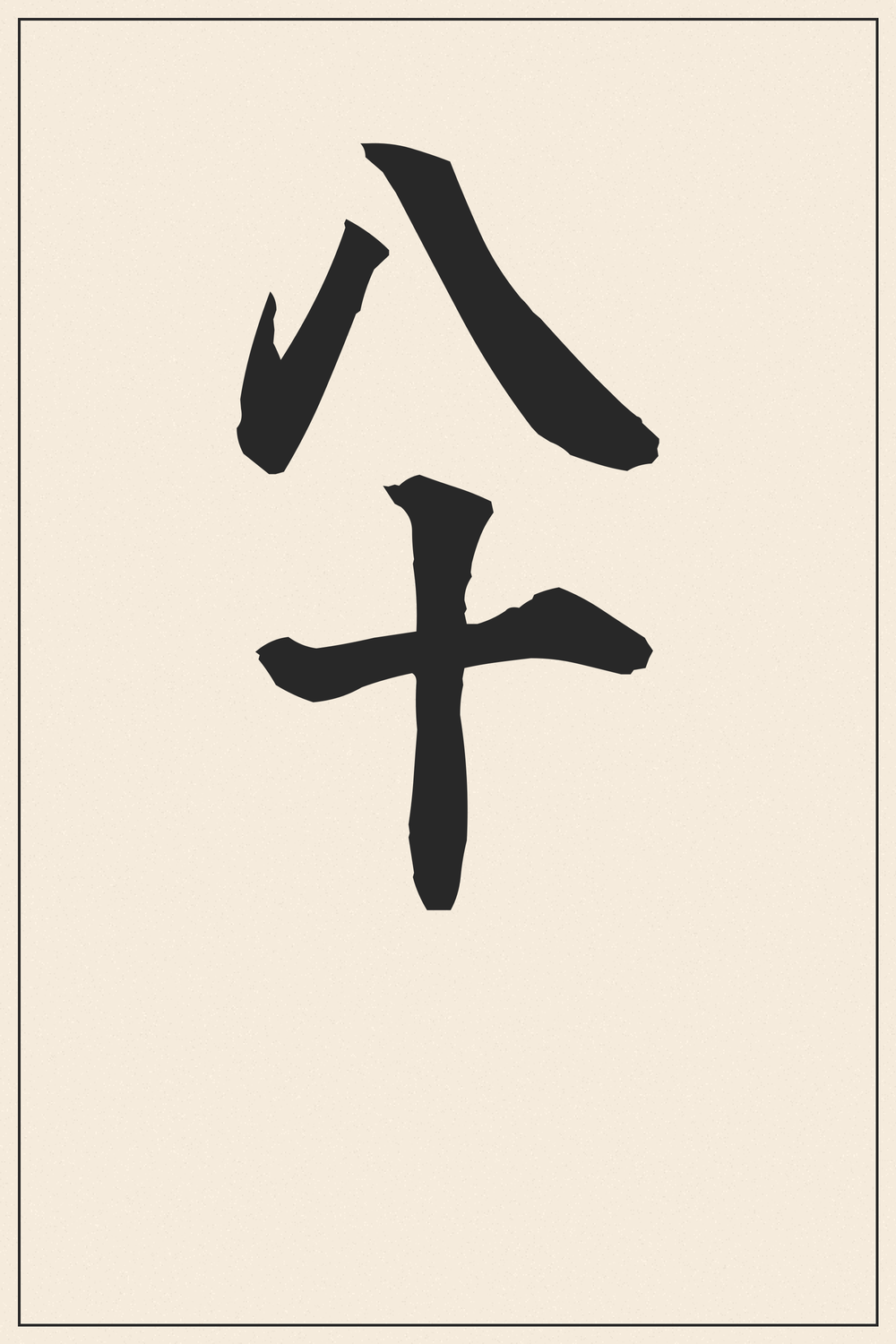
The Kanji compound 八十 (Hachijuu) represents the number eighty, a significant numerical value in Japanese culture often associated with milestones and longevity.
The atmosphere of a Kanji character changes dramatically depending on the font style. A character that looks elegant in a brush style might look bold and modern in a different font.
Recommendation:
Since a tattoo is permanent, we strongly recommend comparing various font styles beyond what is shown here. Use our designs as a trusted reference for the correct structure, but feel free to explore different artistic variations to find the perfect match for your vision.
The Deep Meaning Behind 八十
The compound 八十, pronounced Hachijuu, directly translates to the number eighty. While a simple numerical representation, in East Asian cultures, specific numbers often carry deeper significance, especially when related to age and milestones.
In Japan, reaching eighty years old is a significant event, often celebrated as a milestone called ‘Sanju’ (傘寿), which literally means ‘umbrella longevity’. This association imbues the number eighty with a sense of achievement, longevity, and wisdom acquired over a long life.
Kanji Breakdown
The Kanji compound 八十 is formed by two fundamental numerical characters.
Meaning: Eight. This Kanji originated from a pictogram depicting two lines separating, symbolizing division or a multitude, thus representing the number eight.
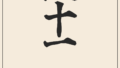
Meaning: Ten. This character is believed to have evolved from a symbol representing a needle or a vertical stroke, and by extension, a complete count or a full set of fingers (ten).
Conclusion
The Kanji 八十, representing eighty, transcends its simple numerical value to symbolize longevity, the culmination of experience, and the celebration of life’s significant milestones.
For those seeking a tattoo that subtly conveys a personal connection to a specific age, a milestone, or simply an appreciation for a long and fruitful life, 八十 offers a clean, culturally resonant, and aesthetically pleasing choice.
Comments