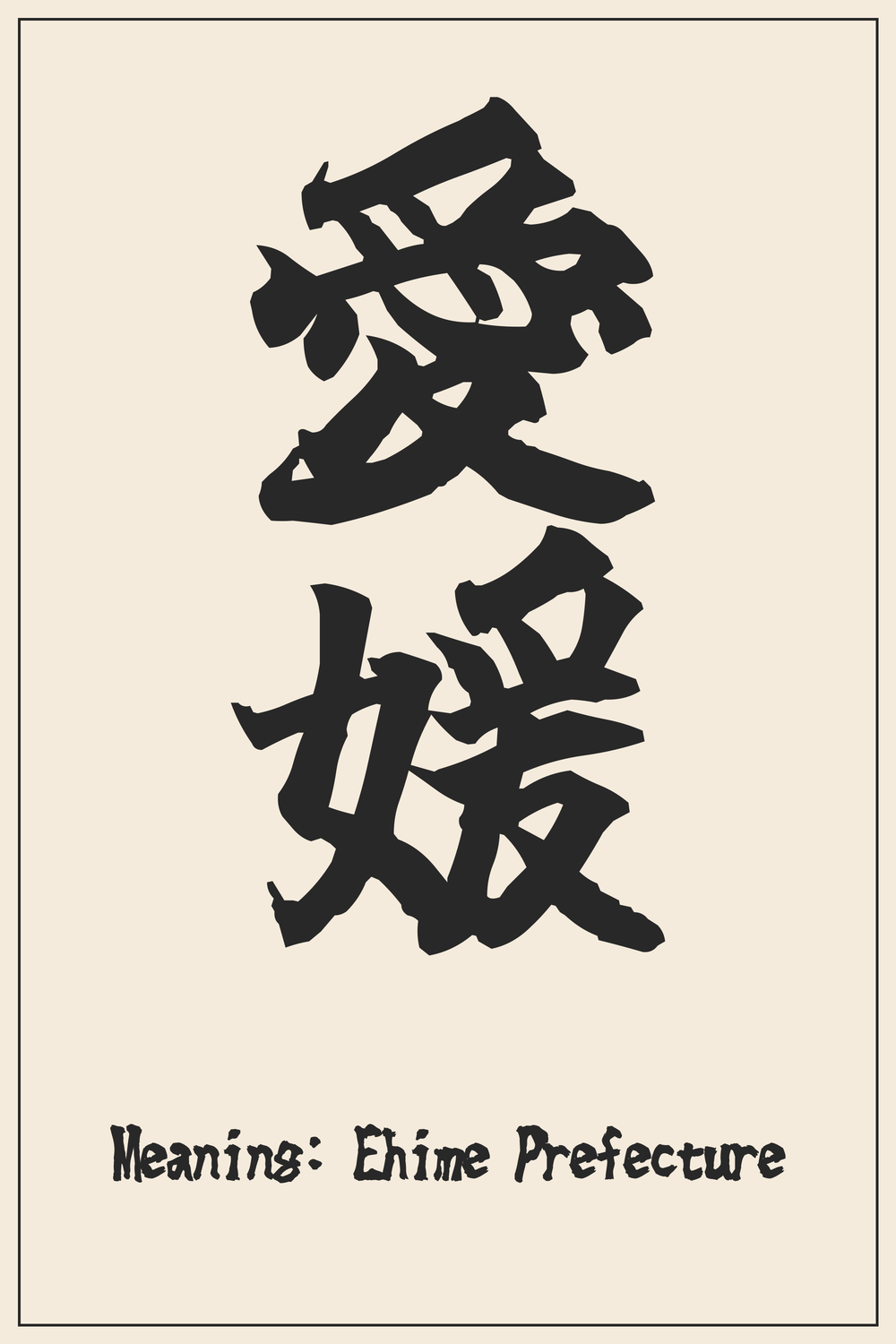
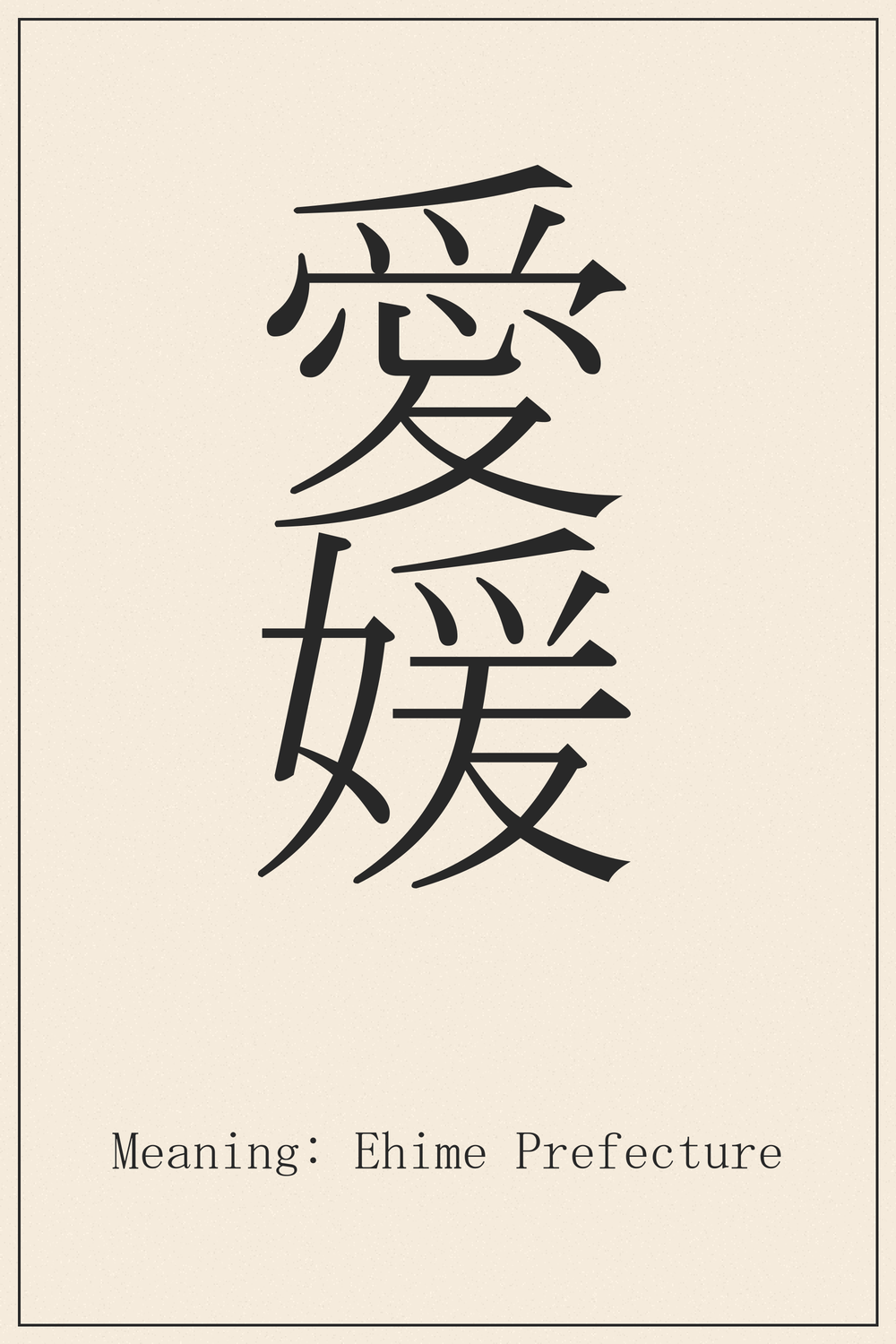
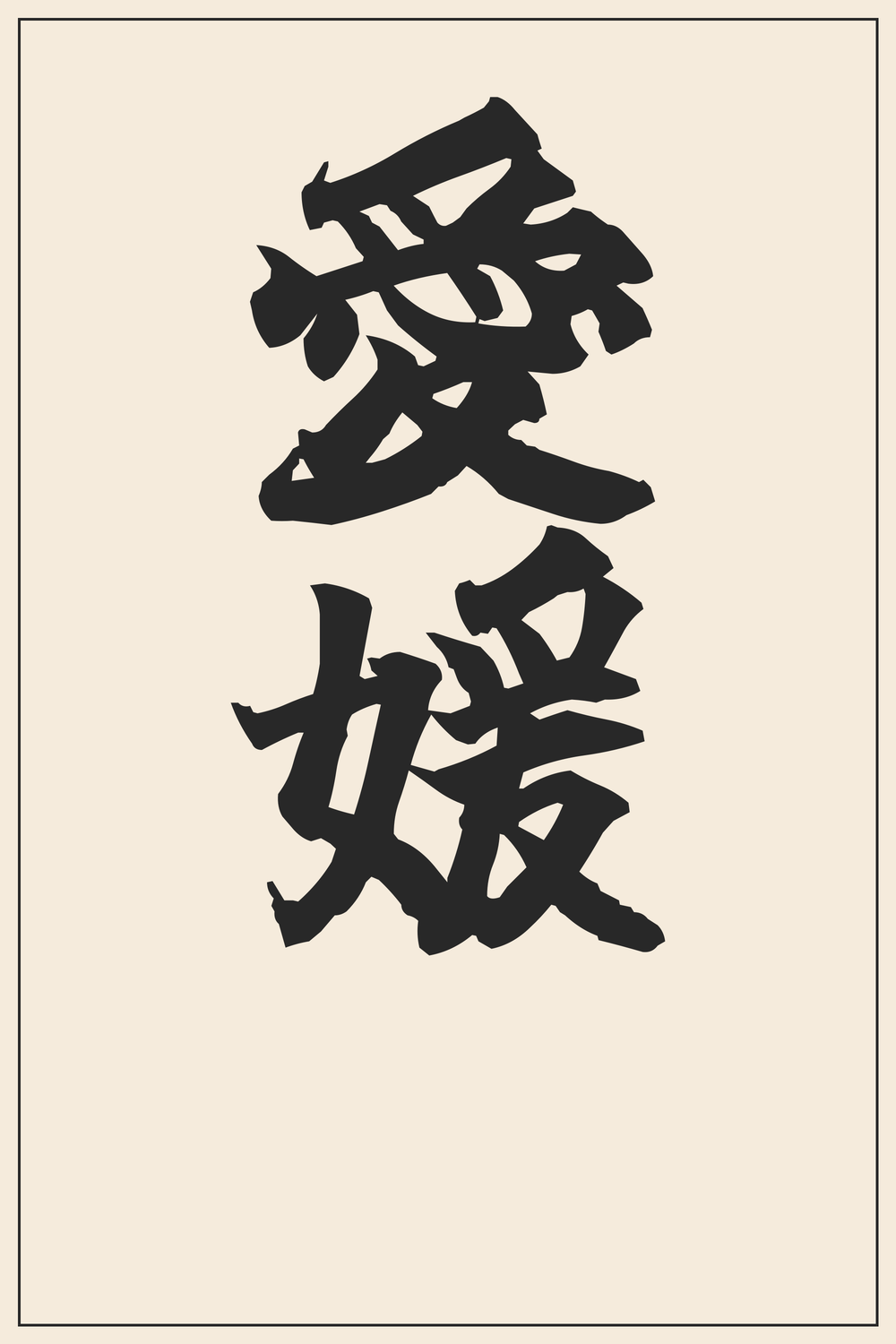
愛媛, known as Ehime, carries a charming and poetic name that speaks of beauty and grace. It represents a region rich in natural splendor and cultural heritage, making it a unique geographical kanji.
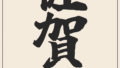
The atmosphere of a Kanji character changes dramatically depending on the font style. A character that looks elegant in a brush style might look bold and modern in a different font.
Recommendation:
Since a tattoo is permanent, we strongly recommend comparing various font styles beyond what is shown here. Use our designs as a trusted reference for the correct structure, but feel free to explore different artistic variations to find the perfect match for your vision.
The Deep Meaning Behind 愛媛
The name “愛媛” (Ehime) literally translates to “lovely maiden” or “beautiful princess.” This name is deeply rooted in ancient Japanese mythology, specifically from the *Kojiki*, which recounts the birth of Japan’s islands. Ehime refers to Ehime-no-mikoto, one of the eight deities born from Izanagi and Izanami.
Located on the island of Shikoku, Ehime is renowned for its natural beauty, historical sites like Dogo Onsen (one of Japan’s oldest hot springs), and its world-famous citrus fruits, particularly mikan (tangerines). The kanji evokes a sense of gentle beauty and a connection to ancient Japanese heritage.
Kanji Breakdown
To fully appreciate the elegance of “愛媛,” let’s examine its individual kanji components.
Meaning: Love, affection.
This character is composed of several elements. The central component, 心 (kokoro), signifies “heart” or “mind.” Above it, there are elements representing “receiving” or “feeling,” and below, 夂 (ashi), often related to “foot” or “action.” Together, these components convey the emotional experience of love, often implying affection that is felt deeply in the heart and expressed.
Meaning: Princess, maiden.
The left radical is 女 (onna), meaning “woman” or “female,” which clearly establishes the character’s gender association. The right component, 爰 (en), is a phonetic element that also carries a nuance of “thus” or “here,” or “pulling gently.” In combination, 女 and 爰 form a kanji that traditionally refers to a noble young woman or a princess, implying grace and beauty.
Conclusion
“愛媛” embodies the serene beauty and historical depth of one of Japan’s enchanting prefectures. Its name, “lovely maiden,” offers a poetic connection to ancient mythology and the gentle spirit of the region.
For those with a special connection to Ehime, or an appreciation for Japanese geography and its mythical origins, this kanji makes for a thoughtful and elegant tattoo. It’s a subtle nod to a place of beauty and cultural significance.
Comments