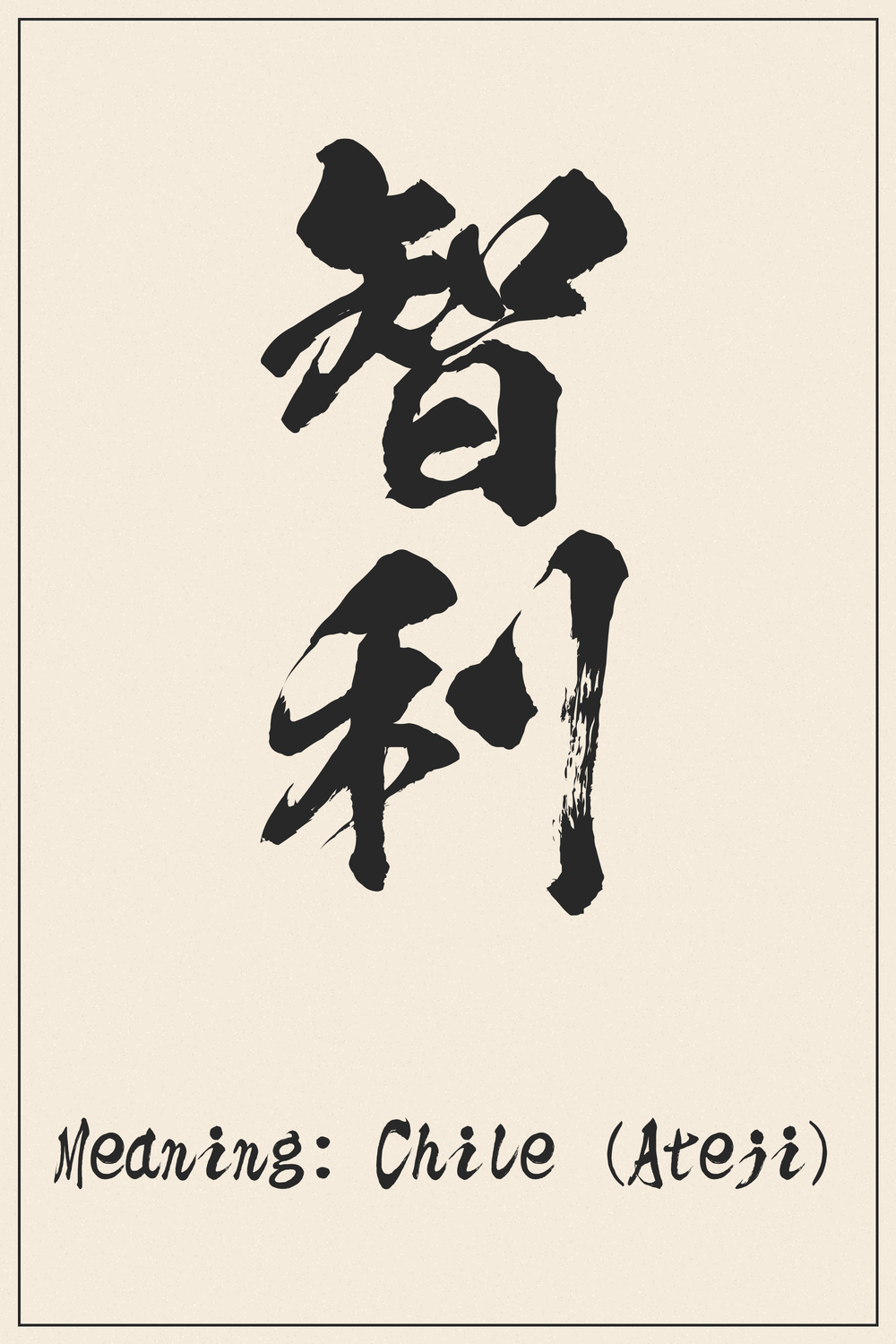
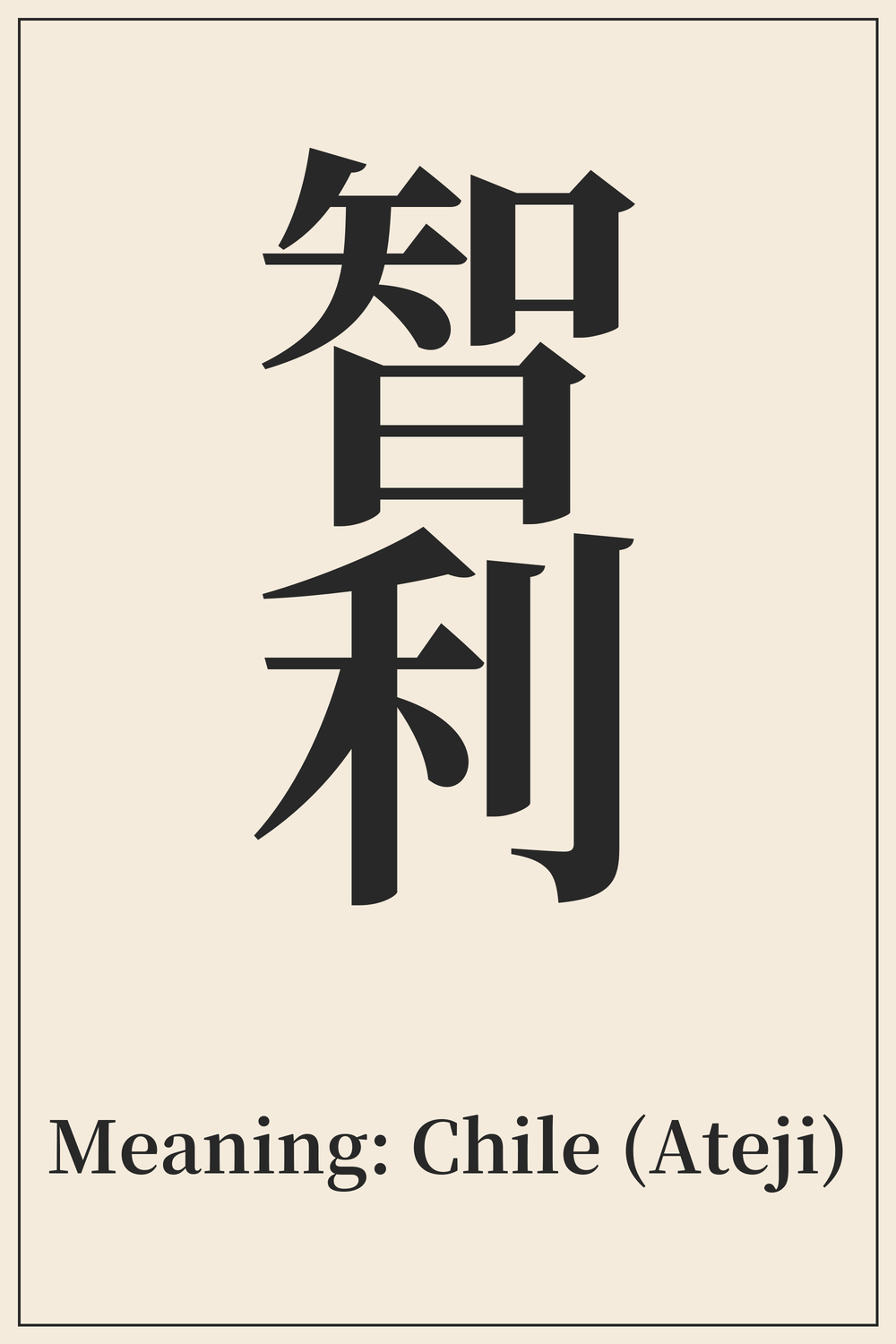
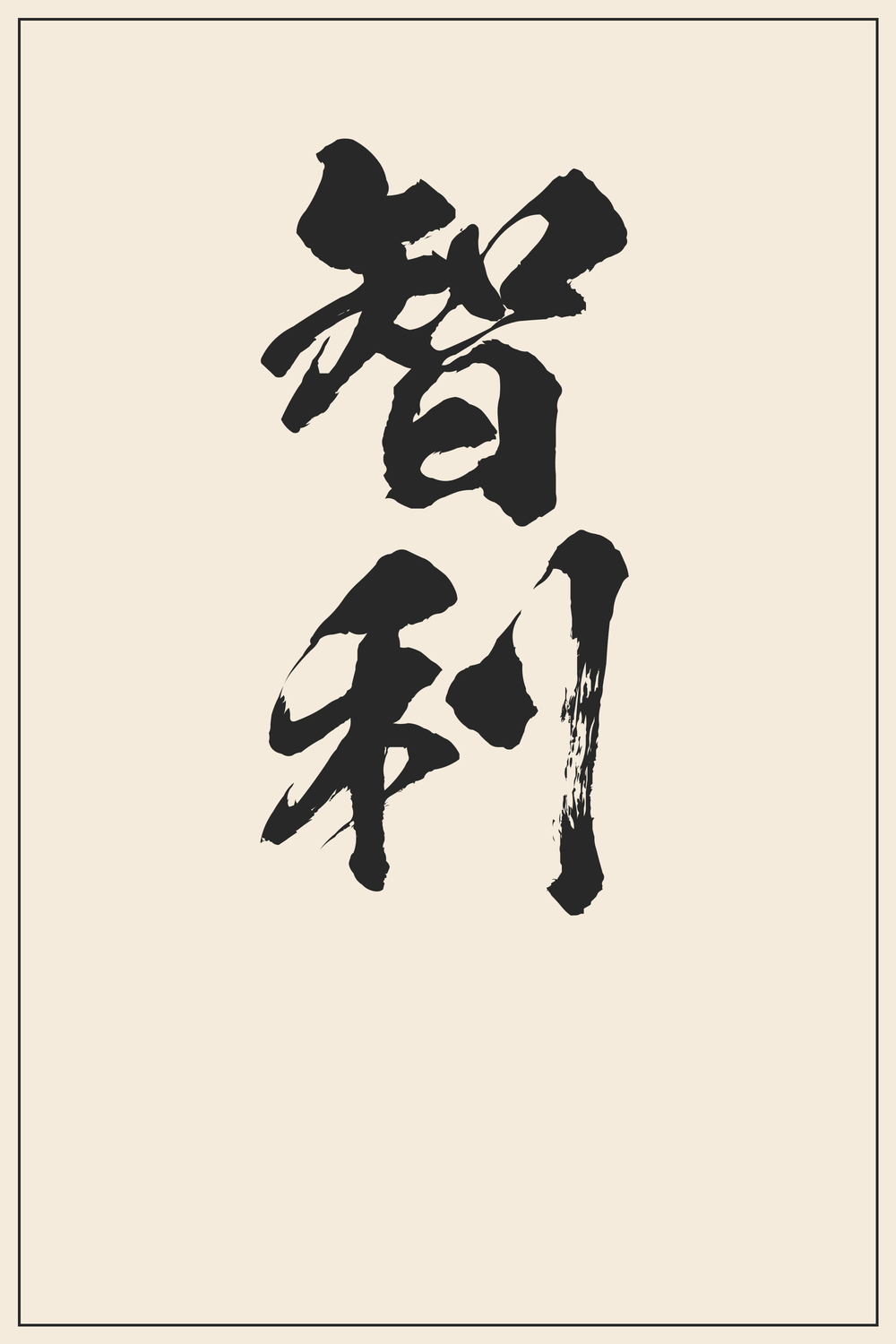
Discover the fascinating phonetic adaptation of ‘Chile’ into Japanese Kanji. This combination, while seemingly straightforward, carries a unique cultural resonance as a representation of a foreign land.
The atmosphere of a Kanji character changes dramatically depending on the font style. A character that looks elegant in a brush style might look bold and modern in a different font.
Recommendation: Since a tattoo is permanent, we strongly recommend comparing various font styles beyond what is shown here. Use our designs as a trusted reference for the correct structure, but feel free to explore different artistic variations to find the perfect match for your vision.
The Deep Meaning Behind 智利
The Kanji ‘智利’ (Chiri) is a classic example of ‘ateji’ (当て字), where characters are chosen primarily for their phonetic value rather than their semantic meaning to represent foreign words or names. In this case, ‘智利’ serves as the Japanese transcription for the country ‘Chile’.
Ateji like ‘智利’ are a testament to the Japanese language’s adaptability in integrating foreign concepts. While ‘智’ means ‘wisdom’ or ‘intellect’ and ‘利’ means ‘profit’ or ‘advantage,’ their combined literal meaning of ‘Wisdom Profit’ is entirely incidental and holds no direct connection to the country of Chile itself. It simply provides a way to pronounce ‘Chiri’ using existing characters.
Kanji Breakdown
Let’s explore the individual characters that form ‘智利’ and their inherent meanings, appreciating them as components of this phonetic representation.
Meaning: Wisdom, Intellect, Knowledge. The character 智 combines components that suggest ‘to know’ (知) and embodies deep understanding and intelligence, often implying a sharp and insightful mind.
Meaning: Profit, Advantage, Benefit, Sharp. The character 利 visually combines 禾 (nogihen, meaning ‘grain’ or ‘rice plant’) and 刀 (katana, meaning ‘knife’ or ‘sword’). It originally depicted a sharp blade used to cut grain, evolving to mean ‘sharpness,’ ‘advantage,’ or ‘profit.’
Conclusion
In summary, ‘智利’ is a phonetic rendering of ‘Chile’ in Japanese, demonstrating the ingenious use of ateji to represent foreign place names. The individual characters, while incidentally meaning ‘wisdom’ and ‘profit,’ ultimately serve to create the sound ‘Chiri’ for this South American nation.
If considering ‘智利’ for a tattoo or artistic representation, it’s crucial to appreciate its primary role as a phonetic transcription. While the characters themselves carry positive connotations, their connection to the country of Chile is purely phonetic. Embrace its cultural significance as a Japanese representation of a global connection, rather than seeking deep inherent meaning from the individual characters in this specific context.
Comments