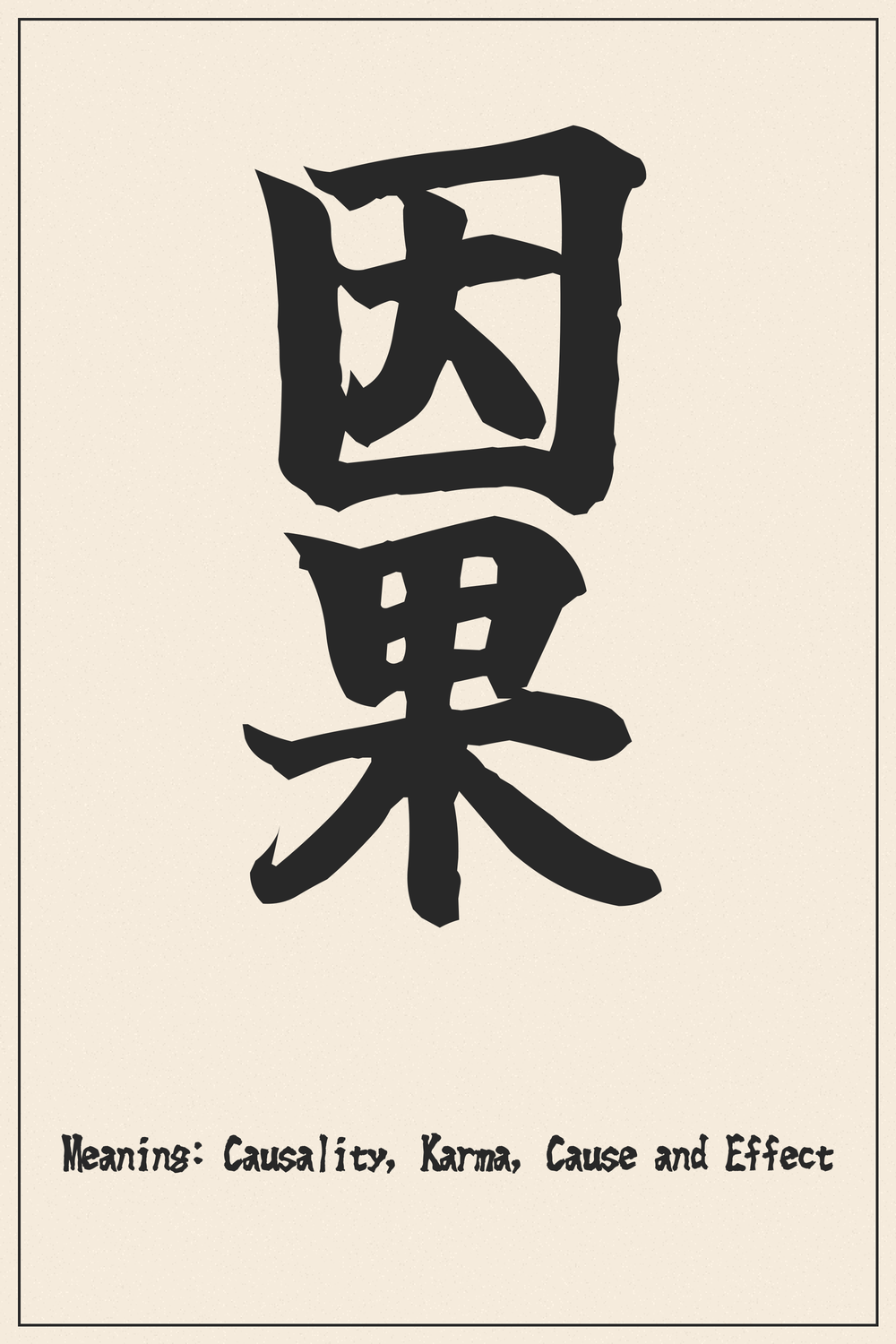
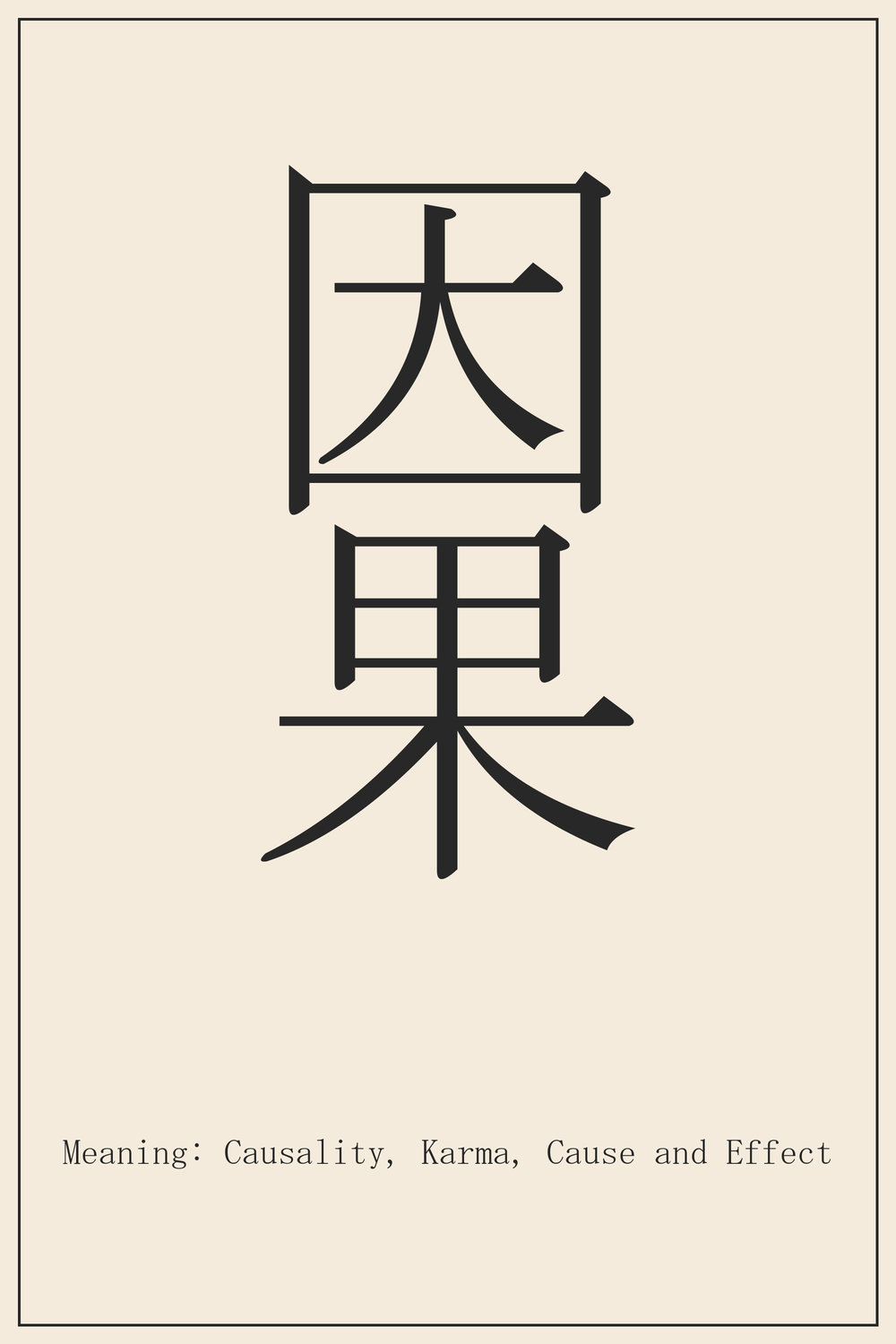
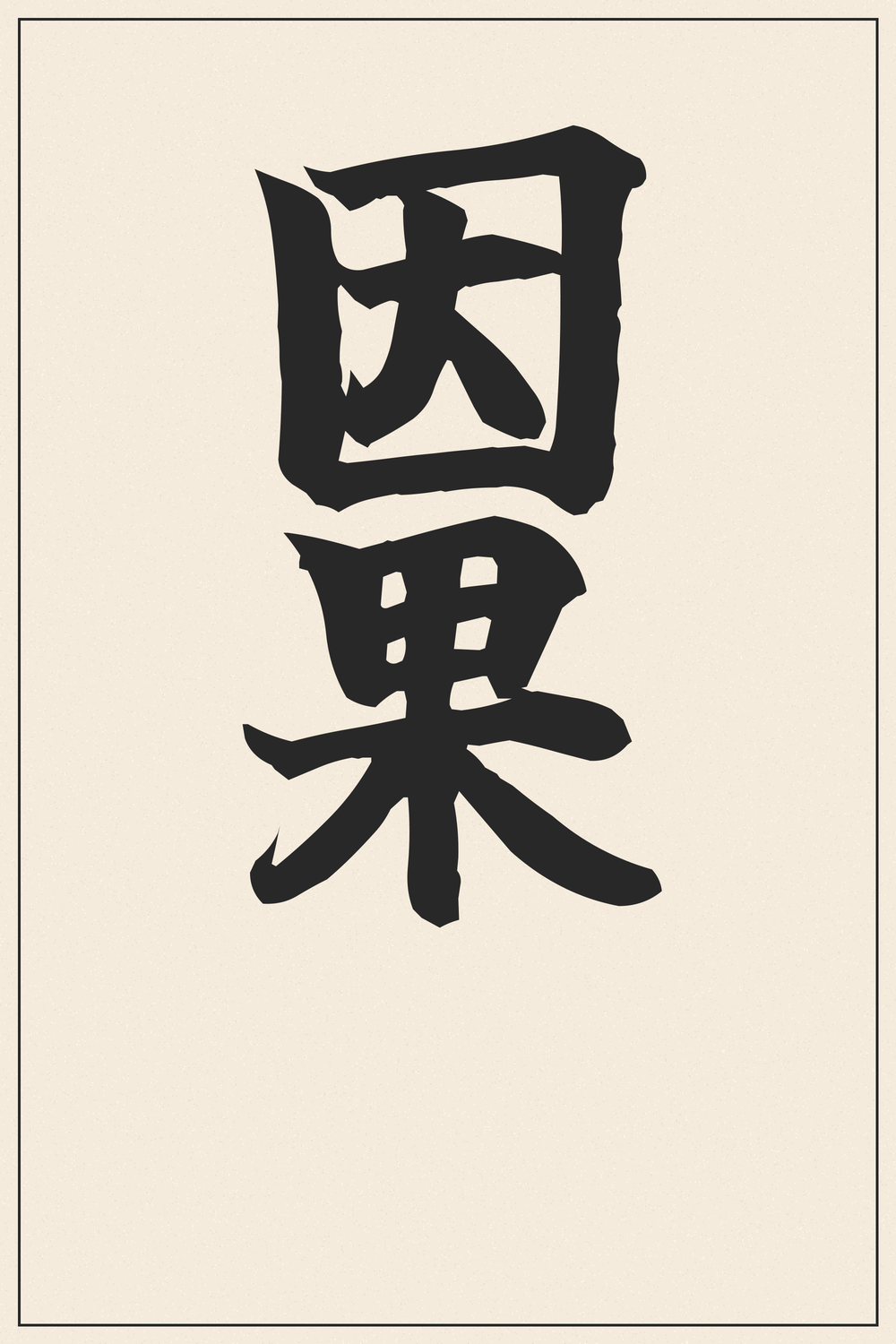
Causality, known as Inga in Japanese, embodies the profound concept of cause and effect, shaping destinies with every action. This ancient wisdom reminds us that every deed, thought, and word carries a ripple effect through time.
The atmosphere of a Kanji character changes dramatically depending on the font style. A character that looks elegant in a brush style might look bold and modern in a different font.
Recommendation:
Since a tattoo is permanent, we strongly recommend comparing various font styles beyond what is shown here. Use our designs as a trusted reference for the correct structure, but feel free to explore different artistic variations to find the perfect match for your vision.
The Deep Meaning Behind 因果
因果 (Inga) is a fundamental term in Buddhism, originating from Sanskrit (hetu-phala), meaning “cause and effect.” It describes the universal law that governs all phenomena, where every action (cause) inevitably leads to a corresponding outcome (effect).
The concept is deeply embedded in Japanese thought, influencing not only religious beliefs but also cultural understanding of responsibility and consequence, fostering a sense of interconnectedness.
Kanji Breakdown
The compound 因果 is formed by two distinct kanji, each contributing to its comprehensive meaning of causality.
Meaning: Cause, reason, factor.
Originally depicting a person (大) within an enclosure (囗), it suggests something contained or a fundamental element, leading to the meaning of a root or cause.
Meaning: Effect, result, fruit.
This kanji is a pictogram of a tree (木) bearing fruit (represented by 口 at the top), illustrating the natural outcome or product of growth, thus signifying an effect or result.
Conclusion
因果 encapsulates the powerful truth that our present is a product of past actions and our future is shaped by current choices. It is a constant reminder of accountability and the potential for shaping one’s path through conscious effort.
Choosing “因果” as a tattoo signifies a commitment to conscious living and an acceptance of life’s interconnectedness. It’s a potent symbol for introspection, personal growth, and understanding the profound impact of one’s journey.
Comments