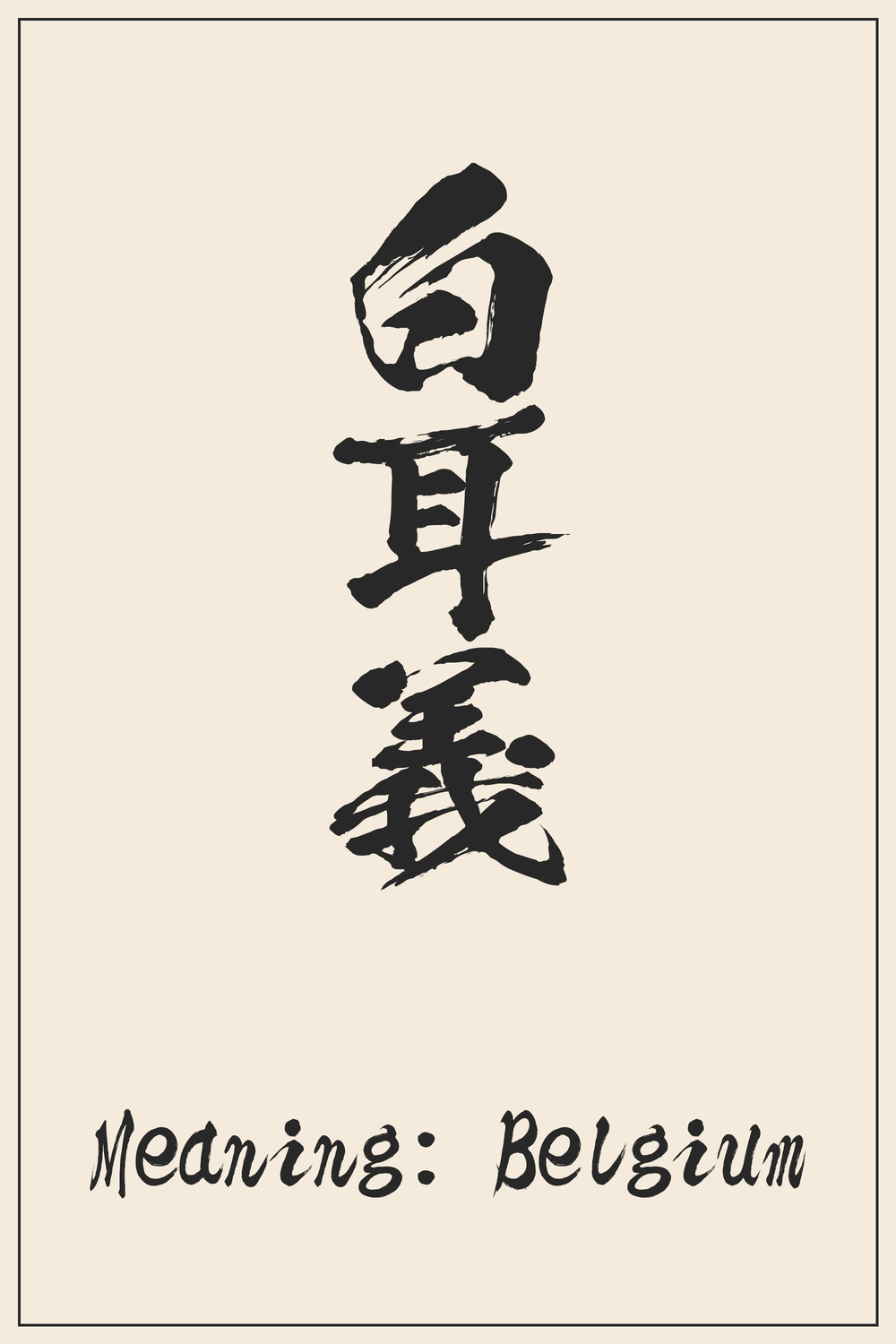
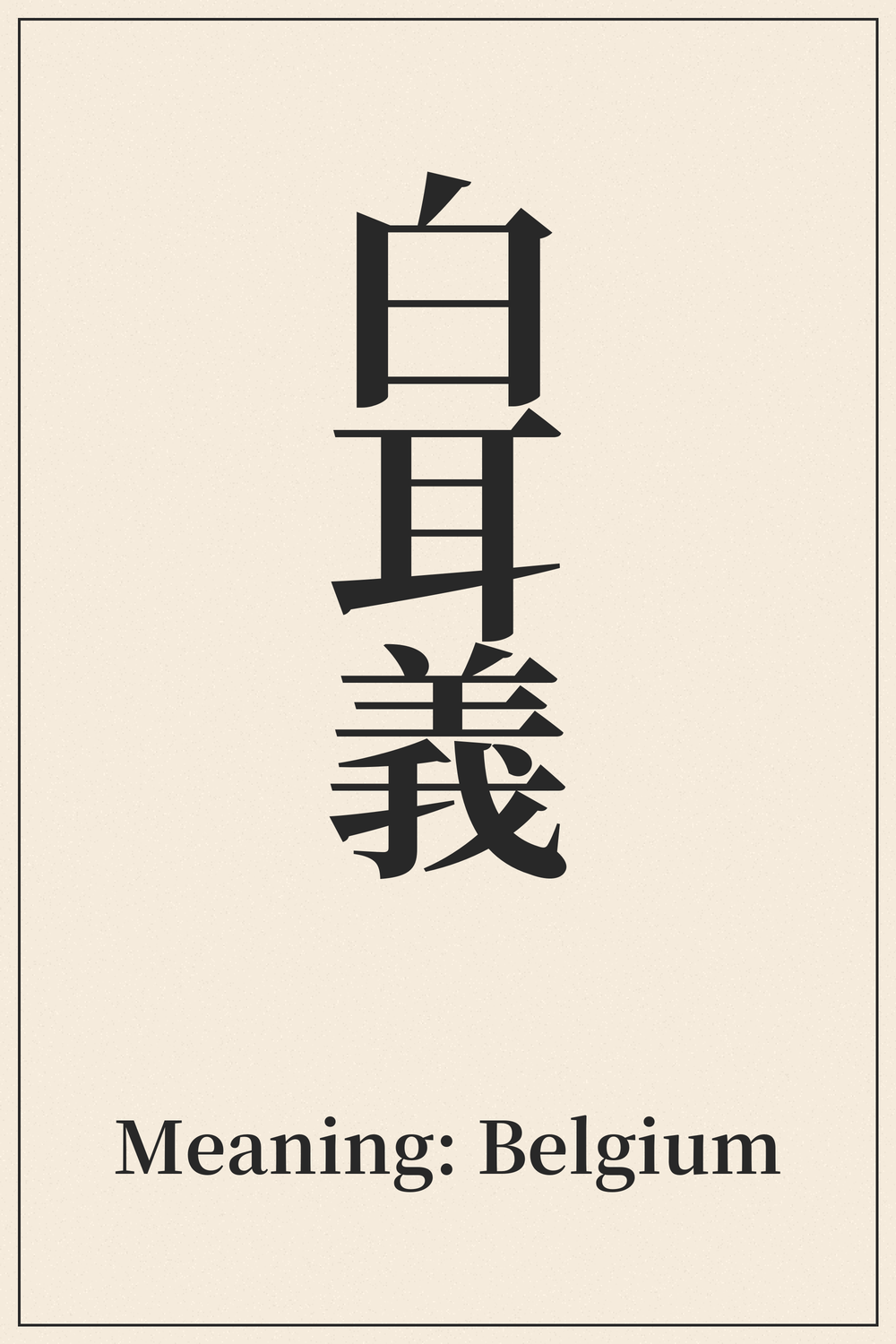
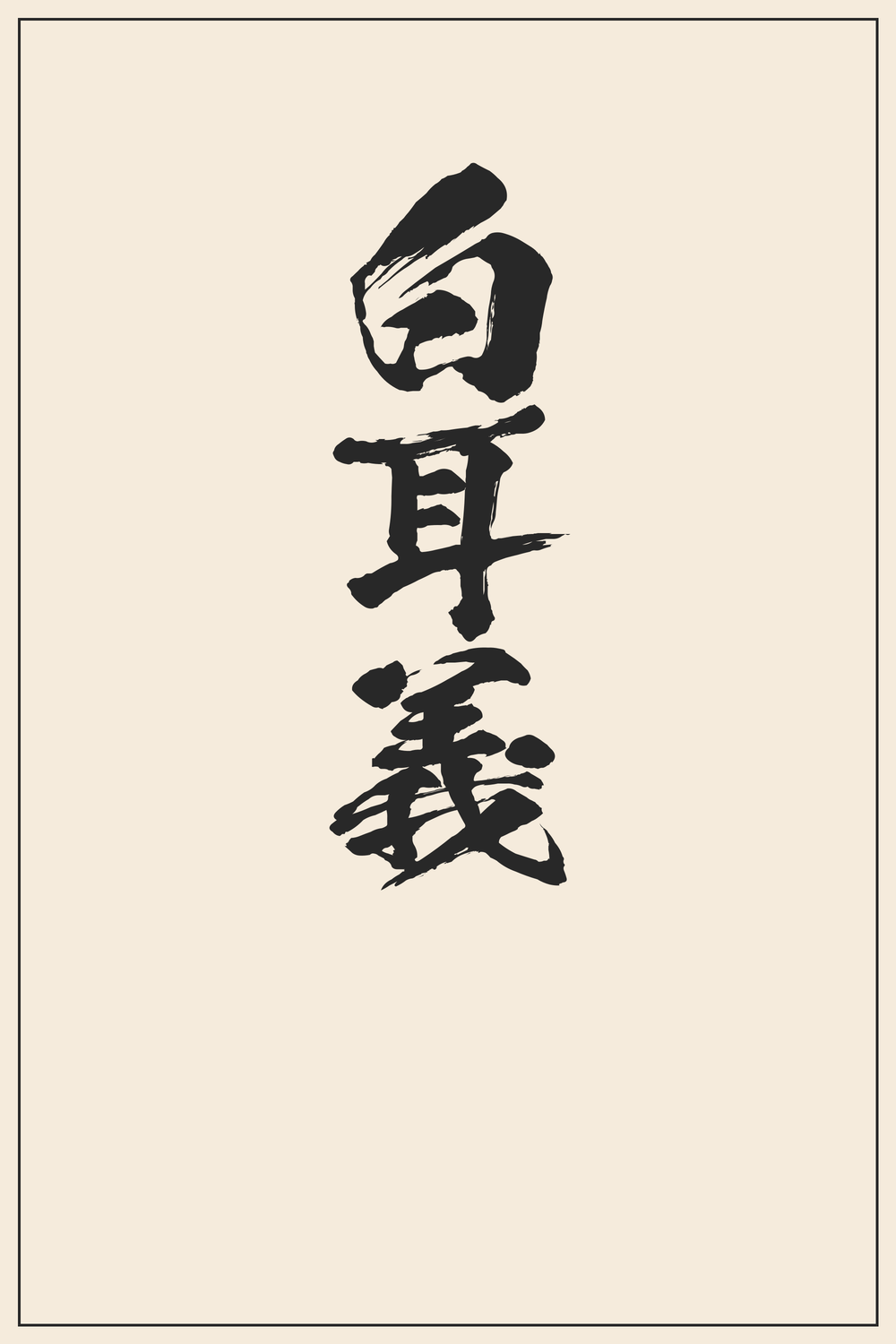
Discover how complex foreign names are beautifully adapted into Japanese Kanji, revealing a unique cultural bridge. This specific combination illuminates the phonetic ingenuity used to represent nations like Belgium.
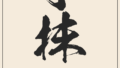
The atmosphere of a Kanji character changes dramatically depending on the font style. A character that looks elegant in a brush style might look bold and modern in a different font.
Recommendation: Since a tattoo is permanent, we strongly recommend comparing various font styles beyond what is shown here. Use our designs as a trusted reference for the correct structure, but feel free to explore different artistic variations to find the perfect match for your vision.
The Deep Meaning Behind 白耳義
The Kanji combination 白耳義 (Berugii) is a prime example of ateji (当て字), a Japanese method of using Kanji characters solely for their phonetic values rather than their literal meanings to represent foreign words or names. In this case, it was adopted to phonetically transcribe “Belgium,” the European country.
This practice highlights a historical approach to integrating foreign concepts into the Japanese language, prioritizing phonetic accuracy over semantic alignment for geographical names.
While its individual characters carry distinct meanings, their combination as 白耳義 is universally understood within Japanese culture as referring exclusively to Belgium. It serves as a straightforward, albeit non-semantic, designation for the country.
It’s a linguistic artifact, reflecting a past era of international engagement where phonetic approximation was key to cataloging world geography.
Kanji Breakdown
The characters in 白耳義 are chosen for their sounds, not their meanings, making their individual significances largely incidental to the compound’s use as a country name. However, understanding their core definitions provides insight into the building blocks of this phonetic construct.
Meaning: White, purity, blank. This kanji visually represents the color white, often associated with concepts of clarity and innocence.
Meaning: Ear. This character is a pictogram depicting the human ear, symbolizing hearing and listening.
Meaning: Righteousness, justice, meaning, duty. This kanji embodies strong moral and ethical principles, often involving a sense of loyalty and integrity.
Conclusion
In summary, 白耳義 (Berugii) is a clear illustration of ateji, where Kanji characters are used phonetically to represent the country of Belgium. Its literal translation of “White Ear Righteousness” has no direct semantic link to the nation itself, serving purely as a phonetic rendering.
For those considering this Kanji for a tattoo, it’s crucial to understand its nature as a phonetic adaptation. While it uniquely identifies Belgium in Japanese, its individual character meanings do not contribute to a deeper symbolic significance related to the country. It is a cultural marker of place, rather than a word imbued with inherent philosophical depth.
Comments