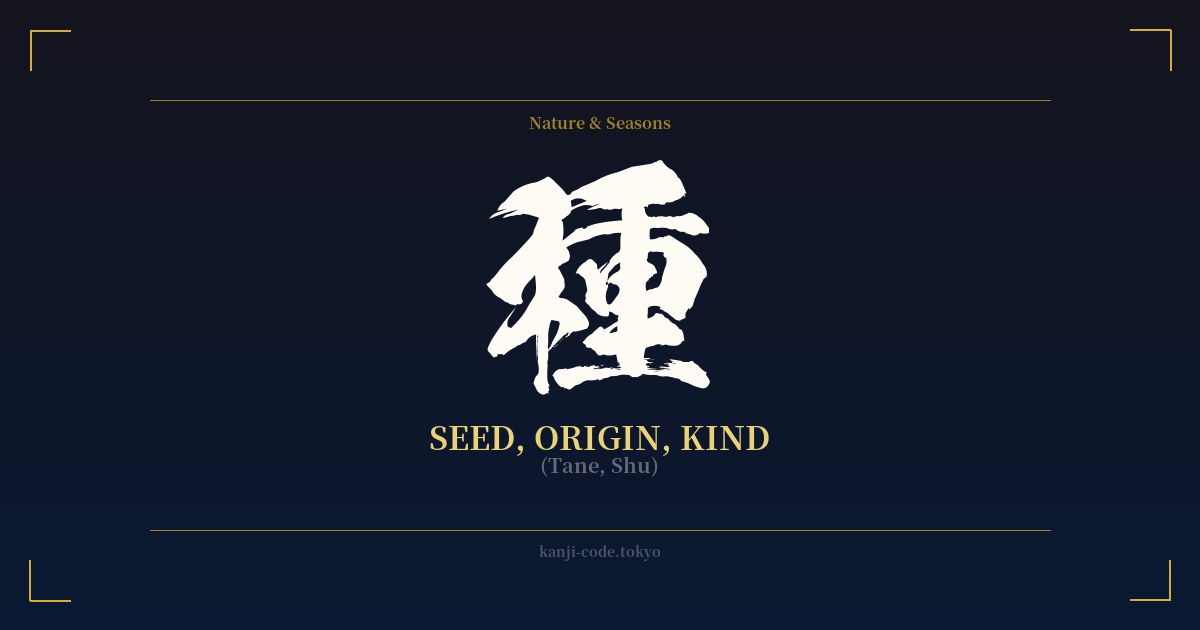
✍️ 種 (Tane, Shu) — Cultural Context
The kanji 種 (tane) is one of the most beautifully layered characters in the Japanese language, rooting itself first in the simple, yet profound, image of a seed.
Literally, a 'tane' is a physical seed you would plant in a garden. In a culture historically tied to agriculture, particularly the cultivation of rice, the concept of the seed is foundational. It represents not just the promise of a future harvest but the cyclical nature of life, sustenance, and the hard work required to bring forth new life from the earth.
From this literal meaning blossoms a rich tapestry of metaphorical uses. A 'tane' can be the 'seed of an idea' (アイデアの種), the 'seed of a story' (話の種), or even the 'seed of conflict' (争いの種). This demonstrates its role in Japanese thought as a starting point, the small, often unseen origin from which great things—both good and bad—can grow. The phrase 悩みの種 (nayami no tane) perfectly captures this, meaning 'the source of one's worries.'
Digging deeper, 種 extends to the concepts of lineage and kind. It can refer to a 'breed' or 'species,' highlighting its use in biological and social classification. The word 種類 (shurui), meaning 'type' or 'variety,' uses this kanji. In a more personal sense, it can touch upon one's heritage or 'stock,' the inherent qualities passed down through generations.
In Buddhism, the concept takes on even greater spiritual significance. The term 種子 (shushi or shuji), literally 'seed-character,' represents the karmic seeds stored in the consciousness. Every action, word, and thought is believed to plant a 'tane' that will eventually ripen and manifest as a future experience. This portrays life as a garden we are constantly tending, with the quality of our future determined by the seeds we sow today. Some esoteric Buddhist traditions even use 'seed syllables' (called Bīja in Sanskrit, Shuji in Japanese) as powerful sonic representations of deities.
Ultimately, the power of 種 lies in its evocation of potential. A single, tiny seed contains the blueprint for a mighty tree. It is a symbol of hope, new beginnings, and the incredible power locked within something small and humble. It reminds us that every great journey, every major achievement, and every life begins with a single, potent seed.
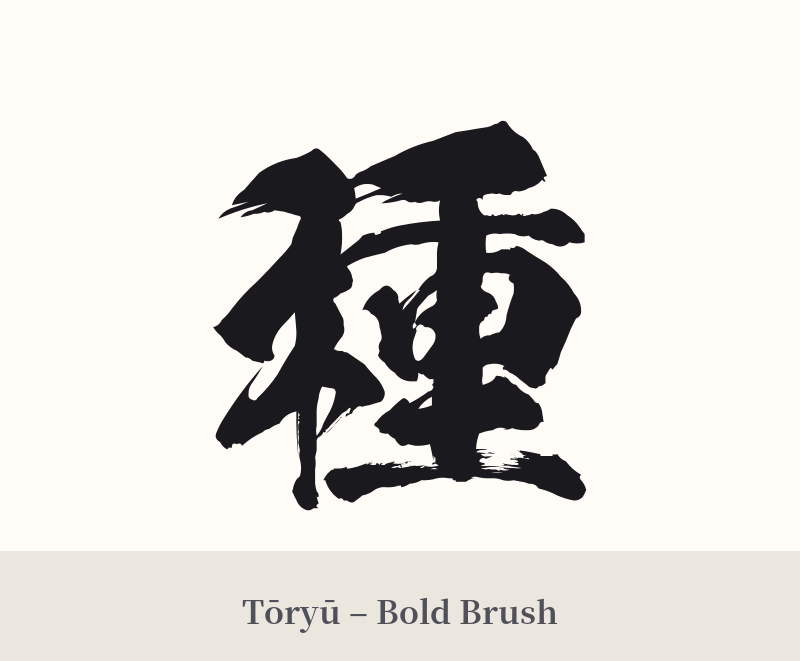
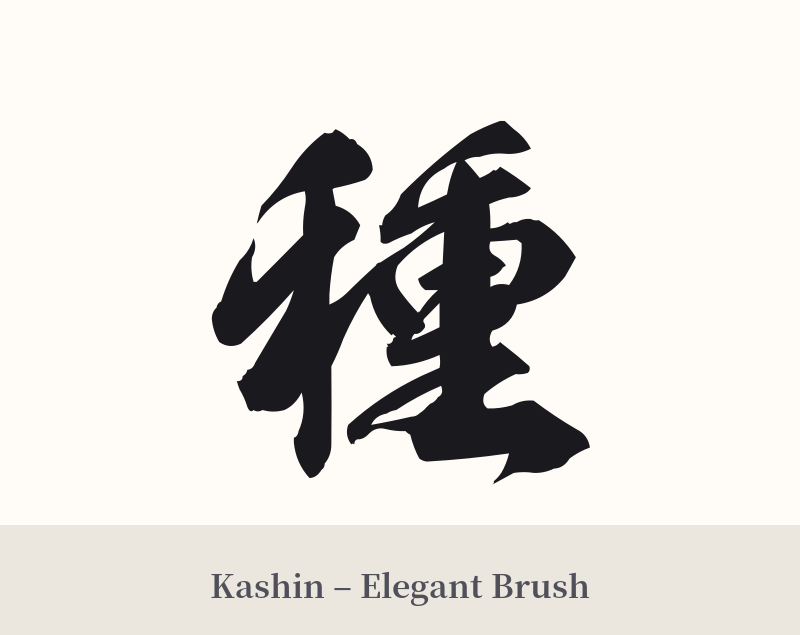
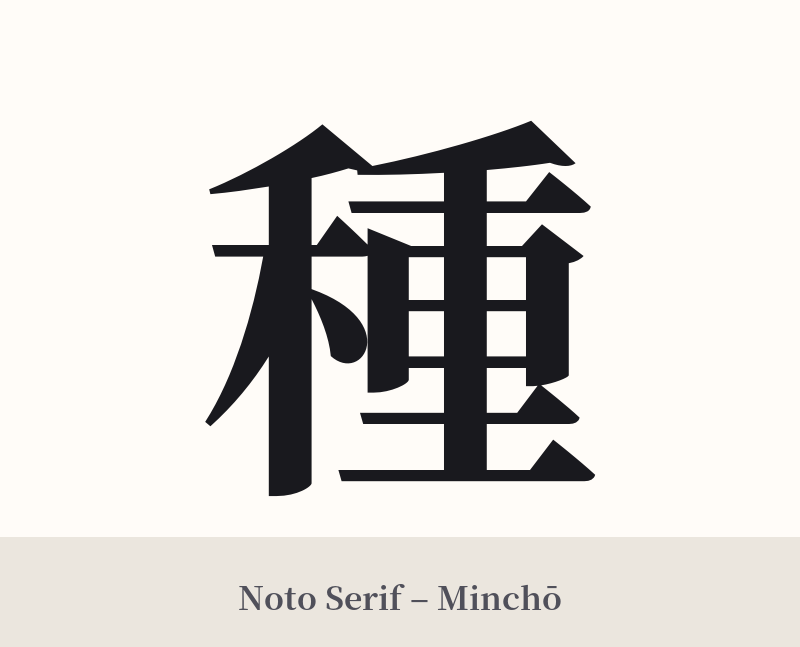
🖌️ Font Styles for 種
The same kanji can look dramatically different depending on the calligraphy style. Choose a font that matches the mood you want for your tattoo or design.
🎨 Tattoo Suitability
📐 Tattoo Design Guide
The kanji 種 offers wonderful versatility for a tattoo, allowing its meaning to be enhanced through thoughtful design choices.
For placement, consider areas that reflect the theme of growth or origin. The inner wrist serves as a constant, visible reminder of one's potential. The back of the neck, just below the hairline, offers a more subtle and personal placement, like a hidden seed. A forearm or calf can also work well, providing a linear space that complements the idea of upward growth.
Stylistically, you have several compelling options: – A clean, precise Kaisho (block) style emphasizes the 'blueprint' or 'origin' aspect of the kanji. It feels structured and intentional. – A flowing Gyōsho (semi-cursive) or Sōsho (cursive) style can evoke a more organic, natural feeling. The fluid strokes can mimic the vines and stems of a growing plant, connecting the character visually to its botanical roots. – Consider integrating the kanji into a larger image. The character itself could be the 'seed' at the base of a design, with a cherry blossom branch, lotus flower, or bamboo stalk growing out of it. This creates a powerful visual narrative that leaves no doubt about the intended symbolism.
Comments