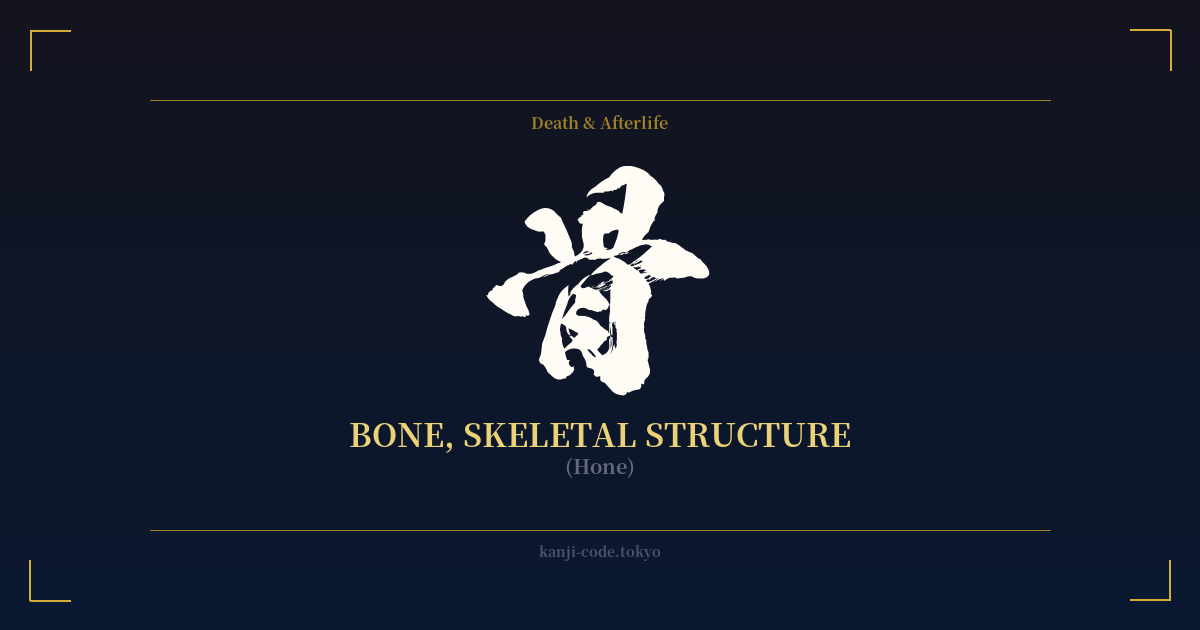
✍️ 骨 (Hone) — Cultural Context
The kanji 骨 (hone) is one of the most primal and fundamental characters in the Japanese language. On the surface, it simply means 'bone'—the physical framework that gives structure to all vertebrates. It is the foundation of the body, the last part to decay, and a stark, universal symbol of life and mortality.
In Japan, this connection to mortality is deeply embedded in cultural practices. The most significant is the Buddhist funeral rite known as 'kotsuage' (骨上げ), or 'bone-picking.' After cremation, close family members use special chopsticks to pick the remaining bone fragments from the ashes and place them in an urn. This solemn, intimate act is a final gesture of respect and connection to the deceased, underscoring the profound role bones play in honoring ancestors and confronting death.
However, the meaning of 骨 goes far beyond the literal. It extends into the very core of one's character and effort. The common expression 'hone wo oru' (骨を折る), which literally translates to 'to break a bone,' is an idiom meaning 'to make a great effort' or 'to go to great pains' to accomplish something. This phrase reframes the idea of 'bone-breaking' work not as a negative, but as a testament to dedication and perseverance.
Similarly, the word 'kikotsu' (気骨) combines the kanji for spirit (気) and bone (骨) to mean 'grit,' 'backbone,' or 'unshakeable spirit.' Someone with 'kikotsu' is principled and unyielding, demonstrating that their core character is as strong and solid as bone. This metaphorical usage elevates 骨 from a mere biological component to a symbol of inner strength and resilience.
Conversely, the kanji can also carry a negative weight. The phrase 'hone no zui made' (骨の髄まで), meaning 'to the marrow of the bones,' signifies something being done thoroughly or completely, often in a negative sense, like being 'rotten to the core.' In folklore, this macabre side is personified by yokai like the Gashadokuro, a giant, starving skeleton that roams the night. Thus, 骨 exists in a fascinating duality: it is at once the structure of life, the symbol of death, the measure of effort, and the essence of character.
🖌️ Font Styles for 骨
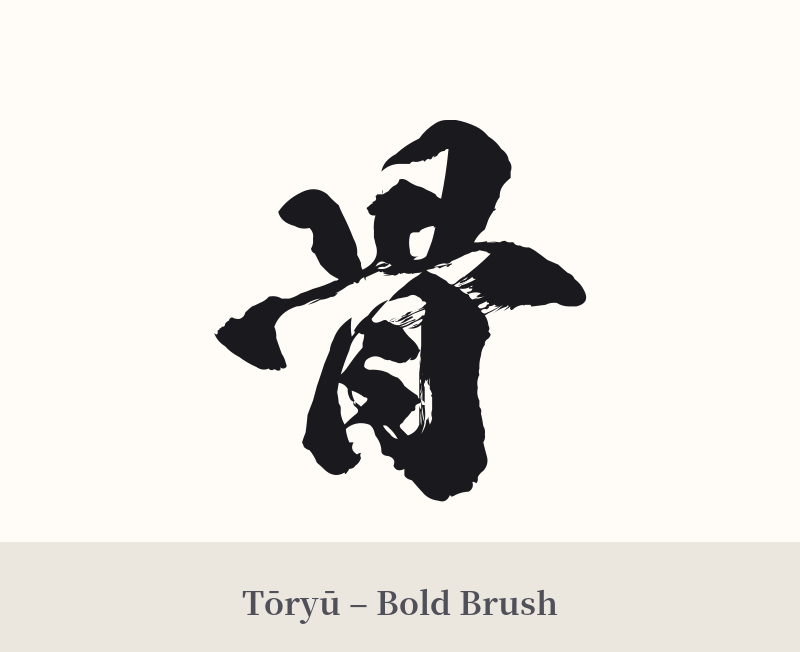
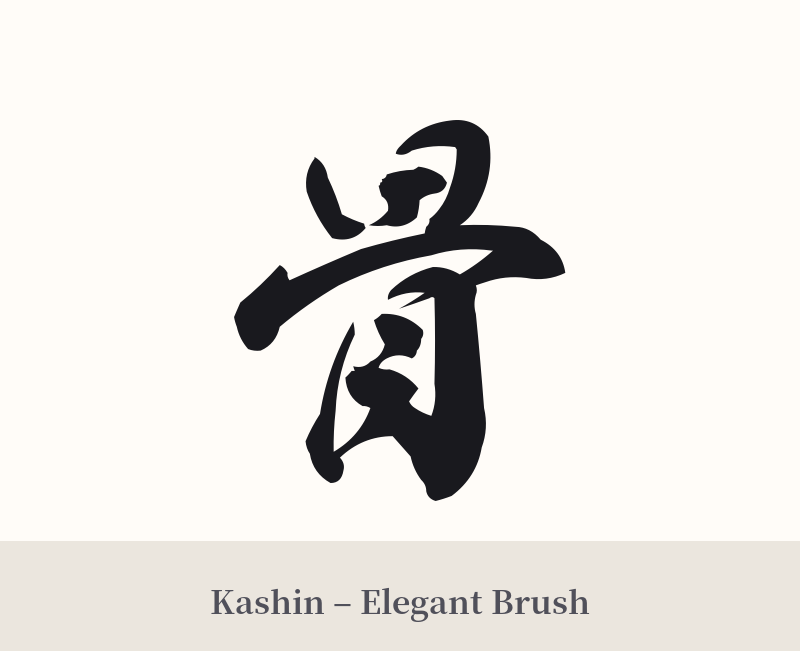
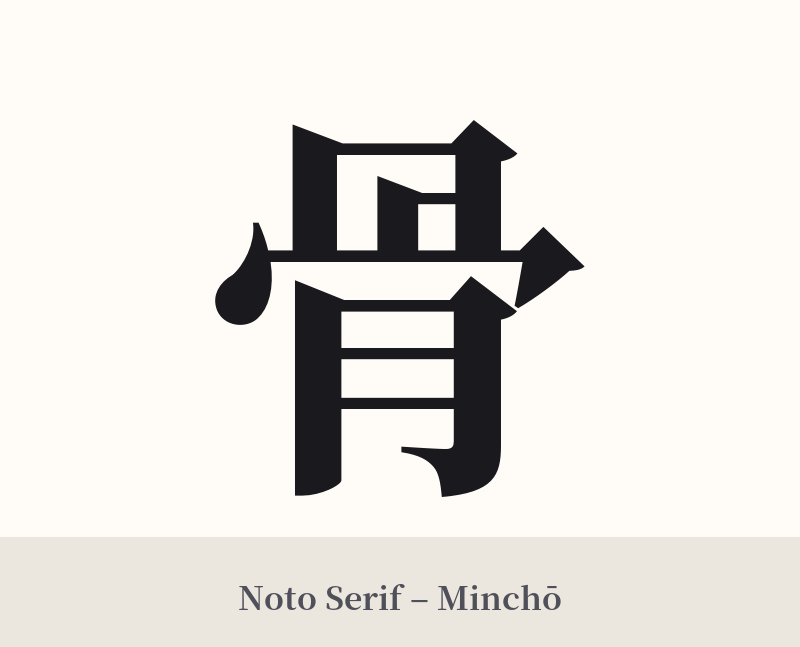
The same kanji can look dramatically different depending on the calligraphy style. Choose a font that matches the mood you want for your tattoo or design.
🎨 Tattoo Suitability
📐 Tattoo Design Guide
For a tattoo of 骨 (hone), the design should reflect the intended meaning—whether it's the raw, physical nature of bone or its metaphorical sense of core strength.
– Placement: This character works well in vertical placements that follow the lines of the body, such as the forearm, spine, or along the ribs. Placing it near an actual bone, like the clavicle or shin, can create a powerful conceptual link.
– Style: A rough, aggressive brush script (shodō) style can emphasize the primal, gritty, and effort-related meanings of the kanji. For a more macabre or anatomical feel, a stark, clean Mincho or Gothic font can highlight its structural and skeletal nature.
– Visual Tips: 骨 is a strong character that can stand alone. Pairing it with minimalist elements like a single red drop (representing blood or life) or placing it within an Enso circle can add layers of meaning. Avoid overly complex backgrounds that might detract from the character's bold form.
Comments