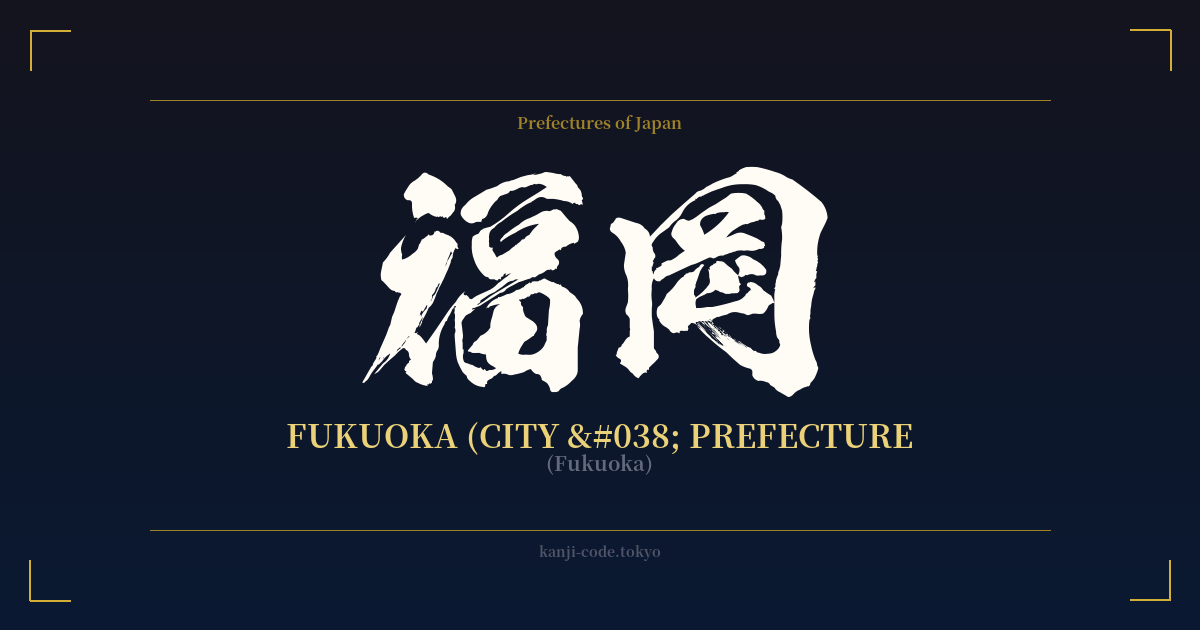
✍️ 福岡 (Fukuoka) — Cultural Context
福岡 (Fukuoka) is more than just a name on a map; it's a kanji that tells a story of strategic naming, historical significance, and modern vibrancy. The name literally translates to 'Fortune Hill' or 'Lucky Hill,' a combination of 福 (fuku), meaning blessing or fortune, and 岡 (oka), meaning hill. This auspicious name wasn't a geographical descriptor of the local terrain but a deliberate choice steeped in samurai history.
In the early 17th century, the feudal lord Kuroda Nagamasa was awarded the domain of Chikuzen. Upon constructing his new castle, he chose to name the area after his family's ancestral home in Bizen Province (modern-day Okayama Prefecture), which was also called Fukuoka. This act was a tribute to his roots and a prayer for the new domain's prosperity, embedding the concept of 'fortune' into its very identity from the beginning.
Historically, Fukuoka has been a crucial gateway between Japan and the rest of Asia. Its location in northern Kyushu made its port, Hakata, a bustling center for trade and cultural exchange for centuries. This legacy continues today, with Fukuoka often called the 'Gateway to Asia.' The city seamlessly blends its rich past with a forward-thinking present, known for its innovative tech scene, thriving arts community, and an exceptionally high quality of life.
Culturally, Fukuoka is famous for many things, most notably its culinary scene. The city is the birthplace of the world-renowned Hakata ramen, a rich, pork-bone broth noodle soup that draws foodies from around the globe. Beyond food, it hosts the Hakata Gion Yamakasa, one of Japan's most dynamic festivals, featuring teams of men racing through the streets carrying massive, ornate floats. This blend of ancient tradition, samurai legacy, and modern dynamism makes the name 'Fukuoka' resonate with a unique energy—a place where history brings fortune to the present.
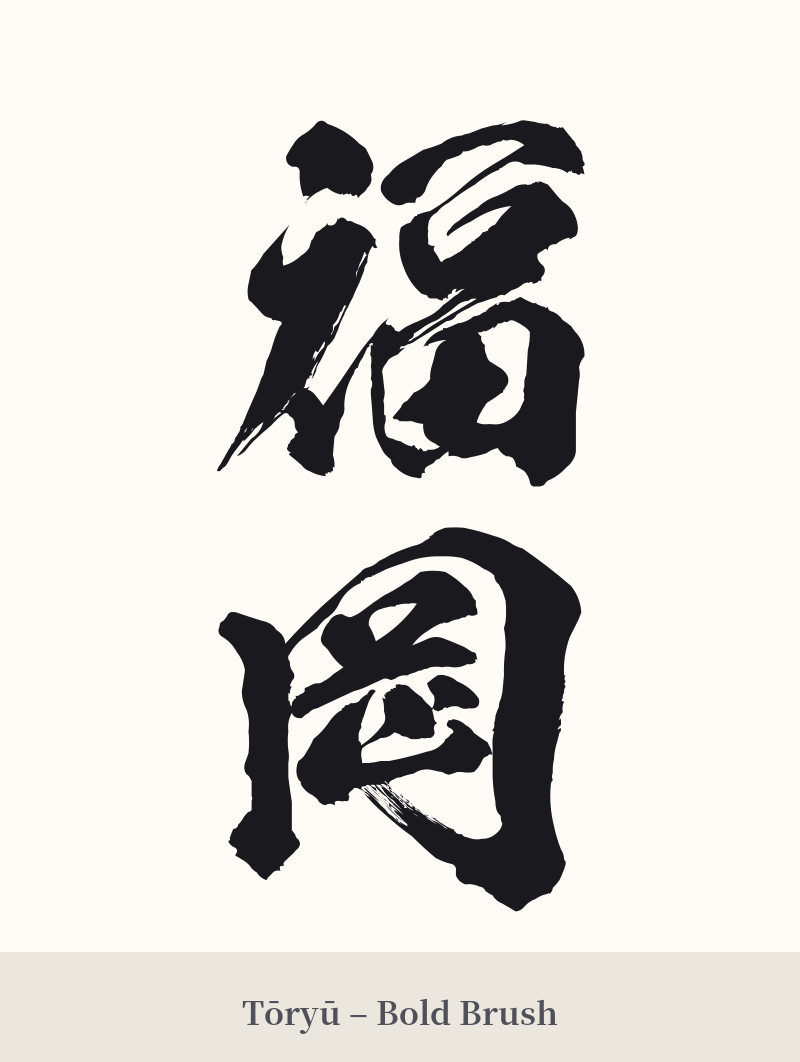
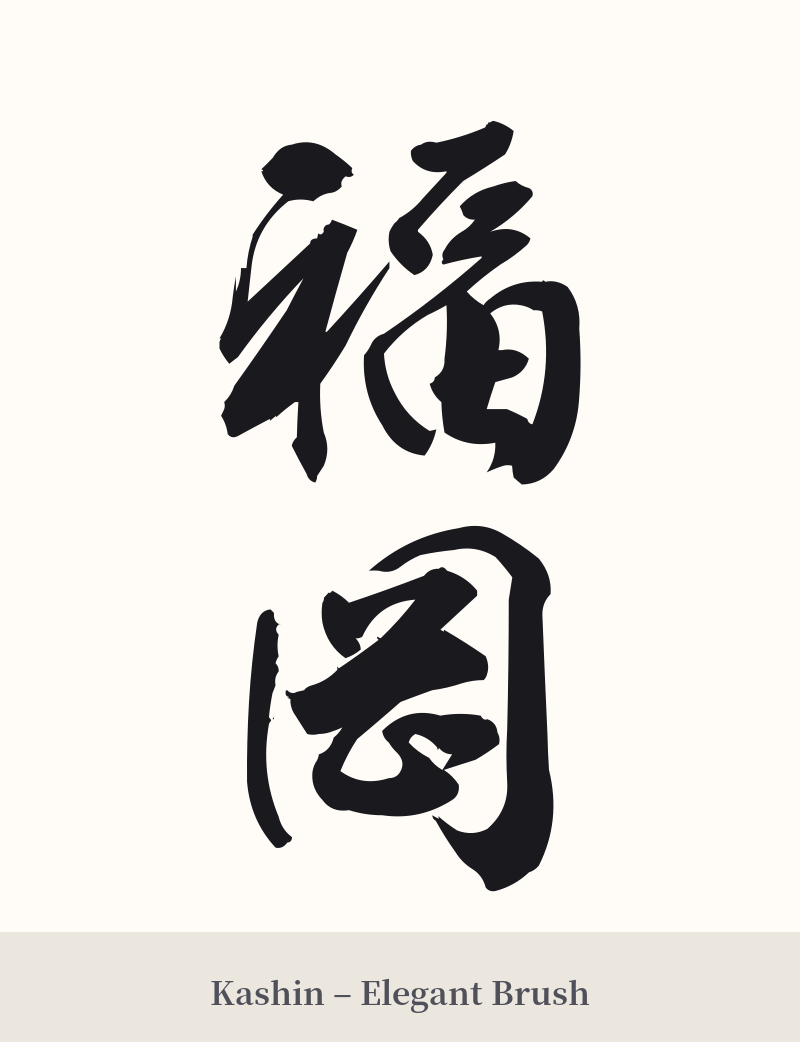
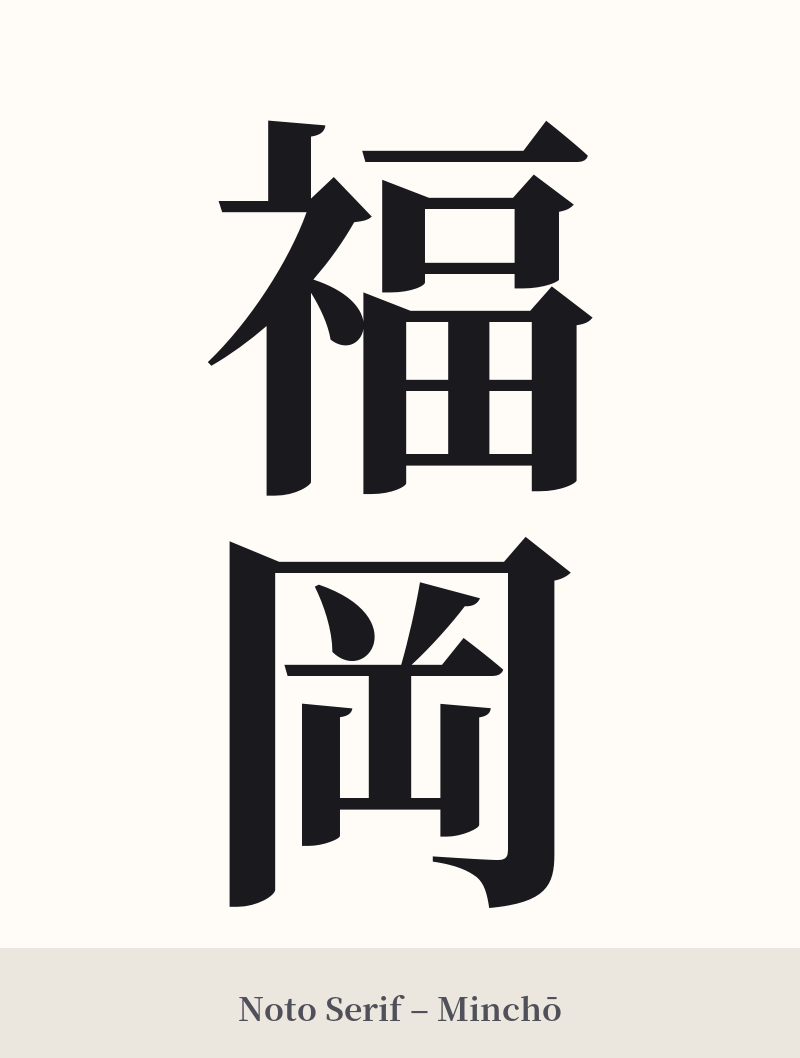
🖌️ Font Styles for 福岡
The same kanji can look dramatically different depending on the calligraphy style. Choose a font that matches the mood you want for your tattoo or design.
🎨 Tattoo Suitability
📐 Tattoo Design Guide
For a tattoo of 福岡, the design should respect the balance and history of the characters.
– Placement: A horizontal arrangement works well on the forearm, chest, or upper back. For a vertical design, the inner forearm, calf, or along the spine are excellent choices, allowing the characters to stack naturally.
– Font Style: To honor its samurai origins, a classic calligraphy script like Gyosho (semi-cursive) or Kaisho (block script) is highly recommended. These styles add a sense of history and authenticity. For a more modern take reflecting the city's contemporary vibe, a clean Mincho or even a stylized sans-serif font could work, but it may lose some of its cultural weight.
– Visual Tips: The two characters are visually distinct—福 is complex and dense, while 岡 is more open and simple. A skilled artist will ensure they are balanced in visual weight. While you could add elements like waves (for the port city) or clouds, the kanji is strong enough to stand alone. Overcrowding the design can detract from the elegance of the characters themselves.
Comments