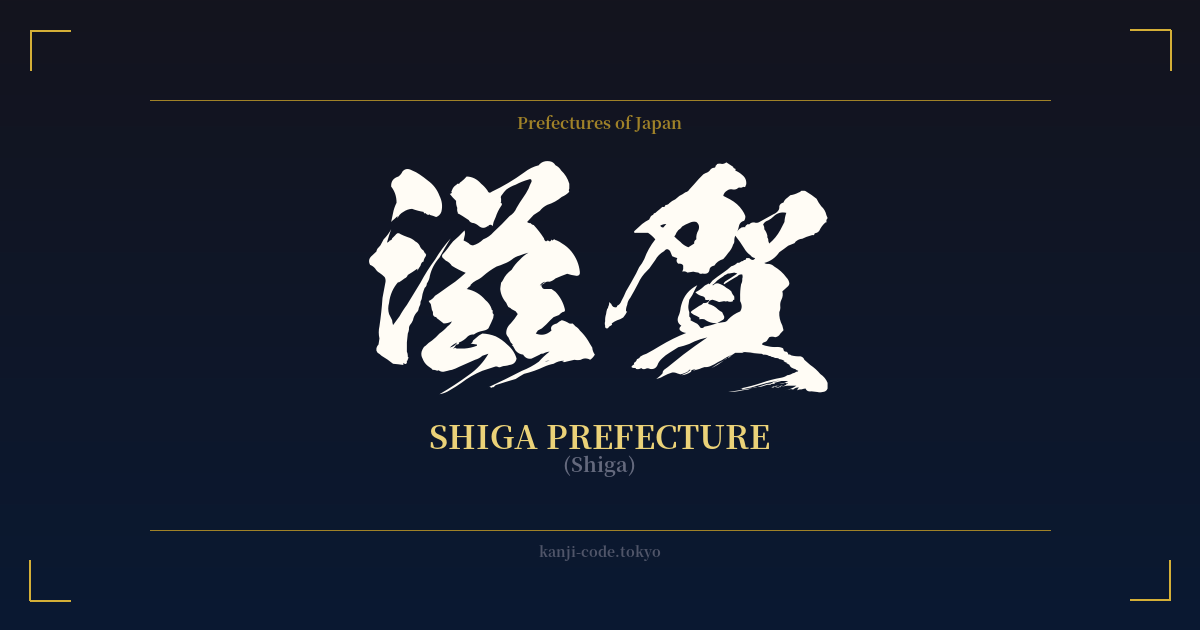
✍️ 滋賀 (Shiga) — Cultural Context
The kanji 滋賀 (Shiga) refers to Shiga Prefecture, a landlocked administrative region in the heart of Japan's Kansai area. Its identity is inextricably linked to the magnificent Lake Biwa (琵琶湖, Biwako), the largest freshwater lake in Japan, which occupies the very center of the prefecture.
The name 'Shiga' itself is ancient, with its origins tracing back to the Shiga District mentioned in Japan's oldest historical records, the Kojiki and Nihon Shoki, compiled in the 8th century. Like many Japanese place names, the characters were likely chosen as ateji—selected for their phonetic sounds to match the pre-existing spoken name, rather than for their literal meanings.
Individually, the characters are 滋 (shi), meaning 'nourishing' or 'luxuriant,' and 賀 (ga), meaning 'congratulations' or 'joy.' While the combination was probably phonetic, it's easy to draw a poetic connection. The 'nourishing' aspect of 滋 beautifully reflects the life-giving properties of Lake Biwa, which has sustained the region for centuries and provides water to over 14 million people in the greater Kansai area, including Kyoto and Osaka.
Historically, the area was known as Ōmi Province (近江国). Its strategic position controlling the narrow isthmus between Lake Biwa and the mountains made it a critical crossroads for trade and military campaigns, earning it the saying, 'He who controls Ōmi, controls Japan.' This history is embodied in landmarks like Hikone Castle, one of only a handful of original, unreconstructed castles in the country.
Today, Shiga represents a blend of history, nature, and industry. It’s a place of serene lakeside views, ancient temples, and the legacy of the Ōmi merchants, who were known for their business acumen. Choosing 滋賀 is choosing a name steeped in the quiet but profound history of the Japanese heartland.
🖌️ Font Styles for 滋賀
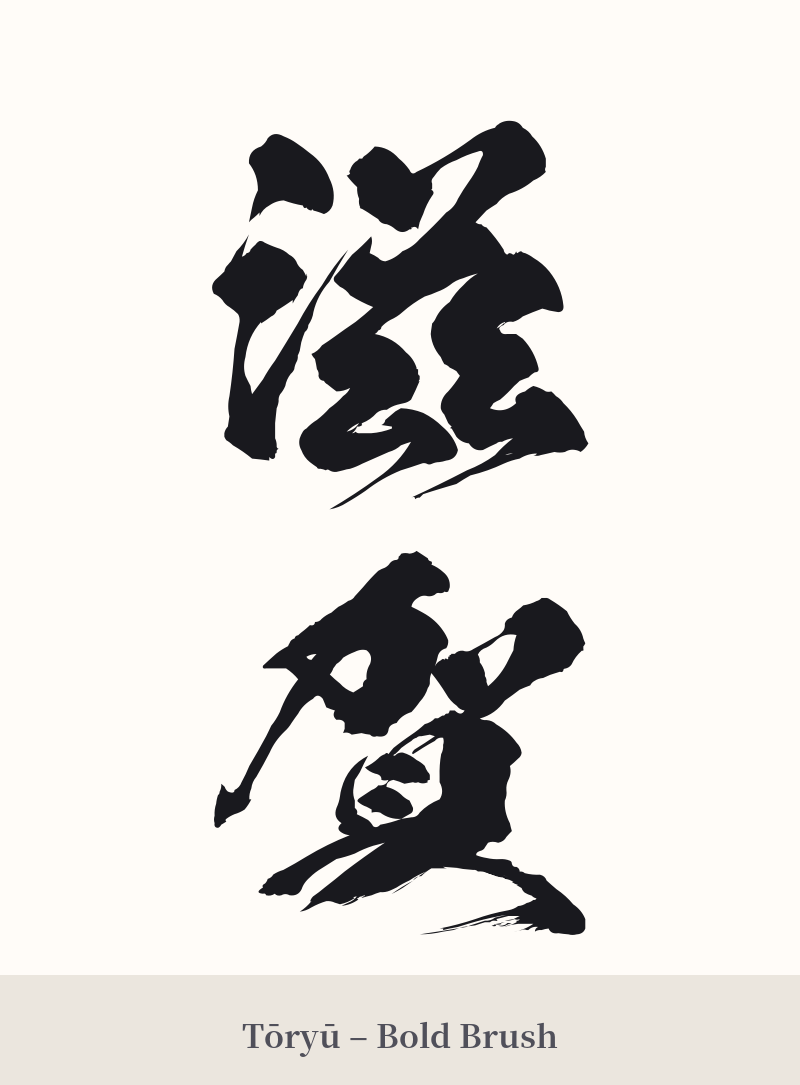
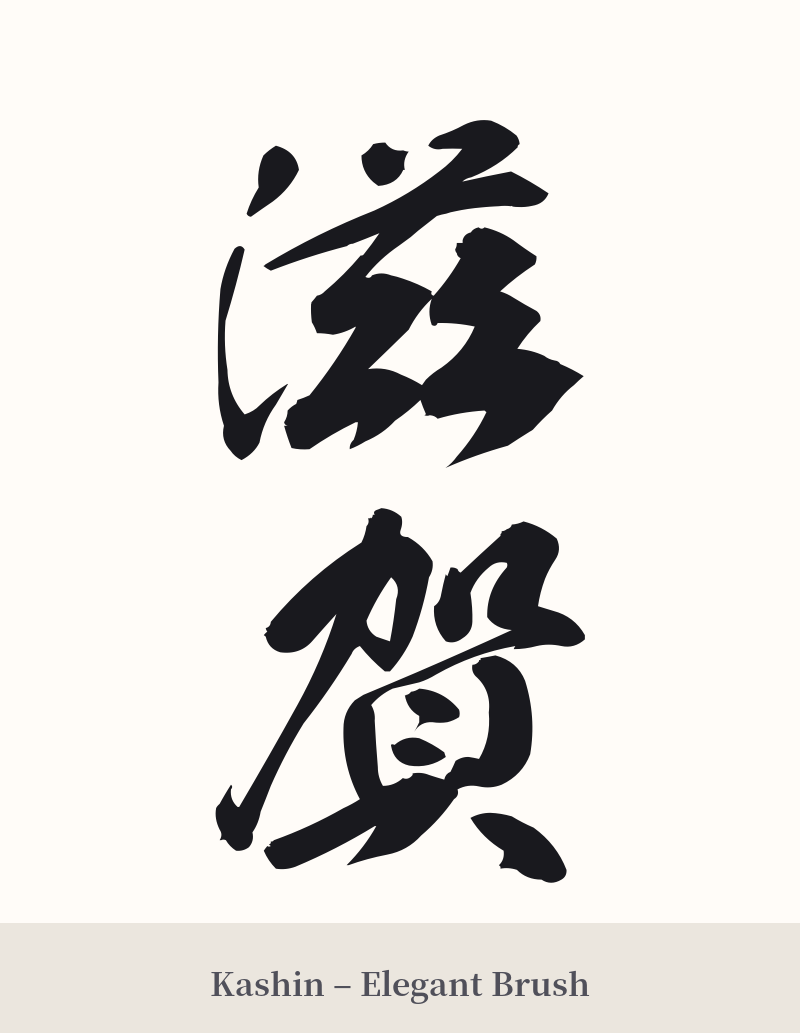
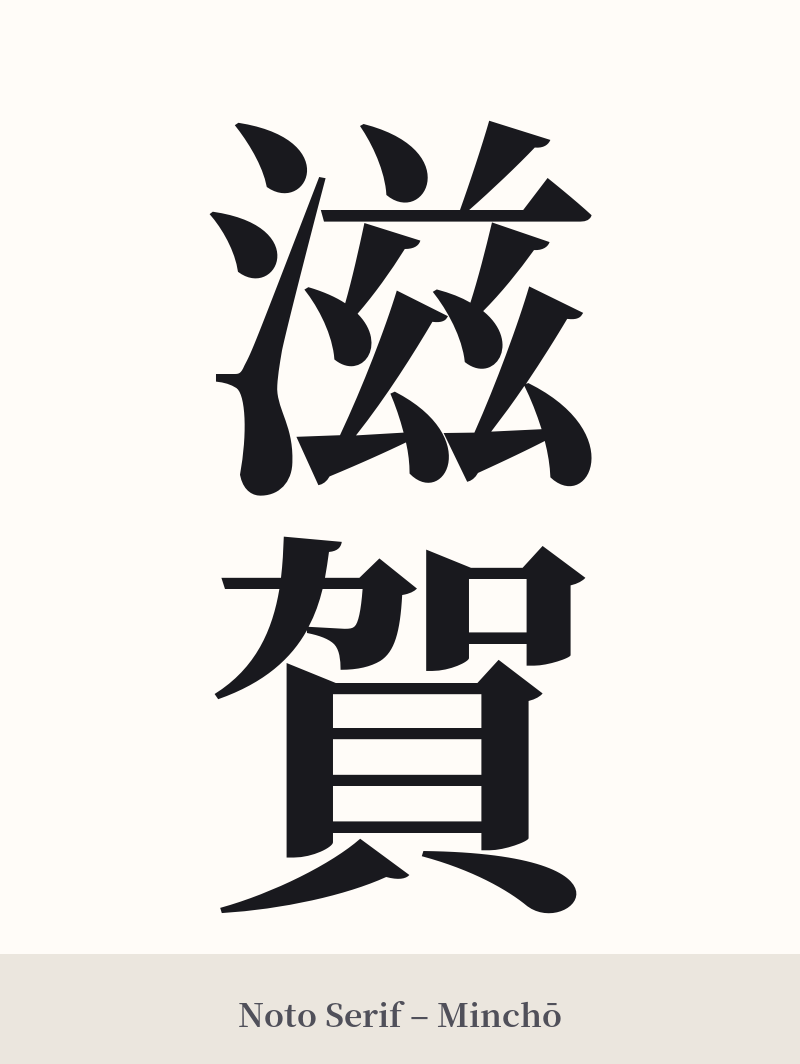
The same kanji can look dramatically different depending on the calligraphy style. Choose a font that matches the mood you want for your tattoo or design.
🎨 Tattoo Suitability
📐 Tattoo Design Guide
For a tattoo of 滋賀, the design should reflect its status as a place name with deep personal significance.
– Placement: This kanji is well-suited for spots that feel personal, like the inner forearm, the shoulder blade, or along the ribs. A vertical orientation often looks more traditional and elegant for Japanese script.
– Font Style: A classic calligraphy script is highly recommended. Kaisho (block script) offers clarity and strength, while Gyosho (semi-cursive script) can add a sense of flow and history, echoing the waters of Lake Biwa.
– Visual Elements: To add context and artistic flair, consider incorporating imagery associated with Shiga. This could include stylized waves representing Lake Biwa, the silhouette of Hikone Castle, or even a subtle map outline of the prefecture. These elements can transform the design from a simple name into a meaningful tribute.
Comments