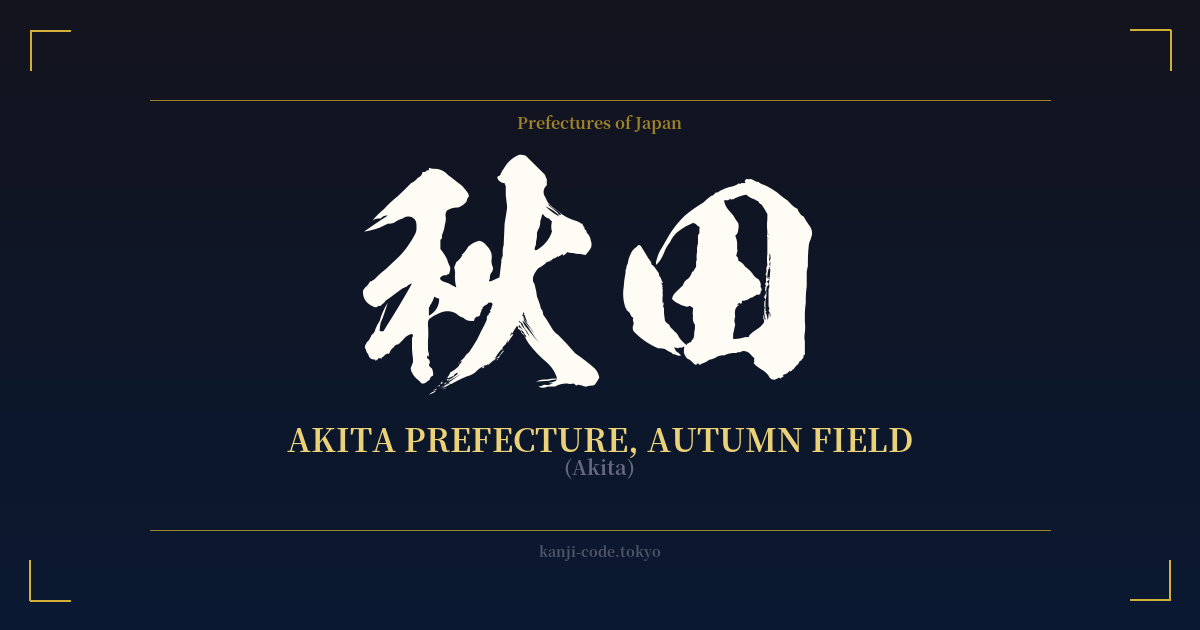
✍️ 秋田 (Akita) — Cultural Context
The word 秋田 (Akita) literally translates to "Autumn Field." This simple, evocative name paints a picture of golden rice paddies ready for harvest under the crisp, clear skies of autumn, a scene that defines much of rural Japan. While the name itself is poetic, it is most famously associated with Akita Prefecture, a large, mountainous region in the Tōhoku area of northern Honshu, Japan's main island.
Akita Prefecture is a land of dramatic natural beauty, characterized by heavy snowfall in winter, lush forests, and fertile plains. This environment has shaped its culture and its most famous exports. The region is renowned throughout Japan for producing some of the highest quality rice, which in turn makes it a powerhouse in the world of sake brewing. The pure mountain water and cold climate create ideal conditions for producing crisp, clean, and complex sake that is prized by connoisseurs.
However, for many in the international community, the name Akita is synonymous with one thing: the Akita Inu (秋田犬), the Akita dog. This majestic and loyal breed, designated as a Japanese national treasure, originated in this rugged northern prefecture where they were bred for hunting bears and deer. The story of Hachikō, the faithful Akita who waited for his deceased owner at Shibuya station for nearly a decade, catapulted the breed to international fame and cemented its image as a symbol of unwavering loyalty and devotion.
Beyond dogs and sake, Akita's culture is rich with unique traditions. The prefecture is home to the Kanto Matsuri, a spectacular summer festival where performers balance massive bamboo poles strung with dozens of paper lanterns, symbolizing ears of rice. It is also the home of the fearsome Namahage, deities portrayed by men in terrifying masks and straw capes who visit homes on New Year's Eve to scare away evil spirits and admonish lazy children. This blend of serene nature, agricultural bounty, and powerful folklore gives the name 秋田 a depth that extends far beyond its literal meaning.
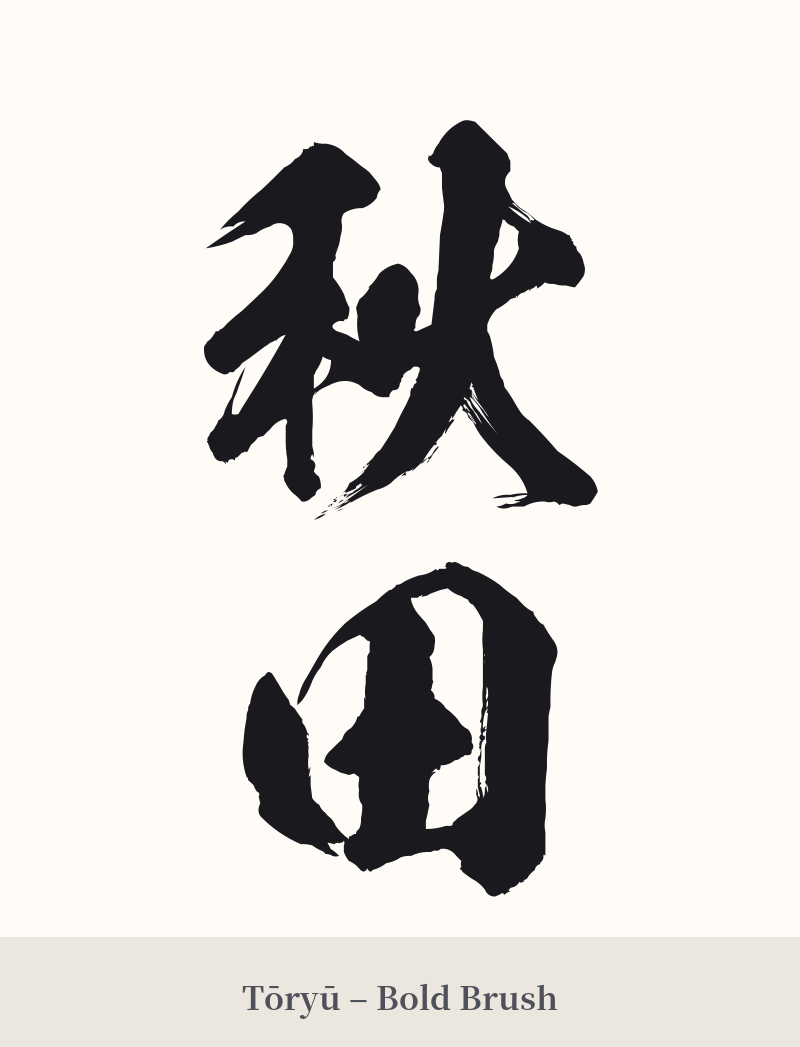
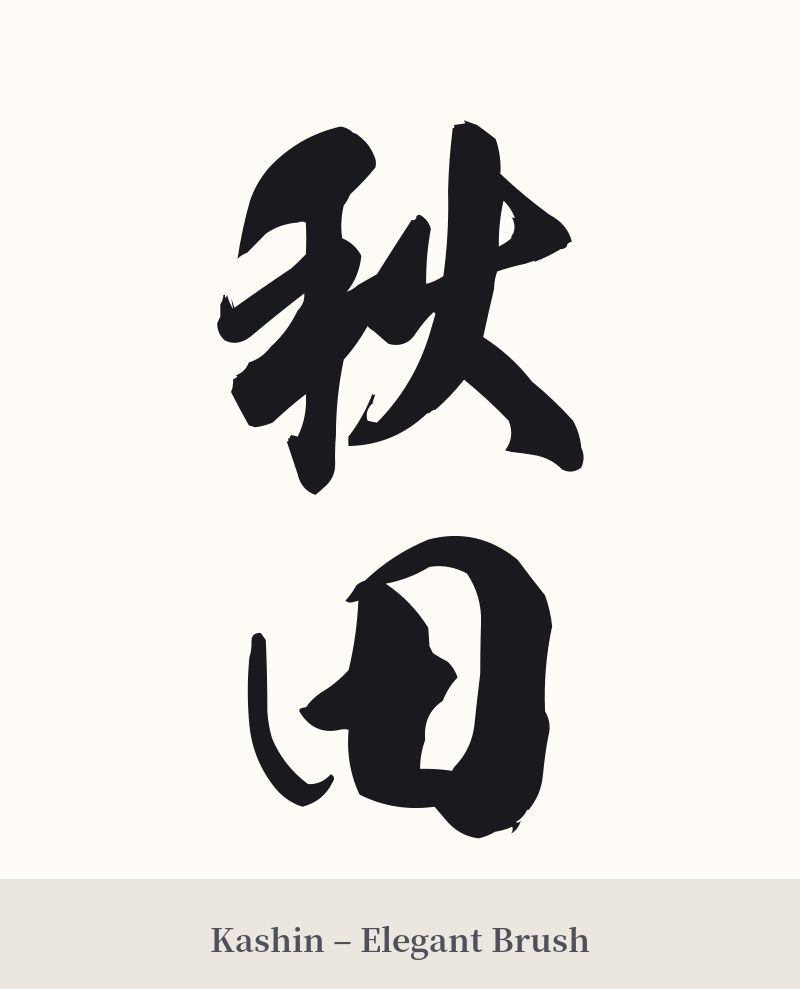
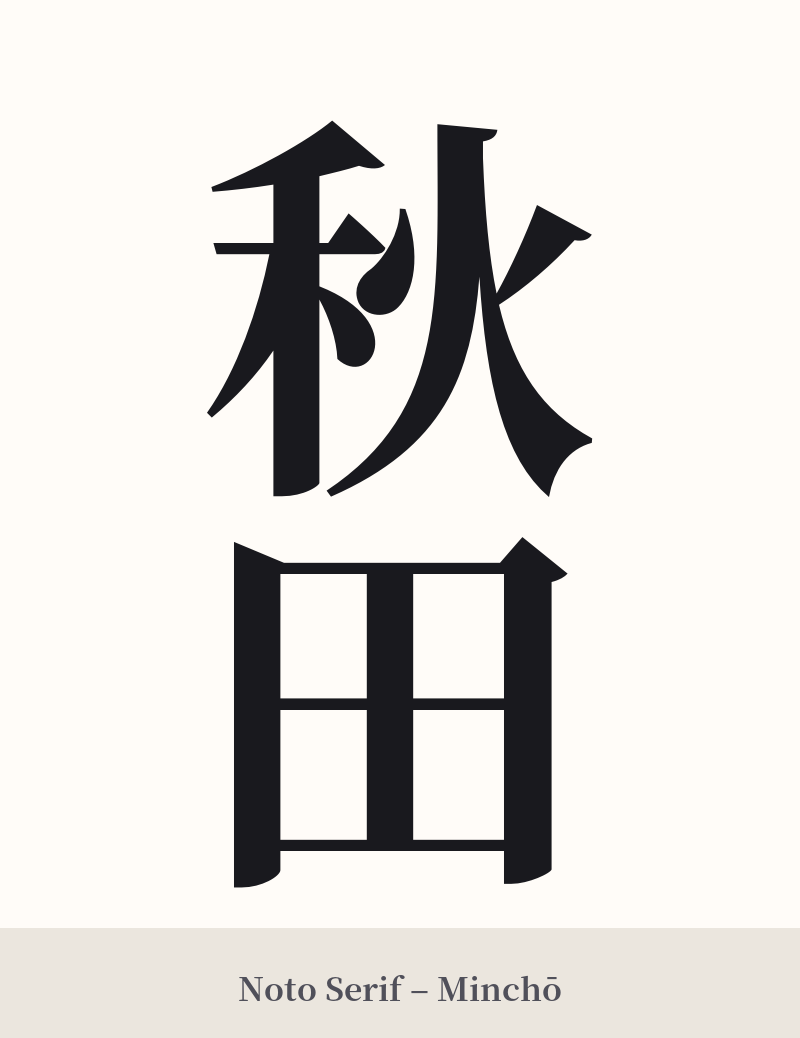
🖌️ Font Styles for 秋田
The same kanji can look dramatically different depending on the calligraphy style. Choose a font that matches the mood you want for your tattoo or design.
🎨 Tattoo Suitability
📐 Tattoo Design Guide
When designing a tattoo for 秋田, the focus is often on personal connection and regional pride. The characters are well-balanced and offer versatility in style.
– Placement: A vertical orientation on the forearm, calf, or along the spine works beautifully. For a horizontal design, the back of the neck or across the chest are strong options.
– Font Style: A classic Kaisho (block) script will give the characters a strong, grounded feel, reflecting the steadfast nature of the land and its famous dog. For a more fluid and organic look, a Gyōsho (semi-cursive) style can evoke the feeling of wind blowing through rice fields.
– Visual Embellishments: Consider incorporating elements that tell a story. You could frame the kanji with stalks of rice, add a subtle silhouette of an Akita dog, or use autumn-colored maple leaves (momiji) to enhance the 'Autumn Field' meaning. A stylized sake cup or a hint of a Namahage mask could also add a unique cultural layer.
Comments