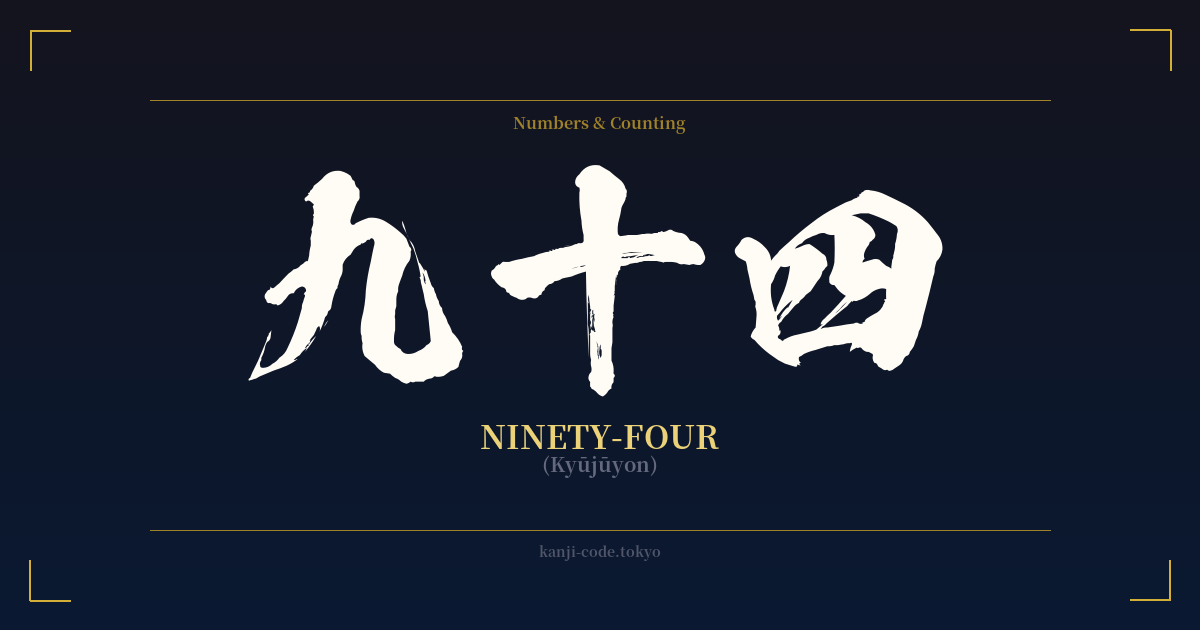
✍️ 九十四 (Kyūjūyon) — Cultural Context
The Japanese word 九十四 (Kyūjūyon) translates directly to "ninety-four." Its structure is a perfect example of the logical, additive nature of the Japanese numbering system. It is composed of three kanji: 九 (kyū, nine), 十 (jū, ten), and 四 (yon, four). The structure literally reads as "nine-tens-four," or (9 x 10) + 4, which equals 94.
While simple on the surface, this number carries significant cultural baggage, primarily due to the inclusion of the numbers nine and four. In Japan, and across much of East Asia, certain numbers are avoided due to superstitions rooted in homophones—words that sound the same but have different meanings.
The number four, 四, is the most famous example of an unlucky number. One of its primary readings is "shi," which is the exact same pronunciation as the word for death (死). This phenomenon, known as tetraphobia, is deeply ingrained in the culture. You will often find buildings without a fourth floor, hospitals avoiding room number four, and people refraining from giving gifts in sets of four. To mitigate this, the alternative reading "yon" is often used, as is the case in 九十四 (Kyūjūyon).
Similarly, the number nine (九) can be considered unlucky because one of its readings, "ku," is a homophone for suffering or agony (苦). Therefore, the number ninety-four could be interpreted by a native speaker as a combination of potentially unfortunate concepts, even if its primary meaning is purely numerical.
Of course, in everyday life, ninety-four is just a number used for counting, ages, and dates. However, the choice to permanently ink a number with such well-known negative associations onto one's body is a different matter entirely. Without a deeply personal and compelling reason that overrides the cultural superstition, a tattoo of 九十四 might be met with confusion or even concern by Japanese people. It highlights the critical difference between a word's literal meaning and its cultural resonance, a key consideration for any Japanese tattoo.
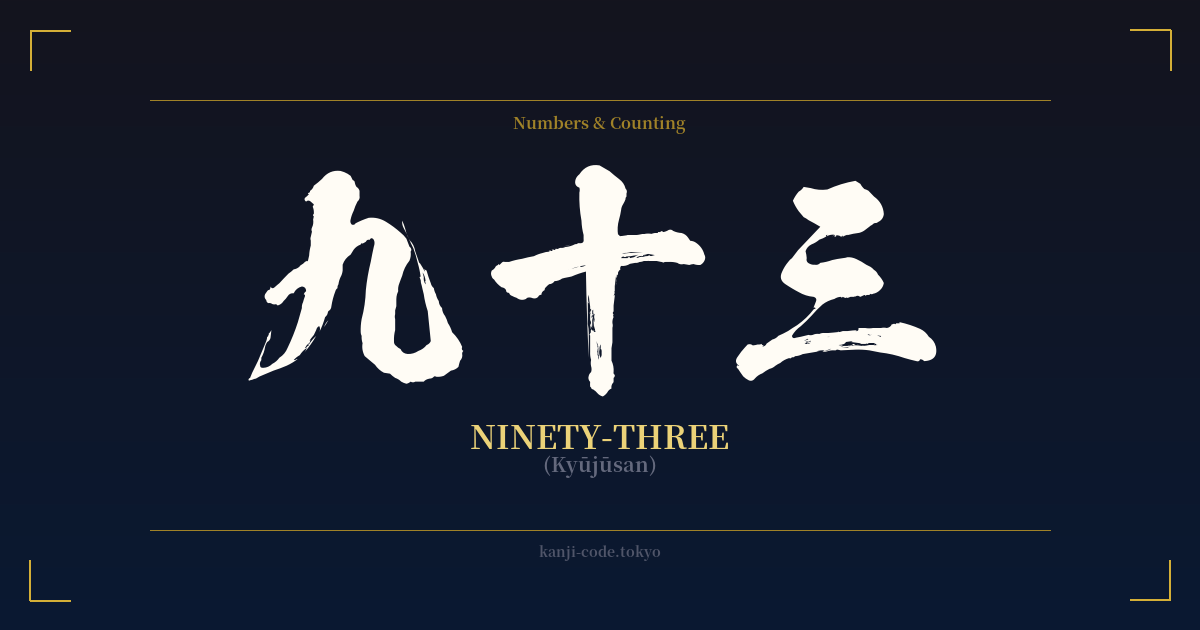
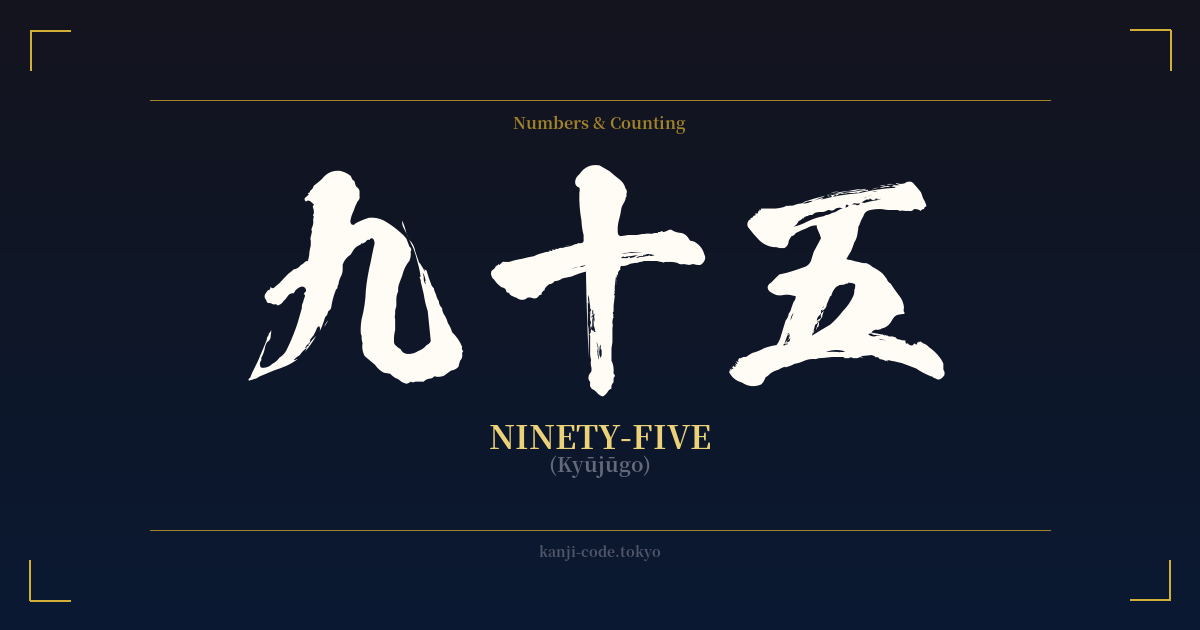
🖌️ Font Styles for 九十四
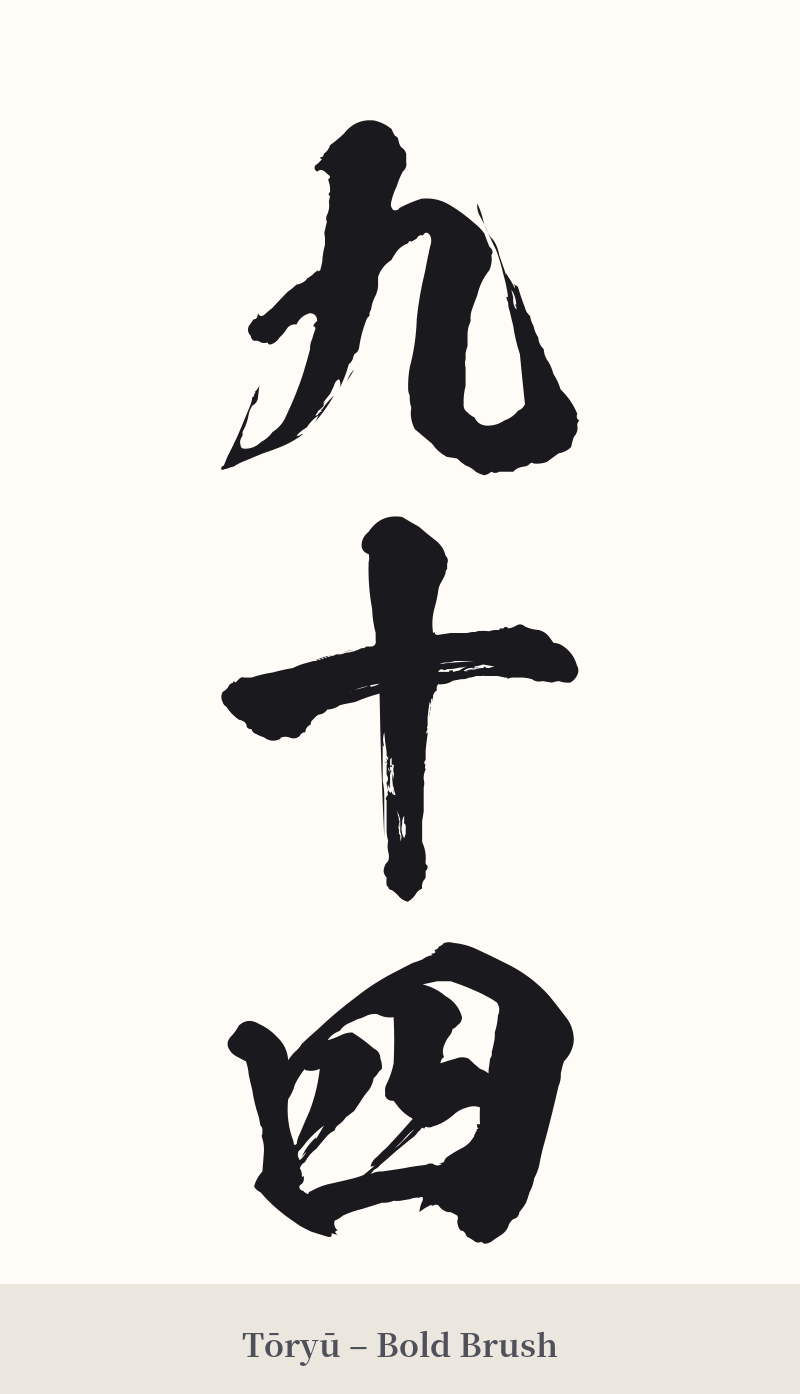
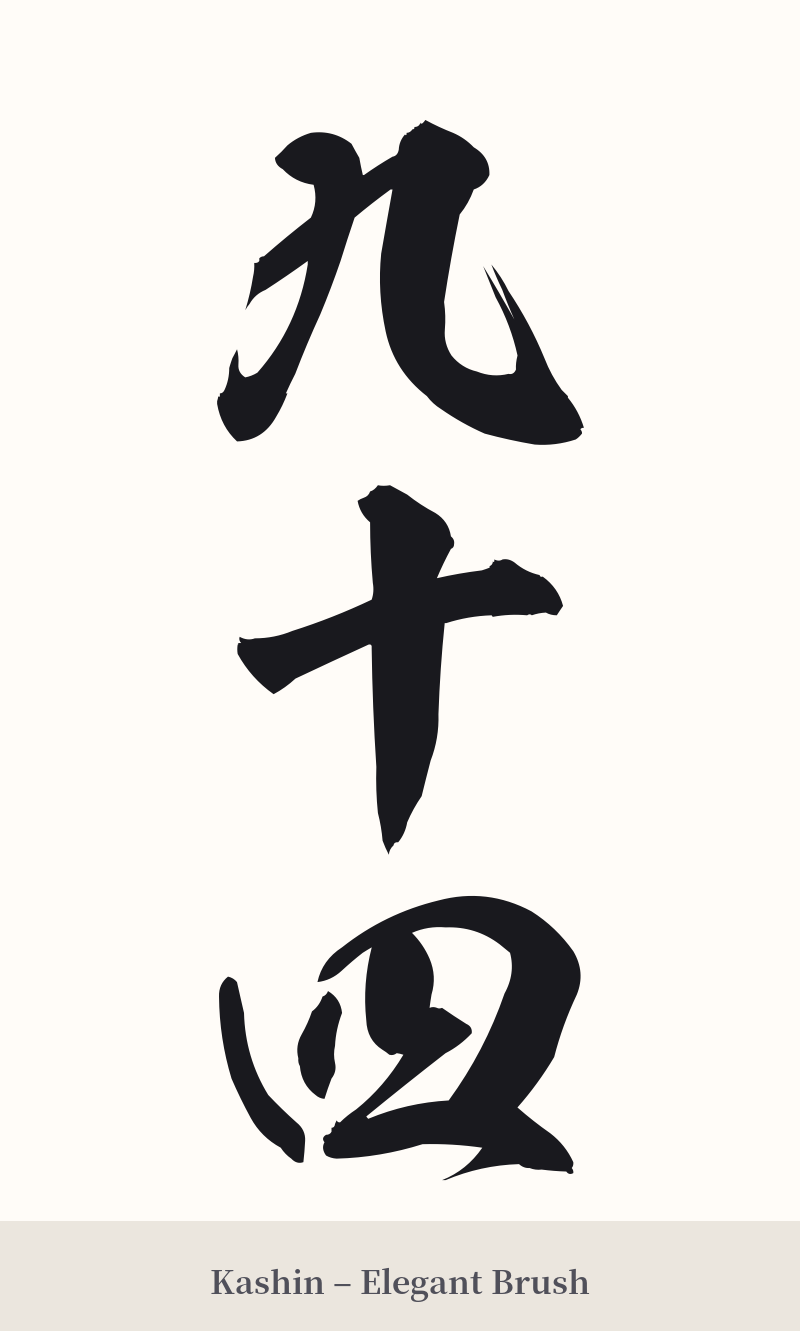
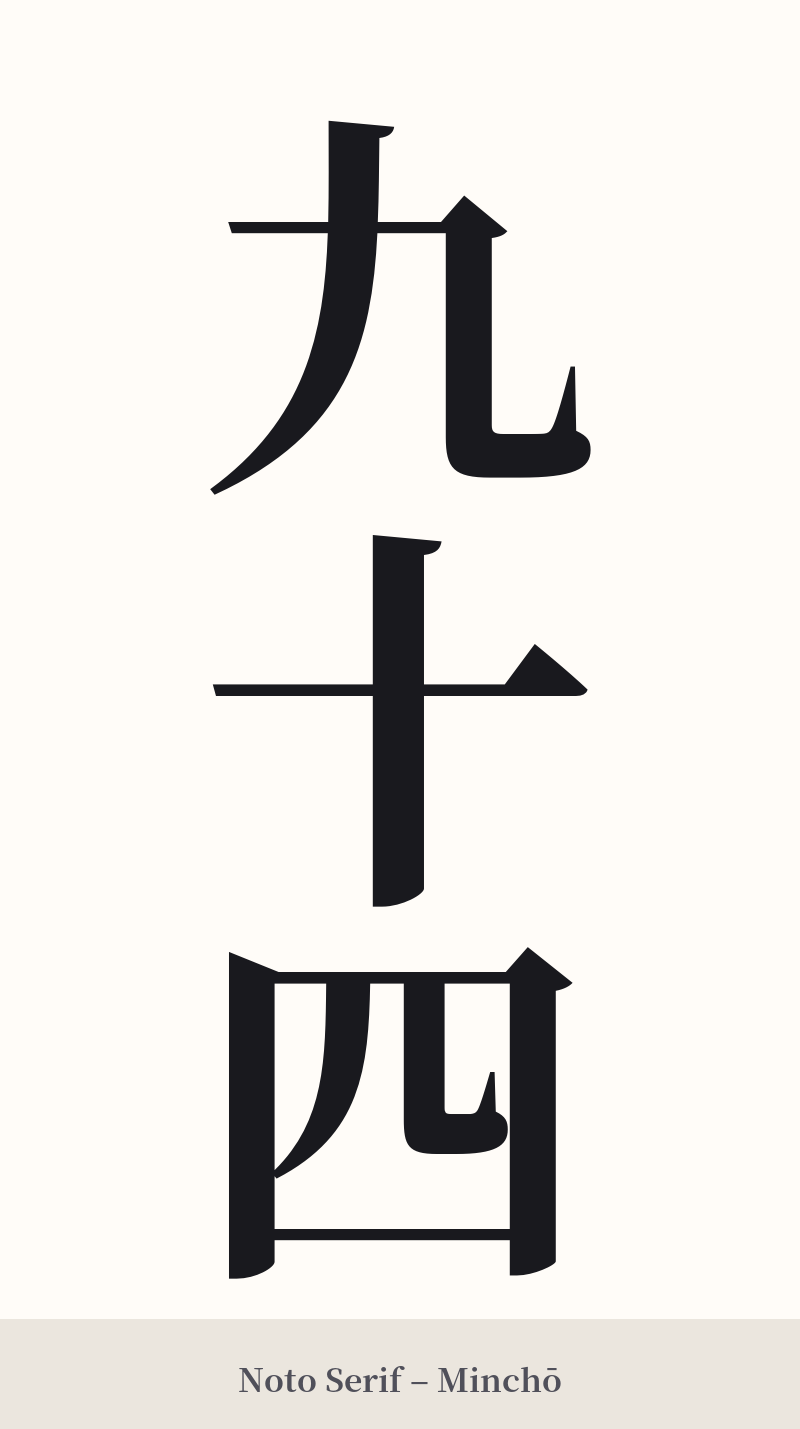
The same kanji can look dramatically different depending on the calligraphy style. Choose a font that matches the mood you want for your tattoo or design.
🎨 Tattoo Suitability
📐 Tattoo Design Guide
Given its three-character structure, 九十四 is best suited for a vertical orientation. This allows the characters to flow downwards naturally, creating a balanced and aesthetically pleasing column. Good placements for a vertical design include the forearm, the spine, the ribs, or along the calf.
For font styles, clarity is key: – Kaisho (楷書): This standard block script is highly recommended. Its clean, precise strokes will ensure the characters are legible and instantly recognizable as numbers, which is the primary point. – Gyosho (行書): A semi-cursive style could add a touch of artistic flair, but be cautious. The simple forms of 九 and 十 might lose their definition if the script is too fluid or abstract.
Due to the cultural superstitions, consider adding a design element that provides personal context. If '94 represents a birth year, perhaps incorporate the corresponding animal from the Chinese zodiac. If it's a memorial number, a simple enso circle or a relevant flower could frame it, lending it a significance that moves beyond the numerical value alone.
Comments