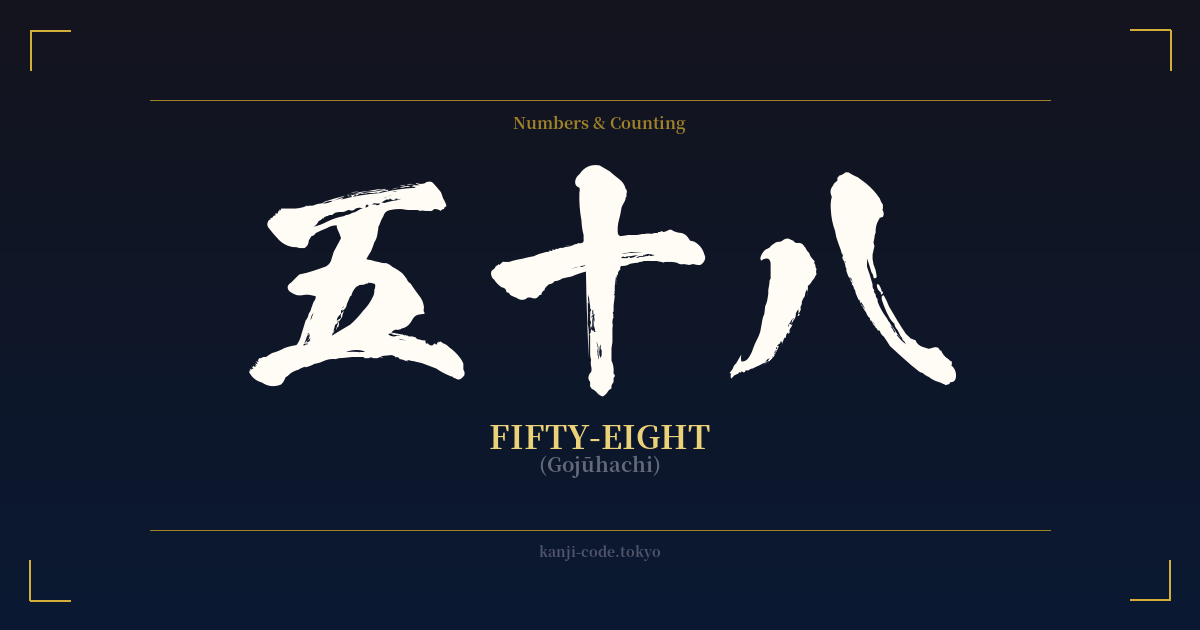
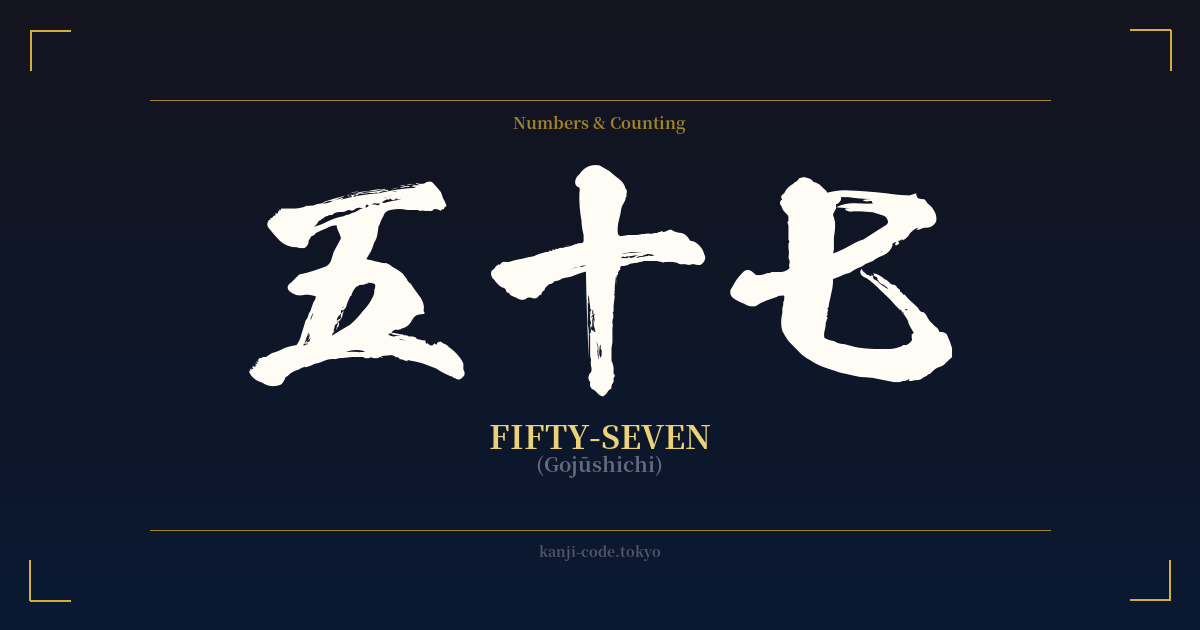
✍️ 五十八 (Gojūhachi) — Cultural Context
The Japanese word for fifty-eight, 五十八 (Gojūhachi), is a straightforward numerical term, but its construction and the characters it uses offer a window into the logic and cultural nuances of the Japanese language.
Unlike English, which has unique words for numbers like 'twenty' or 'fifty,' Japanese builds them systematically using kanji. The structure of 五十八 is a perfect example of this multiplicative and additive logic: it breaks down into 五 (go, five) + 十 (jū, ten) + 八 (hachi, eight). The construction is understood as (五 x 十) + 八, or (5 x 10) + 8, equaling 58. This system, using Chinese-derived numerals known as kansuuji (漢数字), is standard for writing numbers in formal contexts, traditional texts, and vertical writing.
While the number fifty-eight itself doesn't carry a famous cultural story or superstition, its component parts do. The character 五 (go) for five is associated with the five elements of Chinese philosophy (五行, gogyō): wood, fire, earth, metal, and water. It represents a sense of balance and foundational structure in nature.
The most culturally significant character in this compound is 八 (hachi), the number eight. In Japan, eight is considered a very lucky number. This is largely due to the shape of the kanji itself, which widens at the bottom. This shape is called suehirogari (末広がり), which literally means 'widening towards the end.' It symbolizes growing prosperity, success, and a bright future. This auspicious association makes the number eight a welcome sight in many contexts, from prices to gift-giving.
Therefore, while 五十八 is functionally just a number, it carries a subtle, positive undertone because it ends with the lucky number eight. It combines the neutrality of five, the completeness of ten, and the good fortune of eight. This makes it more than just a sequence of digits; it’s a small package of numerical logic and cultural symbolism, representing a specific point in a system that values both order and fortune.
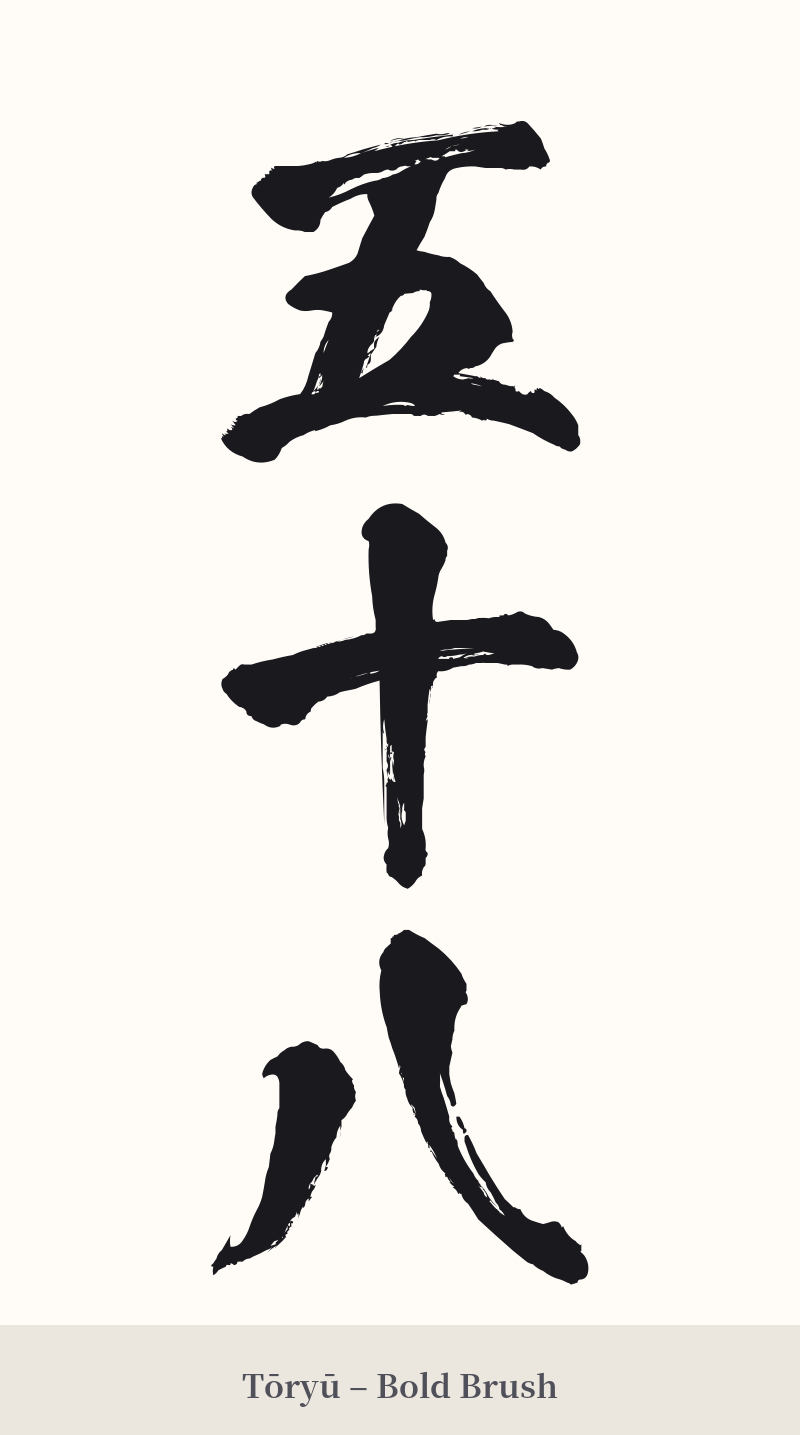
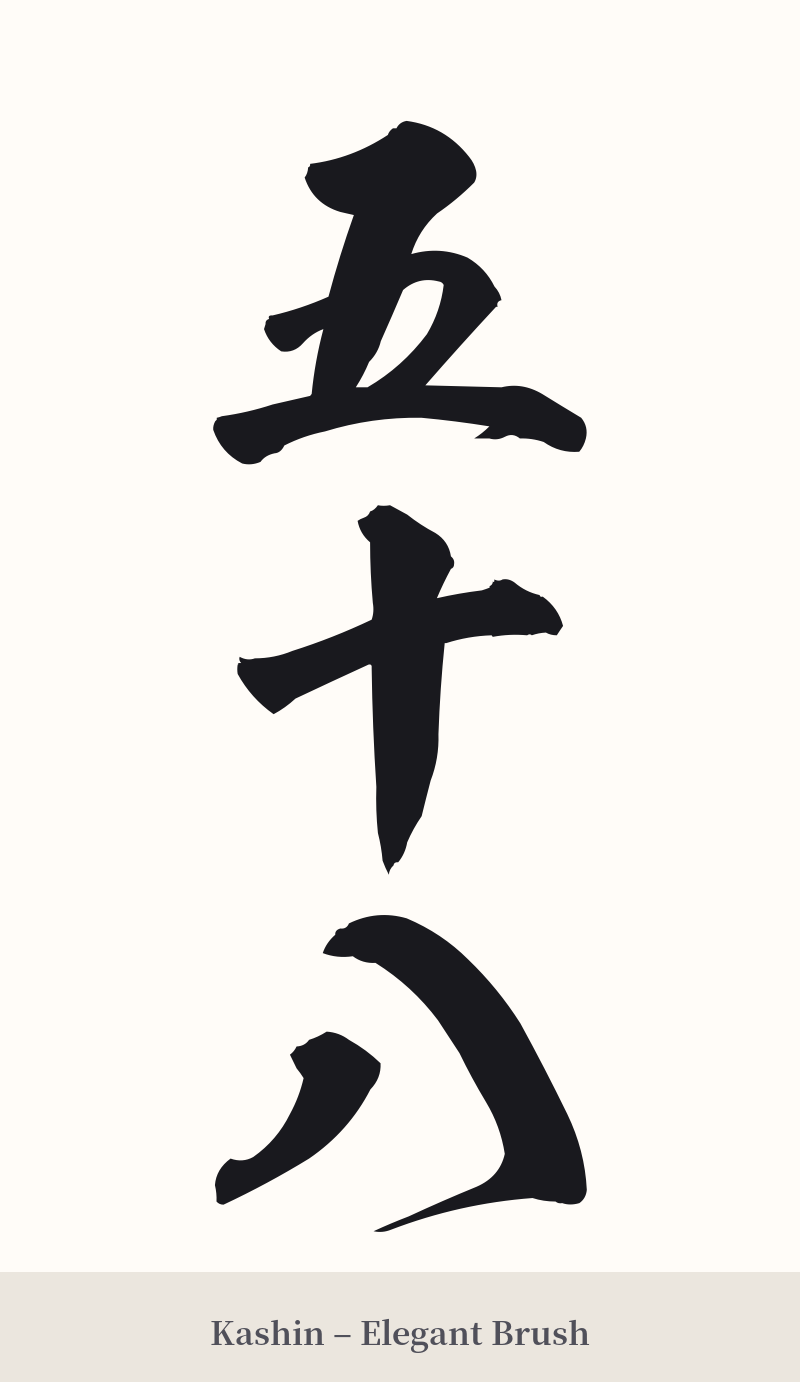
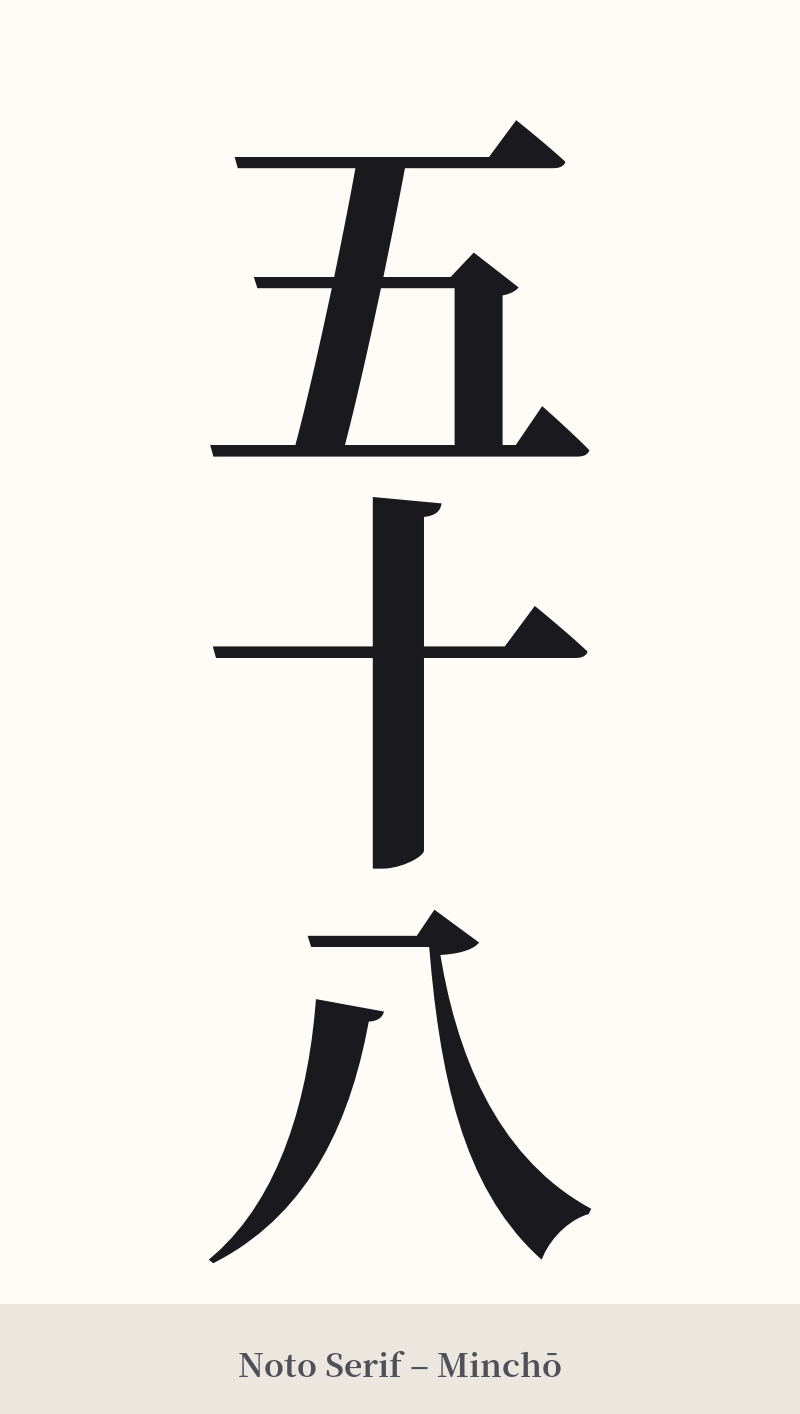
🖌️ Font Styles for 五十八
The same kanji can look dramatically different depending on the calligraphy style. Choose a font that matches the mood you want for your tattoo or design.
🎨 Tattoo Suitability
📐 Tattoo Design Guide
For a tattoo of 五十八, the design's success hinges on embracing its simplicity or integrating it into a larger concept. Because the characters are fundamental and common, artistic execution is key to making it feel special.
– Placement: This kanji combination works best in smaller, more discreet locations. Consider a vertical alignment on the inner wrist, along the ankle, behind the ear, or on the ribs. As a large piece, it might look sparse unless it's part of a more complex design.
– Style: A vertical orientation is the most traditional and natural way to write Japanese numbers. For font styles, a semi-cursive script like gyōsho (行書) can add a touch of fluid elegance to the simple strokes. For a more modern and clean look, a crisp kaisho (楷書) block script emphasizes its directness.
– Visual Tips: To give the number context, you could incorporate it into a design that explains its significance. For example, if it represents a birth year, it could be paired with the corresponding zodiac animal. It could also be rendered on a small scroll or plaque as part of a larger Japanese-themed sleeve.
Comments