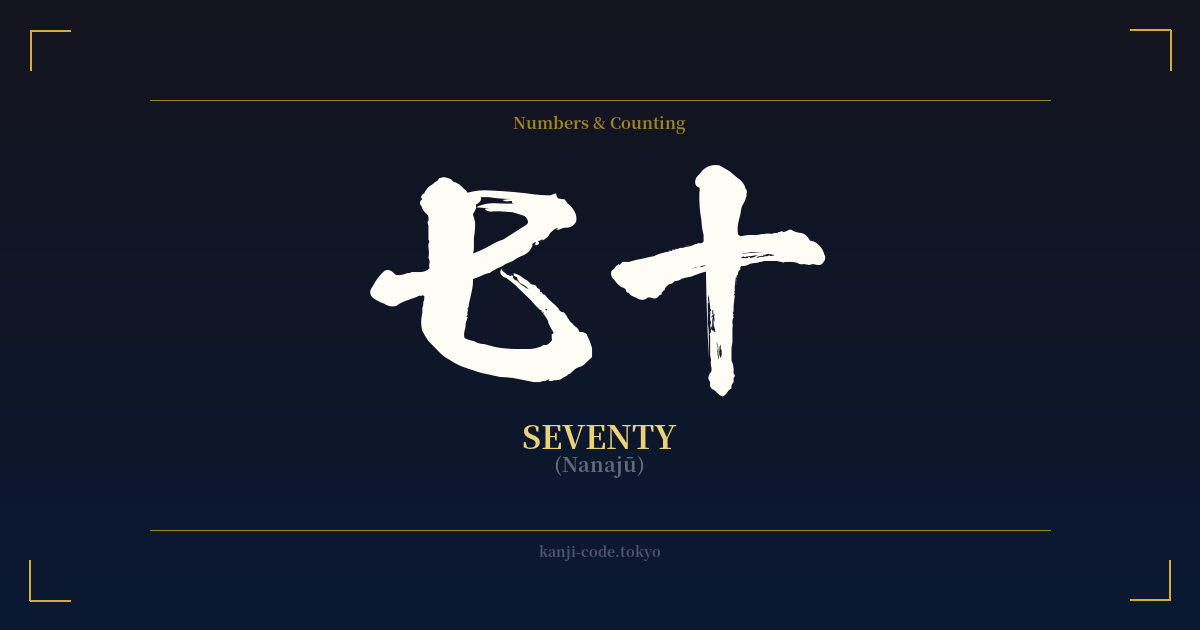
✍️ 七十 (Nanajū) — Cultural Context
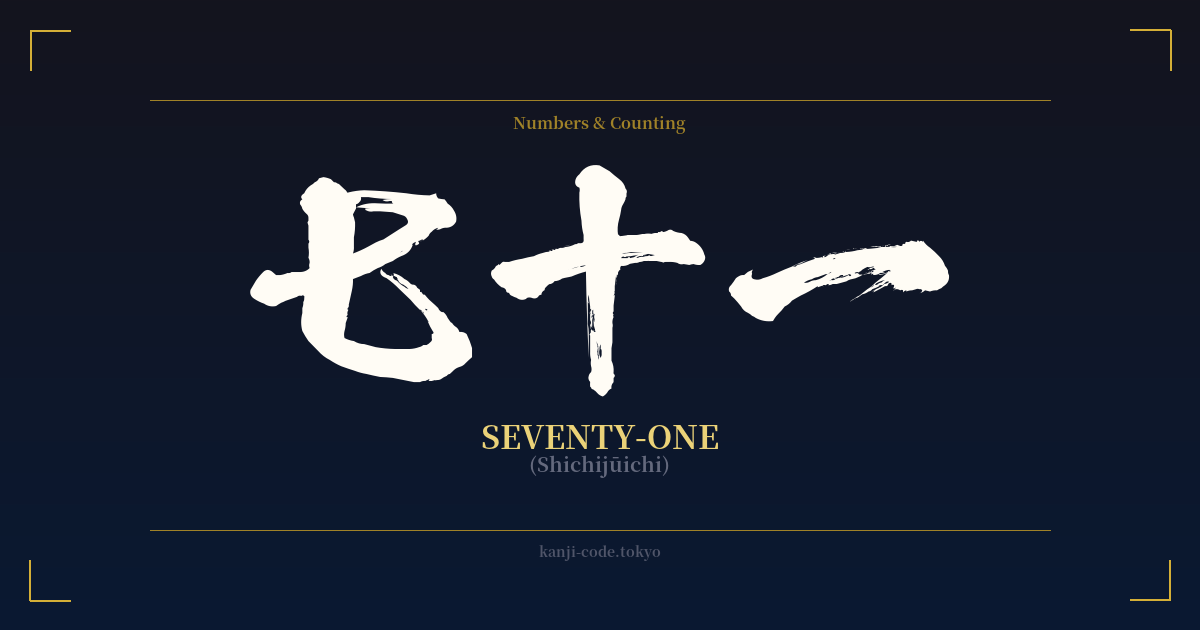
The kanji compound 七十 (nanajū) represents the number seventy in Japanese. It is a simple and direct combination of the characters for seven (七) and ten (十), literally translating to "seven tens." This follows the standard multiplicative logic used for constructing numbers in Japanese, which is shared across the Chinese-speaking world.
While its daily use is purely functional—for counting, expressing age, or marking dates—the number seventy holds a significant cultural milestone in Japan: the 70th birthday celebration known as Koki (古希). The name itself is steeped in literary history, originating from a line in a famous poem by the Tang dynasty Chinese poet Du Fu (杜甫): 「人生七十古来稀」 (jinsei nanajū korai mare nari), which translates to "To live to seventy has been rare since ancient times."
In an era when life expectancy was much shorter, reaching the age of 70 was a remarkable achievement worthy of special recognition. This tradition was adopted in Japan, and Koki became one of the key celebrations of longevity (長寿, chōju). Unlike the 60th birthday (Kanreki), which marks the completion of a full sexagenary cycle and is associated with the color red, Koki is celebrated with the color purple (紫, murasaki).
Purple has long been a color of nobility, elegance, and high rank in Japan, historically reserved for the Imperial family and top-ranking aristocrats. Gifting the celebrant a purple hat, vest (chanchanko), or cushion honors their wisdom and the rarity of their long life, elevating them to a position of great respect. This makes the number seventy far more than just a digit; it is a symbol of a life well-lived and a rare blessing.
There are two primary readings for 七十: "nanajū" and "shichijū." While both are correct, "nanajū" is far more common in modern spoken Japanese. This preference arose to avoid auditory confusion, as the reading "shichi" can sound similar to "ichi" (one) and, more importantly, "shi" (four), which is a homophone for death (死). Therefore, "nana" is often favored for clarity and to sidestep any inauspicious connotations.
🖌️ Font Styles for 七十
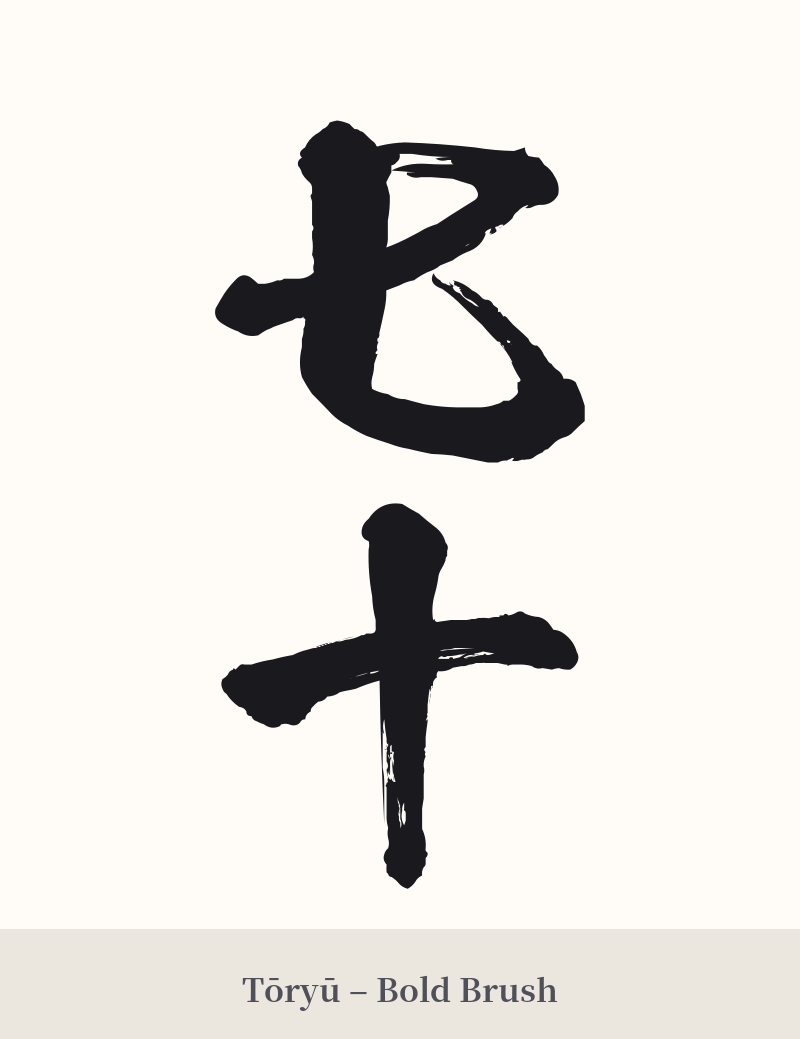
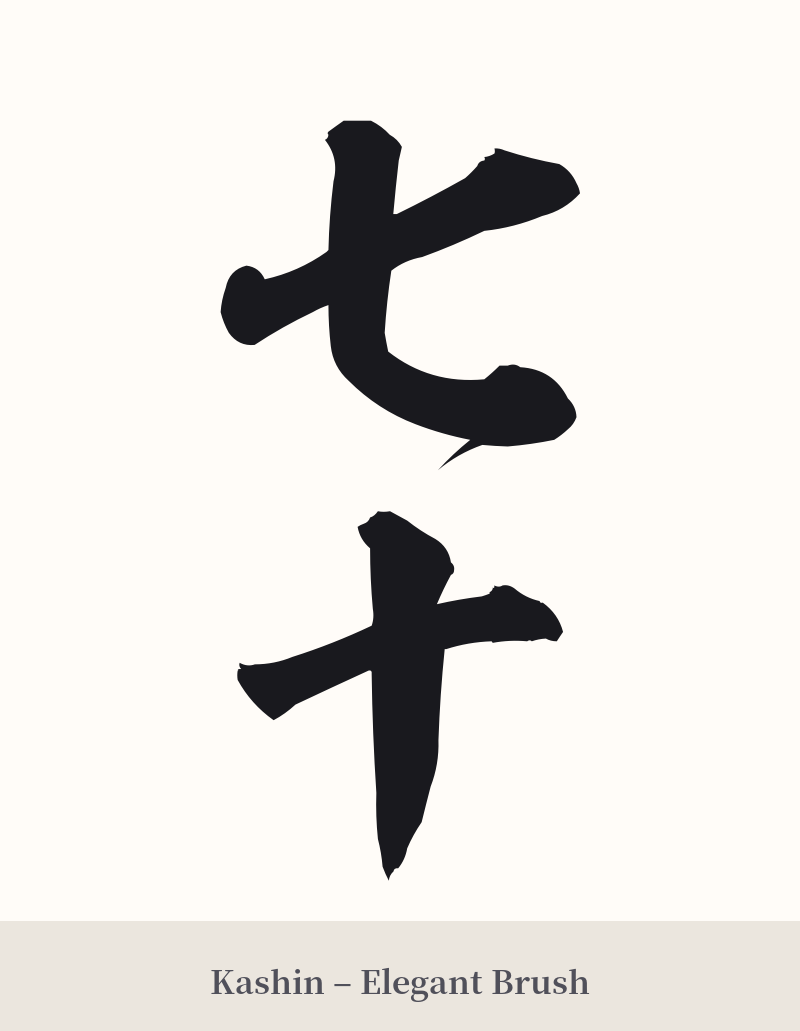
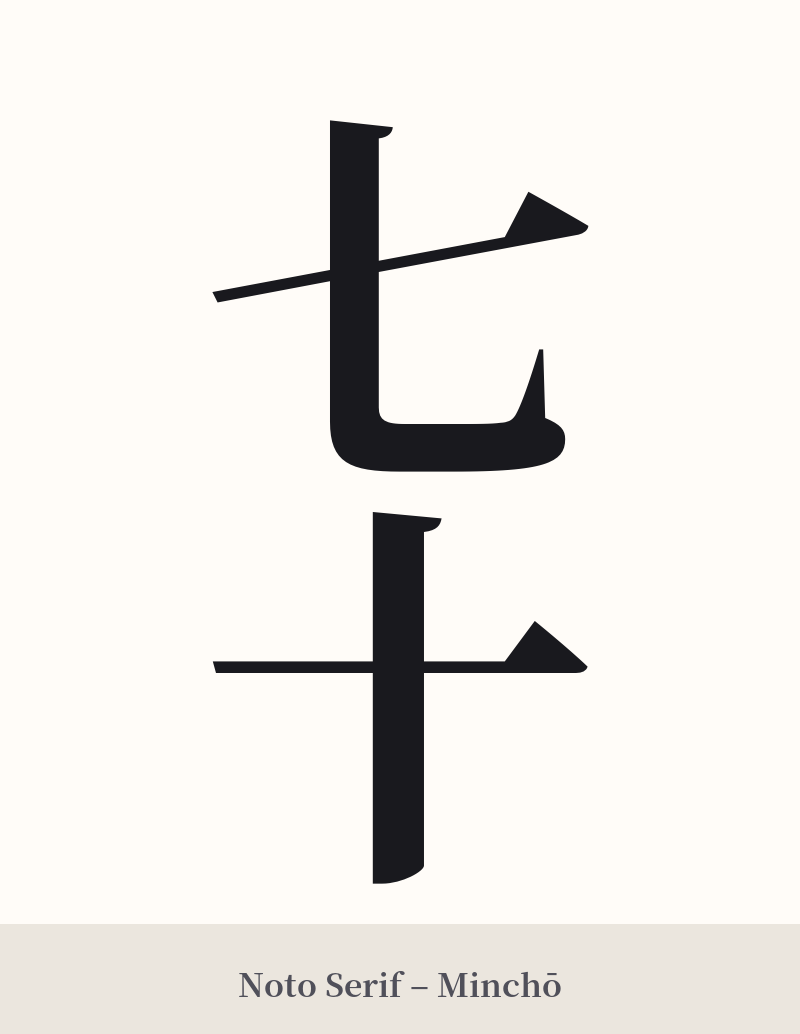
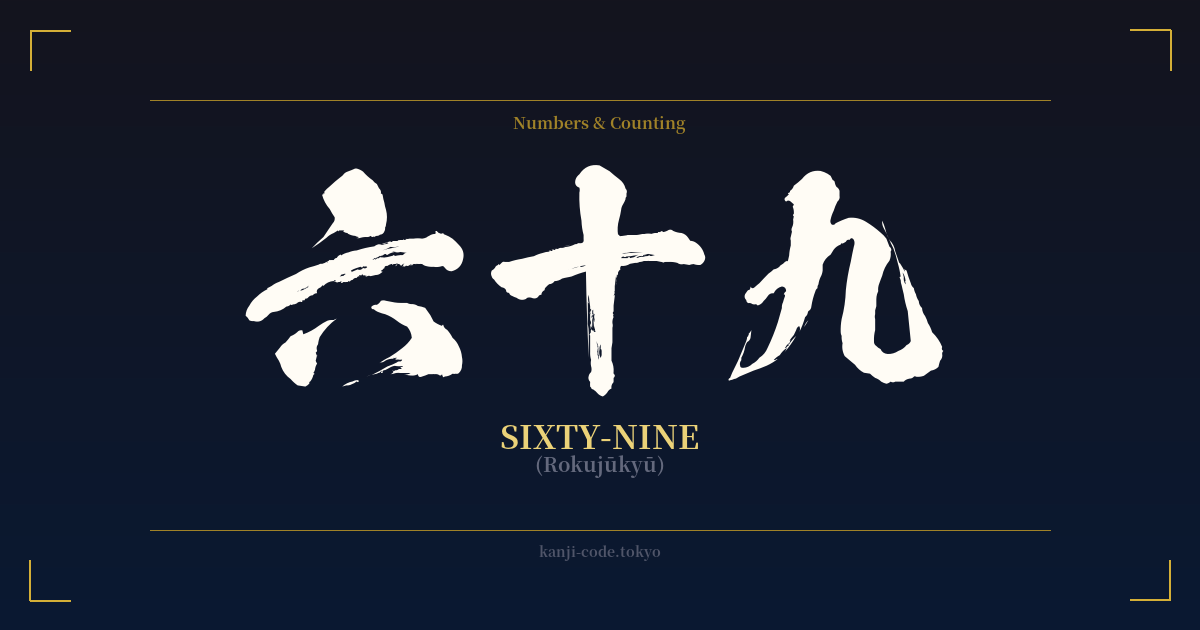
The same kanji can look dramatically different depending on the calligraphy style. Choose a font that matches the mood you want for your tattoo or design.
🎨 Tattoo Suitability
📐 Tattoo Design Guide
The kanji for seventy, 七十, is defined by its stark simplicity. This can be both a challenge and an opportunity for a tattoo design. Because the characters themselves are so basic, the artistic style and context are paramount.
– Placement: Due to its small and simple form, 七十 works well as a discreet tattoo on the wrist, ankle, behind the ear, or on the fingers. For a more prominent piece, consider a vertical alignment along the spine, forearm, or ribs.
– Font Style: A standard block font (Kaisho) can look overly simplistic and plain. To give the design life, opt for a more dynamic calligraphic style. A semi-cursive script (Gyōsho) adds a touch of fluid motion, while a full cursive script (Sōsho) can transform the simple lines into an abstract, artistic statement.
– Visual Tips: To overcome its plainness, integrating 七十 into a larger design is highly recommended. You could frame it within an ensō (Zen circle) to give it a sense of completeness and focus. If the tattoo commemorates a 70th birthday (Koki), consider incorporating purple elements, such as a purple iris or wisteria flowers, to symbolize the celebration's traditional color.
Comments