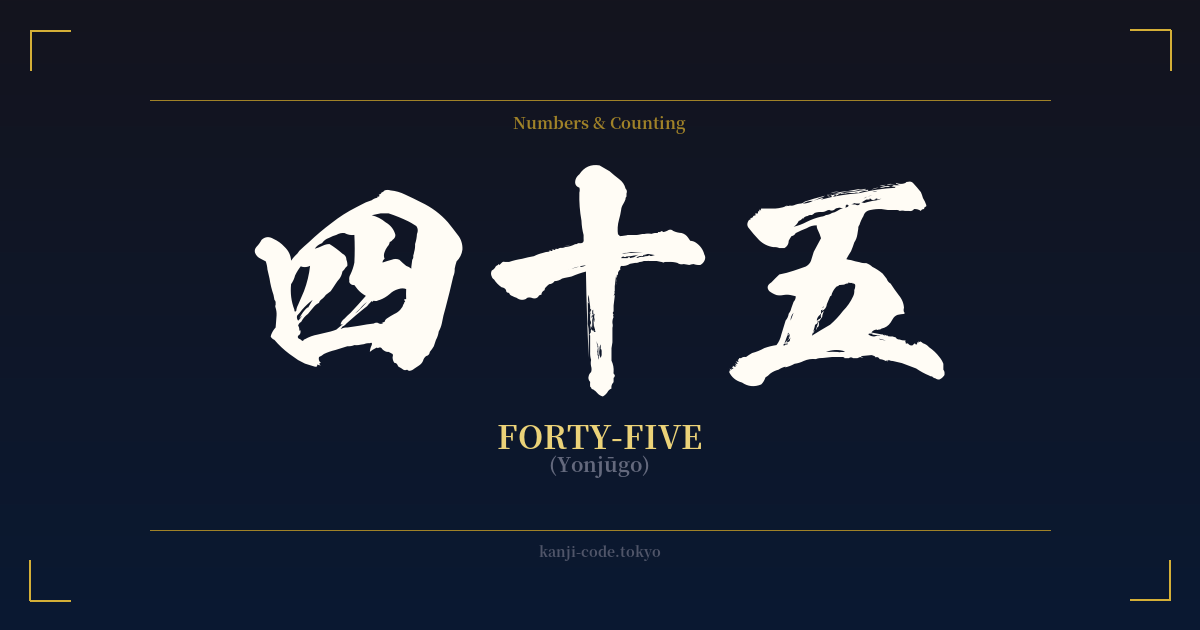
✍️ 四十五 (Yonjūgo) — Cultural Context
The Japanese word for forty-five, 四十五 (yonjūgo), offers a fascinating window into the logical structure of Japanese numeration and a deep-seated cultural superstition.
Unlike English, which has unique words like 'forty', the Japanese system is elegantly mathematical. 四十五 is read as 'yon-jū-go', which literally breaks down into 'four-ten-five'. The structure is (4 x 10) + 5, a straightforward formula that makes counting large numbers incredibly intuitive once you know the basic characters from one to ten.
However, the seemingly simple number four, 四, carries immense cultural weight. One of its readings is 'shi', which is a homophone for the word for death, 死. This linguistic coincidence has given rise to 'tetraphobia', a widespread superstition surrounding the number four, similar to how the number 13 is viewed in some Western cultures.
This fear manifests in many ways in daily Japanese life. Hospitals and hotels often skip the fourth floor, going directly from three to five. Room numbers containing four are frequently avoided. You will rarely find gift sets packaged in groups of four; sets of three or five are far more common. This avoidance is a subtle but constant presence in the culture.
To navigate this, the Japanese language has an alternative, native reading for four: 'yon'. In many contexts, especially when counting objects or people, 'yon' is used specifically to avoid the morbid association with 'shi'. The word 四十五 (yonjūgo) is a perfect example of this linguistic workaround in action. The 'yon' reading is deliberately used to soften the presence of the unlucky digit.
In contrast, the number five, 五 (go), is generally considered neutral or auspicious. It is associated with the five elements of Chinese philosophy (Gogyō: wood, fire, earth, metal, water), which have been influential in Japan. It also appears in important Buddhist concepts like the Five Great Buddhas (Godai Nyorai). The number ten, 十 (jū), often symbolizes completeness.
Therefore, while 四十五 is just a number used for counting age, time, or objects, its components tell a story. It represents a clash between mathematical logic and deep-rooted superstition, showcasing how culture actively shapes and provides solutions within a language. It is a functional, everyday term, but not one that carries any special philosophical or poetic meaning on its own.
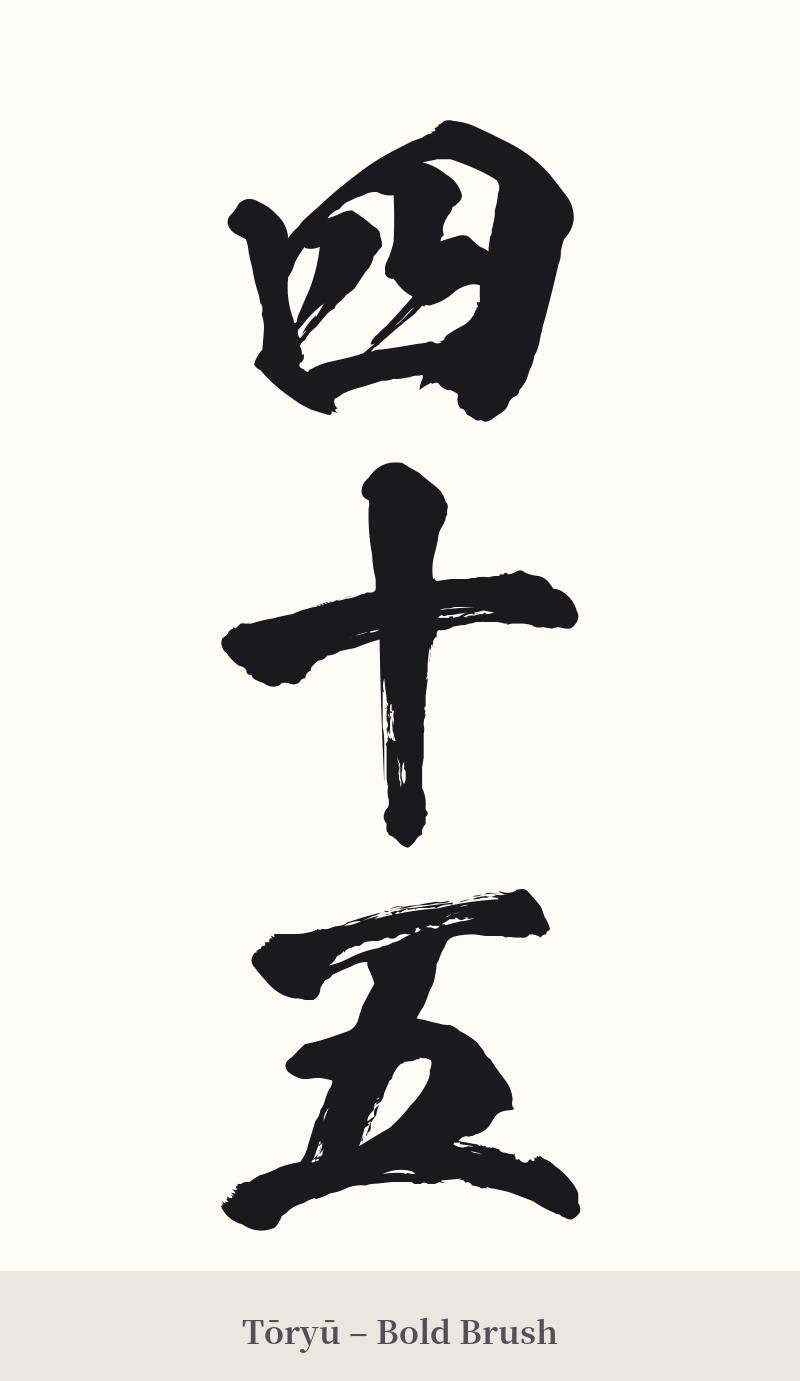
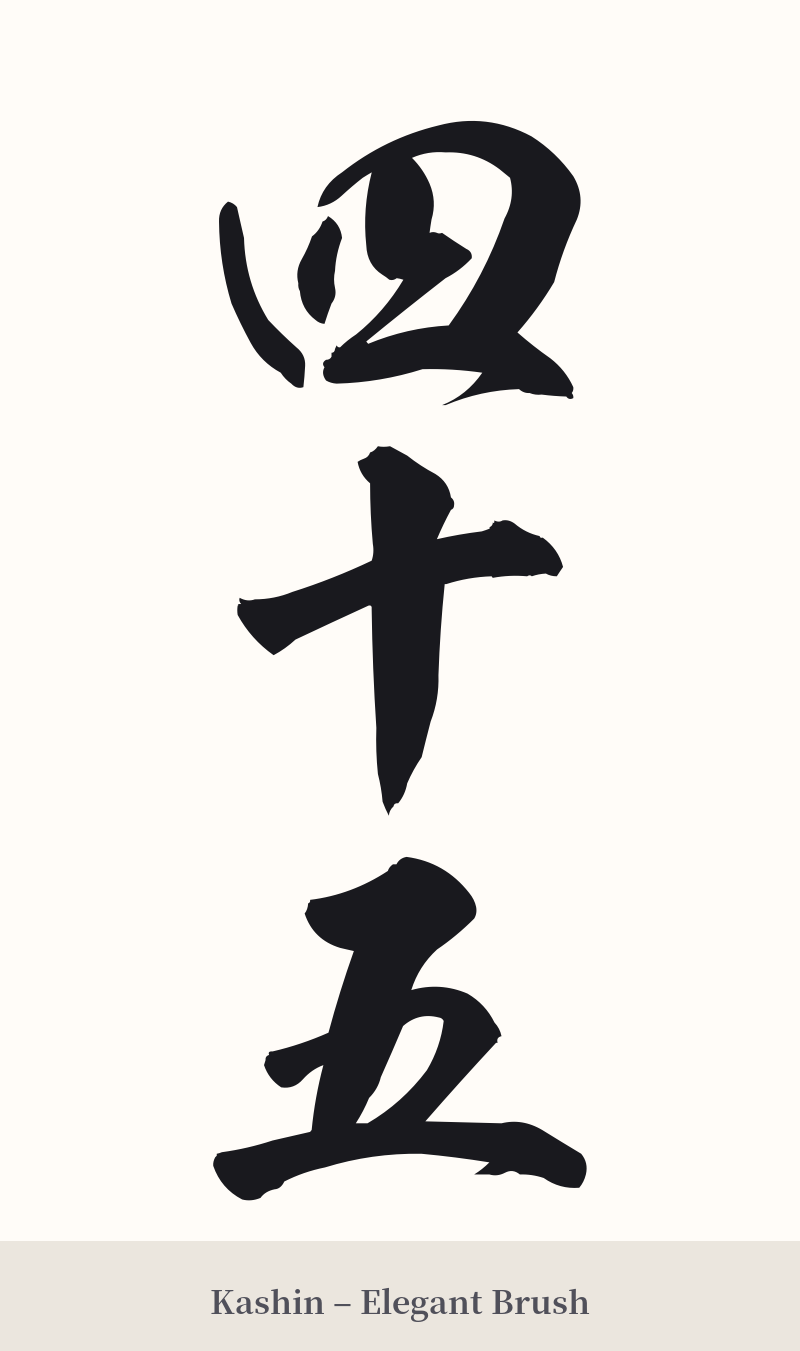
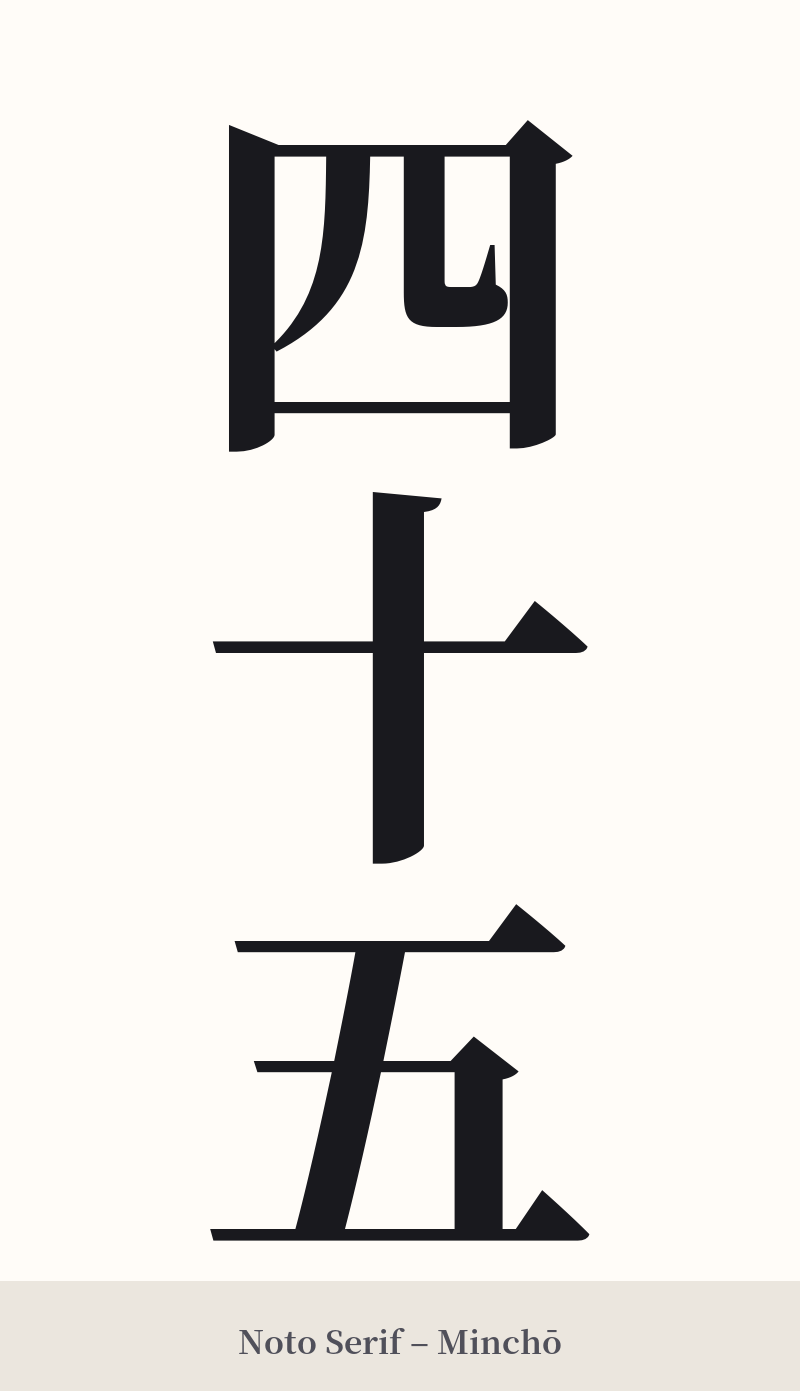
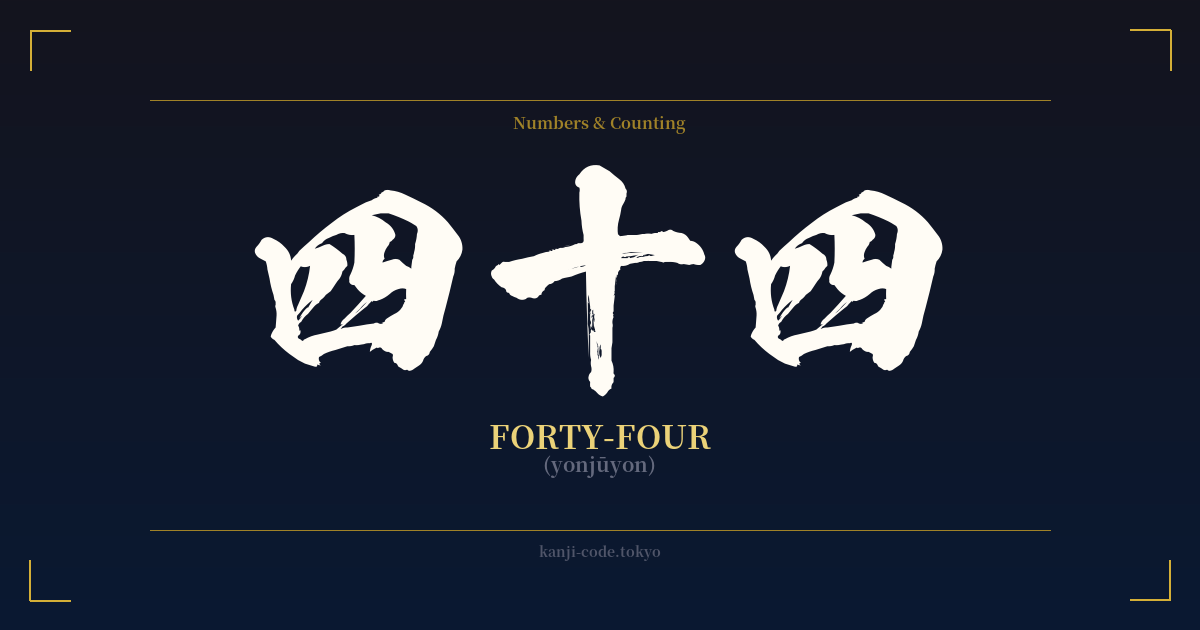
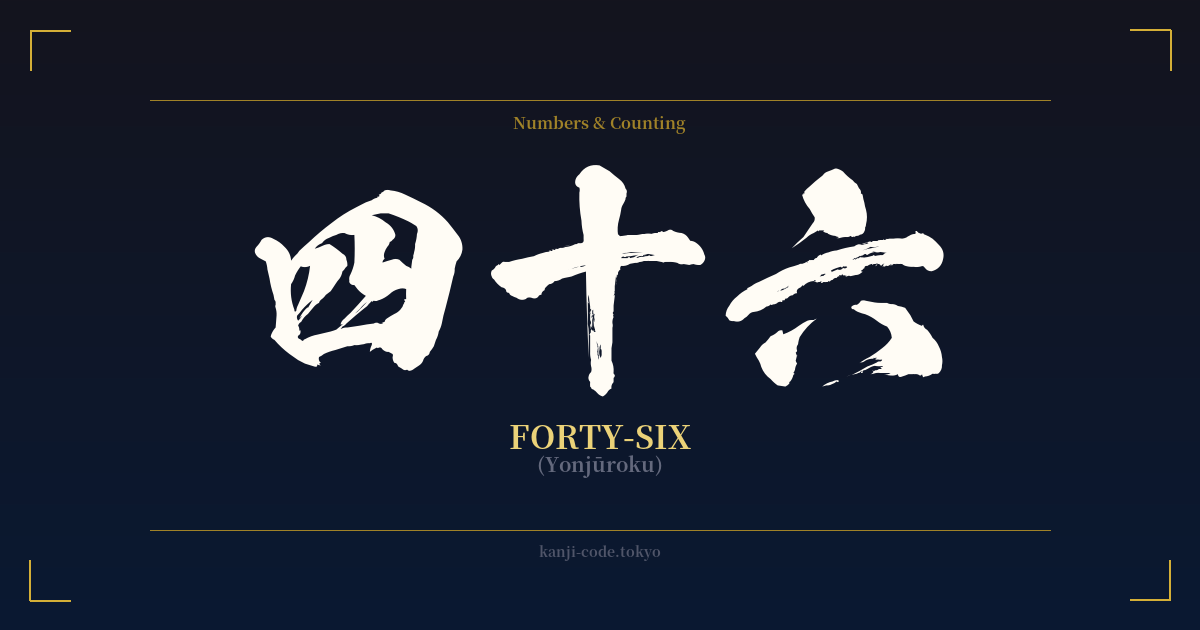
🖌️ Font Styles for 四十五
The same kanji can look dramatically different depending on the calligraphy style. Choose a font that matches the mood you want for your tattoo or design.
🎨 Tattoo Suitability
📐 Tattoo Design Guide
If you are set on tattooing the number forty-five for personal reasons, despite the cultural cautions, design choices can help convey your intent.
– Placement: A vertical orientation (四, then 十, then 五 below it) is the traditional and most aesthetically pleasing way to write Japanese script. This would look natural on a forearm, bicep, calf, or along the spine.
– Font Style: For a literal number, a clean and crisp font like a Mincho (serif) or Gothic (sans-serif) style is appropriate. It emphasizes clarity over artistry. A flowing, highly stylized calligraphy (shodō) script might feel mismatched, as it typically lends itself to more poetic or powerful concepts.
– Visual Tips: Because the number itself lacks a universal story, consider pairing it with other visual elements that explain its significance to you. For example, if it represents a birth year, you could incorporate the corresponding zodiac animal. If it's a memorial number, a small, subtle flower or symbol associated with that person could provide context and transform it from a random number into a meaningful tribute.
Comments