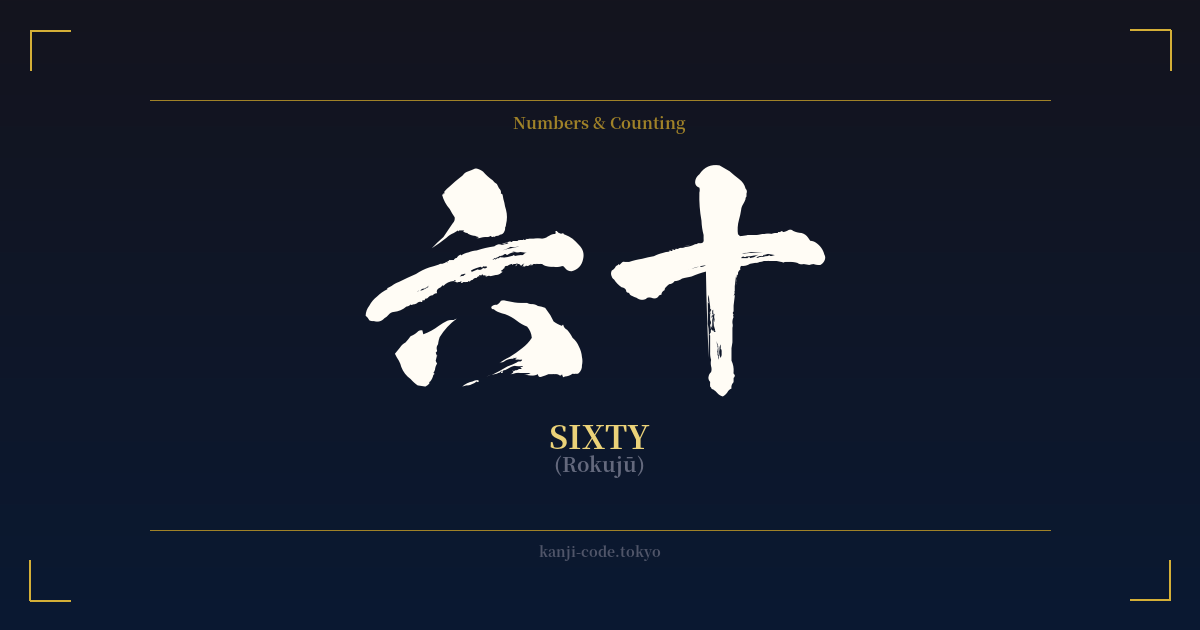
✍️ 六十 (Rokujū) — Cultural Context
The kanji 六十 (Rokujū) literally translates to "sixty," a combination of 六 (six) and 十 (ten). While seemingly a straightforward number, sixty holds a place of profound significance in Japanese culture, primarily through the celebration known as Kanreki (還暦).
Kanreki marks a person's 60th birthday and is one of the most important milestones in the traditional Japanese life cycle. Its origins lie in the ancient Chinese sexagenary cycle, or Jikkan Jūnishi (十干十二支), which was adopted by Japan. This calendar system combines ten celestial stems and twelve terrestrial branches (the zodiac animals). A full cycle, where the specific combination of stem and branch repeats, takes exactly 60 years.
Therefore, reaching the age of 60 signifies the completion of one full calendrical cycle and a return to the zodiac sign of one's birth year. The name Kanreki itself means "return of the calendar" (還 – return, 暦 – calendar). This is not seen as an end, but as a symbolic rebirth. The individual is considered to have completed their journey and is now starting a new life, free from past obligations and ready for a second childhood.
This theme of rebirth is beautifully symbolized in the Kanreki ceremony. The person celebrating often wears a red chanchanko (a sleeveless vest), a red hat, and sits on a red cushion. In Japanese culture, the color red is associated with babies and is believed to ward off evil spirits. By dressing the 60-year-old in red, the family is lovingly treating them as a newborn, celebrating their new beginning.
In pre-modern Japan, when life expectancy was much lower, reaching the age of 60 was a remarkable achievement, a testament to one's health and fortune. It was a true mark of a venerable elder. Today, with people living much longer and healthier lives, the meaning of Kanreki has evolved. It is less about entering old age and more about celebrating a transition into a vibrant "second act" of life—a time for travel, hobbies, and personal fulfillment, often after retiring from a long career.
🖌️ Font Styles for 六十
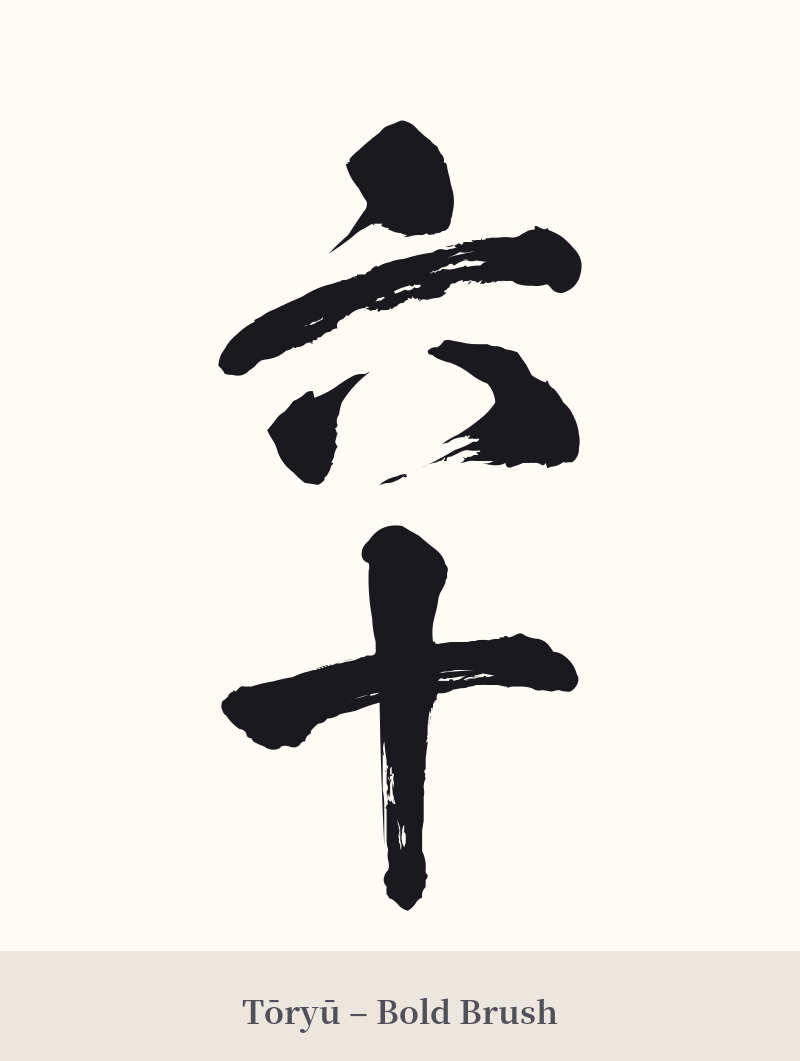
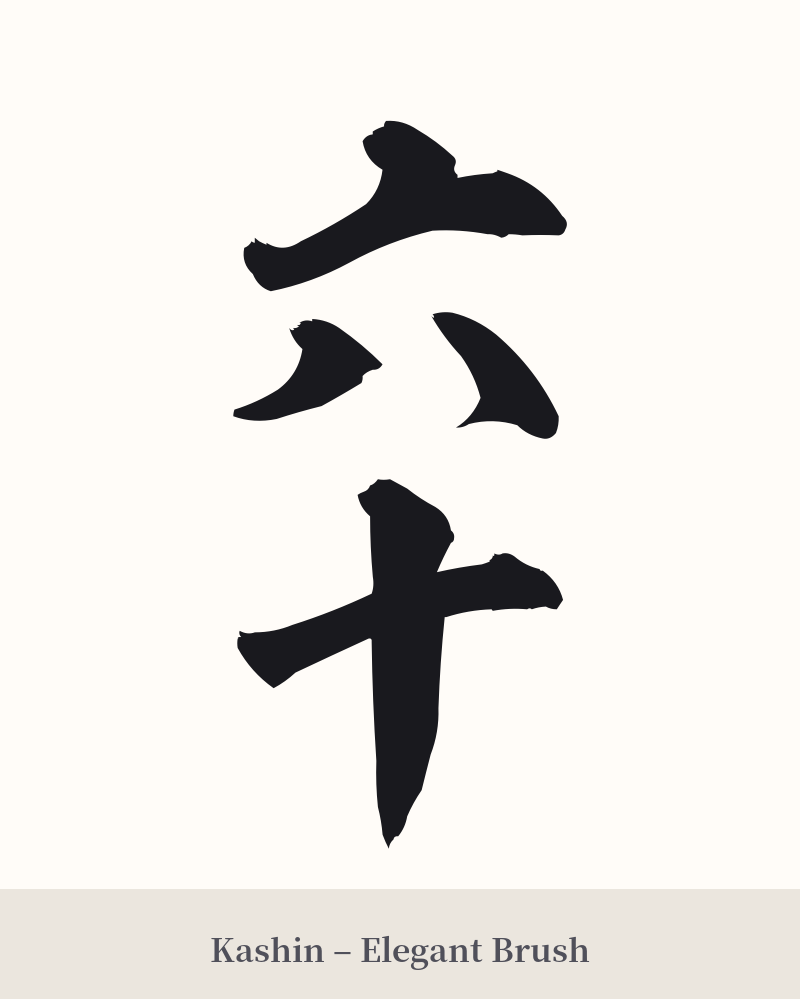
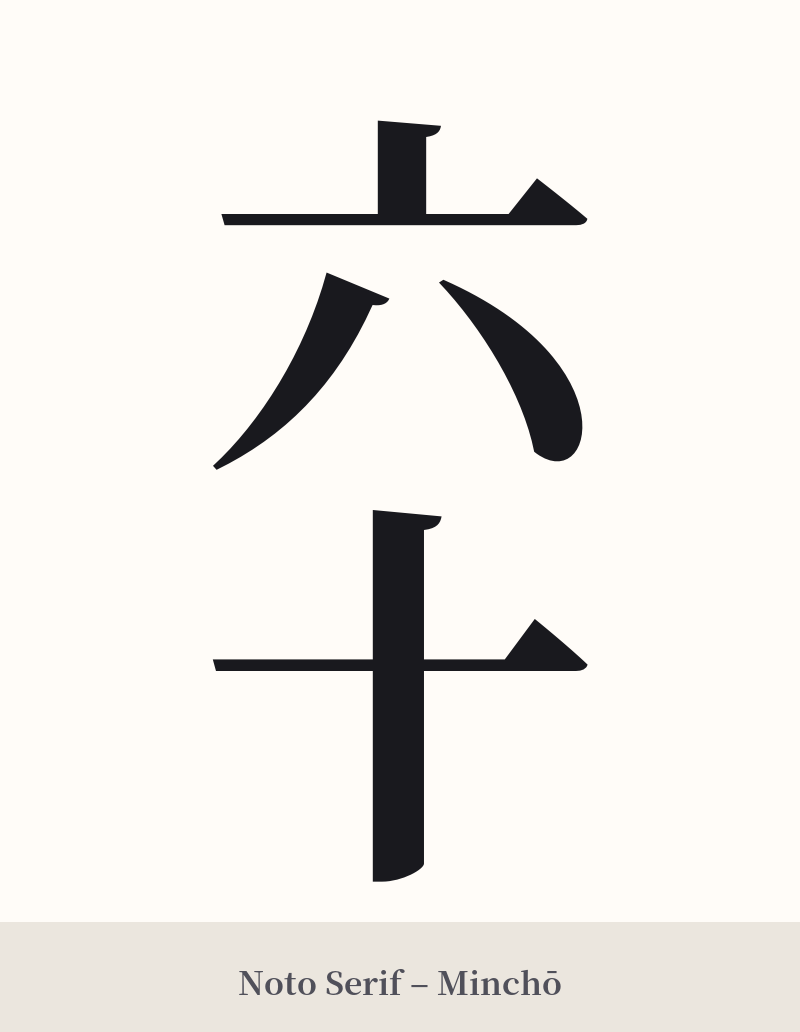
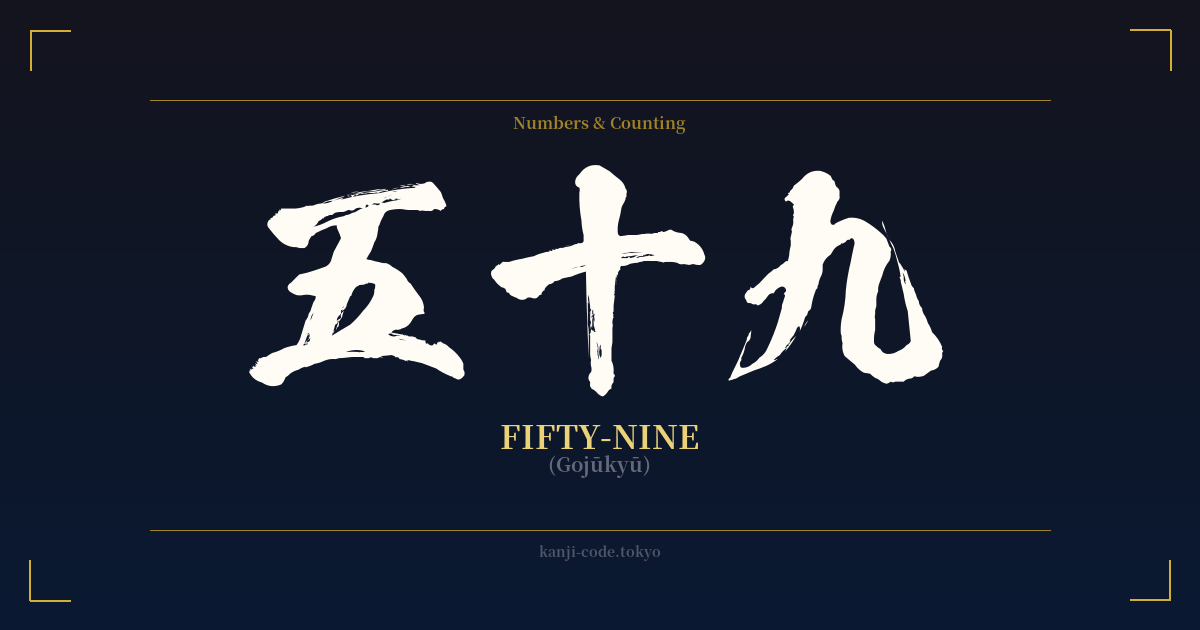
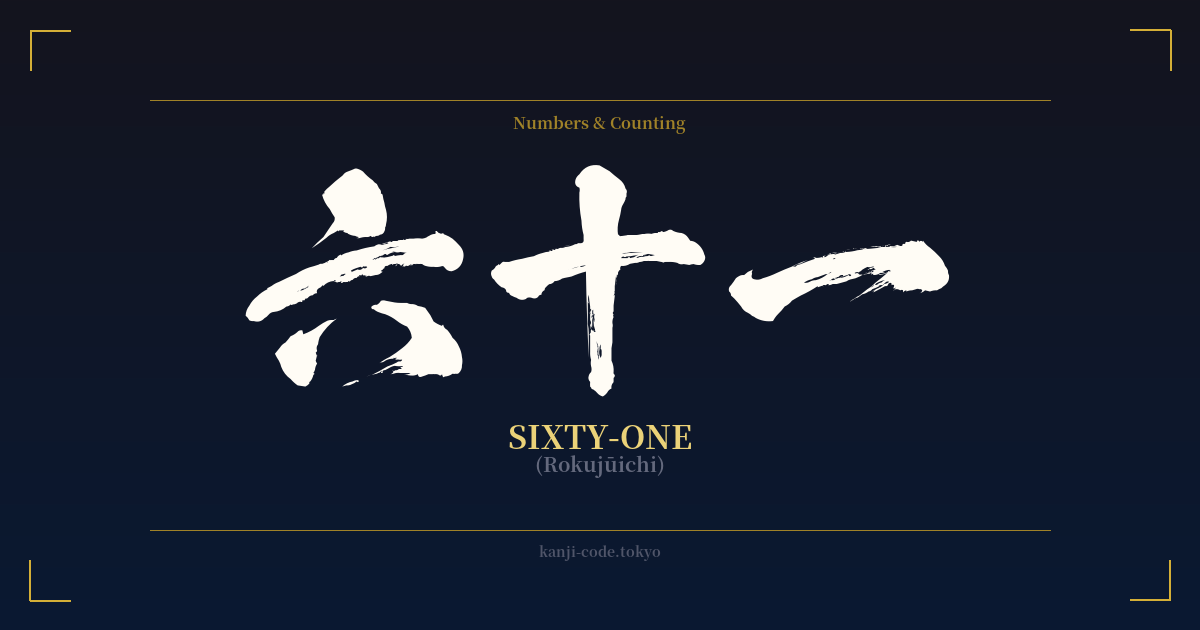
The same kanji can look dramatically different depending on the calligraphy style. Choose a font that matches the mood you want for your tattoo or design.
🎨 Tattoo Suitability
📐 Tattoo Design Guide
Due to its simplicity, a tattoo of 六十 requires careful consideration of style and placement to have impact.
– Placement: Small, personal spots like the inner wrist, behind the ear, or on the ankle can work well. For a more significant piece, it could be integrated into a larger design that tells a story, perhaps related to family or a personal milestone.
– Font Style: A bold, blocky Kaisho (clerical script) font can give the simple characters a sense of solidity and presence. Conversely, a flowing Gyosho (semi-cursive) script can add a touch of elegance and movement, connecting the two characters more fluidly.
– Visual Tips: Consider a vertical orientation, which is a classic arrangement for Japanese text. To allude to the Kanreki celebration, you could subtly incorporate the color red—perhaps for one specific stroke or as a small red seal (hanko) stamp near the kanji. Another idea is to combine it with the zodiac animal of the birth year to make the meaning more personal and complete.
Comments